
In the intricate world of business finance, clarity and transparency are paramount. Among the many financial documents that illuminate a company’s health, the Statement of Stockholders’ Equity stands as a crucial beacon, offering a detailed look into the ownership structure and the residual claim on a company’s assets after liabilities are settled. For anyone navigating the realms of Money, Tech, or Brand – from shrewd investors and curious entrepreneurs to brand strategists and tech innovators – understanding this statement is not merely an accounting exercise; it’s a key to unlocking deeper insights into a company’s financial stability, growth potential, and strategic direction.
Unpacking the Foundation: What is Stockholders’ Equity?
At its core, stockholders’ equity represents the owners’ residual claim on a company’s assets. It’s the money that would be returned to a company’s shareholders if all assets were liquidated and all debts were paid off. This fundamental concept is anchored in the bedrock of the accounting equation: Assets = Liabilities + Equity. Here, equity is essentially the difference between what a company owns (assets) and what it owes to external parties (liabilities).
Why does this matter? For one, it signifies ownership. When you buy shares in a company, you’re buying a piece of its equity. A robust and growing equity base often signals financial strength and a company’s ability to withstand economic downturns, fund future expansions, or simply maintain a healthy balance sheet. For businesses, especially those leveraging Tech for rapid scaling or those carefully cultivating their Brand, understanding their equity position is vital for strategic planning, investor relations, and capital allocation decisions.
The Core Components of Stockholders’ Equity
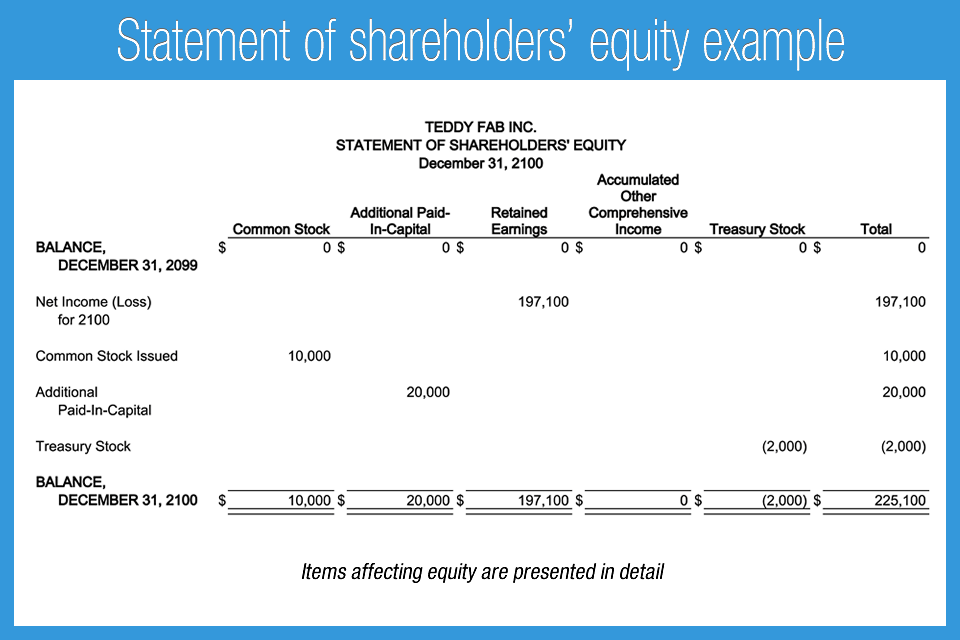
The “stockholders’ equity” section on a company’s balance sheet is not a monolithic figure but rather an aggregation of several distinct accounts, each telling a part of the financial story:
-
Common Stock & Preferred Stock: These accounts represent the par value of shares issued by the company. Common stock holders are the true owners, typically with voting rights, while preferred stock holders usually have no voting rights but often receive fixed dividends before common stockholders and have a priority claim on assets in liquidation. The funds raised from issuing these shares are the initial capital infusion from investors.
-
Additional Paid-in Capital (APIC): Also known as Capital Surplus, this amount represents the premium investors paid over the par value of the stock. If a company issues shares with a par value of $1 but sells them for $10, $1 goes to the common stock account, and $9 goes to APIC. It’s a direct reflection of how much capital the company has raised from shareholders beyond the basic par value.
-
Retained Earnings: This is perhaps the most dynamic and often scrutinized component. Retained earnings represent the cumulative total of a company’s net income that has been “retained” and reinvested in the business, rather than being paid out as dividends to shareholders. A growing retained earnings balance indicates a profitable company that is building its internal capital, which is crucial for funding research & development, acquiring new Tech, or expanding Brand presence without incurring additional debt.
-
Treasury Stock: This account appears as a negative value within stockholders’ equity. It represents shares of the company’s own stock that it has repurchased from the open market. Companies buy back their own stock for various reasons, such as reducing the number of outstanding shares (thereby increasing earnings per share), signaling undervaluation, or for use in employee stock option plans. While it reduces total equity, it can be seen as a strategic capital management move.
-
Accumulated Other Comprehensive Income (AOCI): This somewhat complex account captures gains and losses that bypass the income statement and are instead recorded directly in equity. Examples include unrealized gains or losses on certain investments, foreign currency translation adjustments, and certain pension adjustments. It provides a more comprehensive view of changes in equity that aren’t tied directly to day-to-day operations but still affect the company’s overall financial standing.
The Statement of Stockholders’ Equity: A Dynamic Financial Narrative
While the balance sheet offers a snapshot of stockholders’ equity at a specific point in time, the Statement of Stockholders’ Equity provides a more dynamic, period-over-period view. It acts as a bridge between the income statement and the balance sheet, explaining the changes in each component of equity from one accounting period to the next. For those focused on Money and investment, this narrative is invaluable for understanding a company’s financial evolution and capital management decisions.
The purpose of this statement is to clearly show the movements – increases and decreases – that have occurred within each equity account. It’s not just about the final number, but the journey to get there.
Decoding the Movements: What the Statement Reveals
By meticulously tracking the changes in each component, the Statement of Stockholders’ Equity offers critical insights into a company’s financial and strategic activities:
-
Profitability and Reinvestment (through Retained Earnings): The statement clearly shows how much net income from the income statement has flowed into retained earnings and, conversely, how much has been distributed as dividends. A consistent increase in retained earnings generally points to a profitable business that is effectively reinvesting its profits, a hallmark of sustainable growth, especially for Tech companies that require continuous R&D investment.
-
Dividend Policy: By showing the amount of dividends declared and paid, the statement reveals a company’s policy regarding shareholder returns. Some companies, particularly mature ones, prefer to reward shareholders with regular dividends, while growth-oriented companies (common in the Tech sector) often choose to retain most earnings to fuel expansion.
-
Capital Raising Activities (New Shares): When a company issues new common or preferred stock, the capital raised is reflected here. This indicates that the company is actively seeking external funding to expand operations, acquire assets, or bolster its cash reserves. For startups or companies making significant Brand investments, new stock issuances are a common way to raise the necessary capital.
-
Share Buybacks (Treasury Stock): The statement details any shares repurchased by the company. As mentioned, this can be a strategic move to boost shareholder value, but it also reduces the overall equity. Investors closely monitor buyback programs, as they signal management’s confidence in the company’s future and its capital allocation strategy.
-
Impact of Other Comprehensive Income: The changes in AOCI provide transparency on non-operational gains and losses that directly impact equity. While often less frequent, these movements can be significant, particularly for companies with substantial foreign operations or specific types of investments.

Stockholders’ Equity in the Digital Age: Leveraging Tech & Protecting Brand
In today’s fast-paced business environment, driven by Tech innovation and intense Brand competition, the management and analysis of financial statements like the Statement of Stockholders’ Equity have been revolutionized. The digital age has not only streamlined the process but also amplified the need for accuracy, security, and insightful interpretation.
Technology as an Enabler for Financial Acumen
The era of manual ledger entries and paper-based financial statements is largely behind us. Modern Tech plays a pivotal role in creating, managing, and analyzing stockholders’ equity statements:
-
Accounting Software and ERP Systems: Enterprise Resource Planning (ERP) systems like SAP, Oracle, and cloud-based accounting platforms like QuickBooks or Xero automate much of the financial reporting process. They integrate data from various departments, ensuring that all transactions affecting equity—from stock issuances to dividend payments and net income—are accurately captured and recorded. This significantly reduces human error and enhances the efficiency of financial teams, boosting productivity.
-
AI and Data Analytics for Insights: Artificial Intelligence (AI) and advanced data analytics tools are increasingly being used to go beyond mere reporting. These technologies can process vast amounts of financial data to identify trends in equity movements, forecast future equity changes based on various business scenarios, and even flag potential inconsistencies or risks. For investors, AI-powered platforms can quickly dissect these statements to provide actionable insights into a company’s financial health, informing crucial Money decisions.
-
Increased Productivity and Accuracy: By automating repetitive tasks and providing real-time data, Tech solutions drastically improve the productivity of financial professionals. This not only speeds up the generation of financial statements but also ensures a higher degree of accuracy, critical for regulatory compliance and maintaining investor confidence.
The Interplay of Equity, Investor Confidence, and Corporate Brand
Beyond the numbers, a company’s Statement of Stockholders’ Equity profoundly impacts its Brand and its relationship with investors. Transparency and a healthy equity position are powerful contributors to corporate reputation:
-
Transparency Builds Trust: In an age where information travels instantly, the clarity and integrity of financial reporting are crucial for building and maintaining trust. A well-prepared and easily understandable Statement of Stockholders’ Equity demonstrates a company’s commitment to transparency, which is a cornerstone of a strong corporate Brand. Conversely, opaque or complex statements can erode investor confidence and damage reputation.
-
Financial Health Bolsters Reputation: A consistently growing equity base, especially driven by retained earnings, signals a financially healthy and stable company. This financial strength directly enhances a company’s Brand image, making it more attractive to potential investors, business partners, and even top talent. A strong Brand is often perceived as a financially stable one.
-
Strategic Capital Management Enables Growth and Brand Investment: The way a company manages its equity—whether through reinvesting profits, issuing new shares for strategic acquisitions, or conducting share buybacks—is a reflection of its capital allocation strategy. A smart strategy, clearly articulated through the equity statement, can enable significant investments in Tech innovation, marketing campaigns, or product development that directly bolster the Brand. For instance, a tech company with strong equity might choose to invest heavily in a new, unproven technology, knowing it has the financial buffer to support the R&D.
-
Digital Security for Financial Data: With all this financial information being managed digitally, the importance of Digital Security cannot be overstated. Breaches of financial data can not only lead to severe financial losses but also inflict irreparable damage on a company’s Brand and investor trust. Robust cybersecurity measures are thus an integral part of managing financial statements in the digital age.
Why Stockholders’ Equity Matters: Insights for Investors, Businesses, and the Future
The Statement of Stockholders’ Equity is more than just an accounting requirement; it’s a window into a company’s past performance, current standing, and future potential. For individuals and entities engaged with Money, Tech, and Brand, its implications are far-reaching.
Guiding Investment Decisions and Business Strategy
-
For Investors: Savvy investors meticulously analyze the Statement of Stockholders’ Equity to assess a company’s financial health, risk profile, and potential for returns. Key financial ratios like Return on Equity (ROE) and Debt-to-Equity are derived from these figures, providing a quick gauge of how efficiently a company is generating profits from shareholder investments and its reliance on debt versus equity financing. A company with a consistent increase in retained earnings and a healthy equity base is generally considered a more stable and attractive investment. This helps in making informed Money decisions.
-
For Management: Internally, the statement is a critical tool for strategic decision-making. Management uses it to evaluate the effectiveness of their capital allocation, dividend policy, and overall growth strategies. Should profits be reinvested in product development (e.g., new Tech features), marketing (to build Brand awareness), or returned to shareholders? The equity statement helps quantify the impact of these choices. It also informs decisions about future funding rounds, whether through debt or additional equity issuance.
-
For Startups/Entrepreneurs: Even for smaller businesses or side hustles contemplating scaling up, understanding the concept of owner’s equity (the equivalent before formal incorporation) is crucial. As they grow and potentially seek venture capital or become publicly traded, a solid understanding of how equity is built, maintained, and reported becomes indispensable for attracting investment and managing financial expectations.

Navigating Economic Shifts and Fostering Sustainable Growth
A strong equity base provides a crucial buffer against economic downturns and unexpected financial challenges. Companies with substantial equity are better positioned to weather recessions, absorb losses, and continue investing in their future without having to take on excessive debt or dilute existing shareholders excessively.
It enables reinvestment and innovation. Companies with healthy retained earnings can afford to invest in cutting-edge Tech, undertake ambitious R&D projects, or launch significant Brand campaigns that may not yield immediate returns but are vital for long-term competitive advantage. This self-funding capability is a hallmark of sustainable growth and resilience. Ultimately, a carefully managed and transparent Statement of Stockholders’ Equity contributes significantly to long-term value creation, reinforcing not just the company’s financial stability but also its market reputation and enduring Brand presence.
In conclusion, the Statement of Stockholders’ Equity is far more than a mere accounting document. It’s a comprehensive report on the owners’ stake in a company, showcasing how that stake has changed over time due to profits, dividends, new investments, and strategic buybacks. For anyone keen on understanding how businesses truly operate, grow, and manage their finances in the modern era – an era shaped by Tech innovation, competitive Brand building, and the shrewd management of Money – this statement offers an indispensable and detailed narrative of financial health and strategic intent.
aViewFromTheCave is a participant in the Amazon Services LLC Associates Program, an affiliate advertising program designed to provide a means for sites to earn advertising fees by advertising and linking to Amazon.com. Amazon, the Amazon logo, AmazonSupply, and the AmazonSupply logo are trademarks of Amazon.com, Inc. or its affiliates. As an Amazon Associate we earn affiliate commissions from qualifying purchases.