
In the lexicon of human communication, few symbols carry as much weight, ambiguity, and transformative potential as the letter “X.” In mathematics, it is the quintessential variable—the unknown value waiting to be solved. In cartography, it marks the spot of hidden treasure. However, in the rapidly evolving landscape of the 21st century, “X” has transcended its algebraic roots to become the ultimate signifier in the technology sector.
To ask “what can X mean” in a tech context is to explore the intersection of social media evolution, experimental hardware, architectural computing, and the future of digital identity. From the radical rebranding of global platforms to the secretive laboratories of “moonshot” innovators, “X” represents the boundary between what is currently possible and what lies just over the horizon.
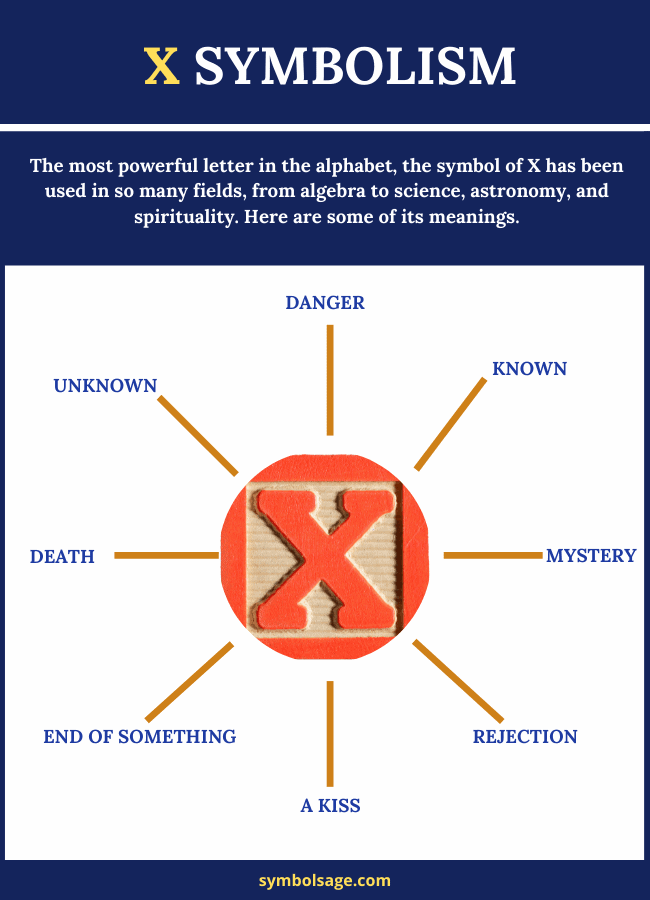
The Rebranding of a Digital Town Square: From Twitter to X
Perhaps the most visible and controversial iteration of “X” in recent history is the transformation of Twitter. When Elon Musk acquired the platform and transitioned its identity to X, it wasn’t merely a change in aesthetics or a replacement of the iconic blue bird. It signaled a fundamental shift in the technological philosophy of social networking.
The Philosophy of the “Everything App”
The transition to X represents an ambition to create a Western equivalent to “super-apps” like WeChat. In this context, “X” means consolidation. The tech strategy involves integrating disparate services—microblogging, long-form video, peer-to-peer payments, and even job recruitment—into a single, unified interface. By stripping away the specific branding of “Twitter,” the platform aims to become a blank canvas upon which a multi-modal digital ecosystem can be built. This requires massive backend overhauls, shifting from a legacy codebase optimized for short text bursts to a robust architecture capable of handling high-frequency financial transactions and high-definition streaming.
UX/UI Implications of Radical Simplification
From a design perspective, “X” signifies a move toward brutalist minimalism. The tech industry has long cycled through phases of skeuomorphism and flat design, but “X” pushes into the territory of the “abstract-functional.” The user interface (UI) changes reflect a broader trend in tech where the brand recedes to let the utility take center stage. For developers, this means building frameworks that are modular enough to support rapid feature deployment without the constraints of a legacy “brand voice.”
X as the Frontier: From Google X to SpaceX
Beyond the screen, “X” is often used to denote the experimental and the aspirational. It is the letter chosen by the world’s most well-funded labs to describe projects that are not yet ready for the consumer market but have the potential to disrupt global industries.
Moonshot Thinking and Experimental Hardware
At Alphabet, the “X” division (formerly Google X) operates as a “moonshot factory.” Here, “X” means the pursuit of 10x improvements rather than 10% increments. This laboratory focuses on the intersection of radical problems and breakthrough technologies. Whether it is Project Loon (using high-altitude balloons to provide internet) or Waymo (self-driving technology), the “X” serves as a protective layer that allows engineers to fail fast and iterate in private. In this niche, “X” is a methodology—a tech-centric approach to solving the world’s hardest physical problems through software and robotics.
The Symbolism of the Unknown in Aerospace
In the realm of aerospace technology, SpaceX (Space Exploration Technologies Corp) uses the “X” to represent the unknown reaches of the cosmos. Tech-heavy industries like rocketry use “X” to signify the experimental phase of a craft (e.g., the X-15). For SpaceX, the “X” isn’t just a letter; it represents the technical challenge of reusability. The ability to land a first-stage booster back on a drone ship is a feat of computational physics and real-time sensor processing. Here, “X” means the optimization of hardware through extreme software precision.
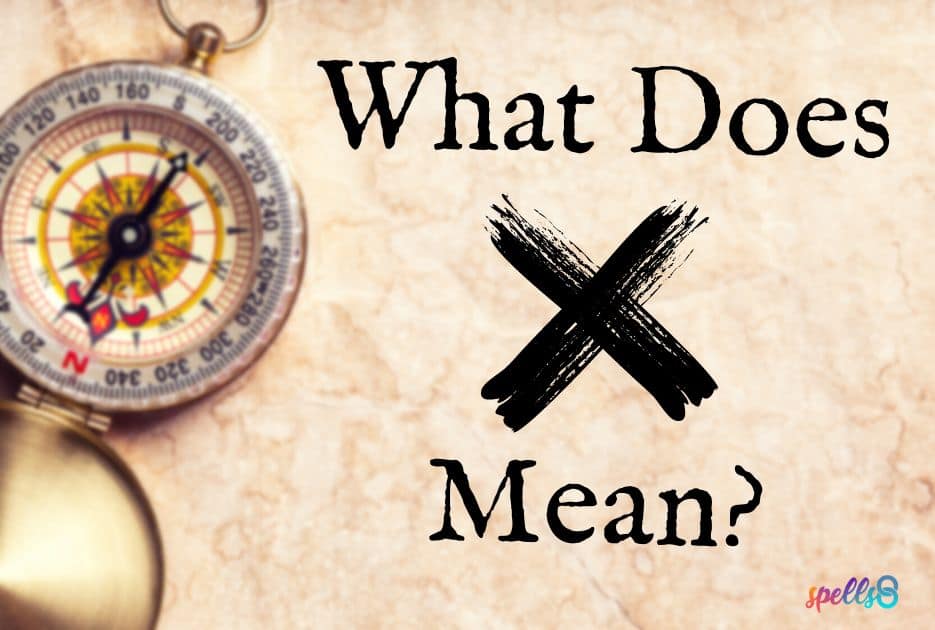
The Logical Foundation: X in Coding and Algorithms
While the public sees “X” on building signs and app icons, developers encounter it daily in its most primal form. The technological world is built on the logic of the variable, and “X” remains the king of the codebase.
Variable Naming and the Power of Placeholder Logic
In programming languages from Python to C++, x is the universal placeholder. While modern “clean code” practices encourage descriptive variable names, x remains the go-to for coordinate systems (the X-axis), loop counters in quick scripts, and temporary values in complex algorithms. In this sense, “X” is the DNA of logic. It represents a value that is yet to be defined, allowing software to remain flexible and reactive to user input. Without the concept of the “X” variable, the dynamic, personalized internet we use today would be impossible.
X in Hardware Architecture: The Legacy of x86
One cannot discuss “X” in tech without mentioning the x86 architecture. This instruction set architecture, originally developed by Intel, has dominated the computing world for decades. In this context, “X” refers to the evolution of a family of processors. It is a technical standard that defines how software communicates with hardware. When we discuss 64-bit versus 32-bit (x64 vs. x86), the “X” carries the weight of 40 years of computing history. It represents backward compatibility, the stabilization of the PC market, and the foundation upon which almost all modern desktop software is built.
X in Consumer Electronics: The Roman Numeral vs. The Future
The tech world often uses “X” to signify a milestone or a “crossing over” point between generations of hardware. This use of the character blends the Roman numeral for ten with the English letter’s association with the future.
The iPhone X and the Shift to Biometric Security
When Apple released the iPhone X, it was pronounced “iPhone Ten,” but the visual “X” was a powerful marketing and technical statement. It signaled the death of the home button and the birth of FaceID. In this scenario, “X” meant a leap in sensor technology—the integration of a “TrueDepth” camera system that used infrared dots to map a user’s face in 3D. This “X” marked the moment that biometric security moved from a niche feature to a global standard in mobile computing.
DirectX and the Revolution of Graphics Processing
For gamers and software engineers, “X” is synonymous with DirectX. Developed by Microsoft, this suite of application programming interfaces (APIs) handles tasks related to multimedia, specifically game programming and video. The “X” in DirectX (which eventually led to the naming of the “Xbox”) represents the intersection of the operating system and the graphics card. It is the bridge that allows developers to access the raw power of the GPU to render hyper-realistic environments. Without this “X,” the modern graphics-heavy tech industry would look vastly different.
The Future Outlook: What X Means for Digital Identity
As we move deeper into the era of Web3 and decentralized technologies, “X” is beginning to take on new meanings related to connectivity and verification.
Decentralization and the Next Phase of Social Connectivity
In many emerging protocols, “X” is used to denote “cross-chain” or “cross-platform” functionality. As we move away from “walled gardens” (platforms that keep your data trapped), “X” represents the ability to move digital assets and identities across different technological ecosystems. Here, “X” stands for “Exchange” and “Extensibility.” It is the promise of a future where your digital reputation isn’t owned by one company but is an “X-factor” that travels with you across the decentralized web.

Conclusion: The Variable of Infinite Potential
Ultimately, when we ask “what can X mean” in the tech world, the answer is never static. “X” is the most versatile tool in the technologist’s toolkit. It is a brand, a variable, a coordinate, a generation, and a mystery. Whether it is being used to rebrand a social media giant, name a groundbreaking processor, or describe a moonshot laboratory, “X” remains the ultimate symbol of the tech industry’s core mission: to solve for the unknown and to build the future out of the variables of today. As long as there are problems to be solved and frontiers to be explored, “X” will continue to be the most important character in the story of human innovation.
aViewFromTheCave is a participant in the Amazon Services LLC Associates Program, an affiliate advertising program designed to provide a means for sites to earn advertising fees by advertising and linking to Amazon.com. Amazon, the Amazon logo, AmazonSupply, and the AmazonSupply logo are trademarks of Amazon.com, Inc. or its affiliates. As an Amazon Associate we earn affiliate commissions from qualifying purchases.