
For decades, identifying a dog’s lineage was a matter of visual guesswork performed by veterinarians or experienced breeders. Today, the landscape has shifted toward high-tech digital solutions. When a pet owner searches for a “what breed is my dog quiz,” they are no longer just looking for a fun personality test; they are engaging with sophisticated technological interfaces that bridge the gap between consumer software and complex genetic science.
The transition from anecdotal identification to algorithmic certainty represents a significant milestone in “Pet Tech.” This article explores the technical architecture behind these identification tools, ranging from computer vision and machine learning to the bioinformatics required for genetic mapping.
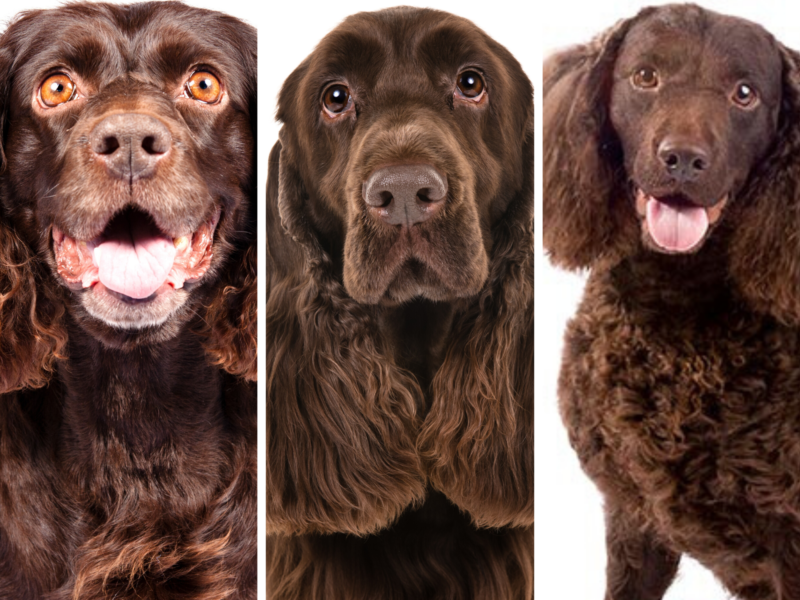
The Architecture of Computer Vision: How AI “Sees” Your Pet
The most common form of the “What Breed is My Dog” quiz is the image-based identification tool. Unlike traditional text-based quizzes, these applications utilize Computer Vision (CV), a field of Artificial Intelligence (AI) that enables computers to derive meaningful information from digital images or videos.
Convolutional Neural Networks (CNNs) in Breed Recognition
At the heart of any high-quality identification app lies a Convolutional Neural Network (CNN). A CNN is a class of deep neural networks most commonly applied to analyzing visual imagery. When a user uploads a photo of their dog, the software doesn’t “see” a pet; it sees a multi-dimensional array of pixel values.
The process begins with “Feature Extraction.” The initial layers of the neural network detect simple patterns, such as edges and textures. As the data moves deeper into the network, these patterns are synthesized into complex structures—ear shapes, snout lengths, tail curls, and coat patterns. For instance, the algorithm can distinguish the brachycephalic (flat-faced) structure of a French Bulldog from the dolichocephalic (long-faced) structure of a Greyhound by calculating the spatial relationship between key facial landmarks.
Overcoming Data Biases and the “Mixed-Breed” Challenge
One of the most significant technical hurdles in breed identification technology is the “mutt” or mixed-breed problem. Purebred identification is relatively straightforward because the training data is highly standardized. However, mixed-breed dogs present a unique challenge for AI because their physical traits—their phenotype—may not clearly reflect their underlying genetic makeup.
To solve this, developers use “Multi-Label Classification” models. Instead of assigning a single breed to an image, the software assigns probability scores across a spectrum of potential breeds. Advanced tech stacks now utilize “Ensemble Learning,” where multiple models run simultaneously to verify results, reducing the margin of error caused by poor lighting, odd angles, or obstructive backgrounds in user-submitted photos.
Bioinformatics and the Backend: The Software Behind DNA Quizzes
While image-based quizzes provide immediate gratification, the more rigorous “What Breed is My Dog” quizzes are those paired with DNA collection kits. These represent a masterpiece of bioinformatics, where software must process millions of genetic markers to determine a dog’s ancestry.
Algorithmic Mapping of Single Nucleotide Polymorphisms (SNPs)
When a laboratory sequences a dog’s DNA, the resulting raw data is massive. The “tech” side of this process involves a software pipeline that analyzes Single Nucleotide Polymorphisms, or SNPs (pronounced “snips”). These are the most common type of genetic variation among individuals of the same species.
Software engineers develop proprietary algorithms that compare the user’s dog’s SNP profile against a massive database of reference samples from known purebred populations. This comparison isn’t done manually; it uses “Maximum Likelihood Estimation” (MLE) and “Hidden Markov Models” (HMM) to determine which combination of breeds most likely produced the specific genetic sequence found in the sample. This is the same level of computational power used in human ancestral research and forensic science.
The Role of Microarray Phenotyping Software
Beyond just identifying the breed, modern pet tech software can predict physical traits. This is known as “Phenotype Prediction.” By analyzing specific genetic markers related to coat color, size, and ear shape, the software can generate a digital profile of what the dog should look like.
For developers, the challenge lies in the “Genotype-to-Phenotype” (G2P) mapping. This requires vast datasets and machine learning models that can account for “Epistasis”—the interaction between different genes where one gene masks or interferes with the expression of another. The tech must be smart enough to understand that a dog might carry the “long-hair” gene but still have short hair due to other regulatory genetic factors.

User Experience and Infrastructure: Building the Modern Interface
The technology is only as good as the user’s ability to interact with it. The modern “What Breed is My Dog” quiz is a masterclass in full-stack development, combining high-speed cloud processing with intuitive mobile interfaces.
Edge Computing and Real-Time Image Processing
To provide a seamless experience, many identification apps are moving toward “Edge Computing.” Instead of sending a high-resolution image to a central server—which consumes bandwidth and time—the initial processing is done locally on the user’s smartphone.
Modern mobile processors (like Apple’s A-series or Qualcomm’s Snapdragon) contain dedicated “Neural Engines” designed specifically for AI tasks. By optimizing the identification model to run on the “edge,” developers can provide real-time feedback. As the user points their camera at the dog, the app can overlay breed probabilities in real-time using Augmented Reality (AR) frameworks, identifying the pet before the shutter is even pressed.
Cloud Scalability and Data Aggregation
While the front-end handles the interaction, the back-end manages the “Big Data.” Every time a user interacts with a breed quiz, they contribute to a massive dataset. Developers use cloud-native architectures (such as AWS or Google Cloud) to manage this influx of data.
Through “Continuous Learning” loops, the software becomes more accurate over time. When a user confirms that the AI correctly identified their Beagle-Harrier mix, that data point is fed back into the training set, refining the weights and biases of the neural network. This creates a self-improving system that grows more intelligent with every “quiz” completed.
The Future of Pet Tech: Predictive Health and Advanced Analytics
As we look forward, the “What Breed is My Dog” quiz is evolving from a novelty tool into a gateway for comprehensive health informatics. The technology is moving away from simple identification and toward “Predictive Analytics.”
Integrating Genetic Data with Preventive Veterinary Medicine
The next generation of identification software will not just tell you that your dog is a Golden Retriever; it will cross-reference that breed data with known genetic predispositions to health issues like hip dysplasia or heart conditions. This requires a complex integration of “Genomic Data Science” and “Electronic Health Records” (EHR).
Developers are currently working on APIs that allow breed identification apps to sync directly with veterinary software. By using “Natural Language Processing” (NLP) to parse veterinary notes and “Predictive Modeling” to assess health risks, the tech becomes a proactive healthcare tool. If an algorithm knows a dog’s breed composition and its current age, it can send automated alerts to owners about specific screening milestones, effectively digitizing the role of a canine health consultant.
The Role of Decentralized Data and Blockchain in Canine Genetics
Data privacy and integrity are becoming paramount as these databases grow. Some tech startups are exploring the use of “Decentralized Identifiers” (DIDs) or blockchain technology to store a dog’s genetic profile. This would allow a pet owner to have a “Digital Passport” for their dog.
In this scenario, the “What Breed is My Dog” quiz becomes the entry point for creating a secure, immutable record of a dog’s lineage and health history. This data could be shared securely with insurers, veterinarians, and breeders, ensuring that the information is accurate and tamper-proof. The intersection of “FinTech” (via blockchain) and “BioTech” (via genetic sequencing) represents the cutting edge of where this niche is headed.

Conclusion: More Than Just a Quiz
The “What Breed is My Dog” quiz serves as a fascinating case study in how consumer-facing software can democratize access to high-level technology. What appears to be a simple interface is, in reality, the tip of a technological iceberg. Beneath the surface lies a complex world of Convolutional Neural Networks, SNP mapping, edge computing, and predictive analytics.
As AI and bioinformatics continue to advance, the precision of these tools will only increase. We are moving toward a future where a single photo or a simple cheek swab, processed through sophisticated software, can unlock a lifetime of insights for pet owners. In the world of tech, the breed quiz is no longer a game—it is a powerful tool in the rapidly expanding ecosystem of digital biology and pet-centric innovation.
aViewFromTheCave is a participant in the Amazon Services LLC Associates Program, an affiliate advertising program designed to provide a means for sites to earn advertising fees by advertising and linking to Amazon.com. Amazon, the Amazon logo, AmazonSupply, and the AmazonSupply logo are trademarks of Amazon.com, Inc. or its affiliates. As an Amazon Associate we earn affiliate commissions from qualifying purchases.