
In the era of fiber optics, 5G, and high-speed streaming, the word “digital” has become synonymous with progress. However, to truly understand the architecture of modern technology, one must look back at the bedrock upon which all communication was built: the analog channel. For decades, analog channels were the primary means of transmitting voice, video, and data across the globe. Even today, as we live in an increasingly digitized world, the fundamental principles of analog signals remain relevant in hardware design, specialized audio, and high-end physics.
An analog channel is, at its core, a communication path that carries information using continuous signals. Unlike digital signals, which represent data in discrete “on” or “off” states (bits), analog signals vary continuously in terms of amplitude, frequency, or phase. Understanding these channels is not just a lesson in tech history; it is a dive into the physics of how information moves through the physical universe.

What Are Analog Channels? Defining the Continuous Waveform
To define an analog channel, one must first understand the nature of the signal it carries. In the physical world, most phenomena are analog. Sound waves, light, and temperature do not jump between fixed values; they flow through an infinite range of possibilities. An analog channel is designed to replicate this natural flow.
The Concept of Continuous Signals
An analog signal is represented by a mathematical function that is continuous in time. If you were to graph an analog signal, it would appear as a smooth, unbroken curve. This is often visualized as a sine wave. In a traditional analog telephone line or a radio broadcast, the electrical voltage or electromagnetic wave fluctuates in direct proportion to the sound or image being transmitted. There are no “gaps” in the data; every nuance of the original source is represented by a corresponding change in the signal’s physical properties.
Frequency and Amplitude: The Language of Analog
Two primary characteristics define how information travels through an analog channel: amplitude and frequency.
- Amplitude refers to the strength or “height” of the wave. In an audio signal, higher amplitude generally correlates to higher volume.
- Frequency refers to how many times the wave oscillates per second, measured in Hertz (Hz). In audio, frequency determines pitch; in radio, it determines the “station” or “channel” being used.
By manipulating these two variables, engineers can encode information into a carrier wave, a process known as modulation. This allows a single physical medium, like a copper wire or the air, to carry distinct streams of information.
Analog vs. Digital: A Critical Comparison
The primary difference between analog and digital channels lies in how they handle “noise.” Because analog signals are continuous, any interference—such as electromagnetic “static” from a nearby power line—becomes part of the signal itself. Once noise is introduced into an analog channel, it is nearly impossible to remove without also degrading the original information.
In contrast, digital channels use discrete levels. As long as a receiver can distinguish between a “1” and a “0,” the signal can be perfectly reconstructed, even if some noise is present. This fundamental difference is why digital channels eventually overtook analog in the consumer tech market: they offer better clarity, higher efficiency, and the ability to compress data.
Key Technologies and Methods of Analog Transmission
The way information is packed into an analog channel is a feat of engineering. Since a raw signal (like a human voice) cannot travel very far on its own, it must be “piggybacked” onto a higher-frequency carrier wave. This process, modulation, defines the various types of analog technology we have used for over a century.
Amplitude Modulation (AM) vs. Frequency Modulation (FM)
The most recognizable forms of analog modulation are AM and FM.
- Amplitude Modulation (AM): In an AM channel, the frequency of the carrier wave remains constant, but the amplitude is varied to match the information signal. AM is effective for long-distance communication because it can bounce off the Earth’s ionosphere, but it is highly susceptible to weather and electrical interference.
- Frequency Modulation (FM): In an FM channel, the amplitude remains constant, but the frequency varies. FM provides much higher fidelity and is less prone to noise, which is why it became the standard for high-quality music broadcasting. However, FM signals have a shorter range and require a “line of sight” between the transmitter and receiver.
Phase Modulation and Complex Waveforms
Beyond AM and FM, phase modulation (PM) is another method where the “phase” or timing of the wave is shifted to encode data. While less common in simple radio, phase modulation is a precursor to the complex modulation schemes used in modern Wi-Fi and LTE. Even though modern systems are digital, the “physical layer” that actually moves through the air is still an analog wave that has been phase-modulated to carry digital bits.
The Role of Bandwidth in Analog Systems
In analog terms, bandwidth refers to the range of frequencies that a channel can carry. For example, a standard analog telephone channel typically has a bandwidth of about 3 kHz (from 300 Hz to 3400 Hz), which is just enough to make human speech intelligible. In contrast, an analog television channel requires a much wider bandwidth—roughly 6 MHz—to carry both the complex video signal and the accompanying audio. The management of this “spectrum” is what allows multiple analog channels to exist simultaneously without overlapping and causing interference.
Common Applications: Where Analog Channels Once Ruled
For the better part of the 20th century, analog channels were the only way to communicate over long distances. From the music we listened to at home to the way we called relatives across the country, analog was the standard.
Terrestrial Broadcasting: Radio and Television
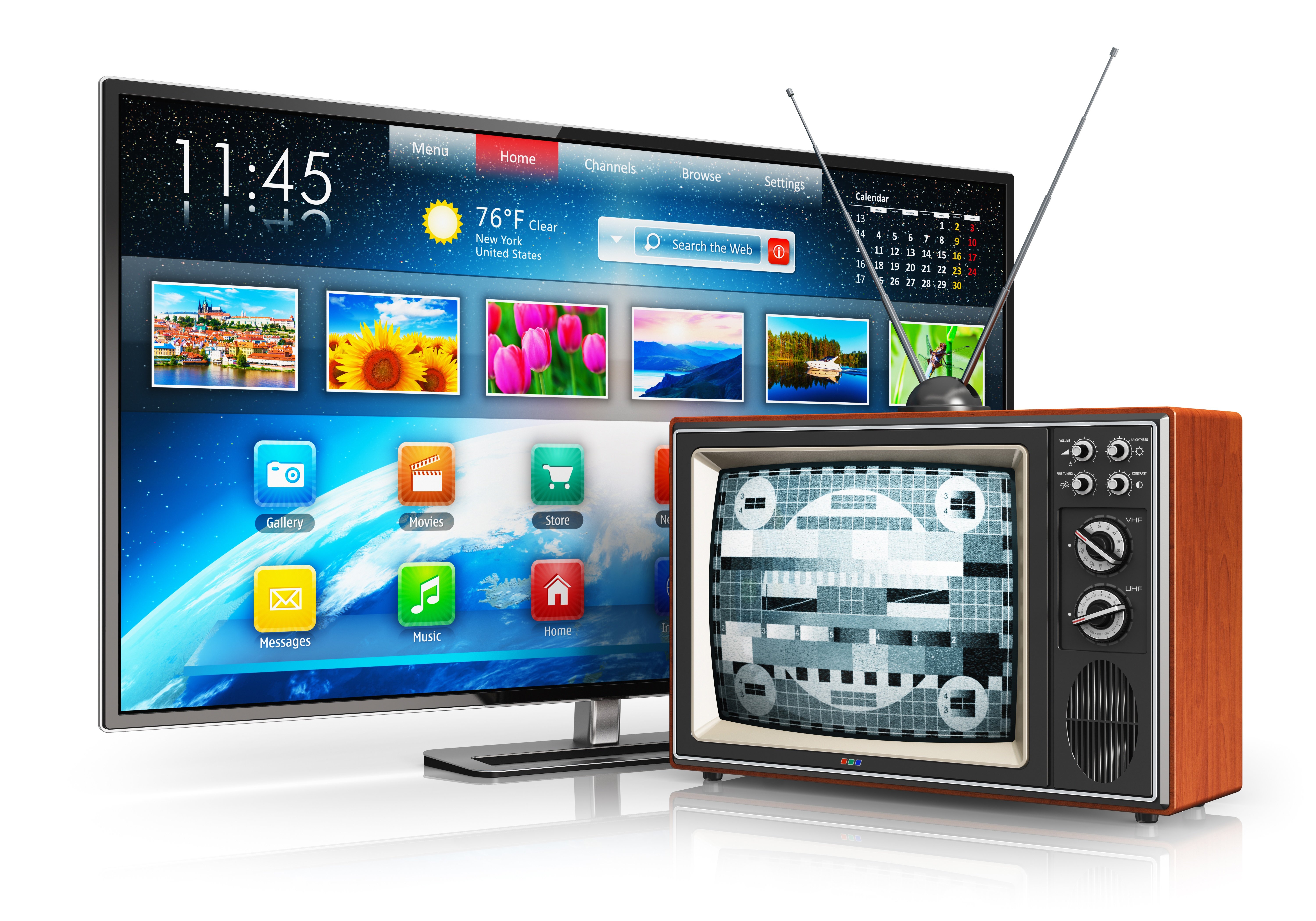
Before the advent of digital TV (ATSC) and streaming services, television was broadcast over-the-air using analog channels. These systems (NTSC in North America, PAL in Europe) used complex analog signals where specific parts of the wave represented the brightness (luminance), color (chrominance), and synchronization of the picture. When you saw “ghosting” or “snow” on an old TV set, you were seeing the physical limitations of an analog channel struggling with signal reflection or low power.
The Plain Old Telephone Service (POTS)
The traditional telephone network was the world’s largest analog machine. When you spoke into a handset, a carbon microphone converted your voice into a varying electrical current. This current traveled over copper wires through various “switching offices” to the recipient. Because it was a dedicated analog channel, the sound was often warm and instantaneous, but the quality dropped significantly over long distances unless expensive repeaters were used to boost the signal.
Analog Audio: Vinyl, Tapes, and High-Fidelity Sound
Vinyl records and cassette tapes are classic examples of analog storage and playback. On a vinyl record, the “channel” is the physical groove. The needle follows the physical undulations of the groove, which are a direct mechanical representation of the sound wave. This “pure” representation is why many audiophiles still prefer analog formats; they believe digital sampling (which chops a wave into tiny pieces) loses the “soul” or “warmth” of the original performance.
Challenges and the Transition to Digital
If analog channels were so effective at replicating natural sound and light, why did the world move to digital? The answer lies in the inherent limitations of physical waves and the need for efficiency.
The Problem of Noise and Signal Degradation
As mentioned previously, analog signals are “fragile.” Every time an analog signal is amplified or recorded, a small amount of noise is added. In the world of analog tape, this was known as “tape hiss.” If you made a copy of a copy, the quality would eventually disappear into a sea of static. Digital technology solved this by using error correction, allowing for perfect copies every time.
Spectral Efficiency and the Digital Dividend
The radio frequency spectrum is a finite resource. Analog channels are “spectrally inefficient,” meaning they take up a lot of space for a relatively small amount of data. One analog TV channel takes up the same amount of space that could hold up to ten high-definition digital channels. By switching to digital, governments were able to reclaim vast amounts of the “airwaves” to be used for mobile data and emergency services—a process known as the “Digital Dividend.”
The Global Digital Switchover
Starting in the late 1990s and accelerating through the 2010s, most countries underwent a “Digital Switchover.” Analog television transmitters were turned off, and the public was required to use digital tuners. While this was a massive logistical challenge, it paved the way for the high-definition and 4K content we enjoy today, which would be impossible to transmit over traditional analog channels.
The Modern Relevance of Analog Technology
It would be a mistake to think that analog channels are extinct. In many high-tech fields, analog is not just a relic; it is a necessity.
Why Audiophiles Still Prefer Analog Systems
In the world of high-end audio, analog is experiencing a massive resurgence. Beyond the nostalgia of vinyl records, many professional recording studios still use analog mixing desks and tube amplifiers. The argument is that analog clipping (when a signal gets too loud) sounds “warm” and “musical,” whereas digital clipping sounds harsh and broken. For these users, the “imperfections” of the analog channel are actually desirable traits.
Analog in Specialized Science and Engineering
In fields like radio astronomy, medical imaging, and high-speed sensor design, analog-to-digital converters (ADCs) are the bottleneck. Before a computer can process data, that data must be captured from the real world via an analog channel. Engineers spend billions of dollars perfecting these analog interfaces to ensure that as much raw information as possible is captured before it is digitized.
The Future: Hybrid Systems and Quantum Analogies
As we push the limits of computing, we are seeing a return to analog concepts in the form of “neuromorphic computing” and certain types of quantum processing. These systems aim to mimic the continuous, parallel nature of the human brain—essentially creating a modern, high-tech version of an analog channel to solve problems that digital computers struggle with.
In conclusion, while we live in a digital age, the analog channel remains the fundamental bridge between the physical world and our digital devices. Whether it’s the raw radio waves traveling from a satellite or the vibration of a speaker in your headphones, technology always begins and ends in analog. Understanding these channels provides a deeper appreciation for the complex systems that keep our modern world connected.
aViewFromTheCave is a participant in the Amazon Services LLC Associates Program, an affiliate advertising program designed to provide a means for sites to earn advertising fees by advertising and linking to Amazon.com. Amazon, the Amazon logo, AmazonSupply, and the AmazonSupply logo are trademarks of Amazon.com, Inc. or its affiliates. As an Amazon Associate we earn affiliate commissions from qualifying purchases.