
For decades, the primary method for distinguishing between a Urinary Tract Infection (UTI) and a Yeast Infection involved a physical visit to a clinic, a wait for laboratory results, and a manual consultation with a healthcare provider. However, as we move deeper into the era of digital transformation, the landscape of personal health is undergoing a radical shift. The convergence of artificial intelligence, high-precision biosensors, and telehealth platforms is revolutionizing how individuals identify and manage these common yet distinct health issues.
Understanding the difference between a UTI and a yeast infection is no longer just a matter of medical literacy; it is increasingly a matter of technical integration. This article explores how the latest innovations in technology are providing users with the tools to differentiate between these conditions from the comfort of their homes, ensuring faster diagnosis and more precise treatment pathways.
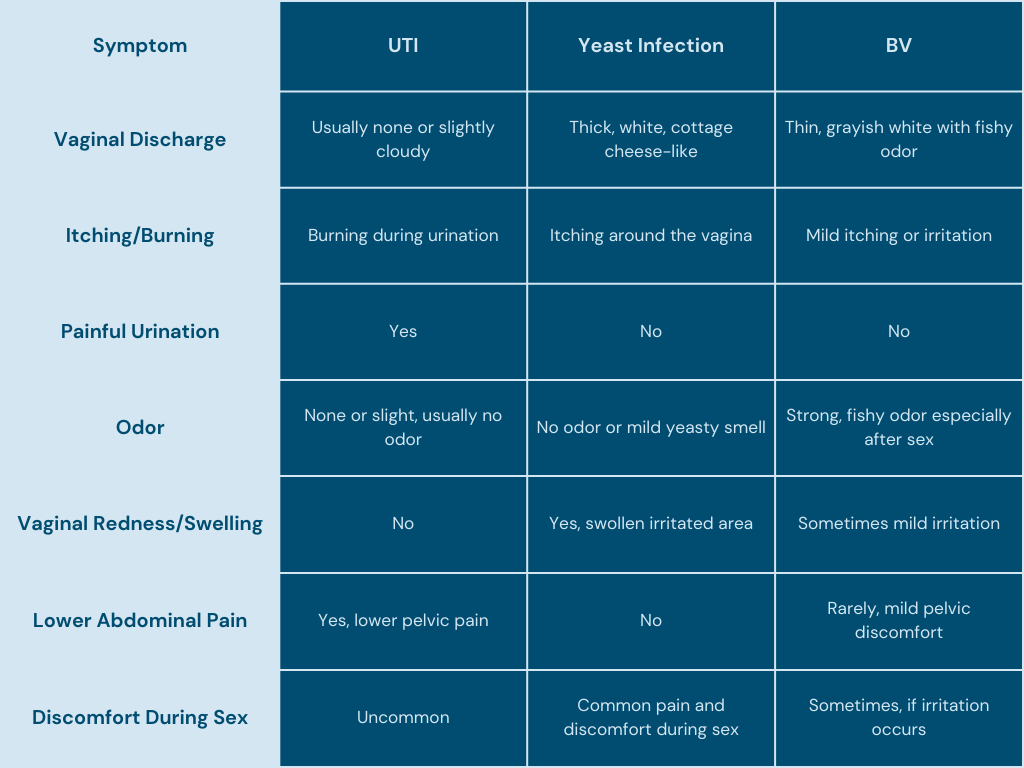
The Rise of FemTech: Navigating Women’s Health in the Digital Age
The term “FemTech” refers to a burgeoning sector of technology focused on hardware, software, and services tailored to women’s biological needs. Within this niche, the distinction between a UTI and a yeast infection has become a focal point for developers aiming to reduce the diagnostic friction that often leads to self-misdiagnosis.
Bridging the Information Gap with AI-Driven Education
One of the greatest challenges in managing personal health is the overlap of symptoms. Both UTIs and yeast infections can cause discomfort, but their biological origins—bacterial vs. fungal—require entirely different treatments. Tech companies are now deploying advanced AI chatbots and natural language processing (NLP) algorithms to guide users through structured symptom-checking flows. These AI interfaces are trained on vast datasets of clinical literature to ask targeted questions: “Is there persistent urgency?” or “Is there a change in discharge consistency?” By processing these inputs, the software can provide a high-probability suggestion of which condition is more likely, bridging the gap between a Google search and a professional diagnosis.
The Role of Health Tracking Apps in Symptom Management
Beyond reactive diagnostics, proactive health tracking apps are becoming essential tools for longitudinal health monitoring. Sophisticated apps like Clue or Flo have expanded their capabilities to allow users to log specific symptoms related to urogenital health. By analyzing data over several months, these apps can use machine learning to identify patterns. For instance, if a user consistently experiences UTI-like symptoms after specific activities or during certain phases of their cycle, the algorithm can flag these trends, providing a data-backed history that can be exported directly to a physician’s electronic health record (EHR) system.
Smart Diagnostics: Home Testing Kits and IoT Integration
Perhaps the most significant leap in distinguishing between a UTI and a yeast infection is the development of smartphone-integrated home testing kits. These devices bring the power of the laboratory to the palm of the hand, utilizing the hardware already present in our pockets.
Urinalysis Meets the Smartphone: Testing for UTIs
The technology behind home UTI testing has evolved far beyond the simple color-changing strip. Modern kits now utilize “Computer Vision” technology. A user performs a standard dipstick test, but instead of trying to match colors to a bottle by eye—a process prone to human error and lighting variations—they use a dedicated app to scan the strip.
The app’s algorithm analyzes the pixels of the scan, adjusting for ambient lighting and shadows to detect the precise levels of leukocytes and nitrites. This digital reading is significantly more accurate than manual interpretation. Some IoT-connected devices even allow this data to be uploaded to a cloud server where it is verified by an automated diagnostic engine, providing a result in minutes that distinguishes a bacterial infection from other types of irritation.
Microbial Identification Tech for Yeast Infections
Distinguishing a yeast infection involves identifying the presence of Candida fungus. While slightly more complex than a UTI test, new Tech startups are developing pH-sensitive digital swabs that interface with mobile devices. These sensors measure the acidity of the environment with high precision. Yeast infections typically do not change the pH balance as drastically as bacterial vaginosis, another common point of confusion. By integrating these sensors with mobile apps, tech platforms provide a multi-factor analysis that helps the user understand whether they are dealing with a fungal overgrowth (yeast) or a bacterial issue (UTI or BV).
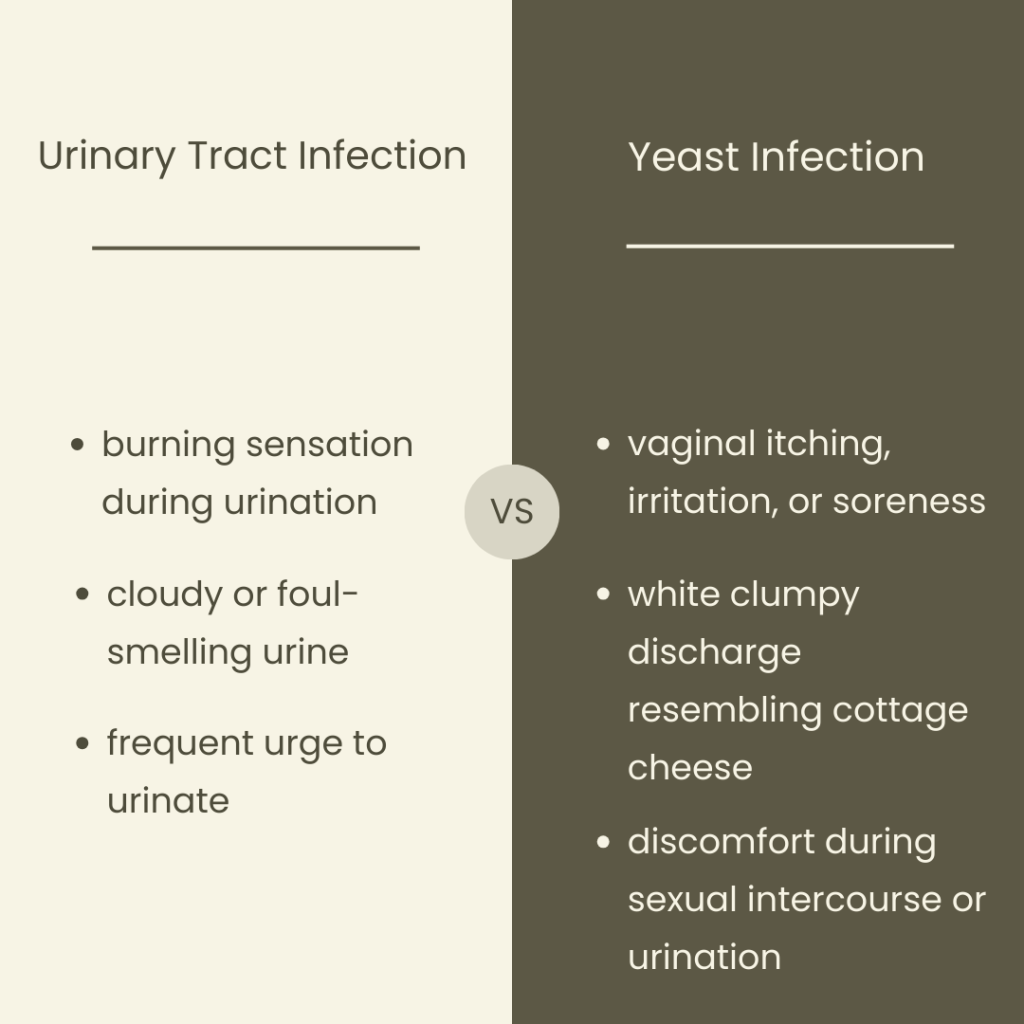
Telemedicine and AI Triage: Reducing the Diagnostic Friction
The infrastructure of healthcare is shifting toward a “digital-first” model. Telemedicine has become the connective tissue that allows technology to move from “information gathering” to “clinical action.”
Virtual Consultations: Speeding Up the Time-to-Treatment
In the past, the confusion between a UTI and a yeast infection often led to the wrong over-the-counter (OTC) treatment being purchased, which can exacerbate the actual issue. Telehealth platforms like Teladoc or specialized services like Maven Clinic utilize high-definition video conferencing and integrated chat to allow providers to visually and verbally triage patients. Because these platforms are built on robust cloud architectures, they can integrate the data from the previously mentioned smart-testing kits. A doctor can view a patient’s digital urinalysis results in real-time during the video call, making a definitive diagnosis and sending a digital prescription to a pharmacy instantly.
Algorithmic Symptom Checkers: Precision vs. Generalization
We are seeing a move away from “one-size-fits-all” symptom checkers toward specialized algorithmic triage. These tools are designed to filter patients into the correct care bucket. For example, if the algorithm detects “red flag” symptoms such as back pain or fever—which might indicate that a UTI has progressed to a kidney infection—it can bypass standard advice and trigger an emergency alert or a priority connection to a nurse practitioner. This technical “sorting” ensures that resources are allocated efficiently and that the distinction between a minor yeast infection and a potentially serious UTI is made with clinical precision.
Data Security and Privacy in Personal Health Tech
As we rely more on technology to manage sensitive health issues, the technical hurdles of data security and digital privacy become paramount. The information required to distinguish between a UTI and a yeast infection is deeply personal, and protecting this “Bio-Data” is a significant focus of the current tech industry.
Protecting Sensitive Bio-Data
Any app or device handling diagnostic information must comply with rigorous standards such as HIPAA (Health Insurance Portability and Accountability Act) in the US or GDPR (General Data Protection Regulation) in Europe. The tech stacks for these health apps now frequently include end-to-end encryption and decentralized data storage. By using “Zero-Knowledge” architectures, companies ensure that even if their servers are breached, the specific health data of an individual remains unreadable. This security is vital for gaining the consumer trust necessary for widespread adoption of home-diagnostic tech.
The Ethical Implications of Health Data Monetization
The tech industry is currently grappling with the ethics of health data. While the data collected from thousands of UTI vs. yeast infection tests can be incredibly valuable for medical research and the training of AI models, the “anonymization” of this data is a complex technical task. Leading tech firms are now employing “Differential Privacy” techniques—adding mathematical “noise” to datasets so that researchers can see the overall trends (e.g., a regional spike in UTIs) without being able to identify any individual user.

The Future of Health-Tech: Predictive Analytics and Personalized Wellness
The ultimate goal of using technology to distinguish between these two conditions is to move from reactive treatment to predictive prevention.
In the near future, we can expect “Wearable Biosensors” that monitor the body’s chemistry in real-time. Much like a continuous glucose monitor (CGM) helps diabetics manage their sugar, future wearables may be able to detect shifts in the microbiome or urinary markers before symptoms even appear. Using predictive analytics, a smartwatch could theoretically alert a user: “Your hydration and nitrate levels suggest a high risk of UTI in the next 24 hours. Increase water intake and schedule a preventative check-in.”
By leveraging the power of the cloud, AI, and miniaturized hardware, the tech industry is not just helping us tell the difference between a UTI and a yeast infection—it is empowering us to understand the underlying language of our own biology. This digital evolution promises a future where health management is seamless, data-driven, and, most importantly, accurately tailored to the individual.
aViewFromTheCave is a participant in the Amazon Services LLC Associates Program, an affiliate advertising program designed to provide a means for sites to earn advertising fees by advertising and linking to Amazon.com. Amazon, the Amazon logo, AmazonSupply, and the AmazonSupply logo are trademarks of Amazon.com, Inc. or its affiliates. As an Amazon Associate we earn affiliate commissions from qualifying purchases.