
The “What The” concept in Nike’s design language has long been more than just a aesthetic choice; it is a disruptive branding strategy that defies the traditional laws of symmetry and uniform design. With the recent release of the “What The Duck” Nike Dunk Low—a collaboration involving the University of Oregon, Division Street, and the GOAT platform—the brand has once again demonstrated how to leverage its deep-rooted history to create a cultural flashpoint.
To the uninitiated, the “What The Duck” sneaker looks like a chaotic explosion of colors, textures, and patterns. However, to a brand strategist, it represents a calculated effort to reinforce the identity of “The University of Nike” and the Oregon Ducks. This article explores the strategic nuances of the “What The Duck” campaign, deconstructing how Nike uses visual storytelling, localized scarcity, and historical reverence to maintain its position as the world’s most dominant sportswear identity.

1. The Anatomy of Mashup Marketing: The “What The” Legacy
The “What The” series did not begin with the Oregon Ducks. It started as a daring experiment in the mid-2000s that challenged the way consumers perceived product consistency. By understanding the origins of this design philosophy, we can see how Nike transformed a potential branding risk into a coveted signature style.
The Origins of the Disruptive Aesthetic
In 2007, Nike SB designer James Arizumi created the “What The Dunk.” It was a Frankenstein-like creation that combined elements from 31 different Dunk designs. At the time, the idea of a “mismatched” pair of shoes was nearly unheard of in the mainstream market. From a brand perspective, this was a high-stakes gamble. Brands usually prioritize consistency to ensure instant recognition. By intentionally breaking its own visual rules, Nike signaled that its brand was confident enough to mock its own ubiquity.
The Oregon Ducks Connection: Phil Knight’s Strategic Heritage
The University of Oregon is the spiritual home of Nike. It is where co-founder Phil Knight ran track and where legendary coach Bill Bowerman tinkered with the first waffle irons. The “What The Duck” release isn’t just another colorway; it is a celebration of this “birthplace” narrative. In branding, heritage is a powerful tool for differentiation. By constantly referencing the Ducks, Nike reminds the market that its innovation is rooted in authentic athletic performance and a specific geographic soul, something newer competitors like On Running or Hoka cannot easily replicate.
2. Building Scarcity and Cult Status through “Division Street”
A brand’s value is often determined by its accessibility—or lack thereof. Nike has mastered the art of the “hype cycle,” and the “What The Duck” release serves as a primary case study in how to manage brand equity through controlled distribution.
The Role of Division Street and NIL Branding
The “What The Duck” project was spearheaded by Division Street, a venture founded by Phil Knight and other Oregon supporters to help student-athletes navigate the Name, Image, and Likeness (NIL) landscape. This adds a layer of “social branding” to the product. It isn’t just a corporate product; it’s a community-driven initiative. For Nike, aligning with Division Street allows the brand to remain “cool” and “authentic” in the eyes of younger consumers who are increasingly skeptical of large, faceless corporations.
Exclusivity as a Brand Driver
By launching the “What The Duck” through limited channels like the GOAT platform and Flight Club, Nike ensures that the product remains a “grail” for collectors. In brand strategy, this is known as the “Halo Effect.” While the average consumer may never own a pair of “What The Duck” Dunks, the buzz surrounding the release elevates the desirability of the entire Dunk product line. It creates a narrative of prestige that trickles down to the more accessible, mass-market models found in big-box retailers.
3. Visual Storytelling: Every Stitch a Story
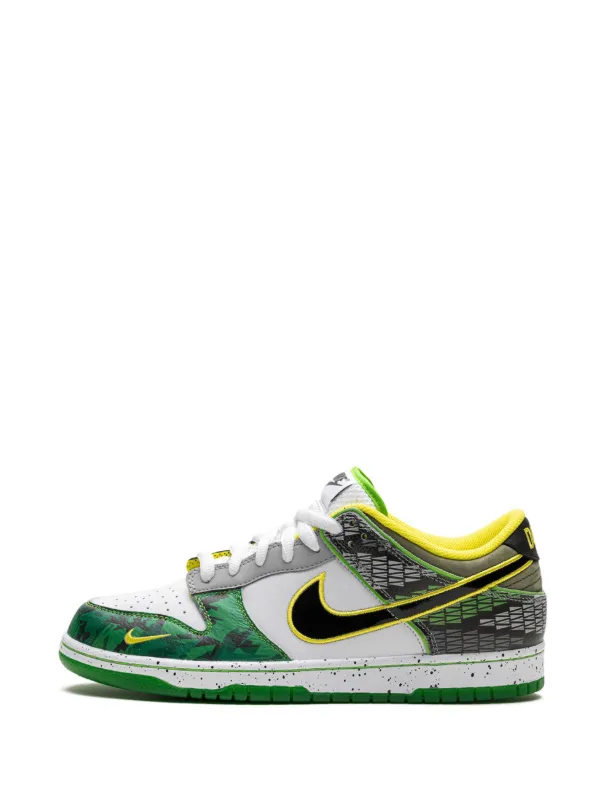
In a crowded marketplace, brands must communicate their values and history quickly. The “What The Duck” Dunk Low accomplishes this through an intricate web of visual cues that act as a “secret handshake” for fans of the Oregon Ducks and Nike history.
Deconstructing the “What The Duck” Aesthetics
The “Home” and “Away” versions of the shoe are a visual anthology of the Ducks’ uniform history. Oregon is famous for having an almost infinite rotation of uniforms—a strategy Nike pioneered in the 1990s to keep the program relevant. The sneaker features carbon fiber textures, neon yellows, forest greens, and various “duck” motifs. For the brand, this is a way to compress decades of innovation into a single, wearable object. It turns the consumer into a walking billboard for the brand’s history of innovation.
Bridging the Gap Between Performance and Lifestyle
The Dunk was originally a basketball shoe in the 1980s, then a skateboarding staple in the 2000s, and now a lifestyle icon. The “What The Duck” iteration effectively bridges these worlds. It honors the “performance” aspect of the Oregon athletic department while catering to the “lifestyle” aesthetic of modern streetwear. This versatility is a core strength of Nike’s brand architecture; they are one of the few brands capable of being taken seriously on both an Olympic track and a Paris fashion runway.
4. The Impact of “What The Duck” on Modern Brand Identity
As Nike faces increasing competition and shifting consumer tastes, projects like “What The Duck” are essential for maintaining brand “heat.” This section examines how this specific campaign helps Nike navigate the complexities of modern retail.
Leveraging Nostalgia to Secure the Future
Nostalgia is a powerful emotional hook in marketing. By referencing old uniform patterns and past sneaker releases, Nike taps into the “good old days” for older collectors while introducing those same stories to Gen Z. This creates a multi-generational brand loyalty. The “What The Duck” campaign is a reminder that Nike doesn’t just sell shoes; it sells a continuous, evolving story that the consumer is invited to join.
Competitive Edge: Why Competitors Can’t Replicate the Magic
Many brands have tried to copy the “What The” mashup style, but few succeed. This is because the mashup only works if the brand has a deep enough archive to pull from. If a new brand tried this, the result would look like a random collection of colors. Nike’s success with the “What The Duck” comes from the fact that every single panel on the shoe has a historical antecedent. It is an exercise in “Brand Authority”—proving that you have been around long enough and have done enough significant work to be able to remix yourself.
5. Strategic Lessons for Brand Developers
The “What The Duck” Nike release offers several high-level takeaways for anyone involved in brand strategy, personal branding, or corporate identity.
Embracing Chaos: The Boldness of Asymmetrical Design
In a world of minimalist “bland-ing,” where many corporate logos and products are starting to look the same, Nike’s willingness to embrace chaos is a lesson in differentiation. Sometimes, the best way to stand out is to be intentionally “too much.” For brand strategists, the lesson is clear: don’t be afraid to break your own visual standards if it serves a larger narrative or honors a specific community.
Community Integration: The Power of Authentic Partnerships
The “What The Duck” wasn’t just a Nike corporate memo. It involved the University of Oregon, local athletes, and specialized resale platforms. This multi-layered approach to partnership makes the brand feel more like an ecosystem and less like a vendor. When a brand integrates itself so deeply into a subculture—in this case, college sports and sneakerhead culture—it becomes “uncancellable” because it is an essential part of that community’s identity.

Consistency in Philosophy, Variation in Execution
While the “What The Duck” is visually inconsistent, it is philosophically consistent with Nike’s “Just Do It” and “Innovation for Athletes” mantras. This is the ultimate goal of brand management: to have a core identity so strong that you can change the exterior appearance of your products entirely without losing your brand soul.
The “What The Duck” Nike Dunk is more than a sneaker; it is a sophisticated piece of brand collateral. It proves that by honoring your roots, embracing scarcity, and telling a complex visual story, a brand can turn a simple pair of shoes into a historical document. As Nike continues to evolve, the “What The” series will likely remain a cornerstone of its strategy—a reminder that in the world of branding, sometimes the best way to move forward is to look back at everything you’ve ever been and mash it all together into something new.
aViewFromTheCave is a participant in the Amazon Services LLC Associates Program, an affiliate advertising program designed to provide a means for sites to earn advertising fees by advertising and linking to Amazon.com. Amazon, the Amazon logo, AmazonSupply, and the AmazonSupply logo are trademarks of Amazon.com, Inc. or its affiliates. As an Amazon Associate we earn affiliate commissions from qualifying purchases.