
In the realm of financial literacy, few mathematical concepts are as foundational or as frequently utilized as the percentage. Whether you are calculating the interest on a high-yield savings account, determining the impact of inflation on your purchasing power, or analyzing the performance of a stock portfolio, understanding how to find a number percentage is a critical skill. At its core, a percentage is a way to express a number as a fraction of 100, providing a universal language for comparison and growth analysis in the world of money.

Mastering these calculations allows individuals to move beyond surface-level numbers and gain a deeper insight into their fiscal health. This guide explores the mechanics of percentage calculations through the lens of personal finance, investing, and business management, ensuring you have the tools to make informed economic decisions.
The Fundamentals of Percentage in Financial Management
Before diving into complex investment scenarios, one must first grasp the basic arithmetic that governs all financial percentages. In the context of money, percentages represent a portion of a whole—be it a portion of your income, a portion of a loan, or a portion of a market.
Understanding the Basic Formula
The most basic way to find a number percentage involves a simple three-step process: division, multiplication, and labeling. The formula is:
(Part / Whole) × 100 = Percentage
For example, if you save $500 out of a $4,000 monthly paycheck, you divide 500 by 4,000 to get 0.125. Multiplying by 100 gives you 12.5%. This figure tells you that your savings rate is 12.5% of your total income. Understanding this ratio is the first step in auditing your financial habits.
Why Decimals and Fractions Matter in Money
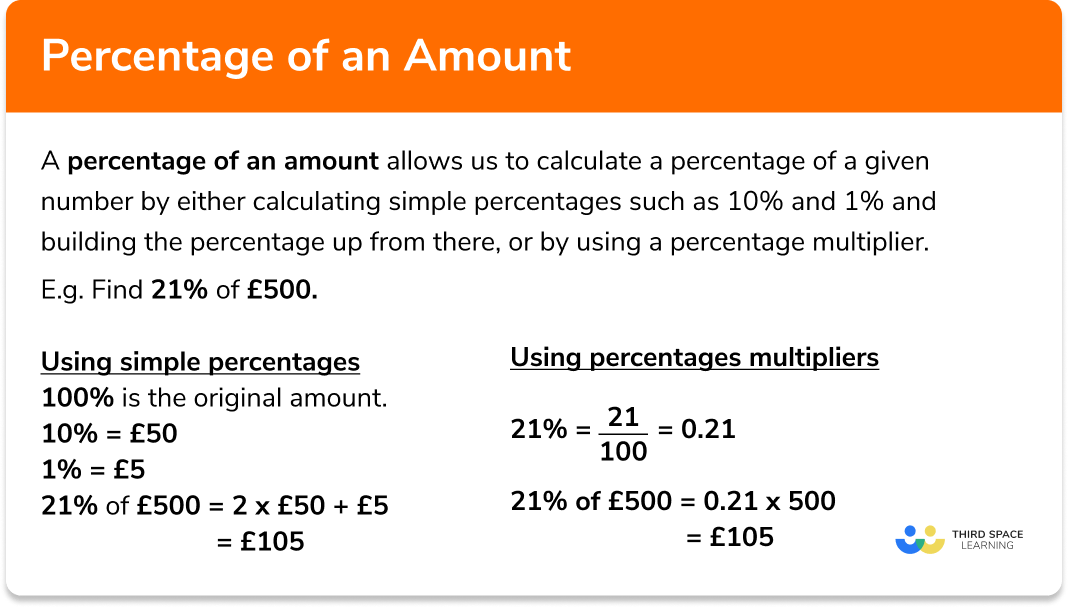
In professional finance, percentages are often converted into decimals to simplify multi-step calculations. To convert a percentage to a decimal, you move the decimal point two places to the left (e.g., 5% becomes 0.05). This is particularly useful when calculating “percent of” a number. If you need to find 7% of a $1,200 investment dividend, you simply multiply 1,200 by 0.07.
Recognizing the relationship between fractions (1/4), decimals (0.25), and percentages (25%) is essential for reading financial statements. Most institutional reports switch between these formats fluently; being able to mentally bridge the gap ensures you are never misled by how data is presented.
Calculating Percentages in Personal Finance
In everyday life, percentages are the primary tool used to measure progress and set boundaries. From the taxes we pay to the discounts we receive at the grocery store, percentages dictate the flow of our liquid assets.
Mastering the Art of Budgeting (The 50/30/20 Rule)
One of the most popular financial frameworks is the 50/30/20 rule, which relies entirely on percentage-based allocation. This rule suggests that 50% of your after-tax income should go toward “Needs,” 30% toward “Wants,” and 20% toward “Savings and Debt Repayment.”
To implement this, you must first calculate your net income. If your take-home pay is $5,000, finding the number percentage involves multiplying 5,000 by 0.50 ($2,500 for needs), 0.30 ($1,500 for wants), and 0.20 ($1,000 for savings). By viewing your budget through percentages rather than fixed dollar amounts, your lifestyle can scale proportionally as your income grows or shrinks.
Interest Rates: Simple vs. Compound Growth
When you borrow money or deposit it into a bank, the cost or gain is expressed as an Annual Percentage Rate (APR) or Annual Percentage Yield (APY).
- Simple Interest: This is calculated only on the principal amount. If you borrow $1,000 at a 5% simple interest rate for one year, the percentage is found by multiplying 1,000 by 0.05, resulting in $50 of interest.
- Compound Interest: This is where the true power of money lies. It is interest calculated on the initial principal, which also includes all of the accumulated interest from previous periods. Understanding how a percentage adds to the “whole” every month or year is the secret to long-term wealth accumulation. Even a small 1% difference in a compound interest rate can lead to hundreds of thousands of dollars in difference over a 30-year investment horizon.
Calculating Sales Tax and Discounts
While seemingly minor, the ability to calculate percentages on the fly helps in consumer decision-making. If a product is listed at $80 with a 15% discount, you find the percentage by multiplying 80 by 0.15 to get $12, then subtracting that from the original price. Conversely, adding a 10% sales tax involves finding 10% of the price and adding it to the total. Proactively calculating these ensures that “hidden” costs do not derail your monthly spending plan.
Percentages in the World of Investing and Asset Allocation
For the sophisticated investor, percentages are used to measure risk, reward, and the balance of a portfolio. A “gain of $1,000” means very little without the context of the percentage relative to the initial capital.
Determining Return on Investment (ROI)
The most vital metric for any investor is the Return on Investment (ROI). This percentage tells you how efficiently your capital is working for you. The formula is:
[(Current Value – Initial Cost) / Initial Cost] × 100
If you bought a stock for $2,000 and sold it for $2,500, your profit is $500. To find the percentage gain, divide 500 by the original 2,000 to get 0.25, or 25%. In the world of money, comparing a 25% return on a stock to a 4% return on a bond allows for an objective assessment of where your money is best utilized, regardless of the raw dollar amounts involved.
Portfolio Diversification and Percentage Weighting
Modern Portfolio Theory emphasizes that you should not put all your eggs in one basket. Investors use percentages to “weight” their portfolios. For instance, a conservative investor might aim for a 60/40 split—60% in stocks and 40% in bonds.
If the stock market performs exceptionally well, your portfolio might shift to 70% stocks and 30% bonds. To “rebalance,” you must calculate the current total value of your portfolio and find what 60% of that new total should be. This requires finding the number percentage of your total assets to determine how much of a specific asset you need to sell or buy to return to your target risk level.
Understanding Dividend Yields and Expense Ratios
When evaluating Dividend Stocks or Exchange-Traded Funds (ETFs), percentages are used to denote costs and payouts.
- Dividend Yield: This is the annual dividend payment divided by the stock’s current price. A 4% yield means for every $100 you invest, you receive $4 back annually in dividends.
- Expense Ratios: In mutual funds, this is the percentage of your investment taken by the fund managers as a fee. While 1% might seem small, finding that percentage of a $100,000 portfolio reveals a $1,000 annual cost, which compounds over time and significantly reduces long-term wealth.
Business Finance: Utilizing Percentages for Growth Analysis
For entrepreneurs and business professionals, percentages are the pulse of the company. They indicate whether a business is sustainable, scalable, or in danger of insolvency.
Profit Margins: Gross vs. Net
Total revenue is a “vanity metric”; the percentage of that revenue that remains as profit is what truly matters.
- Gross Profit Margin: This is calculated by subtracting the Cost of Goods Sold (COGS) from total revenue, then dividing that by total revenue. A 40% gross margin means that for every dollar earned, 40 cents remain after paying for the direct costs of the product.
- Net Profit Margin: This is the “bottom line” percentage. It takes all expenses into account (rent, taxes, interest). Finding this percentage allows a business owner to see how much of their total sales actually turns into take-home income.
Year-Over-Year (YoY) Growth Calculations
To understand if a business or an investment is growing, we look at the percentage change over time. The formula for percentage increase is:
[(New Value – Old Value) / Old Value] × 100
If a side hustle earned $10,000 last year and $15,000 this year, the raw increase is $5,000. However, the percentage growth is 50%. This percentage is a much more powerful indicator of momentum than the dollar amount alone, especially when comparing businesses of different sizes.
Debt-to-Income Ratios for Business Scaling
When a business seeks a loan, lenders look at the Debt-to-Income (DTI) ratio. This is the percentage of gross monthly income that goes toward paying debts. Generally, a DTI below 36% is considered healthy. To find this number, you divide total monthly debt payments by total monthly gross income. Understanding this percentage is crucial before attempting to leverage debt for business expansion, as it determines your creditworthiness and financial stability.

Conclusion: The Power of Percentage in Long-Term Wealth
The ability to find a number percentage is more than just a mathematical exercise; it is a fundamental pillar of financial mastery. By translating raw data into percentages, you gain a clear, comparative view of your financial world. It allows you to strip away the distractions of large numbers and focus on the ratios that drive growth, efficiency, and security.
Whether you are optimizing your monthly budget, rebalancing a retirement portfolio, or calculating the margins of a burgeoning business, the percentage remains your most reliable metric. In the complex landscape of money, where values are constantly fluctuating, the percentage provides the one thing every investor and earner needs: perspective. By consistently applying these calculations, you empower yourself to navigate the world of finance with precision, confidence, and foresight.
aViewFromTheCave is a participant in the Amazon Services LLC Associates Program, an affiliate advertising program designed to provide a means for sites to earn advertising fees by advertising and linking to Amazon.com. Amazon, the Amazon logo, AmazonSupply, and the AmazonSupply logo are trademarks of Amazon.com, Inc. or its affiliates. As an Amazon Associate we earn affiliate commissions from qualifying purchases.