
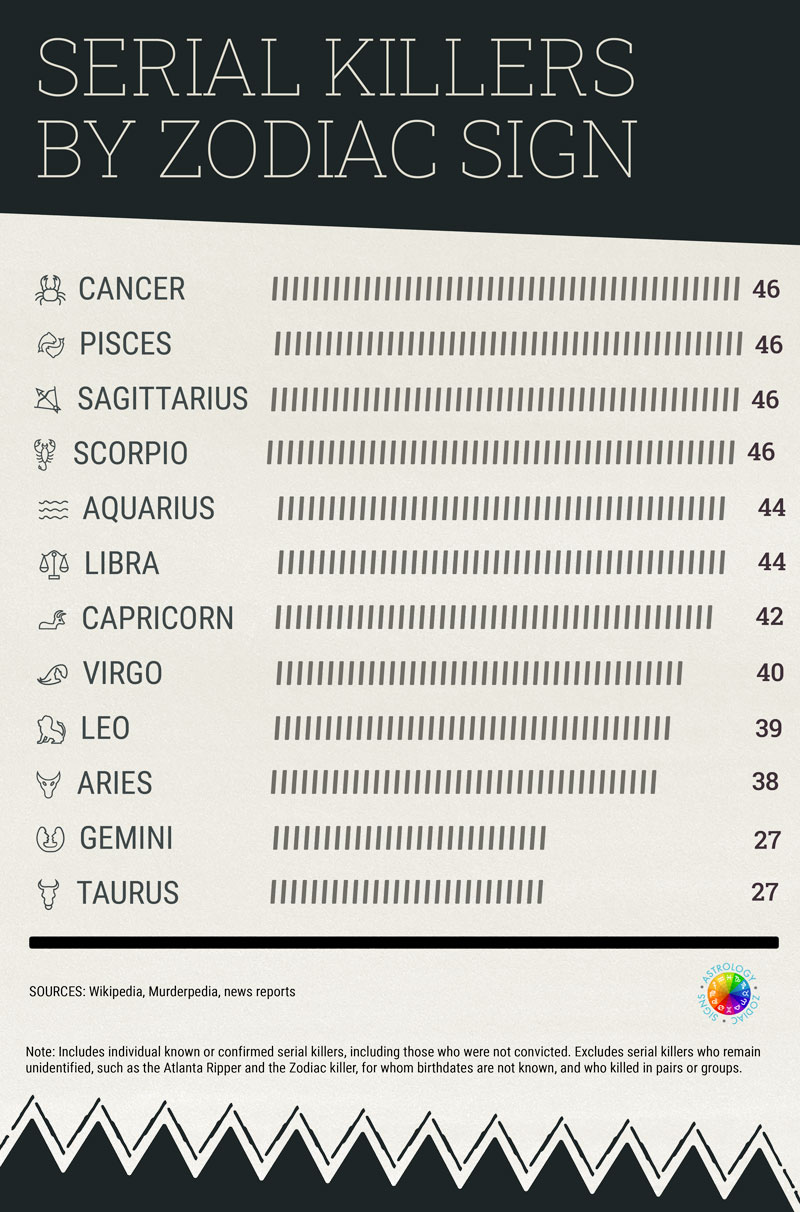
For decades, tabloid headlines and armchair detectives have obsessed over a peculiar question: Is there a specific month that produces more serial killers than others? While pop psychology often points toward November and the zodiac sign of Scorpio, modern technology and high-level data analytics are beginning to paint a much more complex picture. In the age of Big Data, we no longer have to rely on anecdotal evidence or superstitious correlations. Instead, forensic technologists and data scientists are using advanced algorithmic models to determine if birth months—and the environmental factors associated with them—actually play a role in the development of violent criminal behavior.
Beyond Astrology: The Role of Big Data in Forensic Profiling
The transition from manual police filing systems to centralized digital databases has revolutionized our understanding of criminal demographics. In the past, identifying patterns among disparate crimes was a monumental task that required years of cross-referencing paper files. Today, the integration of technology into criminology allows researchers to analyze thousands of cases simultaneously to find statistical significance where once there was only speculation.
From Manual Files to Algorithmic Databases
The foundational shift began with the development of systems like the Serial Killer Database (SKD), a collaborative effort between academic institutions like Radford University and Florida Gulf Coast University. This digital repository contains detailed information on over 5,000 serial killers. By digitizing variables such as birth dates, locations, and methods of operation, technology has allowed researchers to move beyond the “hunch” and toward empirical evidence. These databases allow for the application of “R” and Python-based statistical models to filter through noise and identify true clusters of data.
The ViCAP System and Pattern Recognition
The FBI’s Violent Criminal Apprehension Program (ViCAP) serves as a prime example of how digital infrastructure supports behavioral analysis. While ViCAP is primarily used for linking unsolved homicides, the metadata collected—including the offender’s biological information—provides a massive dataset for longitudinal studies. When technologists run queries on these datasets regarding birth months, they aren’t looking for astrological signs; they are looking for “seasonal birth effects,” a phenomenon well-documented in medical tech and sociology that examines how climate, vitamin D exposure, and seasonal viruses affect fetal development.
Statistical Anomalies or Coincidence? What the Data Actually Shows
When we apply rigorous data analysis to the question of birth months, the results often clash with viral internet myths. The “November” theory gained traction because several high-profile killers, such as Ted Bundy and Charles Manson, were born in that month. However, a deep dive into the numbers reveals that a “cluster” in a small sample size does not necessarily equate to a trend in a global dataset.
Investigating the “November” Theory
Data scientists often use Chi-square tests to determine if the distribution of serial killer births across the twelve months is significantly different from what would be expected by chance. In many large-scale digital analyses of serial killer registries, researchers have found that while there are minor peaks in certain months—often November and May—these peaks frequently fall within the margin of error. From a data perspective, if you analyze a group of 100 people, it is statistically likely that one month will have a higher frequency than others purely by coincidence.
The Correlation vs. Causation Trap in Data Analysis
A major challenge in digital forensics is the “Correlation vs. Causation” trap. Technology allows us to find correlations with incredible speed, but it requires human insight to interpret them. For instance, if data shows a slight uptick in violent offenders born in late autumn, a data scientist might look at the “Relative Age Effect” or seasonal affective disorders in the mother during pregnancy rather than the alignment of the stars. Modern tech tools enable us to overlay birth month data with socioeconomic maps, nutritional data from specific decades, and even lead exposure levels to see if the birth month is simply a proxy for a different environmental variable.

The Evolution of Predictive Modeling in Criminology
As we move further into the 21st century, the focus of technology has shifted from analyzing past serial killers to developing predictive models that can identify high-risk behaviors before they escalate. This is where Artificial Intelligence (AI) and Machine Learning (ML) become the primary tools for investigators.
Machine Learning and Behavioral Forecasting
Machine learning algorithms are now being trained on the life histories of known offenders to create “risk profiles.” These models analyze hundreds of data points, including childhood trauma, early contact with the justice system, and psychological evaluations. While birth month is occasionally included as a data point in these broader sets, it is rarely a weighted variable. AI systems prioritize “dynamic risk factors”—behaviors that can change, such as substance abuse or social isolation—over “static risk factors” like birth date. The power of this tech lies in its ability to see multi-dimensional relationships that a human profiler might miss.
Natural Language Processing in Criminal Communications
Another frontier in the tech-driven study of deviance is Natural Language Processing (NLP). By analyzing the digital footprints, manifestos, and communications of violent offenders, NLP tools can identify linguistic patterns associated with certain personality disorders. This technology allows researchers to look at the “why” behind the crime. If a specific birth month were truly influential, NLP would likely detect consistent cognitive biases or linguistic styles unique to those born in that window. To date, the data suggests that environmental upbringing and neurological development are far more influential than the time of year a person was born.
Ethics and Privacy in the Age of Algorithmic Policing
While the use of technology to analyze and predict criminal behavior offers exciting possibilities for public safety, it also raises significant ethical concerns. The move toward “predictive policing” and algorithmic profiling must be handled with extreme caution to avoid the pitfalls of digital determinism.
The Danger of Digital Profiling
One of the primary risks of using data to link birth months or other biological traits to criminality is the potential for bias. If an algorithm begins to “flag” individuals based on arbitrary traits—such as being born in a certain month or living in a specific zip code—it can lead to a feedback loop of over-policing. This is known as “algorithmic bias.” In the context of our original question, if society were to take the “November killer” myth seriously and program it into a risk-assessment tool, the tech would disproportionately target innocent people born in November, creating a self-fulfilling prophecy of surveillance.
Ensuring Transparency in Forensic Tech
To combat these risks, the tech community is pushing for “Explainable AI” (XAI). In forensic applications, it isn’t enough for a computer to say someone is “high risk”; the software must be able to show exactly which variables led to that conclusion. By maintaining transparency in how databases are used and how birth data is analyzed, we ensure that the technology remains a tool for objective science rather than a digital version of phrenology or astrology.

Conclusion: Data vs. Destiny
In summary, while the question of “what month are most serial killers born” makes for a compelling mystery, the technological reality is far less sensational. Through the use of Big Data, statistical modeling, and AI, we have learned that there is no “killer month.” Criminal behavior is the result of a complex interplay of genetics, environment, and neurobiology—factors that technology is helping us map with increasing precision.
Modern data science has largely debunked the idea that the calendar holds the key to a person’s propensity for violence. Instead, technology has directed our attention toward more meaningful metrics: childhood intervention data, neurological imaging, and socioeconomic support systems. As we continue to refine our digital tools, we move closer to a future where we don’t just categorize killers by their birth dates, but where we use predictive technology to understand the roots of violence and prevent it before it begins. The data shows that we are not defined by the month we are born, but by the digital and physical world we inhabit.
aViewFromTheCave is a participant in the Amazon Services LLC Associates Program, an affiliate advertising program designed to provide a means for sites to earn advertising fees by advertising and linking to Amazon.com. Amazon, the Amazon logo, AmazonSupply, and the AmazonSupply logo are trademarks of Amazon.com, Inc. or its affiliates. As an Amazon Associate we earn affiliate commissions from qualifying purchases.