
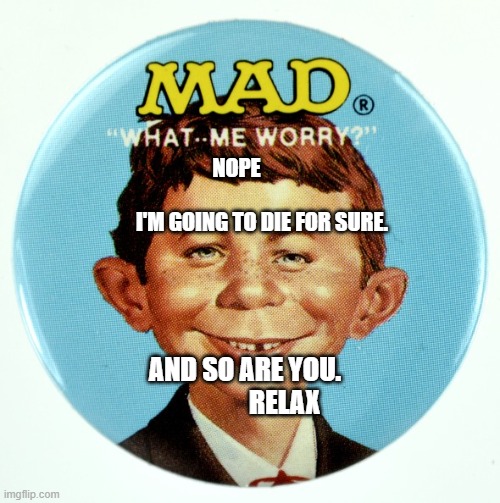
In the fast-paced, often high-stakes world of digital marketing, the ability to communicate a complex emotional state in a fraction of a second is a superpower. Among the pantheon of digital artifacts used to achieve this, few carry as much historical weight and instantly recognizable subtext as the “What, Me Worry?” GIF. Featuring the iconic, gap-toothed mascot of MAD Magazine, Alfred E. Neuman, this visual shorthand has transcended its print origins to become a staple of digital brand communication.
For brand strategists, the “What Me Worry” GIF represents more than just a nostalgic reference; it is a tool for navigating the “Jester” archetype, managing brand persona during volatile market shifts, and establishing a rapport with an audience that prizes authenticity and irony over polished corporate messaging.

1. The Iconography of Nonchalance: From MAD Magazine to Digital Brand Assets
To understand why a simple GIF of a fictional boy from the 1950s remains relevant to a 21st-century brand, one must first understand the brand equity of Alfred E. Neuman. For decades, Neuman served as the face of American satire, embodying a specific type of defiant optimism in the face of political and social upheaval.
The Evolution of the Archetype
Alfred E. Neuman is the quintessential “Jester.” In the framework of brand archetypes, the Jester lives to enjoy the moment and lighten up the world. When a brand uses a “What Me Worry” GIF, they are tapping into a century of cultural conditioning that associates this face with a refusal to be intimidated by authority or chaos. This evolution from a static magazine cover to a looping digital file allows brands to adopt a posture of “confident indifference.”
Why Nostalgia Scales in Digital Marketing
The use of 20th-century icons in modern branding creates a “bridge of trust.” For Gen X and Millennial decision-makers, the “What Me Worry” GIF triggers a sense of familiarity. In a digital landscape cluttered with AI-generated imagery and hyper-real photography, the hand-drawn, slightly grotesque charm of Alfred E. Neuman stands out as authentic. Brands that leverage this nostalgia effectively can bypass the initial skepticism that often greets traditional advertising.
Decoding the Visual Semiotics
The GIF usually depicts Neuman with his trademark shrug or simply his unbothered expression. Semiotically, this communicates “The situation is absurd, and I am aware of it.” For a brand, using this visual means telling the customer: “We see the chaos of the market/world, but we are centered enough to remain unbothered.”
2. The Psychology of the GIF in Brand Communication
Why does a brand choose a GIF over a well-written tweet or a high-production video? The answer lies in the cognitive processing of visual loops. GIFs function as “visual emojis,” providing a layer of emotional context that text alone cannot convey.
Reducing Cognitive Load
In modern branding, the goal is often to reduce the “friction” between the message and the recipient. A “What Me Worry” GIF is processed by the human brain much faster than a sentence describing a carefree attitude. This instantaneous communication is vital on platforms like X (formerly Twitter) or Slack, where the speed of response defines the brand’s “online personality.”
The “Irony Loop” and Audience Engagement
Digital culture is built on layers of irony. A brand that takes itself too seriously risks being perceived as “out of touch.” By deploying a “What Me Worry” GIF, a brand signals that it is “in on the joke.” This creates a feedback loop of engagement where the audience feels like they are interacting with a human entity rather than a faceless corporation. This psychological alignment is crucial for building community-led brands.
Emotional Resonance and Memory Retention
Studies in neuromarketing suggest that humor combined with visual motion increases memory retention. When a brand uses a humorous GIF to respond to a customer or comment on an industry trend, it creates a “micro-moment” of joy. These moments aggregate over time, leading to higher brand affinity. The “What Me Worry” GIF specifically resonates because it transforms potential anxiety into a shared moment of levity.
3. Strategic Deployment: When and How to Use the “What Me Worry” GIF

Effective brand strategy is as much about when to speak as it is about what to say. The “What Me Worry” GIF is a high-potency tool that requires careful contextual consideration.
Crisis Management and “Leaning Into the Skids”
One of the most daring uses of the “What Me Worry” GIF is in response to minor brand setbacks or industry-wide panics. If a competitor launches a “disruptive” feature or if there is a temporary service outage, a well-timed GIF can signal to the market that the company is not in a state of panic. It suggests a level of operational maturity and confidence that reassures stakeholders. However, this must be balanced carefully; using it during a genuine disaster can appear tone-deaf.
Community Management and Social Listening
On social media, the “What Me Worry” GIF is the ultimate response to “trolls” or overly critical commentary that lacks substance. It allows a brand to dismiss negativity without engaging in a toxic back-and-forth. It effectively says, “Your attempt to rattle us is noted, but ineffective.” This strengthens the brand’s position as a leader rather than a follower of public opinion.
B2B Branding: Humanizing the Corporate Identity
In the B2B sector, branding is often criticized for being dry and overly formal. Innovative B2B brands are using GIFs in email marketing, LinkedIn comments, and even internal presentations to break the “fourth wall.” The “What Me Worry” GIF can be used when discussing market volatility or complex transitions, signaling to partners that the brand has the situation under control and maintains a healthy perspective.
4. Building a Distinctive Brand Voice Through Visual Satire
A brand is not just a logo; it is a personality. Integrating satire and humor into that personality can differentiate a brand in a crowded marketplace.
The Rise of the “Anti-Brand”
We are seeing a rise in “anti-branding,” where companies like dbrand or Liquid Death use irreverence as their primary marketing tool. The “What Me Worry” GIF fits perfectly into this strategy. It rejects the traditional corporate “fear of offending” and instead embraces a bold, slightly mischievous identity. This appeals specifically to younger demographics who are disillusioned with traditional corporate “speak.”
Consistency Across Touchpoints
For a brand strategy to be effective, the “What Me Worry” energy must be consistent. If a brand uses a carefree GIF on social media but has a rigid, bureaucratic customer service experience, the dissonance will damage the brand’s credibility. The visual language of the GIF must reflect an underlying corporate culture of agility, humor, and resilience.
Navigating the Risks of Cultural Appropriation
While Alfred E. Neuman is a public-facing icon, brands must be aware of the intellectual property and cultural context surrounding his image. Strategic use means understanding the history of MAD Magazine—its counter-cultural roots and its history of poking fun at the establishment. A brand that aligns itself with this icon is, by extension, aligning itself with those values.
5. The Future of Branded Visual Language: Beyond the Static Image
As we move further into the era of Web3 and AI-driven content, the way brands use visual assets like the “What Me Worry” GIF is evolving.
From GIFs to Custom Brand Memes
While the classic “What Me Worry” GIF is timeless, forward-thinking brands are now creating their own versions of these cultural staples. This might involve creating a custom animation of a brand mascot in the “Alfred E. Neuman style.” This allows the brand to capture the same emotional resonance while maintaining 100% original IP.
The Role of AI in Scaling Visual Persona
Artificial Intelligence is now allowing brands to generate reactive visual content in real-time. Imagine an AI agent for a brand that can sense the “mood” of a social media thread and generate a contextually relevant version of a “What Me Worry” visual. This level of hyper-personalization is the next frontier of brand strategy.
Conclusion: Embracing the “What Me Worry” Mindset
In an era of “permacrisis” and rapid technological disruption, the “What Me Worry” GIF is more than just a piece of digital ephemera. It is a strategic asset for brands that want to project confidence, humor, and a human touch. By understanding the historical context, psychological impact, and tactical application of this iconic visual, brand managers can build a more resilient and engaging identity.
Ultimately, the goal of using such a tool is to remind both the brand and its audience that while the world may be chaotic, our reaction to it is a choice. A brand that can look at a challenge, shrug its shoulders, and say “What, me worry?” is a brand that people will follow into the future. It is a declaration of stability in an unstable world, delivered with a gap-toothed grin.
aViewFromTheCave is a participant in the Amazon Services LLC Associates Program, an affiliate advertising program designed to provide a means for sites to earn advertising fees by advertising and linking to Amazon.com. Amazon, the Amazon logo, AmazonSupply, and the AmazonSupply logo are trademarks of Amazon.com, Inc. or its affiliates. As an Amazon Associate we earn affiliate commissions from qualifying purchases.