
In the world of software engineering, efficiency is the currency of success. When we build applications, whether they are simple scripts or complex distributed systems, the way we handle data directly impacts performance, scalability, and user experience. One of the most common operations a developer performs is removing an element from a collection. In many high-level languages like Python, Java, and JavaScript, this is often achieved using a .remove() method.
While the syntax is simple, the underlying mechanics are complex. Understanding the time complexity of .remove() is not just an academic exercise for technical interviews; it is a fundamental requirement for writing production-grade code that doesn’t buckle under the weight of large datasets. In this article, we will dissect what happens under the hood when you call .remove(), how it varies across different data structures, and the strategic implications for modern software development.

The Fundamentals of Time Complexity and the Linear Search
To understand why .remove() performs the way it does, we must first revisit the concept of Big O notation. Big O notation provides a high-level abstraction of how the execution time of an algorithm grows as the size of the input data (denoted as n) increases.
When dealing with a standard array or list, the .remove(value) method typically performs two distinct operations:
- Searching: The algorithm must traverse the collection to find the first occurrence of the specified value.
- Deletion and Shifting: Once the element is found, it is removed, and the subsequent elements must be shifted to fill the gap to maintain the integrity of the sequence.
Big O Notation and the Linear Bottleneck
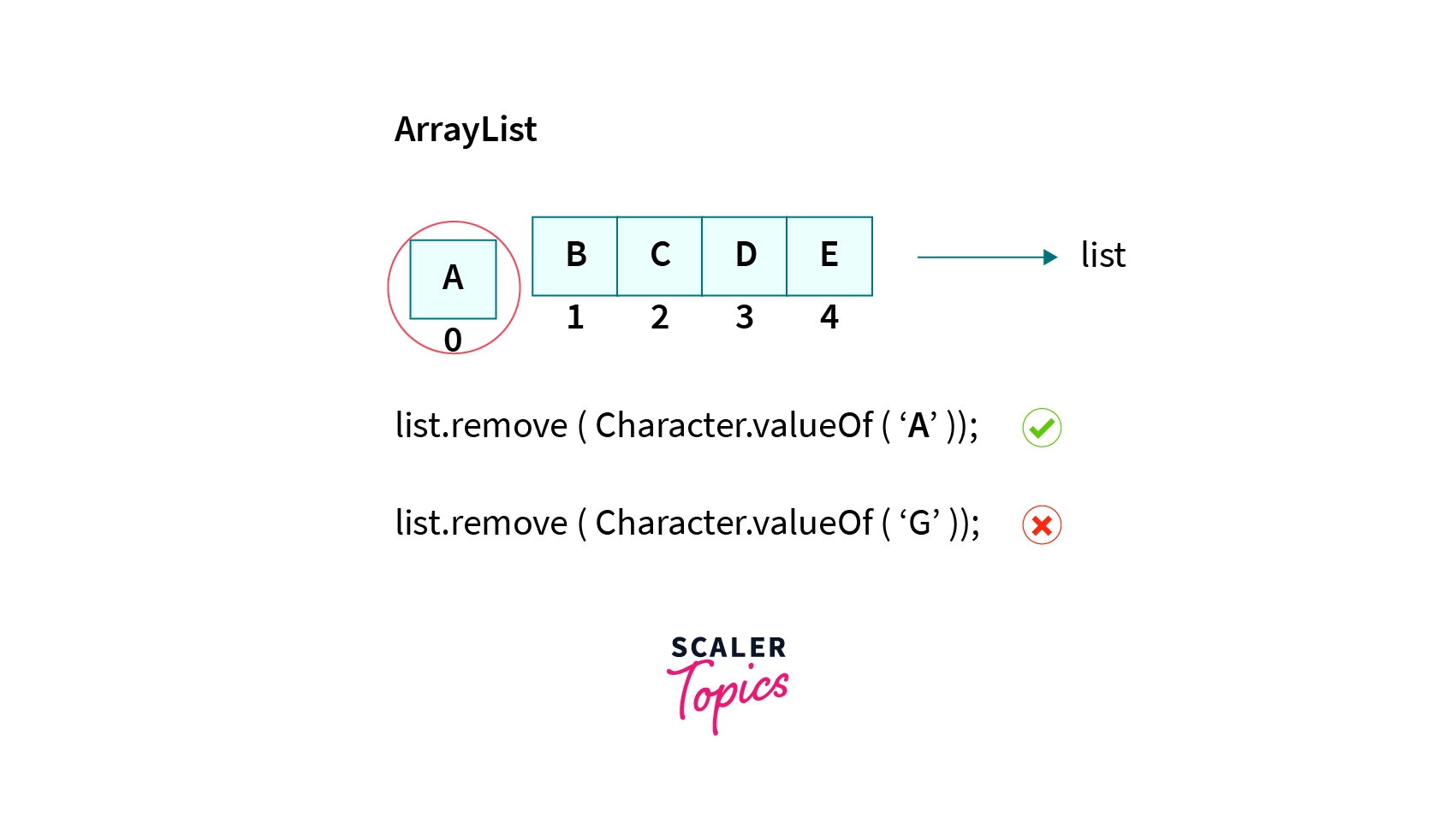
In a standard dynamic array (like Python’s list or Java’s ArrayList), the .remove() method has a time complexity of O(n). This is known as linear time complexity. If your list contains ten elements, the operation is instantaneous. If it contains ten million, the operation can become a significant bottleneck.
The “worst-case scenario” occurs when the element to be removed is at the very end of the list or is not present at all. In this case, the computer must inspect every single element. Even in the “average case,” where the element is in the middle, the algorithm still performs n/2 operations, which simplifies to O(n) in asymptotic analysis.
Why Arrays and Lists Demand O(n)
The physical layout of memory is the reason for this O(n) requirement. Arrays are stored in contiguous memory blocks. This allows for O(1) (constant time) access if you know the index. However, when you remove an element from the middle, you cannot simply leave a “hole” in the memory if the data structure is designed to be a sequential list. To keep the indices correct for future operations, every element to the right of the deleted item must be moved one position to the left. This shifting process is what makes the operation expensive.
Language-Specific Implementations of .remove()
Different programming languages implement their standard libraries with specific optimizations, but the fundamental constraints of data structures remain. Let’s look at how the most popular languages handle this operation.
Python’s list.remove()
In Python, the list.remove(x) method searches for the first item in the list whose value is equal to x. Because Python lists are implemented as dynamic arrays, this is a classic O(n) operation. Python developers often fall into the trap of using .remove() inside a loop. For example, removing multiple items from a list by calling .remove() iteratively results in an O(n²) complexity—a performance nightmare that can cause applications to hang as data grows.
Java’s ArrayList vs. LinkedList
Java provides a clearer distinction through its Collections Framework.
- ArrayList: Similar to Python,
ArrayList.remove(Object o)is O(n) because it requires a linear search and subsequent element shifting. - LinkedList: A common misconception is that
LinkedList.remove(Object o)is faster. While a linked list does not require shifting elements (you simply update the pointers of the neighboring nodes), it still requires an O(n) search to find the node containing the value. Therefore, the overall complexity remains O(n). However, if you are using anIteratorand already have a reference to the node, the actual removal is O(1).
JavaScript and the splice() Method
In JavaScript, there isn’t a native .remove() method for arrays that matches the Python syntax exactly. Instead, developers use indexOf() combined with splice(). indexOf() is an O(n) search, and splice() is an O(n) operation because it must re-index the array. Thus, the total operation remains linear. In modern V8 engine optimizations, small arrays might see incredible speeds, but the algorithmic complexity remains the same as the dataset scales.
Performance Bottlenecks and Trade-offs
When choosing a data structure, software architects must weigh the trade-offs between different types of operations. A structure that is fast for adding data might be slow for removing it.
The Impact of Shifting Elements
The “hidden” cost of .remove() in array-based structures is the memory write operation. Finding the element is a read operation, which is relatively cheap and cache-friendly. Shifting elements, however, involves writing to memory. In high-performance systems or systems with limited hardware resources (like IoT devices), the cumulative cost of these memory shifts can lead to thermal throttling or significant latency spikes.
Removing from Sets and HashMaps (The O(1) Alternative)
If your application requires frequent removals and the order of elements is not a primary concern, a Set or HashMap is almost always the superior choice.
- Sets: In languages like Python (
set) or Java (HashSet), the.remove()operation (often called.discard()or.remove()) has an average time complexity of O(1). - The Mechanism: These structures use a hash table. Instead of searching through every element, the computer applies a mathematical function to the value to find its exact “bucket” in memory. This allows the system to jump directly to the item and remove it without touching any other data point.
Switching from a List to a Set can transform an O(n) operation into a constant-time operation, which is one of the most effective ways to optimize code.
Optimization Strategies for High-Performance Software
Understanding that .remove() is O(n) allows developers to write more defensive and efficient code. Here are several strategies to mitigate the performance impact of deletions.
Choosing the Right Data Structure
The most effective optimization happens at the design phase. Ask yourself:
- Do I need to maintain the order of elements? (If no, use a Set).
- Will I be removing elements by their value or their position?
- Is this a “read-heavy” or “write-heavy” collection?
If you frequently need to remove the first or last elements, a Deque (Double-Ended Queue) provides O(1) removals from both ends, which is significantly faster than removing from the start of an array.
Bulk Deletions and Filtering
Instead of removing items one by one in a loop (which leads to O(n²) complexity), it is often better to use a “filter” approach. In Python, this is elegantly handled by list comprehensions:
new_list = [item for item in old_list if item != value_to_remove]
While this still involves looking at every item (O(n)), it creates a new list in a single pass and avoids the repeated shifting of elements. In many cases, creating a new collection is actually faster than modifying an existing one because of how memory allocation and garbage collection work in modern runtimes.
Using “Tombstones” for Lazy Deletion
In some high-scale systems, developers use a technique called “lazy deletion.” Instead of actually removing an item and shifting the rest of the array, they mark the item with a “tombstone” (a boolean flag or a null value). Periodically, the system performs a single “compaction” pass to clean up all marked items at once. This defers the O(n) cost to a time when it won’t impact the user-facing latency.
Real-World Implications in Modern Software Development
In the age of Cloud Computing and Big Data, the efficiency of a .remove() call can have financial implications. If an O(n²) algorithm is running on a serverless function (like AWS Lambda), it will take longer to execute, directly increasing the cost of the compute bill.
Scalability and the “N+1” Problem
When we talk about “Digital Security” or “Software Trends,” we often focus on encryption or AI, but the most common cause of system outages is actually poor algorithmic scaling. A system that works perfectly with 1,000 users might crash when it reaches 10,000 because an O(n) removal in a critical path suddenly starts taking seconds instead of milliseconds.
The Role of AI Tools in Optimization
Modern AI-driven coding assistants (like GitHub Copilot or ChatGPT) are increasingly adept at identifying inefficient uses of .remove(). However, these tools still require a knowledgeable developer to make the final architectural decision. An AI might suggest changing a List to a Set for faster removal, but only the developer knows if the application relies on the specific ordering of that List.
In conclusion, the .remove() method is a powerful tool, but it is not a “free” operation. By recognizing its O(n) nature in most linear collections, developers can make informed decisions about data structures. Whether you are building a simple mobile app or a high-frequency trading platform, respecting the laws of time complexity is the key to building software that is not only functional but truly professional and performant.