
In the realm of personal and business finance, the ability to calculate a percentage is more than just a vestige of middle school mathematics; it is a fundamental skill for survival and growth. Whether you are assessing the performance of a stock portfolio, calculating the interest on a mortgage, or determining the tax implications of a new side hustle, percentages are the universal language of value. Understanding “how to find the percentage of a number” is the first step toward financial literacy, allowing you to peel back the layers of complex financial statements and see the raw reality of your economic standing.

When we talk about percentages in money management, we are discussing the relationship between a part and a whole. This simple ratio governs the world’s most complex markets. This guide will walk you through the essential mechanics of percentage calculations and, more importantly, how to apply them to your wealth-building journey.
Foundations of Financial Percentages: Why the Math Matters
To master your money, you must first master the basic arithmetic that moves it. At its simplest level, a percentage represents a fraction of 100. In finance, this translates to how much of your capital is working for you, how much of your revenue is profit, or how much of your income is being diverted to expenses.
The Core Formula: Part over Whole
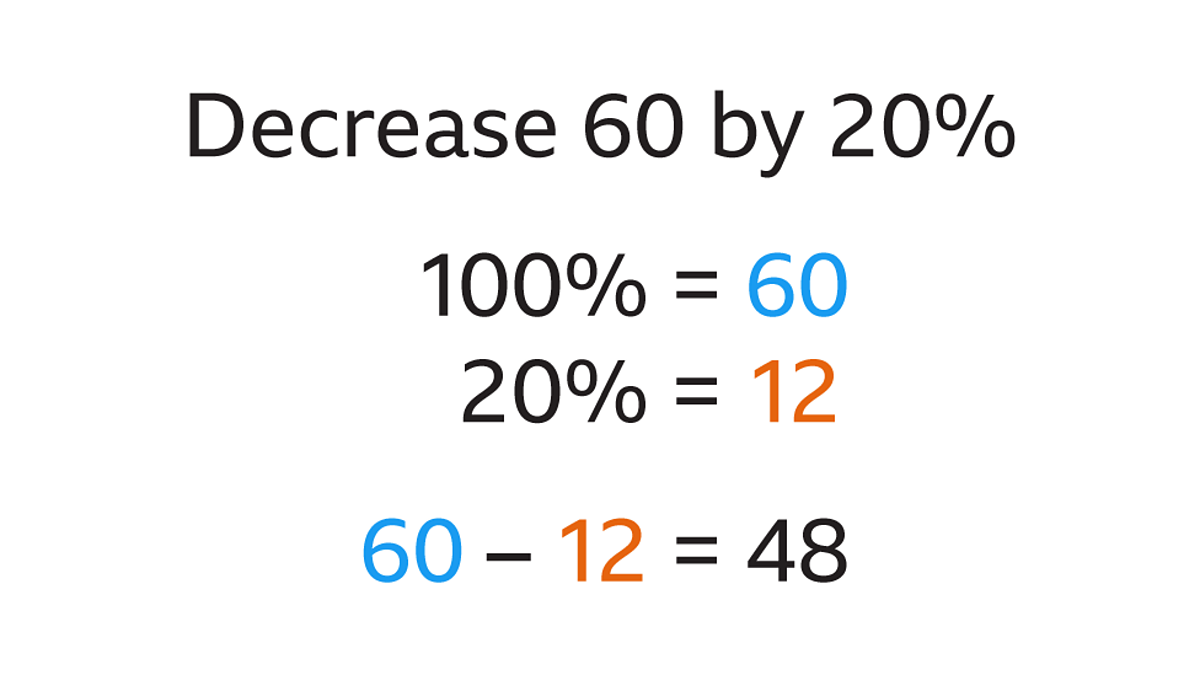
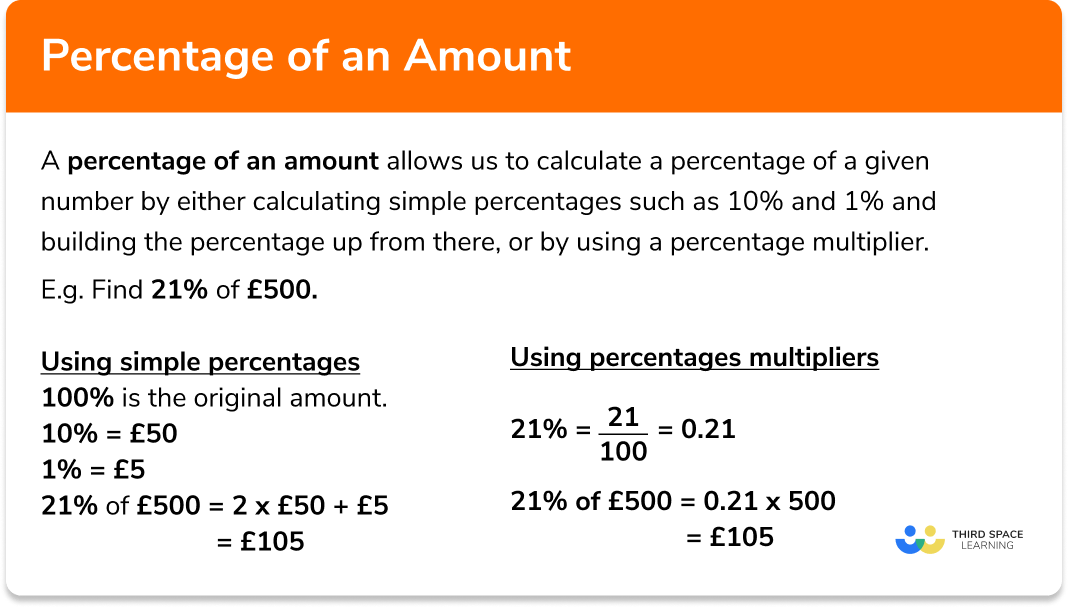
The most basic way to find the percentage of a number is to multiply the number by the percentage expressed as a decimal. For example, if you want to find 15% of $2,000 (perhaps for a tax set-aside), you convert 15% to 0.15 and multiply: $2,000 × 0.15 = $300.
Alternatively, if you are looking to find what percentage one number is of another—such as determining what percentage of your $5,000 monthly income goes toward a $1,500 rent payment—you use the “part over whole” formula:
(Part / Whole) × 100 = Percentage
In this case: ($1,500 / $5,000) × 100 = 30%. Understanding this ratio is the bedrock of creating a sustainable budget.
Understanding Basis Points and Market Movement
In the world of investing and banking, percentages are often discussed in even smaller increments known as “basis points” (BPS). One basis point is equal to 1/100th of 1%, or 0.01%. While a 0.25% change in an interest rate might sound negligible to a novice, a seasoned financial professional sees this as 25 basis points—a shift that can trigger billions of dollars in movement across global markets. Being able to toggle between raw numbers, percentages, and basis points allows you to interpret financial news and bank offers with the precision of an expert.
Applied Percentages in Personal Finance and Budgeting
Budgeting is essentially the art of dividing a whole (your income) into various percentage-based buckets. Without a clear understanding of these proportions, it is easy to overspend in one category while neglecting another, such as retirement or emergency savings.
The 50/30/20 Rule: Allocating Your Income
One of the most popular financial frameworks is the 50/30/20 rule. This strategy suggests that you should find the percentage of your take-home pay to ensure:
- 50% for Needs: Housing, utilities, and groceries.
- 30% for Wants: Dining out, hobbies, and travel.
- 20% for Financial Goals: Debt repayment and savings.
To apply this, you must find the percentage of your total net income for each category. If you bring home $4,000 a month, 20% ($800) must go toward your future. If your debt payments exceed this 20% mark, you are mathematically “over-leveraged,” a realization that is only possible through consistent percentage tracking.
Calculating Debt-to-Income Ratios
When you apply for a mortgage or a car loan, lenders look at your Debt-to-Income (DTI) ratio. This is the percentage of your gross monthly income that goes toward paying debts.
Formula: (Total Monthly Debt Payments / Gross Monthly Income) × 100.
Lenders typically prefer a DTI below 36%. If you earn $6,000 gross and your total debts are $2,500, your DTI is 41.6%. Knowing how to calculate this number yourself allows you to take corrective action—either by increasing income or paying down principal—before a lender denies your application.
Percentages in the World of Investing and Returns
In the investing niche, percentages are the primary metric for success. Raw dollar gains are deceptive; a $1,000 profit is impressive on a $5,000 investment (a 20% gain) but mediocre on a $100,000 investment (a 1% gain).
Measuring ROI (Return on Investment)
Return on Investment, or ROI, is the most common percentage used to evaluate the efficiency of an investment.
Formula: [(Current Value – Original Cost) / Original Cost] × 100.
If you bought shares in a tech company for $10,000 and they are now worth $12,500, your ROI is 25%. This percentage allows you to compare different asset classes. For instance, if your real estate portfolio is returning 8% while your index funds are returning 10%, the percentage calculation tells you exactly where your capital is most productive.
The Impact of Compound Interest and Yield
Understanding percentages is vital when evaluating “yield”—the income generated by an investment, such as dividends or interest. A high-yield savings account offering 4.5% APY (Annual Percentage Yield) means that for every $1,000 you deposit, you will earn $45 in a year, assuming the rate stays constant.
Furthermore, the “Rule of 72” is a quick mental percentage trick used by investors to estimate how long it will take for an investment to double. By dividing 72 by the annual percentage rate of return, you get the approximate number of years for doubling. For example, at a 6% return, your money doubles in 12 years (72 / 6 = 12).
Business Finance: Margin, Markup, and Profitability
For entrepreneurs and business owners, finding the percentage of a number is a daily necessity. Miscalculating the difference between margin and markup is one of the leading causes of small business failure.
Distinguishing Gross Margin from Markup
While both involve percentages, they serve different purposes.
- Markup is the percentage added to the cost of a product to derive the selling price. If an item costs $100 and you sell it for $150, your markup is 50%.
- Gross Margin is the percentage of the selling price that is profit. Using the same example, your profit is $50. The margin is ($50 / $150) × 100 = 33.3%.
Understanding that a 50% markup only results in a 33.3% margin is critical for ensuring that your business can cover overhead costs like rent, payroll, and marketing.
Tax Implications and Effective Tax Rates
Businesses and high-earners must also understand their “Effective Tax Rate.” Because the U.S. uses a progressive tax bracket system, your top marginal bracket isn’t what you actually pay on your total income. To find your effective tax rate, you divide your total tax beauty by your total taxable income. If you earned $100,000 and paid $15,000 in total federal taxes, your effective rate is 15%, even if you are in the 22% or 24% marginal bracket. Knowing this percentage is essential for accurate cash flow forecasting.
Tools for Streamlining Financial Calculations
While manual calculations build mental acuity, the modern financial landscape offers tools that handle the heavy lifting, allowing you to focus on strategy rather than arithmetic.
Leveraging Financial Calculators and Spreadsheets
Software like Microsoft Excel or Google Sheets is built on percentage logic. Using the “Percent” format button allows you to input “0.05” and see “5%.” More importantly, functions like =PMT (for calculating loan payments) or =FV (for future value of investments) rely entirely on your ability to input the correct percentage rate.
When using these tools, always remember to match the rate to the period. If you are calculating monthly interest on a credit card with a 24% APR, you must divide that percentage by 12 to use a 2% monthly rate in your formulas.
The Psychological Benefit of Percentage Tracking
Beyond the math, there is a profound psychological benefit to viewing your finances through the lens of percentages. Percentages normalize data. They allow you to stay calm during market volatility (a 10% drop is a 10% drop, whether your portfolio is $1,000 or $1,000,000) and help you celebrate incremental progress.
By consistently asking “how do I find the percentage” of my savings rate, my investment fees, and my debt reduction, you move from being a passive observer of your bank account to being the active CEO of your personal economy. Mastery of this simple mathematical concept is, quite literally, the price of entry for financial freedom.
aViewFromTheCave is a participant in the Amazon Services LLC Associates Program, an affiliate advertising program designed to provide a means for sites to earn advertising fees by advertising and linking to Amazon.com. Amazon, the Amazon logo, AmazonSupply, and the AmazonSupply logo are trademarks of Amazon.com, Inc. or its affiliates. As an Amazon Associate we earn affiliate commissions from qualifying purchases.