
In the modern landscape of the Internet of Things (IoT) and smart home ecosystems, “HCHO” has transitioned from a niche chemical term to a critical data point for tech-savvy homeowners and environmental engineers. HCHO stands for Formaldehyde, a colorless, pungent-smelling gas that is a significant component of indoor air pollution. From a technological perspective, monitoring HCHO levels is no longer a task reserved for specialized laboratories. Today, it represents a frontier in sensor precision, data analytics, and automated climate control.
As we spend more time indoors, the demand for high-fidelity environmental monitoring has surged. This article explores the technology behind HCHO air quality monitoring, the evolution of sensing hardware, and how software integration is turning raw chemical data into actionable insights for the digital age.

The Core Tech: How HCHO Sensors Actually Work
At the heart of any air quality monitor is the sensor. For a long time, detecting HCHO was complex because the molecule is small and easily confused with other Volatile Organic Compounds (VOCs). However, advancements in Micro-Electro-Mechanical Systems (MEMS) and semiconductor technology have revolutionized this field.
Electrochemical Sensing Technology
The most common technology used in high-end consumer and professional-grade HCHO monitors is the electrochemical sensor. These devices operate by reacting with the formaldehyde gas and producing an electrical signal proportional to the gas concentration. This is a sophisticated “fuel cell” process where the HCHO molecules undergo a chemical reaction at an electrode, releasing electrons that create a measurable current.
Technologically, the challenge lies in selectivity. A high-quality electrochemical sensor must be engineered with specific catalysts that prioritize HCHO over other gases like carbon monoxide or ethanol. Developers are constantly refining the membrane materials and electrolyte compositions to increase the “signal-to-noise” ratio, ensuring that the smart device provides an accurate reading rather than a false positive triggered by a glass of wine or a cleaning spray.
Metal Oxide Semiconductor (MOS) Sensors
A more cost-effective alternative often found in entry-level tech gadgets is the Metal Oxide Semiconductor (MOS) sensor. These sensors utilize a thin film of metal oxide (usually tin dioxide) that is heated to a high temperature. When HCHO molecules come into contact with the surface, they change the electrical resistance of the oxide layer.
While MOS sensors are durable and cheap to manufacture, they traditionally lacked the precision of electrochemical units. However, the latest generation of “Digital VOC” sensors utilizes advanced algorithms to differentiate between various organic compounds. By analyzing the “fingerprint” of the resistance change over time, software-driven MOS sensors can now provide a reliable HCHO estimate, making them ideal for integration into budget-friendly smart home hubs.
The Precision Problem: Calibration and Interference
One of the biggest hurdles in HCHO tech is the drift of sensor accuracy over time. Unlike a thermometer, which is relatively stable, chemical sensors degrade as they react with the environment. Tech companies are solving this through “Auto-Calibration” software. By using baseline algorithms that track the lowest recorded levels over a 24-hour period (assuming the room eventually ventilates), the software can re-zero the sensor, ensuring long-term reliability without manual intervention.
Smart Ecosystems: Integrating Air Quality Monitoring into the IoT
HCHO data is useless if it exists in a vacuum. The true value of modern air quality technology lies in its integration into the broader smart home ecosystem. When an HCHO sensor is connected via Wi-Fi, Zigbee, or Matter, it transforms from a passive observer into a proactive controller.
Real-Time Data Visualization and Mobile Apps
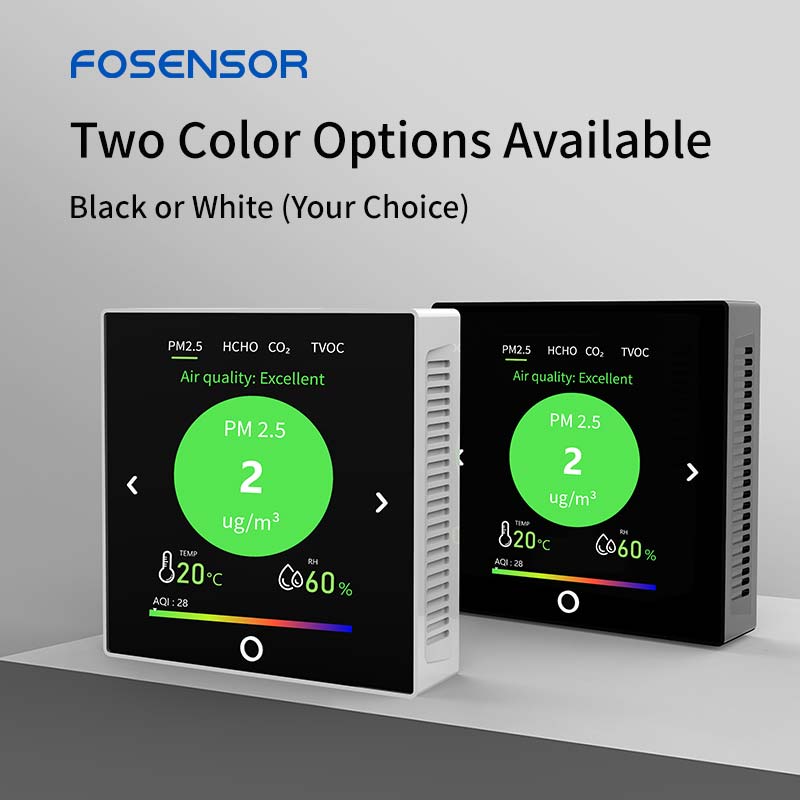
Modern air quality monitors, such as those from brands like Dyson, Airthings, or Eve, prioritize the user interface (UI). Through dedicated apps, users can view HCHO concentrations in parts per million (ppm) or milligrams per cubic meter (mg/m³).
Beyond just showing a number, these apps leverage data visualization tech to show trends over days, weeks, or months. This is particularly useful for identifying the “off-gassing” period of new furniture or building materials. By correlating spikes in HCHO data with time-stamped events, the software helps users identify the exact source of pollution in their digital twin of their home environment.
Automation Loops: Triggering the Smart Home
The most significant tech trend in HCHO monitoring is the “If This, Then That” (IFTTT) automation. Through platforms like Apple HomeKit, Google Home, or Amazon Alexa, a high HCHO reading can trigger a series of automated responses:
- Purification: The air purifier automatically switches to “Boost” mode.
- Ventilation: Smart window actuators or HVAC systems open to introduce fresh air.
- Alerting: The user receives a critical notification on their smartphone or smartwatch if levels exceed a safe threshold.
This shift from manual monitoring to automated remediation is a hallmark of the “Ambient Intelligence” movement, where technology works in the background to maintain a healthy environment without human input.
The Software Layer: AI and Predictive Air Quality Modeling
The next frontier for HCHO technology is the implementation of Artificial Intelligence (AI) and Machine Learning (ML). While current sensors react to the present, the next generation of software aims to predict the future.
AI-Driven Predictive Modeling
By analyzing historical data, outdoor weather patterns, and indoor humidity levels, AI algorithms can predict when HCHO levels are likely to rise. For instance, formaldehyde off-gassing increases with temperature and humidity. A smart system integrated with a weather API can anticipate a heatwave and proactively increase ventilation or lower the thermostat to suppress HCHO release from carpets and cabinets before the levels even become problematic.
Advanced Pattern Recognition
Machine learning is also being used to solve the “cross-sensitivity” issue. By training neural networks on thousands of different gas exposure scenarios, software can distinguish between the specific HCHO signature and other “nuisance” gases. This digital filtering allows lower-cost hardware to perform at the level of laboratory equipment, democratizing access to high-quality air monitoring.
The Future of Environmental Tech: Wearables and Urban Mapping
As we look toward the future, HCHO monitoring is moving beyond the four walls of the home and into the palm of our hands—or even onto our wrists.
Wearable Air Quality Monitors
There is a growing trend in “personal tech” involving wearable sensors that track the wearer’s immediate micro-environment. While miniaturizing an HCHO sensor to fit into a smartwatch or a lapel pin is a massive engineering challenge, recent breakthroughs in solid-state sensor technology are making this a reality. These devices can provide a “personal exposure map,” helping people—especially those with sensitivities—navigate urban environments and workplaces more safely.
Crowd-Sourced Air Quality Data
On a macro level, the “Smart City” movement is looking to aggregate data from thousands of individual HCHO monitors. If a city-wide network of IoT sensors reports a sudden spike in HCHO, municipal software can identify industrial leaks or localized pollution events in real-time. This “Big Data” approach to air quality turns every smart home into a node in a massive environmental monitoring grid.
Data Security and Privacy in Environmental Monitoring
As with any IoT device, the collection of HCHO data raises questions about digital security and privacy. While HCHO levels might seem innocuous, they can actually reveal a lot about a user’s habits—when they are home, when they buy new furniture, or even when they are cleaning.
Safeguarding Personal Atmospheric Data
Leading tech firms are implementing end-to-end encryption for environmental data. When your sensor sends an HCHO report to the cloud, it must be anonymized and secured to prevent unauthorized access. Furthermore, the rise of “Edge Computing” means that much of the data processing is now happening locally on the device itself rather than in the cloud. This reduces latency for automation and ensures that sensitive data about the home’s internal environment never leaves the local network.
The Role of Open Standards
The adoption of the “Matter” protocol is a significant step forward for the security and interoperability of HCHO sensors. By creating a unified standard, the industry ensures that devices from different manufacturers can communicate securely. This prevents the “siloing” of data and allows for a more robust and secure smart home architecture where air quality sensors, purifiers, and thermostats work in a protected, unified mesh.
In conclusion, HCHO air quality monitoring has evolved from a complex scientific process into a sophisticated pillar of modern technology. Through the marriage of high-precision hardware, IoT connectivity, and AI-driven software, we are now able to see and manage the invisible. As sensors become more accurate, smaller, and more integrated into our digital lives, the technology of HCHO monitoring will continue to play a vital role in the pursuit of the ultimate “Smart Home”—one that is not only automated but also fundamentally healthier.
aViewFromTheCave is a participant in the Amazon Services LLC Associates Program, an affiliate advertising program designed to provide a means for sites to earn advertising fees by advertising and linking to Amazon.com. Amazon, the Amazon logo, AmazonSupply, and the AmazonSupply logo are trademarks of Amazon.com, Inc. or its affiliates. As an Amazon Associate we earn affiliate commissions from qualifying purchases.