
In the rapidly evolving landscape of cinematic exhibition, the traditional movie-going experience has undergone a massive technological transformation. As streaming platforms offer high-definition content at home, cinema chains have responded by developing “Premium Large Format” (PLF) experiences to draw audiences back to the big screen. One of the most prominent contenders in this space is EMX, or the Enhanced Movie Experience.
EMX is not merely a branding exercise; it is a meticulously engineered technological suite designed to maximize sensory immersion. By integrating cutting-edge projection systems, sophisticated spatial audio, and ergonomic architectural design, EMX represents the pinnacle of modern theatrical engineering. To understand what makes EMX a leader in the tech-driven cinema space, we must deconstruct the specific hardware and software integrations that define the “Enhanced” label.
The Core of EMX: Advanced Projection Technology
At the heart of any EMX theater is the visual engine. Unlike standard auditoriums that may rely on aging Xenon bulb projectors, EMX installations utilize state-of-the-art digital projection systems designed to deliver unprecedented clarity and brightness.
Laser Projection vs. Traditional Systems
The shift from traditional lamp-based projection to Laser Projection is perhaps the most significant leap in cinema tech over the last decade. EMX theaters often utilize 4K Laser Projection systems. Unlike traditional bulbs that dim over time and struggle with color accuracy, laser light sources provide a consistent, high-intensity output. This results in a “purer” light, allowing for a much wider color gamut (Rec. 2020) and deeper saturation. For the viewer, this means the blacks are inkier and the highlights are more brilliant, eliminating the “washed-out” look common in older theaters.
4K Resolution and High Frame Rates (HFR)
While 1080p was once the standard, EMX pushes the envelope with 4K resolution, offering four times the pixel density of standard HD. This is crucial for the “Large Format” aspect of EMX; because the screens are significantly larger than average, a higher pixel count is necessary to maintain image density and prevent “screen-door effects” where pixels become visible. Furthermore, EMX systems are often equipped to handle High Frame Rate (HFR) content, processing 48 or 60 frames per second. This technological capability reduces motion blur in high-action sequences, providing a hyper-realistic clarity that traditional 24fps cinema cannot match.
Contrast Ratios and HDR Integration
EMX technology prioritizes high contrast ratios. Through digital signal processing, the system manages light levels to ensure that detail is preserved in the darkest shadows of a frame. This is effectively the theatrical equivalent of High Dynamic Range (HDR). By utilizing proprietary screen coatings that reflect light more efficiently, EMX ensures that the light hitting the screen is directed back toward the audience with minimal loss, maintaining the integrity of the filmmaker’s original color grade.
Immersive Audio Engineering in the EMX Environment
Vision is only half of the cinematic equation. EMX theaters differentiate themselves through a rigorous approach to audio engineering, moving away from “channel-based” sound to “object-based” spatial audio.
The Role of Dolby Atmos in EMX
Most EMX auditoriums are integrated with Dolby Atmos, the gold standard in audio technology. Traditional surround sound (5.1 or 7.1) sends audio to specific groups of speakers (left, right, rear). In contrast, Dolby Atmos treats every sound—a helicopter flying overhead, a whisper in the corner—as an independent “object.” The EMX audio processor calculates exactly where that sound should be in 3D space and moves it fluidly across an array of dozens of speakers.
Spatial Audio and Overhead Arrays
A defining technical feature of the EMX audio suite is the inclusion of overhead speaker arrays. By adding a vertical dimension to the soundstage, EMX creates a hemispherical audio environment. This requires complex digital signal processing (DSP) to ensure that sound waves from different speakers do not interfere with one another (phase cancellation). The result is a seamless “bubble” of sound that tracks perfectly with the action on the screen.
Acoustic Treatment and Sub-Bass Management
Technical excellence in audio isn’t just about the speakers; it’s about the room. EMX theaters undergo specific acoustic “tuning.” This involves the installation of custom baffles and sound-dampening materials to eliminate echoes and standing waves. Furthermore, EMX utilizes massive industrial subwoofers located behind the screen and in the rear of the theater. These are calibrated to deliver “infra-sound”—frequencies so low they are felt in the chest rather than heard—providing a tactile layer to the auditory experience.

Structural and Ergonomic Design: The “Large Format” Architecture
The “Enhanced” in EMX also refers to the physical engineering of the auditorium itself. Every aspect of the room, from the curvature of the screen to the placement of the seats, is calculated using CAD (Computer-Aided Design) to optimize the viewing angle for every patron.
Wall-to-Wall and Ceiling-to-Floor Screens
Standard cinema screens often have “masking” (black curtains) that shrink the image size based on the aspect ratio. EMX screens are engineered to be wall-to-wall and ceiling-to-floor. This maximizes the viewer’s peripheral vision, which is a key psychological component of immersion. The screens are also slightly curved. This curvature ensures that the distance from the projector to the center of the screen is roughly the same as the distance to the edges, preventing “focus fall-off” and ensuring uniform brightness across the entire surface.
Sightline Optimization and Stadium Seating
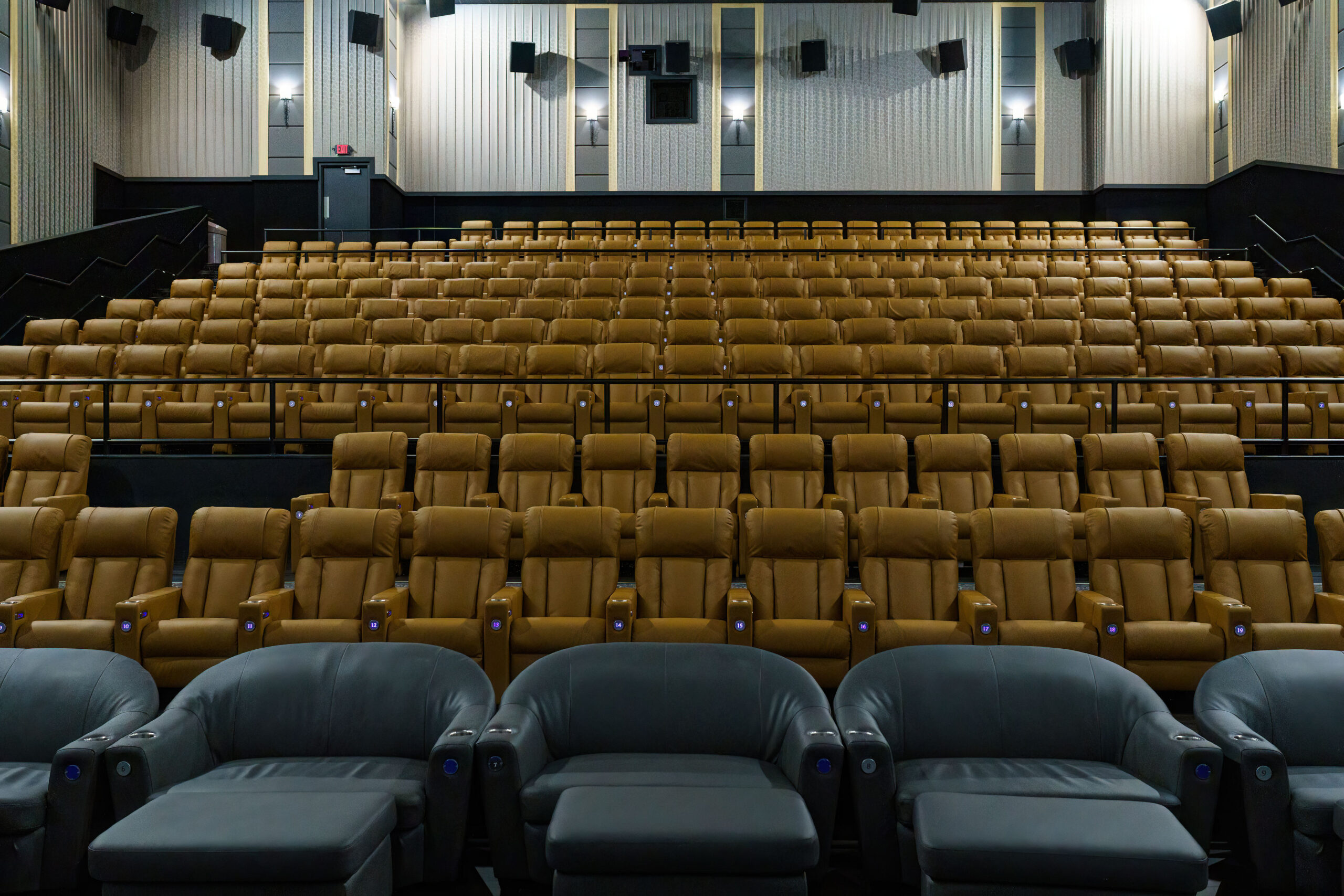
The geometry of an EMX theater is designed using a “stadium seating” configuration with a steep rake (the angle of the floor). This technical layout ensures that every seat has an unobstructed sightline. By utilizing advanced optical calculations, engineers ensure that even the seats at the far edges of the row experience minimal image distortion.
Ergonomic Power Recliners and Haptic Tech
Modern EMX installations have replaced traditional folding chairs with luxury electronic recliners. Beyond mere comfort, these seats are part of the tech stack. Many EMX theaters are beginning to experiment with haptic feedback—technology built into the seat that syncs with the audio’s low-frequency effects. This physical vibration, coupled with the motorized adjustability, ensures that the viewer’s physical state remains as engaged as their visual and auditory senses.
EMX vs. The Landscape of Premium Cinema Tech
To understand the niche EMX occupies, it is helpful to compare its technical specifications with other industry giants like IMAX or Dolby Cinema.
Comparing EMX with IMAX
IMAX is often defined by its unique 1.43:1 or 1.90:1 aspect ratios and proprietary film formats. EMX, however, is designed as a more flexible Premium Large Format (PLF) solution. While IMAX focuses on a specific, very tall screen shape, EMX focuses on maximizing the brightness and audio quality of the standard widescreen (2.39:1) format that most modern blockbusters are filmed in. For many viewers, EMX offers a comparable level of “bigness” but with a heavy emphasis on the “luxury tech” side—specifically more advanced seating and localized audio tuning.
The Scalability of Proprietary PLF Systems
One of the technological advantages of the EMX brand is its scalability. Cinema chains can integrate EMX technology into existing large auditoriums without the massive structural overhauls sometimes required by IMAX. This is achieved through proprietary “tuning kits” that allow technicians to calibrate the laser projectors and Atmos arrays to the specific dimensions of a pre-existing room, ensuring a high-end experience regardless of the building’s original footprint.
The Future of EMX: AI-Driven Optimization and Beyond
As we look toward the future of theater technology, EMX is poised to integrate even more sophisticated digital tools to maintain its “Enhanced” status.
AI-Enhanced Image Scaling
New developments in AI-driven upscaling are beginning to enter the cinema space. In the future, EMX processors may use machine learning algorithms to analyze frames in real-time, sharpening edges and reducing noise beyond what the source file provides. This would ensure that even older films re-released in EMX formats look as though they were shot on modern 8K cameras.

Automated Calibration Systems
Maintaining a high-tech theater requires constant vigilance. The next generation of EMX hardware includes built-in sensors and microphones that monitor the auditorium’s performance 24/7. If a projector’s color balance shifts by even a fraction, or if a speaker driver begins to fail, the system can automatically recalibrate itself or alert a technician via the cloud. This “self-healing” tech ensures that the “Enhanced Movie Experience” remains consistent from the first showing of the day to the last.
In conclusion, EMX Theater is a testament to the power of integrated technology. It is a sophisticated ecosystem where 4K laser optics, object-based audio, and precision-engineered architecture converge. By focusing on the high-tech requirements of modern cinema, EMX ensures that the theater remains the definitive place to experience the art of visual storytelling. For the tech-savvy cinephile, EMX is not just a place to watch a movie; it is an optimized environment where every photon and every sound wave is engineered for perfection.
aViewFromTheCave is a participant in the Amazon Services LLC Associates Program, an affiliate advertising program designed to provide a means for sites to earn advertising fees by advertising and linking to Amazon.com. Amazon, the Amazon logo, AmazonSupply, and the AmazonSupply logo are trademarks of Amazon.com, Inc. or its affiliates. As an Amazon Associate we earn affiliate commissions from qualifying purchases.