
In the realm of personal finance, few assets are as polarizing or as misunderstood as the automobile. For most individuals, a vehicle represents the second-largest purchase they will ever make, trailing only a primary residence. However, unlike a home, a car is a depreciating asset—a “leaky bucket” in financial terms. When we ask, “What is considered a high mileage vehicle?” we are not merely asking a mechanical question; we are asking a valuation question. We are seeking to identify the inflection point where the cost of maintenance intersects with the decline in resale value, and where the risk of catastrophic failure begins to outweigh the benefit of a low monthly payment.
Understanding the financial implications of high mileage is essential for anyone looking to optimize their personal balance sheet. Whether you are looking to purchase a used vehicle to avoid the “off-the-lot” depreciation hit or trying to decide when to sell your current car before its value zeroes out, the definition of “high mileage” is the metric that governs your ROI.
Redefining Value: The Economic Threshold of “High Mileage”
Historically, the automotive industry and the consumer public viewed 100,000 miles as the “death knell” for a vehicle. This was a psychological and financial barrier; once a car crossed into six figures on the odometer, its trade-in value plummeted, and it was often relegated to the “bargain bin” of used car lots. From a financial planning perspective, this was considered the end of the asset’s reliable life.
The 100,000-Mile Myth vs. Modern Financial Reality
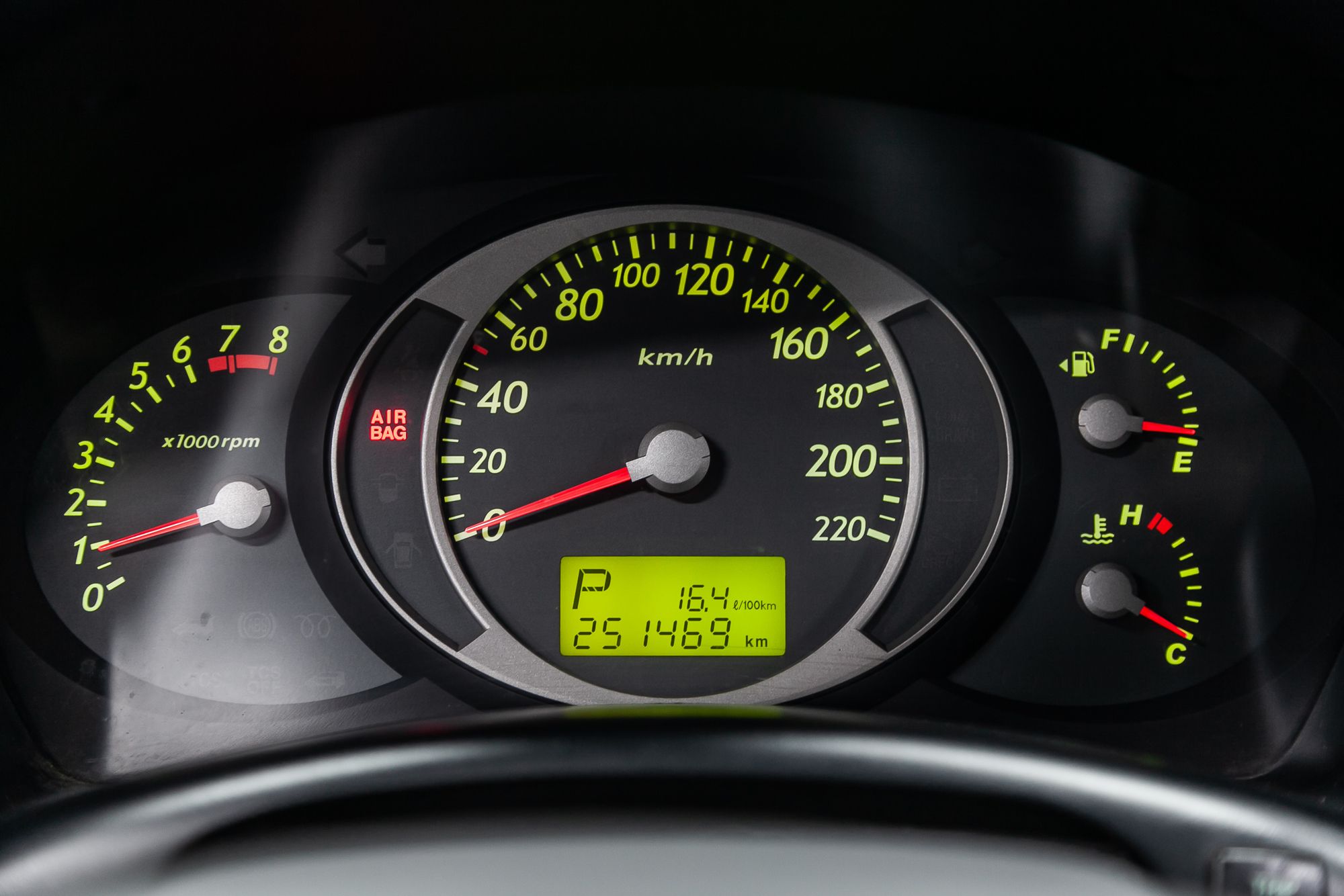
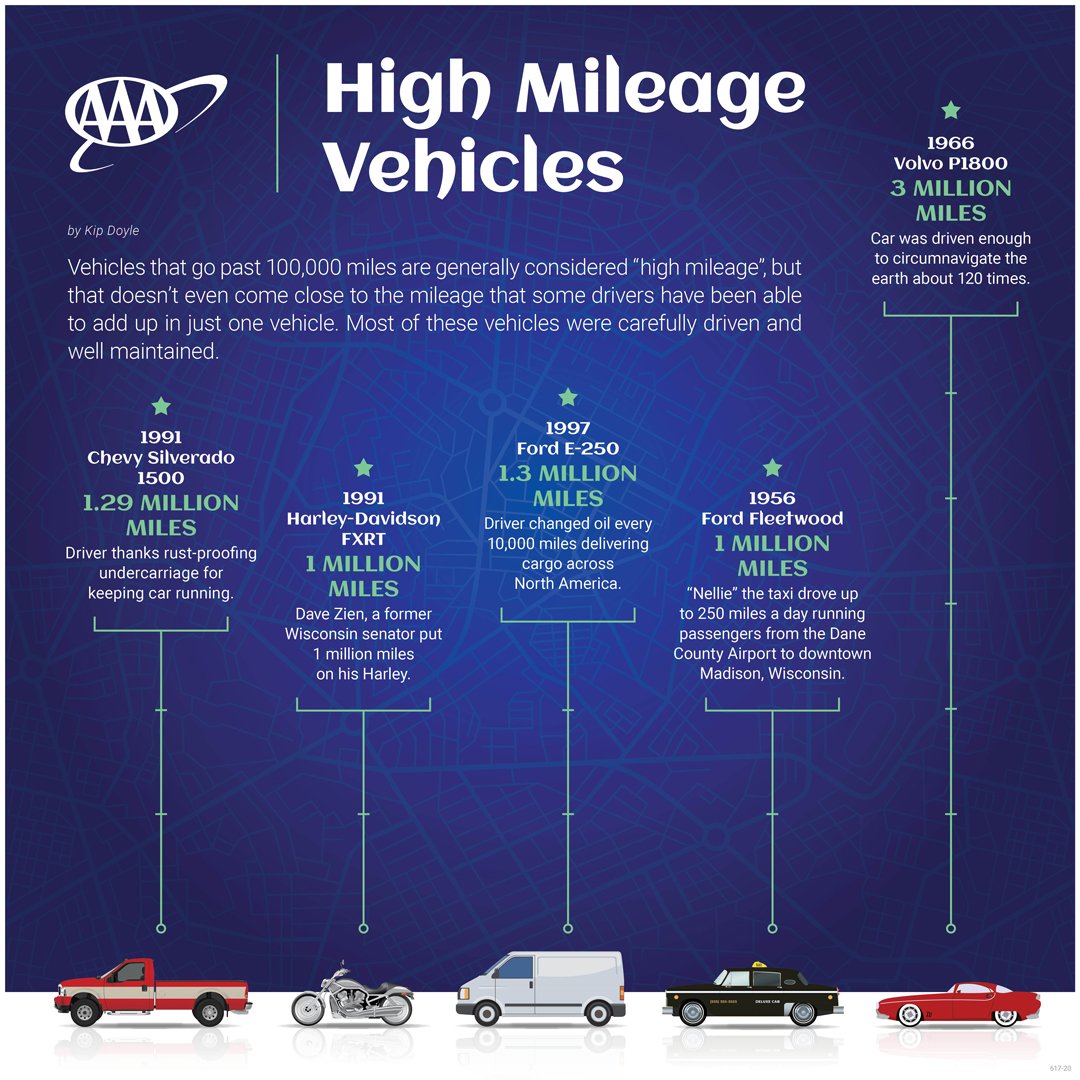
In the current economic landscape, the 100,000-mile benchmark is largely obsolete. Improvements in engineering, synthetic lubricants, and manufacturing precision mean that many modern vehicles—particularly those from brands with high reliability ratings—can easily reach 200,000 or even 300,000 miles with proper care.
For the savvy investor in personal transportation, “high mileage” is now more accurately defined as 120,000 to 150,000 miles. At this stage, the vehicle has typically shed 60% to 70% of its original MSRP. This creates a “sweet spot” for buyers who prioritize low capital outlay over the prestige of a new model. However, it also signals a transition in the vehicle’s role on your balance sheet from a reliable transport asset to a speculative liability.
How Mileage Impacts the Depreciation Curve
Depreciation is the single greatest expense of car ownership, often exceeding the cost of fuel or insurance. Most vehicles lose about 20% of their value in the first year and roughly 15% each year thereafter until they reach their “floor value.”
The relationship between mileage and depreciation is non-linear. The steepest drop occurs between 0 and 36,000 miles (the typical warranty period). A second significant drop occurs at the 100,000-mile mark due to consumer psychology. By understanding this curve, a consumer can identify that a car with 110,000 miles may be a significantly better financial “buy” than one with 90,000 miles, as the 100k depreciation hit has already been absorbed by the previous owner.
Total Cost of Ownership (TCO) and the Maintenance Inflection Point
When evaluating a high-mileage vehicle, the primary financial metric to consider is the Total Cost of Ownership (TCO). This includes the purchase price, insurance, fuel, and—most importantly—maintenance and repairs. As mileage increases, the “cost per mile” to keep the vehicle operational begins to rise.
Calculating the Break-Even Point of Repairs
The “high mileage” label becomes relevant when the annual cost of repairs exceeds the annual cost of financing a newer, more reliable vehicle. For example, if a vehicle with 160,000 miles requires $3,000 in repairs over twelve months, that equates to $250 per month. If a newer vehicle can be financed for $400 a month but comes with a warranty and significantly lower fuel costs, the $150 difference may be a price worth paying for the reduction in “opportunity cost”—the time lost when the vehicle is in the shop.
A vehicle is considered “financially high mileage” when its cumulative maintenance costs over a 24-month period exceed 50% of its current market value. At this point, the asset is no longer providing an efficient return on the capital invested in its upkeep.
The Financial Risks of Hidden “Deferred Maintenance”
One of the greatest dangers in the high-mileage market is deferred maintenance. When an owner knows they are going to sell a vehicle as it approaches a high-mileage milestone, they often skip expensive “milestone services” (such as timing belt replacements, transmission fluid flushes, or suspension overhauls).
For the buyer, a vehicle with 120,000 miles and a documented service history is often a better financial asset than a vehicle with 80,000 miles and no records. The former is a known quantity; the latter is a potential “money pit” where the true cost of ownership is hidden behind the odometer reading.
High Mileage as a Financial Strategy: Buying vs. Selling
In the world of personal finance, there are two primary schools of thought regarding vehicle mileage: “Sweating the asset” and “Strategic liquidation.”
The Value Play: Leveraging High Mileage for Lower Entry Costs
For those focused on wealth building, buying a high-mileage vehicle can be a powerful move. By purchasing a well-maintained vehicle with 100,000 miles for $10,000 instead of a new one for $40,000, you free up $30,000 of capital. If that $30,000 is invested in a diversified portfolio with a 7% annual return, it could grow to over $59,000 in ten years.
In this scenario, the “high mileage” of the car is a tool used to leverage capital for more productive investments. The key to this strategy is selecting vehicles known for longevity (e.g., certain models of Toyota, Honda, or diesel trucks) and having a dedicated “repair fund” to handle the inevitable mechanical needs without going into debt.
Strategic Disposition: When to Liquidate a High-Mileage Asset
On the flip side, knowing when to sell a high-mileage vehicle is crucial for preserving your net worth. The goal is to sell the vehicle while it still has “residual utility” to another buyer.
Selling a car at 140,000 miles while it is still running well and looks presentable will yield a much higher return than waiting until it hits 180,000 miles and suffers a major transmission failure. Once a major component fails on a high-mileage car, the resale value often drops to its “scrap value,” which is a total loss of the remaining equity. Strategic liquidation involves monitoring the used car market and selling when the vehicle’s value is still high enough to serve as a significant down payment on its replacement.
Market Volatility and Resale Value Metrics
The definition of “high mileage” is not static; it fluctuates based on broader economic trends, supply chain issues, and inflation.
Brand Equity and Its Impact on High-Mileage Valuation
From a financial standpoint, mileage is relative to the brand. A BMW with 100,000 miles is often considered “high mileage” and a high-risk liability due to the extreme cost of specialized parts and labor. Conversely, a Lexus with the same 100,000 miles is often seen as having 50% of its life remaining.
This discrepancy in “brand equity” means that high mileage affects the valuation of different brands at different rates. When managing your personal finances, it is often wiser to own a “high-mileage” reliable brand than a “low-mileage” luxury brand that will depreciate more rapidly as it nears the end of its warranty.
Using Digital Tools for Real-Time Financial Appraisals
In the modern era, there is no excuse for not knowing the exact financial standing of your vehicle. Online tools and valuation platforms allow owners to track the depreciation of their car in real-time. By inputting your mileage monthly, you can see exactly how each thousand miles driven impacts your net worth.
For business owners and freelancers, tracking this is even more critical for tax purposes. The IRS provides a standard mileage rate (currently 67 cents per mile for 2024) which is designed to cover gas, insurance, and—crucially—depreciation. If you drive a high-mileage vehicle that has already depreciated significantly, but you continue to claim the full IRS rate, you can effectively “profit” from the mileage on your taxes, turning a high-mileage vehicle into a tax-advantaged business tool.
Conclusion: The Bottom Line on Mileage
What is considered a high mileage vehicle? In the context of money and finance, it is any vehicle that has reached the point where its market value is highly sensitive to further use and its maintenance requirements are likely to become unpredictable.
For the average consumer, 120,000 to 150,000 miles is the new threshold for “high mileage.” However, rather than fearing this number, the financially literate individual views it as a variable in a larger equation. By understanding the depreciation curve, calculating the total cost of ownership, and strategically timing the purchase or sale of these assets, you can transform a “high mileage” vehicle from a perceived liability into a calculated component of a successful financial strategy. In the end, it’s not just about the miles on the odometer; it’s about the value those miles have left in your pocket.
aViewFromTheCave is a participant in the Amazon Services LLC Associates Program, an affiliate advertising program designed to provide a means for sites to earn advertising fees by advertising and linking to Amazon.com. Amazon, the Amazon logo, AmazonSupply, and the AmazonSupply logo are trademarks of Amazon.com, Inc. or its affiliates. As an Amazon Associate we earn affiliate commissions from qualifying purchases.