
In the landscape of modern career planning, the Associate Degree in Nursing (ADN) stands as one of the most potent financial instruments available to the aspiring professional. Often overshadowed by the prestige of a four-year Bachelor of Science in Nursing (BSN), the ADN represents a high-efficiency entry point into one of the economy’s most resilient sectors. When viewed through the lens of personal finance and investment strategy, the ADN is not merely a terminal degree; it is a “lean startup” approach to a high-yield career.
For those prioritizing financial agility, debt mitigation, and rapid income generation, understanding the mechanics of an ADN degree is essential. This path allows individuals to enter the workforce in half the time of a traditional degree program while maintaining a high ceiling for future earnings.

Understanding the ADN as a High-Yield Financial Asset
Choosing an ADN degree is fundamentally a decision about capital allocation and speed-to-market. In the world of personal finance, the “opportunity cost” of spending four years in a classroom versus two years is immense. By opting for an ADN, a student minimizes their initial capital outlay while maximizing their early-career liquidity.
Low Initial Capital, High Early Returns
The primary financial appeal of an ADN lies in its affordability. Most ADN programs are offered through community colleges or vocational schools, where tuition rates are a fraction of those at four-year universities. While a BSN might cost anywhere from $40,000 to over $100,000 in total student loan debt, an ADN can often be completed for $6,000 to $15,000.
This drastic reduction in student loan debt is a cornerstone of long-term wealth building. By entering the workforce with little to no debt, a graduate can immediately begin allocating their salary toward high-interest investments, retirement accounts, or a down payment on a home, rather than servicing high-interest student loans for decades.
Comparing the ADN vs. BSN Financial Trajectory
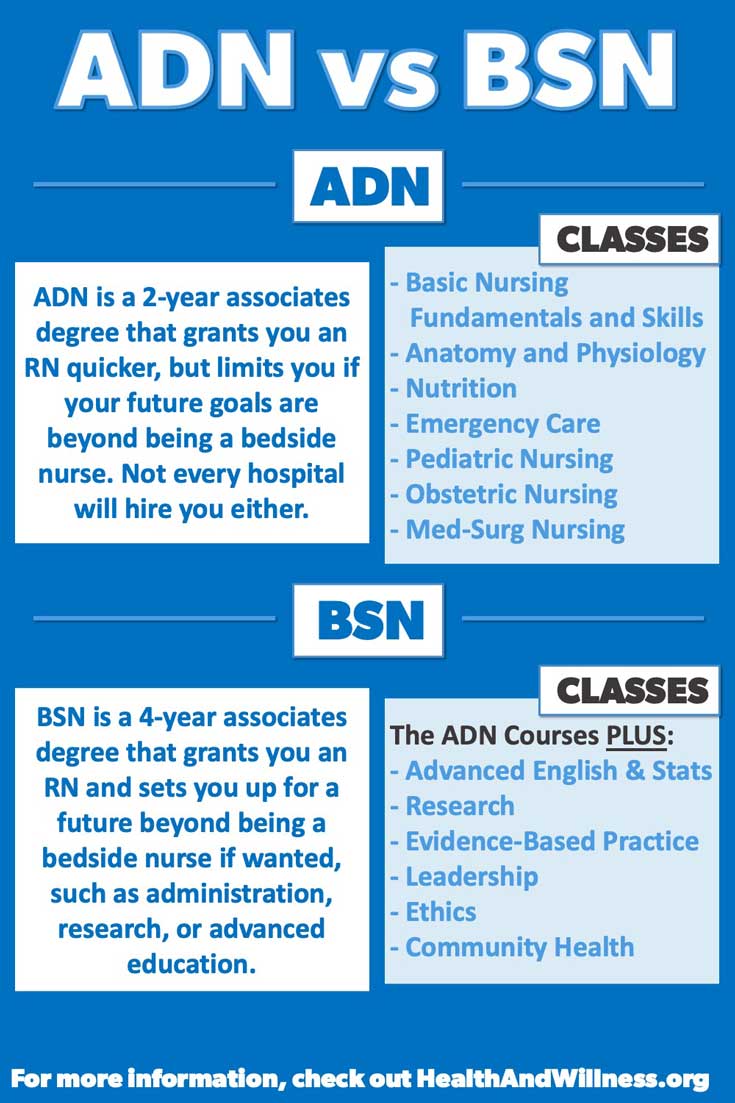
From a purely mathematical standpoint, the “pay parity” between ADN and BSN holders at the entry level is a significant market anomaly. In most clinical settings, an ADN-prepared Registered Nurse (RN) earns the exact same starting hourly wage as a BSN-prepared RN.
While some Magnet-status hospitals prefer BSN holders, the vast majority of healthcare facilities prioritize the RN license over the specific degree. This means the ADN graduate achieves the same earning power (often starting between $60,000 and $85,000 depending on the region) with half the educational investment. Over the first two years of their career, the ADN nurse is earning a full salary while the BSN student is still paying tuition—a net difference that can exceed $150,000 in total wealth when factoring in lost wages and educational costs.
Strategic Career Pathing: From Entry-Level Nursing to High-Income Streams
In the “Money” niche, the goal is not just to earn a salary, but to leverage current assets to acquire greater wealth. The ADN degree is the ultimate leverage tool. It provides the “credentialing floor” required to access corporate benefits that can pay for future advancement.
Leveraging Employer-Sponsored Education (Tuition Reimbursement)
One of the most sophisticated financial moves an ADN graduate can make is utilizing “educational arbitrage.” Many major healthcare systems face a shortage of BSN-prepared nurses and are willing to pay for their employees to upgrade their credentials.
By starting work with an ADN, a nurse can secure a position at a hospital that offers 100% tuition reimbursement for an “RN-to-BSN” bridge program. This allows the professional to earn their bachelor’s degree for free while being paid a full-time salary. From a financial planning perspective, this is a “double win”: you avoid the cost of the degree and you gain two years of professional experience (and senior-level pay raises) in the process.
Specialized Certifications as Income Multipliers
Once the ADN degree is secured, the focus shifts from general practice to specialization. In healthcare, specialization is the key to increasing one’s “billing rate” or hourly value. Certifications in areas such as Critical Care (CCRN), Emergency Nursing (CEN), or Post-Anesthesia Care (CPAN) often come with immediate hourly “diffs” (differentials) or annual bonuses.
Investing a few hundred dollars in a certification exam can result in a $2,000 to $5,000 annual increase in income. This represents a massive return on investment (ROI) that far exceeds traditional market returns. For the ADN professional, these certifications serve as a way to compete with higher-degree holders for lucrative specialty roles without returning to school for several years.
Diversifying Income as an ADN Professional
A key principle of financial independence is the diversification of income streams. The nursing license granted by an ADN degree is a versatile tool that opens doors to several high-margin side hustles and alternative business models.
The Lucrative World of Travel Nursing and Agency Work
Perhaps no other career offers the “burst income” potential of travel nursing. After gaining 12 to 24 months of experience as an ADN-prepared nurse, individuals can transition into contract work. Travel nurses can often earn double or triple the hourly rate of staff nurses, often including tax-free stipends for housing and meals.
For a financially savvy ADN holder, a two-year stint in travel nursing can be a “wealth accelerator.” It provides the capital necessary to wipe out any remaining debt, max out retirement contributions for the year, or provide the seed money for a separate business venture. Agency “per diem” work also allows for a flexible side hustle, where a nurse can pick up extra shifts at premium rates to fund specific financial goals.
Nursing as a Foundation for Healthcare Entrepreneurship
The clinical knowledge gained through an ADN program is the “intellectual property” required for various entrepreneurial ventures. Many nurses leverage their ADN to launch businesses in the “private pay” healthcare sector.
This includes:
- Legal Nurse Consulting: Advising attorneys on medical malpractice or personal injury cases for high hourly fees.
- Concierge Nursing/Home Health: Providing specialized post-operative care for private clients.
- Aesthetics and IV Hydration: With additional training, ADN-prepared nurses can work in or own med-spas, a high-growth sector in the wellness economy.
By shifting from a “wage earner” to a “business owner,” the ADN holder removes the ceiling on their income potential.
Long-Term Wealth Building and Financial Security in Nursing
Beyond the immediate paycheck, the ADN degree offers a pathway to structural financial security. In an era of economic volatility and AI-driven job displacement, nursing remains one of the most stable professions, providing a “defensive” layer to any personal finance portfolio.
Pension Plans, 401(k)s, and Tax-Advantaged Investing
Most healthcare employers, particularly those in the public sector or large non-profit systems, offer robust retirement benefits. ADN graduates who enter the workforce at age 20 or 21 have a massive chronological advantage in the world of compound interest.
By starting an ADN career early, a professional can contribute to employer-matched 403(b) or 401(k) plans for a longer period. Furthermore, nurses working for non-profit hospitals may qualify for Public Service Loan Forgiveness (PSLF), effectively turning any minimal student debt they did incur into a non-factor after ten years of service.
Mitigating Burnout to Protect Your Greatest Asset: Income Longevity
From a financial standpoint, your “human capital”—your ability to work and earn—is your most valuable asset. The ADN degree offers the flexibility to pivot between different types of nursing to prevent burnout, which is the primary threat to a nurse’s earning longevity.
If a high-stress ICU environment becomes unsustainable, an ADN holder can pivot to school nursing, insurance case management, or telehealth. This lateral mobility ensures that the individual stays in the workforce longer, protecting their income stream and social security benefits. In the realm of money management, “staying in the game” is often more important than “winning big” in any single year. The ADN provides the ultimate career insurance policy, ensuring that the holder is never more than a few days away from a well-paying job opportunity, regardless of the economic climate.

Conclusion
What is an ADN degree? In the context of finance and business, it is a low-cost, high-leverage entry into a recession-proof industry. It is a strategic move that prioritizes early earnings, debt avoidance, and rapid career progression. By utilizing the ADN as a foundational asset, a professional can exploit educational arbitrage, tap into high-margin contract work, and build a diversified portfolio of income streams. In the final analysis, the ADN is not just a nursing degree—it is a sophisticated financial tool designed for those who want to achieve professional success and financial independence simultaneously.
aViewFromTheCave is a participant in the Amazon Services LLC Associates Program, an affiliate advertising program designed to provide a means for sites to earn advertising fees by advertising and linking to Amazon.com. Amazon, the Amazon logo, AmazonSupply, and the AmazonSupply logo are trademarks of Amazon.com, Inc. or its affiliates. As an Amazon Associate we earn affiliate commissions from qualifying purchases.