
The acronym “RICO” often evokes cinematic imagery of underground syndicates and high-stakes criminal investigations. However, beyond the Hollywood dramatizations, the Racketeer Influenced and Corrupt Organizations Act represents one of the most powerful and sophisticated financial tools in the United States legal arsenal. Originally designed to dismantle the economic foundations of organized crime, RICO has evolved into a critical mechanism for addressing complex financial fraud, corporate malfeasance, and systemic white-collar crime. For investors, business owners, and financial professionals, understanding the mechanics of a RICO charge is essential, as its implications can lead to the total dissolution of assets, triple-damage payouts, and the permanent restructuring of corporate entities.

The Financial Origins and Evolution of the RICO Act
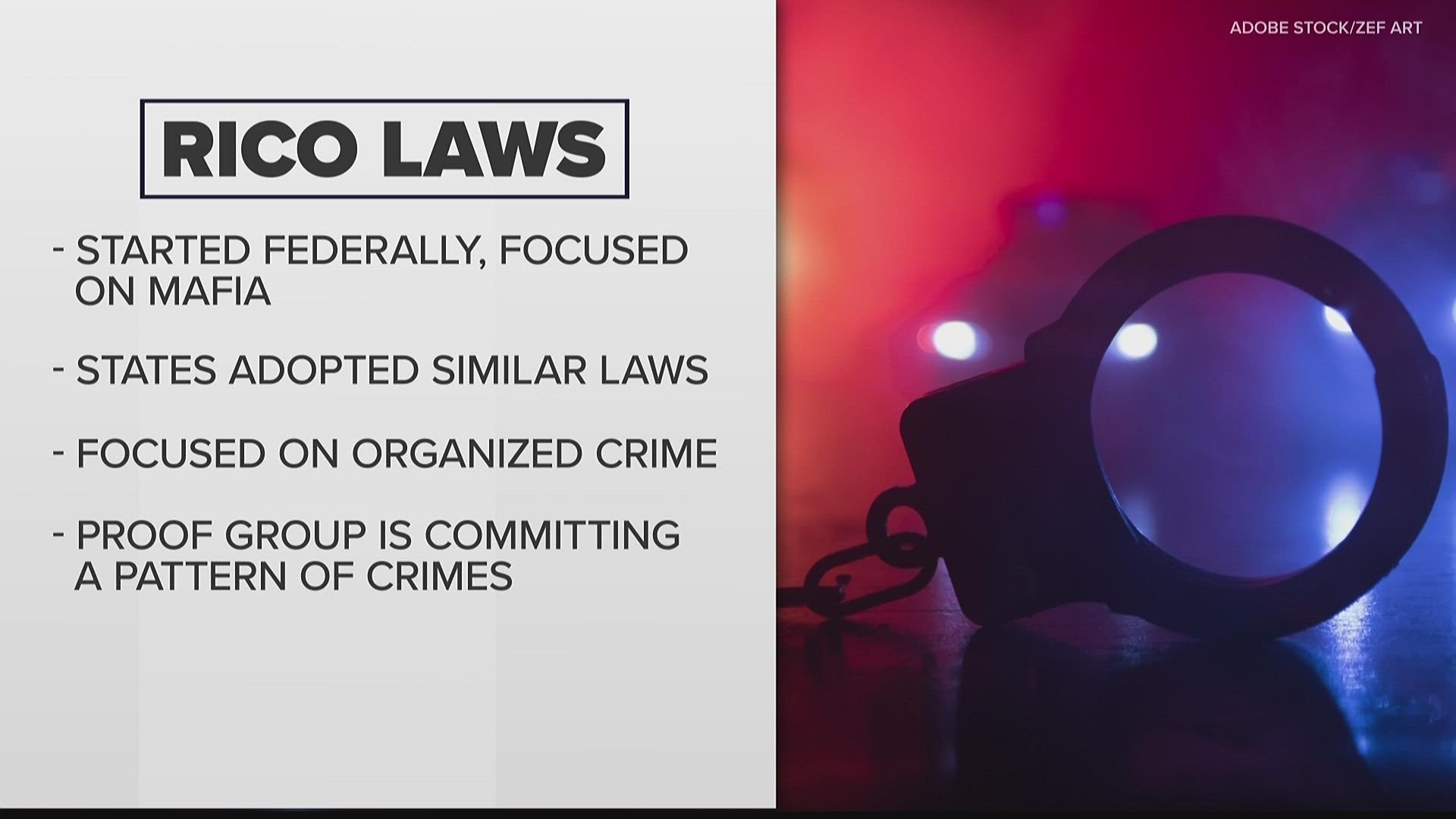
Enacted as part of the Organized Crime Control Act of 1970, RICO was born out of a necessity to target the “enterprise” rather than just the individual. Before its inception, prosecutors could only convict low-level operatives for specific crimes, while the masterminds—and the illicit wealth they accumulated—remained protected by layers of corporate shells and hierarchical distance. From a financial perspective, RICO was designed to hit criminal organizations where it hurts most: their capital.
From the Mafia to Wall Street
While the initial target was traditional organized crime, the 1980s saw a significant shift in how RICO was applied. Federal prosecutors began to recognize that the same logic used to dismantle crime families could be applied to corrupt financial institutions and insider trading rings. High-profile cases involving figures like Michael Milken and firms like Drexel Burnham Lambert demonstrated that RICO was not just a tool for the streets, but a formidable weapon for the boardroom. This transition marked a turning point in business finance, as it established that any “enterprise” engaging in a pattern of racketeering—whether it be a legitimate hedge fund or a fraudulent shell company—could be subject to its draconian penalties.
Defining “Racketeering” in Economic Terms
To understand a RICO charge, one must first define “racketeering activity.” In the context of money and business, this encompasses a broad range of federal and state crimes, including mail fraud, wire fraud, financial institution fraud, embezzlement from pension funds, and money laundering. A RICO charge is triggered when an individual or entity commits at least two such acts within a ten-year period, establishing a “pattern” of criminal conduct. This definition is crucial for the financial sector because it transforms isolated incidents of accounting errors or regulatory slips into a comprehensive criminal conspiracy if they are found to be systematic.
The Financial Mechanics of a RICO Charge
A RICO charge is fundamentally different from a standard criminal indictment because of its focus on the “enterprise.” In the realm of business finance, the enterprise is the vehicle through which the profit is generated. This can be a legitimate corporation, a partnership, or even an informal group of individuals associated in fact for the purpose of generating illicit revenue.
The Enterprise Requirement: Business Structures in Legal Crosshairs
In a RICO case, the prosecution must prove that an enterprise existed and that the defendant was employed by or associated with that enterprise. For a financial entity, this means that the entire structure of the business—its subsidiaries, its offshore accounts, and its management tiers—can be viewed as a singular unit of criminal activity. This “enterprise” concept allows the government to seize assets that were not necessarily the direct result of a specific crime but were part of the broader organization’s financial ecosystem. This creates a massive risk for legitimate businesses that may inadvertently provide services to, or partner with, entities later found to be engaged in racketeering.
The Pattern of Activity: Quantifying Criminal Consistency
The requirement of a “pattern of racketeering activity” is what makes RICO particularly dangerous for large-scale financial operations. Under the law, two “predicate acts” must be proven. In modern finance, these acts are often wire fraud or securities fraud. Because a single fraudulent scheme can involve hundreds of individual wire transfers or emails, a prosecutor can easily identify dozens of predicate acts within a single financial scandal. This cumulative effect allows the government to paint a picture of an ongoing criminal business model rather than a one-time mistake, drastically increasing the likelihood of conviction and the severity of financial penalties.
Civil RICO: A Tool for Financial Litigation
Perhaps the most unique and feared aspect of the RICO Act is its provision for civil litigation. While the criminal side of RICO can lead to prison time, the civil side is designed to provide financial recourse for victims of organized fraud. This has become a staple of high-stakes corporate litigation, where one company may sue another for systematic deceptive practices.
Triple Damages: The Ultimate Deterrent
Under 18 U.S.C. § 1964(c), any person “injured in his business or property” by a RICO violation may sue in federal court and recover “threefold the damages he sustains.” This “treble damages” provision is a massive financial multiplier. For example, if a company loses $10 million due to a competitor’s racketeering scheme, a successful Civil RICO suit could result in a $30 million judgment, plus attorney’s fees. This makes RICO charges a potent weapon in the world of business finance, as the mere threat of a RICO claim can force a massive settlement or drive a company into insolvency.
Asset Forfeiture and Injunctions
Beyond monetary damages, RICO allows for powerful “provisional remedies.” The court can issue restraining orders or injunctions to freeze assets before a trial even begins. In a financial context, this is devastating. A company whose bank accounts are frozen and whose assets are tied up in litigation cannot meet payroll, satisfy debt obligations, or maintain operations. This “financial strangulation” is often enough to end a business’s viability long before a jury ever hears the case. Furthermore, upon conviction, the government can permanently seize any interest the defendant has in the enterprise, effectively liquidating the entity and returning its value to the public treasury or victims.
Modern Implications for Corporate Entities and Financial Institutions
In the 21st century, RICO charges have found new life in the world of fintech, cryptocurrency, and international banking. As financial transactions become more complex and digitized, the “pattern” of activity required for a RICO charge often leaves a clear, immutable paper trail through digital ledgers and communication logs.
White-Collar Crime and Institutional Accountability
Modern RICO applications frequently target “white-collar” enterprises. We have seen RICO-style investigations applied to pharmaceutical companies accused of systemic bribery, banks involved in widespread money laundering, and tech platforms facilitating illicit trade. For these institutions, a RICO charge is a “nuclear option” used by the Department of Justice to signal that the corruption is not the result of a “few bad apples” but is baked into the institution’s business model. This shifts the focus of financial liability from the individuals in the C-suite to the corporation’s entire balance sheet.
Risk Management and Compliance in a RICO Era
For any entity operating in the financial sector, the specter of a RICO charge necessitates a rigorous compliance and risk management framework. Because RICO can turn a series of smaller infractions into a major racketeering case, businesses must implement “know your customer” (KYC) and anti-money laundering (AML) protocols that are airtight. In the world of money, ignorance is rarely a defense against RICO; if a business structure is used to facilitate a pattern of fraud, the owners and operators can be held liable for the enterprise’s actions. This has led to the rise of specialized legal and financial auditors who look specifically for “RICO-vulnerable” patterns in corporate behavior.
The Economic Fallout of a RICO Conviction
The conclusion of a RICO case often results in total financial upheaval. Unlike standard criminal charges where a fine might be seen as a “cost of doing business,” a RICO conviction is designed to be economically terminal for the criminal enterprise.
Restitution and Victim Compensation
A primary goal of the financial penalties associated with RICO is restitution. The law prioritizes the compensation of those who were financially harmed by the racketeering activity. In cases involving large-scale investment fraud or consumer exploitation, the seized assets of the enterprise are often placed into a fund managed by the court to pay back investors. This process can take years, but it ensures that the illicitly gained capital is stripped from the perpetrators and reintroduced into the legitimate economy.

Reputation and Market Impact
Finally, the mere mention of an investigation into a potential RICO charge can cause a company’s stock price to plummet and its credit rating to be downgraded to “junk” status. For a public company, the “RICO label” is a scarlet letter in the eyes of shareholders and institutional investors. The loss of market capitalization can often exceed the actual legal fines or settlements. In the interconnected world of global finance, a RICO charge is a systemic shock that can trigger “bad actor” clauses in international contracts, leading to the immediate termination of partnerships and the loss of operational licenses.
In summary, a RICO charge is the ultimate financial accountability mechanism in the United States. It recognizes that in the world of money and business, the most dangerous crimes are not isolated incidents but are those integrated into the very fabric of an organization. Whether applied to a fraudulent investment firm or a corrupt corporate hierarchy, RICO serves as a stark reminder that the law views the pursuit of profit through a pattern of deception not merely as a series of crimes, but as a fundamental threat to the integrity of the economic system itself.
aViewFromTheCave is a participant in the Amazon Services LLC Associates Program, an affiliate advertising program designed to provide a means for sites to earn advertising fees by advertising and linking to Amazon.com. Amazon, the Amazon logo, AmazonSupply, and the AmazonSupply logo are trademarks of Amazon.com, Inc. or its affiliates. As an Amazon Associate we earn affiliate commissions from qualifying purchases.