
In the contemporary digital landscape, we often treat the “mailing postal code” as a simple requirement for checking out on an e-commerce site or registering for a software service. However, from a technological perspective, a postal code is far more than a string of alphanumeric characters intended for a human mail carrier. It is a vital piece of metadata—a primary key in the global database of logistics, a critical variable in geographic information systems (GIS), and a foundational element of the modern tech stack that powers global commerce.
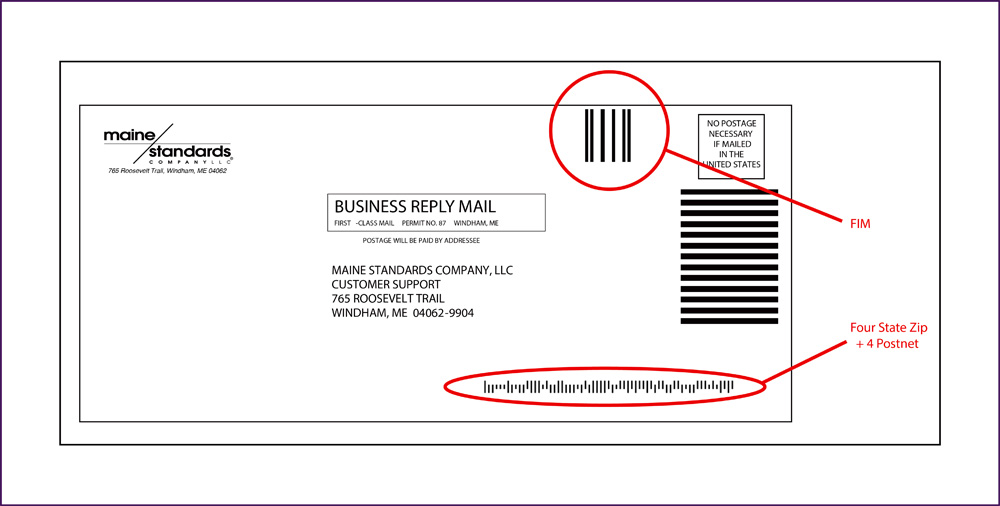
To understand what a mailing postal code is today, we must look beyond the physical envelope. We must examine it as a data point that facilitates complex algorithmic routing, fuels big data analytics, and serves as a bridge between the physical world and digital software architectures.
The Evolution of Postal Codes: From Physical Sorting to Data Arrays
The origin of the postal code was rooted in the need for mechanical efficiency. As mail volume exploded in the mid-20th century, manual sorting became a bottleneck. The introduction of systems like the ZIP (Zone Improvement Plan) code in the United States or the Postcode in the United Kingdom was the first step toward “data-fying” geography.
The Binary Logic Behind Geographic Tagging
In software engineering terms, a postal code functions as a hierarchical data structure. Each digit or character represents a narrower filter in a search query. For example, in many systems, the first digit represents a broad region, the next two represent a central processing hub, and the final digits represent a specific delivery post office or local area. This logic is remarkably similar to how IP addresses route data packets across the internet. Just as an IP address directs data to a specific node on a network, a postal code directs a physical package to a specific node in a logistics network.
How Algorithms Interpret Alphanumeric Strings
For a computer, a postal code is a string variable that must be validated through specific logic. Unlike names or descriptions, postal codes follow strict syntax rules (Regular Expressions or RegEx). Tech platforms use these patterns to ensure data integrity. A “code” is essentially a compressed packet of geographic information. When you input a postal code into a modern application, the backend doesn’t just store the text; it often triggers a “lookup” function that populates city, state, and even latitude/longitude coordinates into the system’s volatile memory.
Integration in Modern Software Architecture
For developers and systems architects, the mailing postal code is a critical integration point. It serves as the primary link between a user’s digital profile and their physical location.
API Verification and Geocoding Services
Most modern web applications do not store an exhaustive list of every postal code in the world. Instead, they rely on specialized APIs (Application Programming Interfaces) such as the Google Maps Geocoding API, Smarty (formerly SmartyStreets), or Loqate. When a user enters a postal code, the software makes an asynchronous call to these services. The service returns a JSON (JavaScript Object Notation) object containing precise geographic coordinates. This process, known as geocoding, transforms a “mailing postal code” into a precise point on a digital map, allowing for features like “find a store near you” or “calculate shipping costs in real-time.”
Database Management: Storing and Querying Global Address Formats
Handling postal codes globally is a significant challenge in database design. Developers must account for varying lengths and formats—ranging from the 5-digit numeric ZIP in the US to the complex alphanumeric codes of Canada (A1B 2C3) or the Netherlands. A robust tech architecture must use flexible data types (typically VARCHAR rather than INT) to store these codes. Furthermore, indexing these fields is essential for high-speed queries, especially for platforms that perform heavy spatial analysis or localized content delivery.
The Role of Postal Codes in the E-commerce and Logistics Tech Stack

The “mailing postal code” is the heartbeat of the automated supply chain. Without this standardized data point, the high-speed delivery promises of companies like Amazon or Alibaba would be technologically impossible.
AI-Driven Route Optimization
Logistics software utilizes the postal code as a core variable in vehicle routing problems (VRP). Advanced algorithms analyze thousands of delivery points simultaneously to determine the most fuel-efficient and time-sensitive path for a delivery vehicle. By grouping deliveries by postal code clusters, AI can predict traffic patterns, calculate “last-mile” delivery windows, and optimize the load sequence of a delivery van. The postal code acts as the “cluster ID” that allows these machine-learning models to process massive datasets into actionable driving directions.
Machine Learning in Automated Sorting Facilities
In modern distribution centers, high-speed cameras equipped with Optical Character Recognition (OCR) software scan labels at a rate of several packages per second. These OCR systems are trained using deep learning models to recognize various fonts, handwriting styles, and even damaged labels to extract the postal code. Once the code is digitized, the system cross-references it with a global routing table and signals mechanical diverters to send the package to the correct loading dock. In this context, the postal code is the digital trigger for an entire ecosystem of industrial robotics.
Cybersecurity and Privacy Dimensions of Location Data
As we transition further into a data-driven society, the mailing postal code has become a sensitive piece of information within the realm of cybersecurity and data privacy.
Protecting PII (Personally Identifiable Information) in Shipping
Under frameworks like GDPR (General Data Protection Regulation) or CCPA (California Consumer Privacy Act), a postal code can be considered part of an individual’s “Personally Identifiable Information” (PII), especially when combined with other data points. Tech companies must implement encryption at rest and in transit for any database fields containing postal codes. Furthermore, “k-anonymity” techniques are often used in data science, where a postal code is truncated (e.g., keeping only the first three digits) to allow for demographic analysis without compromising the specific identity or location of an individual.
Geofencing and Location-Based Security Protocols
Postal codes are also used as a layer in cybersecurity defense. Many financial applications and SaaS platforms use “geofencing” logic to flag suspicious activity. If a user’s postal code is registered in New York, but an account login attempt occurs from an IP address associated with a different geographic region, the security software may trigger a multi-factor authentication (MFA) challenge. Here, the postal code serves as a baseline for geographic identity verification.
The Future of Spatial Addressing: Beyond Static Codes
As technology advances, the traditional mailing postal code is evolving into more dynamic and precise systems. We are moving toward a future where “addresses” are no longer static strings but fluid digital coordinates.
Virtual Address Mapping and the Rise of Digital Twins
Emerging tech like “Digital Twins”—virtual replicas of physical cities—require more precision than a standard postal code can provide. Newer systems like “Plus Codes” (developed by Google) or “what3words” are attempting to revolutionize the concept of the postal code. These systems divide the entire world into tiny squares (e.g., 3×3 meters) and assign each a unique digital identifier. For autonomous delivery drones and self-driving trucks, these high-resolution digital addresses are far more useful than a traditional postal code, which may cover several square miles.
Blockchain for Immutable Logistics Tracking
There is growing interest in using blockchain technology to manage the “Chain of Custody” in shipping. In a blockchain-enabled logistics network, the mailing postal code becomes part of a smart contract. As a package moves from one postal zone to another, the transaction is recorded on a decentralized ledger. This ensures an immutable record of the package’s journey, reducing fraud and providing a level of transparency that traditional relational databases struggle to achieve at scale.

Conclusion
A mailing postal code is no longer just a tool for the post office; it is a fundamental unit of digital geography. In the realm of technology, it serves as a bridge between the physical world and the digital systems that manage our lives. From the RegEx patterns used by developers to validate inputs, to the AI models optimizing global shipping routes, and the cybersecurity protocols protecting our privacy, the postal code is an indispensable component of the modern tech stack. As we look toward a future of autonomous delivery and blockchain-verified logistics, the humble postal code will continue to evolve, transforming from a simple sequence of numbers into a sophisticated node in the global grid of information.
aViewFromTheCave is a participant in the Amazon Services LLC Associates Program, an affiliate advertising program designed to provide a means for sites to earn advertising fees by advertising and linking to Amazon.com. Amazon, the Amazon logo, AmazonSupply, and the AmazonSupply logo are trademarks of Amazon.com, Inc. or its affiliates. As an Amazon Associate we earn affiliate commissions from qualifying purchases.