
In the world of real estate and personal finance, few terms carry as much weight—or as much dread—at the word “condemned.” For a homeowner, it represents the potential loss of their primary asset. For an investor, it signals either a catastrophic loss of capital or a high-risk, high-reward opportunity. From a financial standpoint, a condemned house is an asset that has transitioned into a significant liability. Understanding the fiscal mechanics of property condemnation is essential for anyone navigating the property market, whether you are protecting your own equity or looking for distressed assets to add to a portfolio.
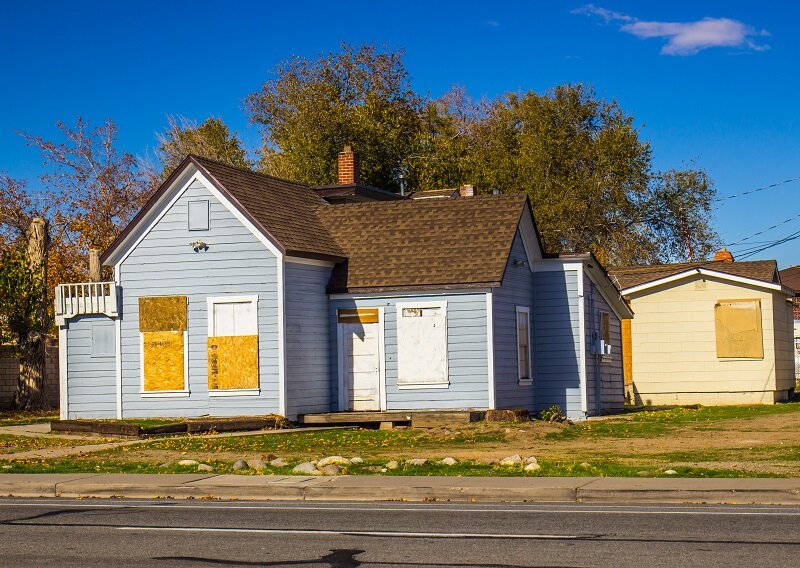
This article explores the financial fallout of condemnation, the impact on property valuation, and the strategic considerations for investors looking to navigate this complex niche of the “Money” sector.
1. The Financial Definition of Condemnation: From Asset to Liability
At its core, condemnation is a legal declaration by a local government entity that a structure is no longer fit for human habitation. While the reasons are often physical—structural failure, unsanitary conditions, or lack of essential utilities—the financial implications are immediate and severe.
The Immediate Eradication of Market Value
The moment a “Condemned” notice is posted, the market value of the property undergoes a dramatic shift. In a standard real estate transaction, value is derived from the “Highest and Best Use” of the land and the structure. Once condemned, the structure’s value often drops to zero—or even becomes a negative number due to the cost of demolition. The property’s remaining value is tied almost exclusively to the land, minus the “encumbrances” of the legal status and the physical debris.
The Liquidity Crisis
A condemned property is, by definition, illiquid. Most traditional mortgage lenders will not finance a property that cannot be legally occupied. This removes the vast majority of retail buyers from the market, leaving only cash buyers and specialized institutional investors. If you are a homeowner relying on the sale of your house to fund a retirement or a move, a condemnation notice effectively freezes your net worth until the status is remediated or the land is sold at a steep discount.
Insurance and Liability Exposure
From a risk management perspective, a condemned house is a financial minefield. Most standard homeowners’ insurance policies contain clauses that allow the insurer to cancel coverage or deny claims if a property is abandoned or deemed uninhabitable. This leaves the owner personally liable for any injuries that occur on the property (e.g., a trespasser getting injured) and provides no protection against fire or further damage. The cost of “vacant property insurance” is significantly higher than standard premiums, adding to the monthly financial drain.
2. Financial Consequences for the Property Owner
When a house is condemned, the owner is not just losing a place to live; they are facing a series of cascading financial pressures that can lead to total insolvency if not managed correctly.
Mortgage Acceleration and Foreclosure
One of the most overlooked financial risks of condemnation is the “acceleration clause” found in most mortgage contracts. Lenders require the collateral (the house) to be maintained in good condition. A condemnation notice often triggers a technical default. The bank may demand full repayment of the loan immediately because their collateral no longer covers the loan amount. If the owner cannot pay or remediate the property quickly, the bank will move toward foreclosure to salvage the land value.
Tax Implications and Liens
Local municipalities do not stop collecting property taxes just because a building is condemned. In fact, the financial burden often increases. If the owner fails to secure the building or clear debris, the city may perform the work themselves and place a “municipal lien” on the property. These liens often carry high-interest rates and must be paid before any profit can be realized from a future sale. Furthermore, if the property is eventually demolished by the city, the owner is billed for the demolition costs, which can range from $10,000 to $50,000 depending on the size and location.
The Cost of Remediation vs. Fair Market Value
The primary financial decision an owner faces is whether to “rehab or release.” Remedying a condemnation order requires a significant capital infusion. You must hire licensed engineers, obtain specialized permits, and bring the entire structure up to current building codes—not just the parts that were broken. If the cost of these repairs exceeds the eventual post-repair market value, the owner is in a “negative equity” trap. In professional finance, this is known as a “sunk cost” scenario, where walking away may be the most fiscally responsible (though painful) choice.
3. Investing in Condemned Properties: The High-Stakes Strategy
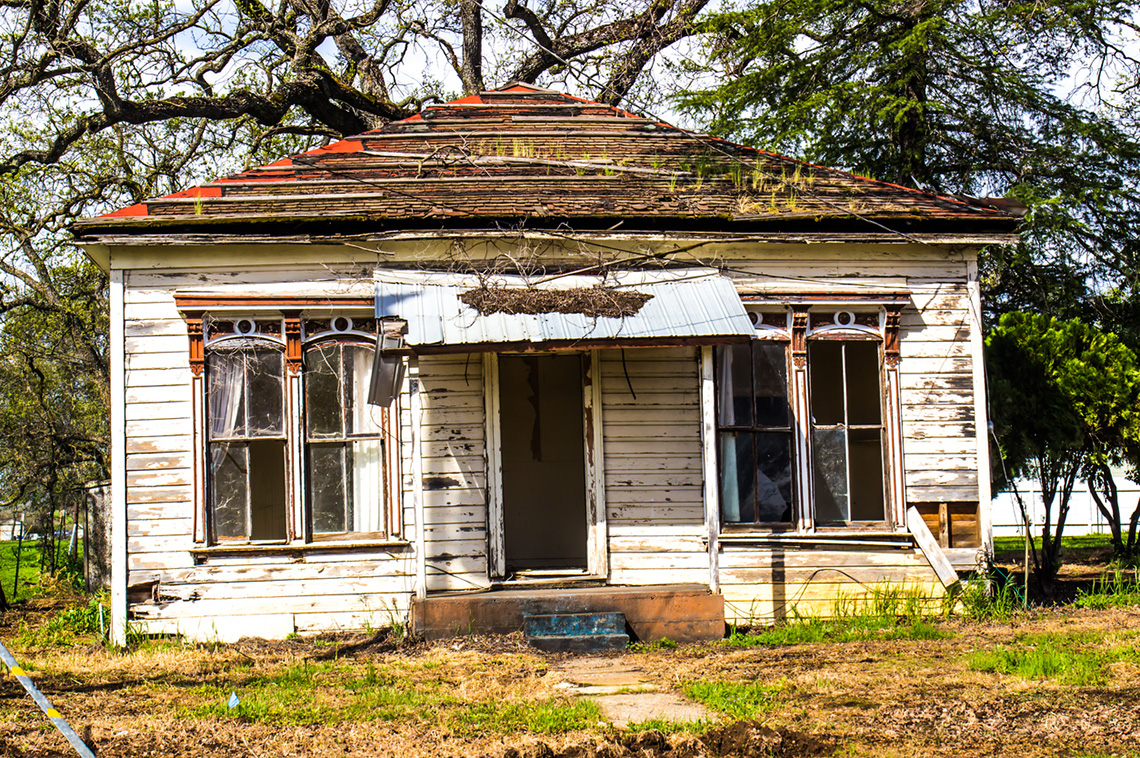
While a condemned house is a nightmare for an owner, it is a specialized asset class for distressed debt and real estate investors. Dealing in these properties requires a sophisticated understanding of capital allocation and risk assessment.
Identifying the “Spread” in Distressed Assets
Investors look for the “spread”—the difference between the acquisition cost (plus repair costs) and the After Repair Value (ARV). Because condemned properties are sold “as-is” and usually for cash, they can often be acquired for 20% to 40% of their potential value. The financial goal is to manage the rehabilitation process efficiently enough to maintain a high Internal Rate of Return (IRR).
Due Diligence and Hidden Capital Expenditures
The risk in buying condemned properties lies in “hidden CapEx” (capital expenditures). An investor must account for:
- Structural Integrity: Is the foundation compromised? This is often the difference between a profitable flip and a total loss.
- Zoning and Code Changes: Will the city require the new owner to install expensive modern infrastructure (e.g., updated sewer lines or fire suppression systems) as a condition of lifting the condemnation?
- Title Issues: Condemned properties often come with a “clouded title,” including unpaid utility bills, tax liens, and mechanics’ liens that must be settled at closing.
The Demolition and New Construction Play
Sometimes, the smartest financial move isn’t to fix the condemned house, but to factor the demolition cost into the purchase price and treat the deal as a land play. In high-demand urban areas, the value of the “dirt” often exceeds the value of a renovated old structure. Investors who understand local zoning laws can turn a condemned single-family home into a high-density multi-family unit, significantly increasing the yield on the investment.
4. Navigating the Legal and Regulatory Costs
Condemnation is as much a legal and bureaucratic process as it is a physical one. Each step in the process involves fees, permits, and professional services that impact the bottom line.
Permit Fees and Impact Fees
Lifting a condemnation order is not as simple as fixing a hole in the roof. Most jurisdictions require “master permits” that cover electrical, plumbing, and structural work simultaneously. These permits are priced based on a percentage of the estimated project cost, adding thousands to the budget. Additionally, some cities charge “impact fees” for revitalizing a derelict property, which are essentially taxes paid to support the local infrastructure.
The Role of Public Adjusted and Legal Counsel
To fight a condemnation order or to negotiate with the city for more time, owners often need to hire legal counsel or specialized consultants. These professional fees are “soft costs” that do not add physical value to the building but are necessary to protect the asset’s legal standing. For an investor, these costs must be modeled into the initial pro-forma to ensure the project remains profitable.
Eminent Domain and “Just Compensation”
In some cases, a house is condemned not because of its condition, but because the government wants the land for public use (Eminent Domain). From a money perspective, this triggers a “valuation battle.” The government is required to pay “just compensation,” but their definition of “just” is often the lowest possible appraisal. Owners must often spend money on independent appraisals and legal representation to ensure they receive the true market value of their asset, rather than a low-ball offer based on the property’s current distressed state.

5. Strategic Conclusion: Protecting and Growing Your Capital
Whether you are a homeowner trying to save your equity or an investor looking for your next project, a condemned house represents a pivot point in financial management.
For the homeowner, the priority is mitigation. Acting quickly to address code violations before the “Condemned” sign is posted can save tens of thousands of dollars in legal fees and lost property value. Once the notice is posted, the focus must shift to a realistic “cost-benefit analysis”: is the house worth the cost of the cure, or is a short sale the best way to protect your credit score and remaining assets?
For the investor, the priority is precision. The margin for error on a condemned property is razor-thin. Success in this niche requires a “margin of safety”—buying at a deep enough discount that even if unexpected structural issues arise, the project remains cash-flow positive.
In the end, while a condemned house may look like a physical ruin, it is actually a complex financial puzzle. Solving that puzzle requires a disciplined approach to risk, a deep understanding of municipal regulations, and the ability to see the latent value in the land beneath the decay. In the world of money, those who can navigate the “un-habitable” are often the ones who find the greatest returns.
aViewFromTheCave is a participant in the Amazon Services LLC Associates Program, an affiliate advertising program designed to provide a means for sites to earn advertising fees by advertising and linking to Amazon.com. Amazon, the Amazon logo, AmazonSupply, and the AmazonSupply logo are trademarks of Amazon.com, Inc. or its affiliates. As an Amazon Associate we earn affiliate commissions from qualifying purchases.