
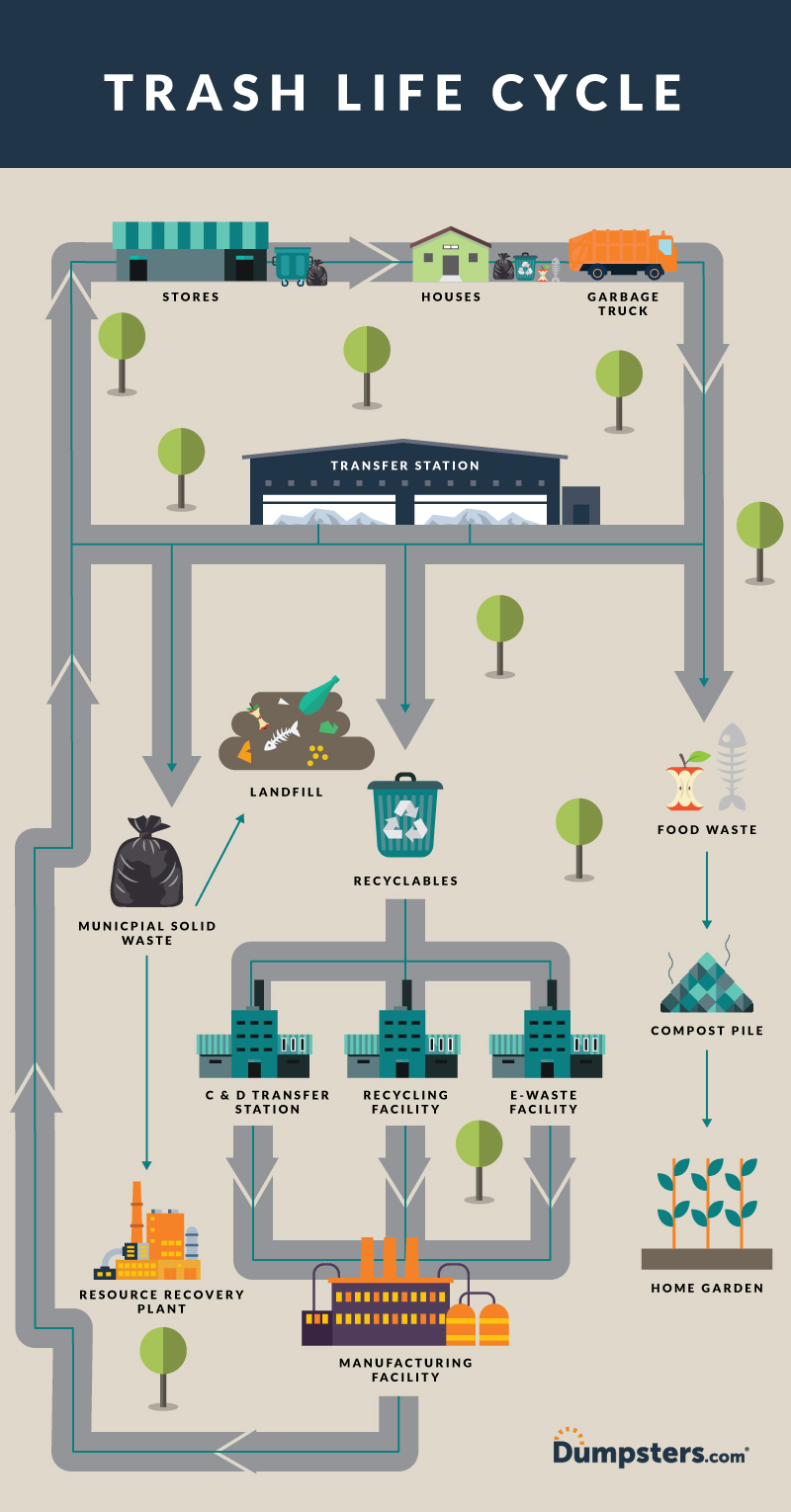
For decades, the journey of waste was a linear and largely invisible process: a bin was emptied, a truck drove away, and the contents were buried in a landfill or incinerated. However, as the global volume of waste is projected to reach 3.4 billion tonnes annually by 2050, the traditional “out of sight, out of mind” philosophy is being dismantled by a surge of technological innovation.
Today, when we ask “what happens to garbage,” the answer is increasingly found in data centers, robotic sorting lines, and molecular recycling laboratories. The waste management sector is undergoing a massive digital transformation, turning the world’s refuse into a high-tech resource stream. This article explores the sophisticated technology currently redefining the lifecycle of garbage, from AI-driven sorting to the blockchain-enabled circular economy.
The Intelligence of the Bin: AI and Robotic Sorting Systems
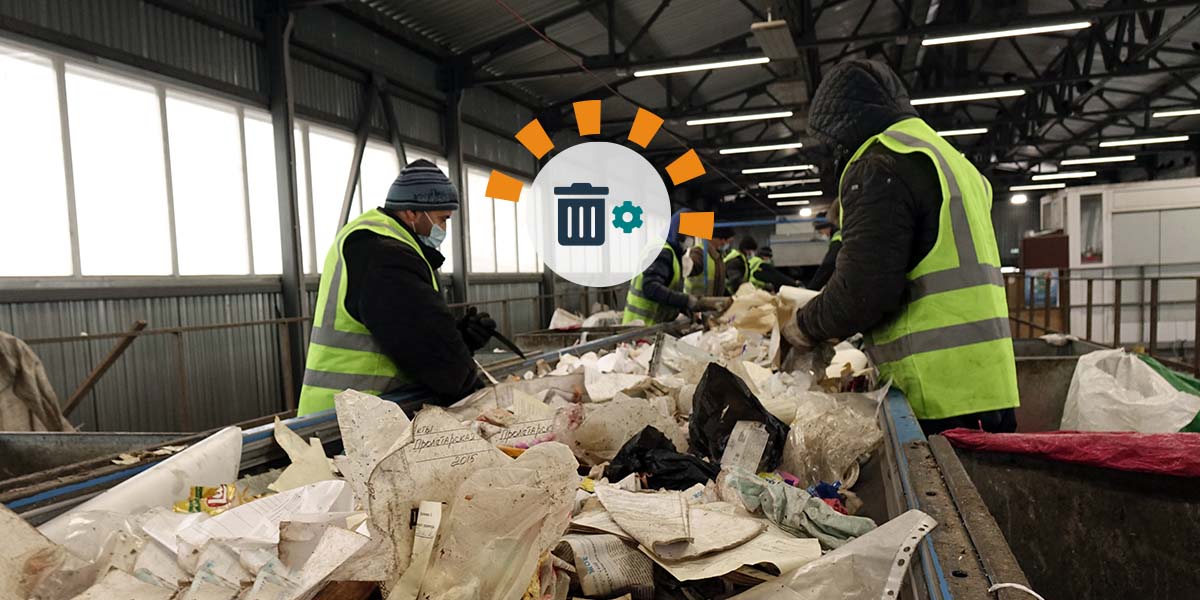
The most significant bottleneck in the waste lifecycle has historically been sorting. For recycling to be economically viable, materials must be pure. In the past, this required dangerous, manual labor or crude mechanical systems that often failed to distinguish between different types of plastics or contaminated paper.
Computer Vision and Neural Networks
The modern Material Recovery Facility (MRF) is now powered by advanced computer vision. Using high-resolution cameras and near-infrared (NIR) sensors, these systems can identify thousands of unique items per minute. Deep learning algorithms are trained on massive datasets to recognize not just the material (e.g., PET vs. HDPE plastic) but also the brand and the potential for recyclability. These neural networks can distinguish a crushed soda can from a piece of cardboard even when they are covered in grime or partially obscured, achieving accuracy levels that exceed human capability.
Robotic Intervention and Precision
Once an object is identified by the AI “brain,” robotic arms—often equipped with high-speed suction or parallel grippers—take over. These robots can perform up to 80 “picks” per minute, whereas a human worker averages about 30 to 40. This technology doesn’t just increase speed; it increases the value of the output. By producing ultra-pure streams of recycled pellets, technology ensures that what was once garbage can be reintroduced into the manufacturing supply chain as high-quality raw material.
Optical Sorting and Air Jets
Beyond mechanical arms, optical sorters use spectrometers to analyze the light reflected off objects on a conveyor belt. When the system identifies a target material—such as a specific type of polymer—it triggers a precise blast of compressed air from a nozzle manifold. This “shoots” the item into a separate bin with millisecond precision. This layer of tech allows facilities to process massive volumes of waste with minimal downtime, effectively turning “garbage” into a predictable inventory of commodities.
The Internet of Waste: IoT and Logistics Optimization
What happens to garbage before it even reaches the facility is also being revolutionized by the Internet of Things (IoT). The logistics of waste collection is one of the most carbon-intensive and expensive parts of the process.
Smart Sensors and Fill-Level Monitoring
The “dumb” dumpster is being replaced by sensor-enabled units. Ultrasonic sensors mounted inside bins measure the fill level in real-time and transmit this data via cellular or LoRaWAN networks to a centralized cloud platform. This shifts the model from a fixed-schedule collection (picking up bins regardless of whether they are full) to a dynamic, demand-driven model. This tech reduces unnecessary truck rolls, lowering fuel consumption and urban traffic congestion.
Algorithmic Route Optimization
The data collected from smart bins is fed into sophisticated routing software. These algorithms calculate the most efficient path for collection fleets, accounting for traffic patterns, fuel efficiency, and the priority of specific waste types (such as organic waste that might pose a biohazard if left too long). By treating garbage collection as a complex data-optimization problem, cities are significantly reducing the carbon footprint of the waste lifecycle.
Fleet Telematics and Predictive Maintenance
Modern garbage trucks are themselves mobile data hubs. Telematics systems monitor engine health, hydraulic pressure in the compactors, and driver behavior. Predictive maintenance algorithms analyze this data to foresee mechanical failures before they happen, ensuring that the critical infrastructure of waste management remains operational. This ensures that the flow of garbage from the curb to the processing plant is never interrupted by avoidable equipment failure.
Molecular Reconstruction: High-Tech Resource Recovery
When garbage cannot be mechanically sorted or recycled—such as contaminated plastics or complex electronic waste—the next phase of its lifecycle involves advanced chemical and metallurgical technology.
Chemical Recycling and Depolymerization
Traditional recycling (melting plastic) often degrades the quality of the material. However, chemical recycling uses heat and chemical catalysts to break down plastics into their original monomers. This process, known as depolymerization or pyrolysis, effectively resets the plastic’s lifecycle. The resulting oils and chemicals can be used to create “virgin-quality” plastic again. This technology is the key to a truly circular economy, where a plastic bottle can be reborn infinitely without losing structural integrity.
Urban Mining: The E-Waste Frontier
Electronic waste (e-waste) is the fastest-growing waste stream in the world, containing precious metals like gold, silver, and palladium, as well as critical minerals like cobalt and lithium. Modern “urban mining” facilities use high-tech hydro-metallurgical and pyro-metallurgical processes to extract these materials. This involves acid leaching and electrolysis at a molecular level to separate different metals with extreme precision. As the tech industry faces mineral shortages, the garbage in our old smartphones is becoming a primary source of high-tech components for new gadgets.
Bio-Refineries and Organic Processing
What happens to organic garbage is also changing. Instead of letting food waste rot in a landfill and produce methane (a potent greenhouse gas), high-tech anaerobic digesters use specialized bacteria to break down organic matter in a controlled environment. This process produces biogas, which is refined into renewable natural gas (RNG) to power the very trucks that collect the waste. It is a closed-loop technological system that turns biological “garbage” into clean energy.
Blockchain and the Transparency of the Circular Economy
One of the greatest challenges in waste management is the lack of transparency. How can a tech company prove that their product was actually recycled? This is where blockchain technology enters the lifecycle of garbage.
Digital Product Passports
The “Digital Product Passport” (DPP) is an emerging tech standard where every manufactured item is assigned a unique digital identity stored on a blockchain. This identity contains data about the materials used, the manufacturing process, and instructions for end-of-life disposal. When a product becomes “garbage,” the recycler can scan its QR code or RFID tag to instantly know its chemical composition, significantly speeding up the sorting and recovery process.
Tokenizing Waste Recovery
Blockchain-based platforms are being used to incentivize recycling in developing regions. By “tokenizing” plastic waste, individuals can receive digital currency for bringing materials to collection centers. This creates a transparent, immutable record of the waste’s journey, allowing global brands to verify their “plastic credits” and ensure that their sustainability claims are backed by hard data.
Supply Chain Traceability
For manufacturers, knowing exactly where their recycled content comes from is essential for regulatory compliance. Blockchain provides a tamper-proof “chain of custody” for garbage. From the moment a bottle is picked up by a smart bin to the moment it is transformed into a new flake of recycled PET, every transaction is logged. This high-tech accountability ensures that recycled materials are not mixed with virgin materials deceptively, maintaining the integrity of the green tech ecosystem.
The Future: Waste-to-Energy (WtE) and Carbon Capture
In cases where garbage cannot be recycled or repurposed, the final technological frontier is Advanced Waste-to-Energy (WtE). This is far removed from the simple incinerators of the past.
Plasma Gasification
Plasma gasification is a high-tech process that uses a plasma torch to create temperatures exceeding 5,000 degrees Celsius. This doesn’t burn the garbage; it causes a molecular dissociation. The organic matter is converted into syngas (a mixture of hydrogen and carbon monoxide), while inorganic matter is turned into a glass-like slag used in construction. This represents the pinnacle of waste technology, capable of processing hazardous materials and non-recyclables into clean energy and useful industrial byproducts.

Integrated Carbon Capture and Storage (CCS)
Modern WtE plants are now being integrated with Carbon Capture and Storage technology. As waste is processed for energy, the CO2 emissions are captured before they reach the atmosphere, liquified, and transported to be stored underground or used in industrial applications like concrete curing. This turns the waste management facility into a carbon-neutral—or even carbon-negative—tech hub, effectively mitigating the environmental impact of the garbage that can’t be reused.
In conclusion, what happens to garbage today is a testament to the power of technological convergence. By blending AI, IoT, robotics, and advanced chemistry, we are shifting from a society that “disposes” of its problems to one that “processes” its resources. The garbage of the 21st century is no longer a burden; it is a data-rich, high-value asset at the heart of the next industrial revolution.
aViewFromTheCave is a participant in the Amazon Services LLC Associates Program, an affiliate advertising program designed to provide a means for sites to earn advertising fees by advertising and linking to Amazon.com. Amazon, the Amazon logo, AmazonSupply, and the AmazonSupply logo are trademarks of Amazon.com, Inc. or its affiliates. As an Amazon Associate we earn affiliate commissions from qualifying purchases.