
In the landscape of modern narrative storytelling, few characters offer as compelling a study in personal branding and professional identity as Hank Schrader. While many viewers see Hank simply as the high-energy DEA agent and foil to Walter White in AMC’s Breaking Bad, a closer examination through the lens of brand strategy reveals a much more complex trajectory. Hank Schrader’s evolution—from a boisterous, narrow-focused lawman to a tragic figure of uncompromising integrity—serves as a masterclass in how a personal brand is built, how it is disrupted by market forces (in this case, the rise of Heisenberg), and what happens when a brand refuses to compromise its core values even in the face of total liquidation.
Building the “ASAC Schrader” Brand: Professional Identity and Market Positioning
Every successful brand begins with a clear identity and a specific value proposition. In the early seasons of the narrative, Hank Schrader’s brand was synonymous with the archetypal “Alpha Lawman.” He occupied a specific niche in the Albuquerque law enforcement market: the gregarious, high-performing investigator who used humor and bravado to mask the high-stakes pressure of his environment.
The Core Brand Values: Bravery, Humor, and the Law
Hank’s brand was built on three foundational pillars: physical courage, a morale-boosting (if often politically incorrect) sense of humor, and an unshakeable belief in the binary nature of right and wrong. To his colleagues at the DEA, the “Schrader Brand” represented reliability. He was the front-facing “CMO” of his department, often leading the charge in press conferences and high-profile raids. This brand consistency allowed him to climb the corporate ladder, eventually securing the position of Assistant Special Agent in Charge (ASAC). His brand wasn’t just about catching criminals; it was about projecting an image of invincibility that bolstered the department’s public relations.
Strategic Differentiation: The Lone Wolf vs. the Bureaucracy
While Hank was a company man, his brand strategy involved a level of “Strategic Differentiation.” Unlike the faceless bureaucrats in the El Paso office or the higher-ups in Washington, Hank maintained a “boots-on-the-ground” persona. He cultivated a personal brand that was accessible to his subordinates and intimidating to his competitors (the cartels). This differentiation was his Unique Selling Proposition (USP). He wasn’t just a suit; he was a hunter. However, this narrow brand positioning—relying heavily on his image as the ultimate predator of the drug trade—left him vulnerable to a specific type of market disruption that he never saw coming.
Market Disruption: When the Brand Identity Faces a Hostile Takeover
In business, a hostile takeover occurs when an outside entity threatens the autonomy and existence of an established brand. For Hank, this disruption was the “Heisenberg” entity. The emergence of a blue meth manufacturer who operated with surgical precision and intellectual superiority was a direct challenge to Hank’s “expert” status in the Albuquerque narcotics market.
The Heisenberg Effect: An Unforeseen Competitor
The Heisenberg brand was the ultimate “disruptive startup.” It operated outside the traditional rules of the drug trade, utilizing chemistry and high-level strategy rather than just brute force. Because Hank’s brand was built on his ability to “read” the street, the arrival of a competitor he couldn’t categorize created a massive internal brand crisis. This is a classic example of “Competitive Blindness.” Hank was so confident in his brand’s ability to identify “the bad guy” that he failed to see the threat growing within his own family—the ultimate failure of internal brand auditing.

Internal Brand Erosion: Trauma and the Loss of Public Persona
The physical and psychological toll of his “brand wars”—specifically the shootout with Tuco Salamanca and the later assassination attempt by the Cousins—led to a period of “Brand Erosion.” Hank lost the boisterousness that defined his early identity. During his recovery, the “Schrader Brand” went dormant. He pivoted briefly into mineral collecting and home-brewing (Schraderbräu), representing a classic brand “pivot” born out of crisis. This period was essential for his brand’s survival; it stripped away the performative bravado and left behind a refined, more focused core identity: the pursuit of truth at any cost.
The Final Pivot: Rebranding the Search for Truth
The turning point for the Hank Schrader brand occurred in a bathroom, where a chance discovery of a book (Walt’s “Leaves of Grass”) finally aligned the external data with Hank’s internal intuition. This led to a complete “Brand Re-Launch.” No longer was Hank seeking professional accolades or departmental approval; his brand had pivoted to a singular, moral obsession.
From Beer-Brewing Hobbyist to Dedicated Investigator
This re-launch saw Hank operating outside the traditional corporate structure of the DEA. Recognizing that his department would likely “fire” him (or at least suspend his authority) if he revealed the truth about his brother-in-law without concrete evidence, Hank took his brand “boutique.” He worked from his garage, leveraging his personal assets and his relationship with his “junior partner,” Steven Gomez. This shift from a massive corporate brand to a lean, focused investigation team allowed for greater agility, though it significantly increased his personal risk profile.
The Ethical Compass as a Brand USP
In the final stages of his career, Hank’s brand was redefined by its ethical purity. In a world where every other character—from Walter White to Saul Goodman—was compromising their values for profit or survival, the “Schrader Brand” stood for a rare commodity: Uncompromising Integrity. This became his new market position. He was the only person willing to sacrifice his career and his safety to ensure that the “Heisenberg” brand was permanently delisted from the market. This ethical stance was his most powerful brand equity, but it was also the factor that made his brand incompatible with the violent, lawless environment of the To’hajiilee desert.
The Tragic Exit: Brand Loyalty at the Ultimate Price
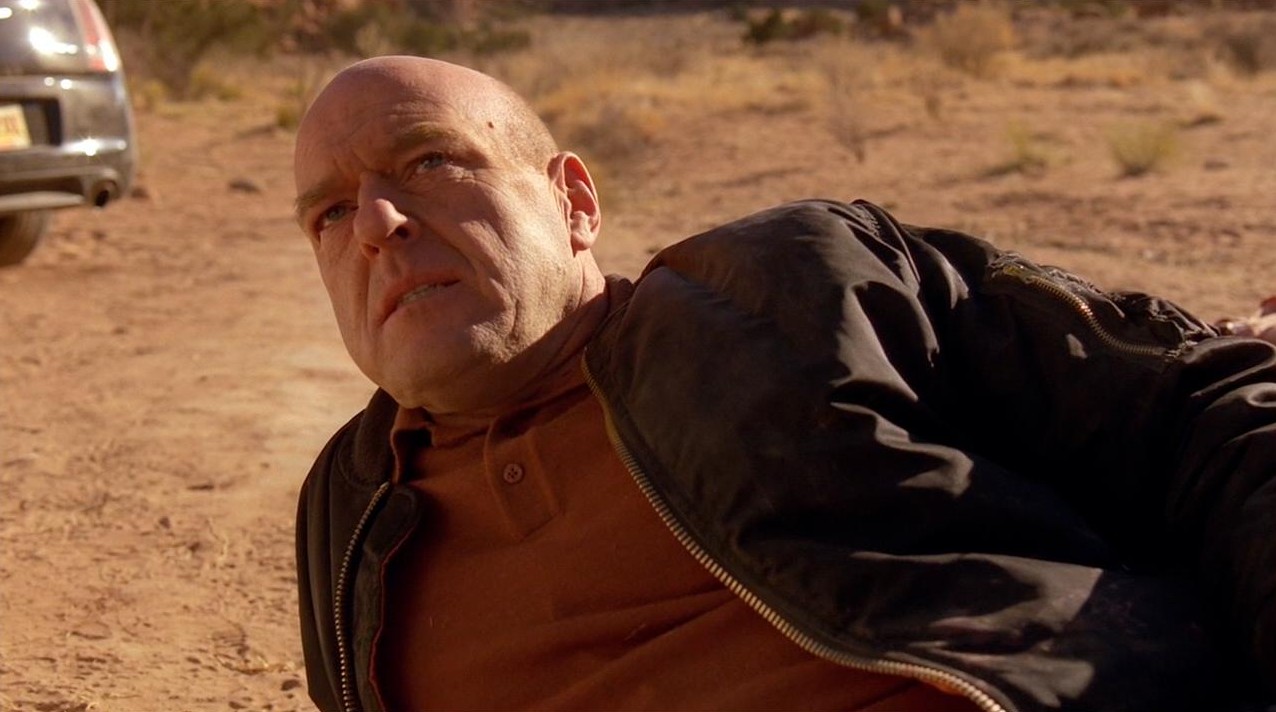
What happened to Hank Schrader is a narrative tragedy, but from a brand perspective, it was the final, logical conclusion of a brand that refused to “sell out.” His death in the desert was not a failure of his brand, but the ultimate validation of its consistency.
The Desert Standoff: When Brand Integrity Outlasts Life
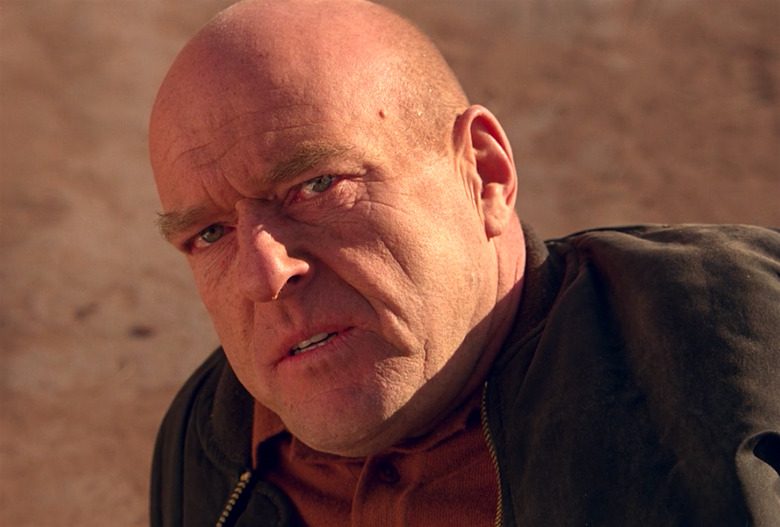
In his final moments, faced with Jack Welker’s gang, Hank was offered a “merger” of sorts—Walter White offered $80 million to save Hank’s life. In business terms, this was a massive buyout offer. If Hank had accepted, he would have survived, but his brand would have been destroyed. He would have become a “subsidiary” of the Heisenberg criminal empire. Hank’s refusal, and his famous final line (“You’re the smartest guy I ever met, and you’re too stupid to see—he made up his mind ten minutes ago”), showed that he understood the market better than Walt did. He knew that his brand’s story ended there, and he chose to go out with his brand’s reputation intact.
Legacy Branding: How Hank Schrader’s Narrative Endures
While the physical entity of Hank Schrader was lost, his “Legacy Brand” became the catalyst for the eventual downfall of the Heisenberg empire. His death forced a “Market Correction.” It removed the last vestige of Walt’s moral justification and set in motion the series of events that led to the total liquidation of the Neo-Nazi gang and Walt’s own demise. In the end, the “Schrader Brand” won the long-term market share of public opinion. He is remembered not as the man who failed to catch Heisenberg for a year, but as the man whose unwavering dedication to the law eventually exposed the truth.
Conclusion: Lessons in Brand Resilience
The story of Hank Schrader teaches us that a brand is more than just a logo, a title, or a catchphrase. It is a set of promises. Hank promised the world that he would stand for justice, and he kept that promise at the highest possible price. In the world of “Brand Strategy,” Hank represents the “Legacy Brand”—one that does not pivot when the values are at stake, one that values its “Goodwill” more than its “Net Worth,” and one that remains consistent from the first day of operations to the final closing of the books. His fate was tragic, but his brand remains one of the most respected “IPs” in the history of television drama.
aViewFromTheCave is a participant in the Amazon Services LLC Associates Program, an affiliate advertising program designed to provide a means for sites to earn advertising fees by advertising and linking to Amazon.com. Amazon, the Amazon logo, AmazonSupply, and the AmazonSupply logo are trademarks of Amazon.com, Inc. or its affiliates. As an Amazon Associate we earn affiliate commissions from qualifying purchases.