
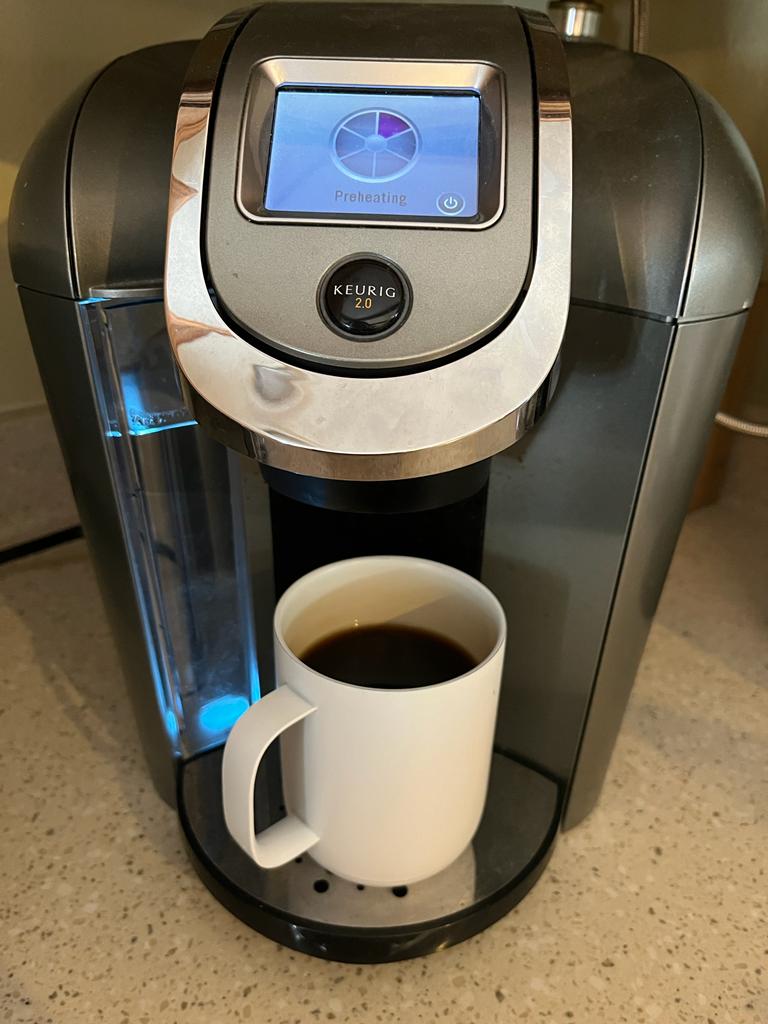
In the landscape of modern consumer electronics, few household gadgets have achieved the ubiquity and transformative impact of the Keurig brewing system. While it is often viewed simply as a kitchen appliance, the Keurig represents a sophisticated intersection of fluid dynamics, thermal engineering, and user-interface design. Among the various features integrated into these machines, the “Strong” button stands out as a primary example of how hardware and software collaborate to alter a physical outcome. To the casual user, it is a flavor enhancer; to the technophile, it is a specific alteration of a pre-programmed brewing algorithm. Understanding what the Strong button does requires a deep dive into the mechanics of extraction and the evolution of beverage technology.
The Engineering Behind the Extraction: Decoding the “Strong” Algorithm
At its core, coffee brewing is a process of chemical extraction. When water passes through coffee grounds, it dissolves organic compounds, oils, and caffeine. The “Strong” button on a Keurig does not increase the amount of coffee inside the K-Cup; rather, it modifies the brewing parameters to optimize the extraction efficiency of the available grounds.
The Mechanics of Pulse Brewing
Standard Keurig brewing involves a steady, continuous stream of hot water pumped through the pod. In contrast, when the Strong button is engaged, the machine initiates a “pulse brewing” cycle. This is a software-driven instruction that tells the internal pump to operate in intermittent bursts. By pulsing the water, the machine allows the coffee grounds to remain in contact with the water for a longer duration. In the world of extraction science, this “contact time” is the most critical variable for increasing the Total Dissolved Solids (TDS) in the final cup.
Optimizing Flow Rate and Pressure
The Strong setting also recalibrates the flow rate of the internal water pump. By slowing down the transit of water through the pressurized K-Cup, the machine ensures that the water navigates through the entirety of the coffee bed rather than carving a “channel” through the center. This reduction in channeling leads to a more uniform extraction, ensuring that the darker, more complex flavor profiles—which typically take longer to dissolve—are successfully pulled into the mug.
Thermal Consistency in Extended Cycles
Because the “Strong” cycle takes roughly 30 to 60 seconds longer than a standard brew, the machine’s heating element must work harder to maintain a consistent temperature. Professional-grade Keurig models utilize sophisticated thermistors to monitor water temperature in real-time, ensuring that even as the pump pauses and restarts, the water remains within the optimal extraction window of 192°F to 204°F.
Hardware Evolution: How Keurig Machines Execute the Command
The ability to offer a “Strong” setting is not merely a software update; it requires specific hardware robust enough to handle the increased pressure and thermal demands of a longer brew cycle. As Keurig technology has evolved from the 1.0 series to the current MultiStream technology, the execution of the Strong function has become increasingly refined.
MultiStream Technology and Saturation
In newer models, the Strong button works in tandem with “MultiStream Technology.” Older machines used a single entry needle to inject water into the pod. Modern high-tech units use five needles. When the Strong button is pressed, the machine leverages these five entry points to saturate the grounds more evenly. This hardware improvement, combined with the pulsed software algorithm, significantly reduces the “weak” or “watery” profile often associated with rapid-extraction pod systems.
The Role of the Internal Microprocessor
Every modern Keurig contains a dedicated microprocessor that acts as the “brain” of the operation. When the user selects the Strong setting, this processor interrupts the default “Quick-Brew” firmware. It triggers a specific set of logic gates that manage the timing of the solenoid valves and the RPM of the water pump. This is a classic example of “smart hardware” where the physical components are capable of multiple distinct operational modes based on user input.
Pressure Management and Valve Durability
Operating in “Strong” mode creates higher back-pressure within the brewing chamber because the grounds become more saturated and “swollen” over the longer duration. To handle this, the internal tubing and check-valves are engineered with high-grade polymers and silicone to prevent leaks or mechanical failure during the more intense pressurized phases of the cycle.
User Interface and the Psychology of Gadget Design
In the realm of tech and product design, the “Strong” button serves as a vital bridge between complex engineering and user experience (UX). It is an example of “one-touch complexity,” where a single physical interaction triggers a series of intricate background processes.

Tactile Feedback vs. Digital Menus
While many modern gadgets are moving toward purely touchscreen interfaces, Keurig has frequently retained a physical or highly visible “Strong” button. From a design perspective, this provides immediate haptic or visual confirmation to the user. It simplifies the user’s relationship with the machine; the consumer does not need to understand flow rates or milliliters per second; they only need to understand the desired outcome.
Customization in the Age of Personalization
The Strong button was one of the first steps toward the hyper-personalization we see in today’s smart home tech. By giving the user control over the “intensity” of the gadget’s output, Keurig shifted the device from a “one-size-fits-all” appliance to a customizable tool. This mirrors the evolution of other tech sectors, such as smartphone displays that allow for “True Tone” or “Night Mode,” where the hardware’s output is adjusted to meet specific user preferences.
The Feedback Loop: Visual and Auditory Indicators
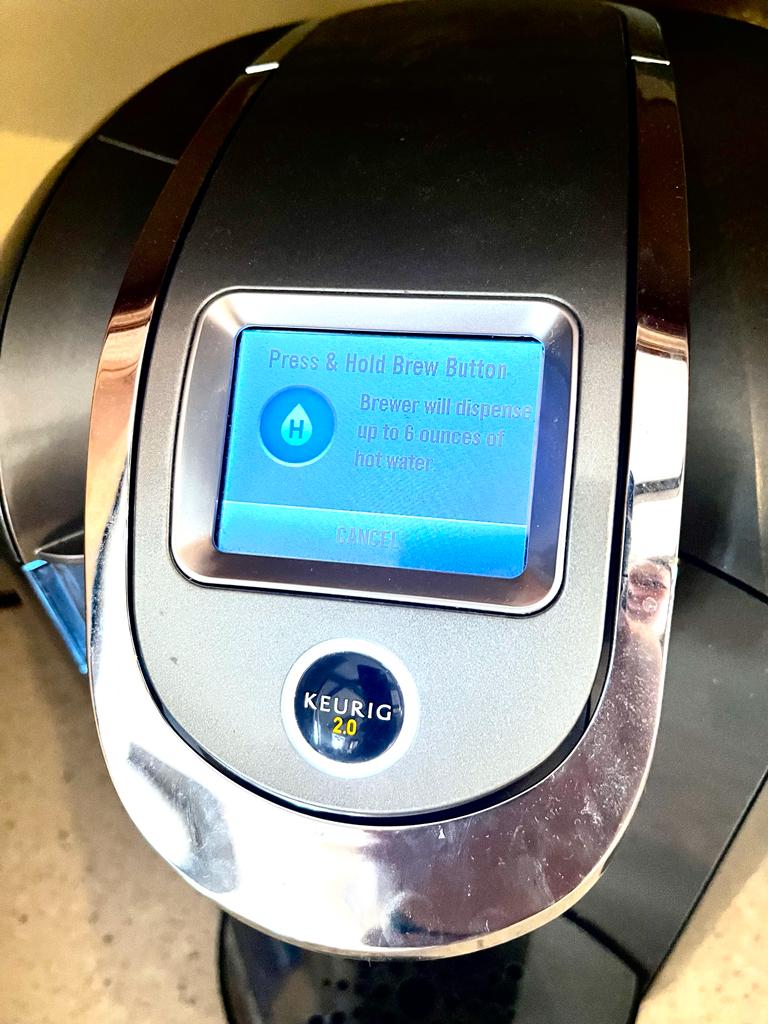
When the Strong button is pressed, many Keurig models provide immediate feedback, such as a glowing LED or a specific icon on an LCD screen. Furthermore, the auditory profile of the machine changes—the rhythmic “start-stop” sound of the pump provides an acoustic confirmation that the machine is operating in a specialized mode. This sensory feedback is a crucial element of sophisticated gadget design, ensuring the user feels in control of the technology.
Maintenance and Longevity of High-Performance Brewing Tech
Utilizing specialized features like the Strong button puts different stresses on a gadget than standard operation. For tech-savvy owners, understanding the maintenance requirements of these machines is essential for preserving the integrity of the internal components.
Managing Mineral Scale in Precision Systems
Because the Strong setting relies on precise flow rates and pulse timing, any obstruction in the internal lines can degrade the feature’s effectiveness. Mineral buildup (scaling) from tap water can coat the heating element and the pump’s impellers. In a “Strong” cycle, where timing is everything, scale can cause the pump to labor or the temperature to fluctuate. Regular descaling is the equivalent of a “system cleanup” for the machine’s hardware.
Needle Maintenance and Pressure Relief
The exit needle of a Keurig can often become clogged with fine coffee particulates, especially during the slower, more pressurized Strong cycle. If the pressure cannot be relieved effectively, it can lead to “short-cups” or “grounds-in-cup” errors. Tech-focused maintenance involves ensuring the exit path is clear so the machine can execute its high-pressure algorithm without backing up.
Energy Consumption Profiles
From a tech-efficiency standpoint, the Strong button does consume marginally more energy per brew. The heating element must remain active for a longer duration, and the pump undergoes more frequent “start-up” draws of electricity. While negligible on a single-cup basis, for high-volume environments, this highlights the trade-off between performance (flavor) and efficiency (speed/power).
The Future of Beverage Technology: Beyond the Button
The Keurig Strong button is a precursor to a new era of “Internet of Things” (IoT) kitchen gadgets. As we look toward the future, the “Strong” setting is evolving from a physical button into a data-driven preference stored in the cloud.
App Integration and Brew ID
Newer Keurig models, such as the K-Supreme Plus Smart, feature “Brew ID” technology. This system uses a camera or scanner to recognize the specific K-Cup brand and roast. Instead of the user pressing a Strong button, the machine automatically connects to a cloud database to download the “perfect” brewing algorithm for that specific pod. This represents the shift from manual hardware toggles to AI-driven automation.
Precision Control and the Enthusiast Market
As consumer tech continues to advance, we are seeing the “Strong” concept expand into “Precision Brewing.” Future gadgets will likely allow users to adjust the exact temperature, pre-infusion time, and flow rate via a smartphone app. The Strong button was the “v1.0” of this customization, proving that consumers want more than just a “standard” output from their devices.
Sustainability and Tech Innovation
The next frontier for Keurig’s engineering team is balancing the “Strong” extraction with eco-friendly hardware. As the industry moves toward compostable pods, the “Strong” algorithm must be recalibrated to work with different materials that have different flow resistances. This ensures that the technology remains relevant in a world focused on both performance and sustainability.
In conclusion, the Strong button on a Keurig is far more than a marketing gimmick. It is a sophisticated software-controlled override of a standard mechanical process. By modulating pump frequency, managing thermal consistency, and increasing contact time, the Keurig transforms from a simple water heater into a precision extraction tool. As we move further into the age of smart appliances, the lessons learned from the success of the “Strong” button—simplicity on the outside, complexity on the inside—will continue to define the next generation of consumer technology.
aViewFromTheCave is a participant in the Amazon Services LLC Associates Program, an affiliate advertising program designed to provide a means for sites to earn advertising fees by advertising and linking to Amazon.com. Amazon, the Amazon logo, AmazonSupply, and the AmazonSupply logo are trademarks of Amazon.com, Inc. or its affiliates. As an Amazon Associate we earn affiliate commissions from qualifying purchases.