
Super Smash Bros. Ultimate (SSBU) stands as a pinnacle of modern gaming software, blending intricate physics engines with a massive roster of intellectual properties. Within this complex digital ecosystem, items serve as dynamic variables that can shift the momentum of a match instantly. Among the most technically interesting and strategically potent items is the Pitfall Seed. While it may appear as a simple throwable orb, its integration into the game’s “bury” mechanic makes it a critical tool for players looking to master the game’s tactical depth.

This article explores the technical function of the Pitfall Seed, the software logic behind its status effects, and the advanced strategies players utilize to turn this item into a match-ending asset.
The Technical Foundations of the Pitfall Seed
To understand the Pitfall Seed, one must first understand how Super Smash Bros. Ultimate handles item interaction and collision detection. The Pitfall Seed is a small, white spherical object marked with a red exclamation point. Its primary function is to trigger the “buried” status effect upon contact with an opponent who is standing on a solid surface.
The “Bury” Mechanic: Software Logic and Frame Data
When a Pitfall Seed makes contact with a grounded opponent, the game software initiates a specific state known as “Buried.” In this state, the character model is partially submerged in the floor, rendering them immobile and vulnerable to follow-up attacks.
The duration of this burial is not arbitrary; it is governed by a specific mathematical formula integrated into the game’s code. The time a player remains buried is determined by their current damage percentage. At 0%, the duration is minimal, often allowing for an almost instantaneous escape. However, as the damage percentage increases, the “scaling” factor of the burial code extends the duration significantly. This makes the Pitfall Seed an exponentially more dangerous tool in the “late game” of a stock.
Physics and Projectile Behavior
The Pitfall Seed operates on a standard projectile trajectory, but it possesses unique collision properties. Unlike a Poké Ball or a Bob-omb, which may have complex AI or explosion radii, the Pitfall Seed is a “contact-trigger” item. If thrown directly at an opponent, it activates the burial. However, if it hits the ground without hitting a player, it becomes a hidden trap.
From a technical standpoint, the seed “re-skins” a small portion of the stage’s collision box. To the player, it looks like a small crack in the ground, but in the game’s code, it creates a proximity trigger. Any character who walks over this coordinate triggers the same burial logic as if they had been hit by the projectile directly.
Strategic Applications in High-Level Gameplay
While many competitive formats disable items to prioritize “pure” mechanical skill, understanding the Pitfall Seed is essential for casual-competitive play, specialized tournament formats, and understanding the broader “meta” of SSBU’s design. The item is not merely a tool for luck; it is a tool for environmental control.
Trap Placement and Zoning
One of the most effective ways to use the Pitfall Seed is as a zoning tool. By planting the seed in the ground, a player effectively “deletes” a portion of the stage for their opponent. In a game where movement and positioning are the most critical resources, forcing an opponent to jump or take a circuitous route creates a predictable movement pattern.
Advanced players use the Pitfall Seed to funnel opponents into specific “kill zones.” For example, planting a seed near the ledge forces an opponent recovering from off-stage to either land precisely or risk being buried at the edge—a position that usually leads to an immediate loss of a stock via a powerful “smash” attack or a “meteor smash” (spike).
Combo Extension and Kill Confirms
In the hands of a skilled player, the Pitfall Seed acts as a “combo bridge.” Because the burial state forces the opponent into a stationary position, it allows for the execution of moves with long start-up frames that would otherwise be impossible to land.
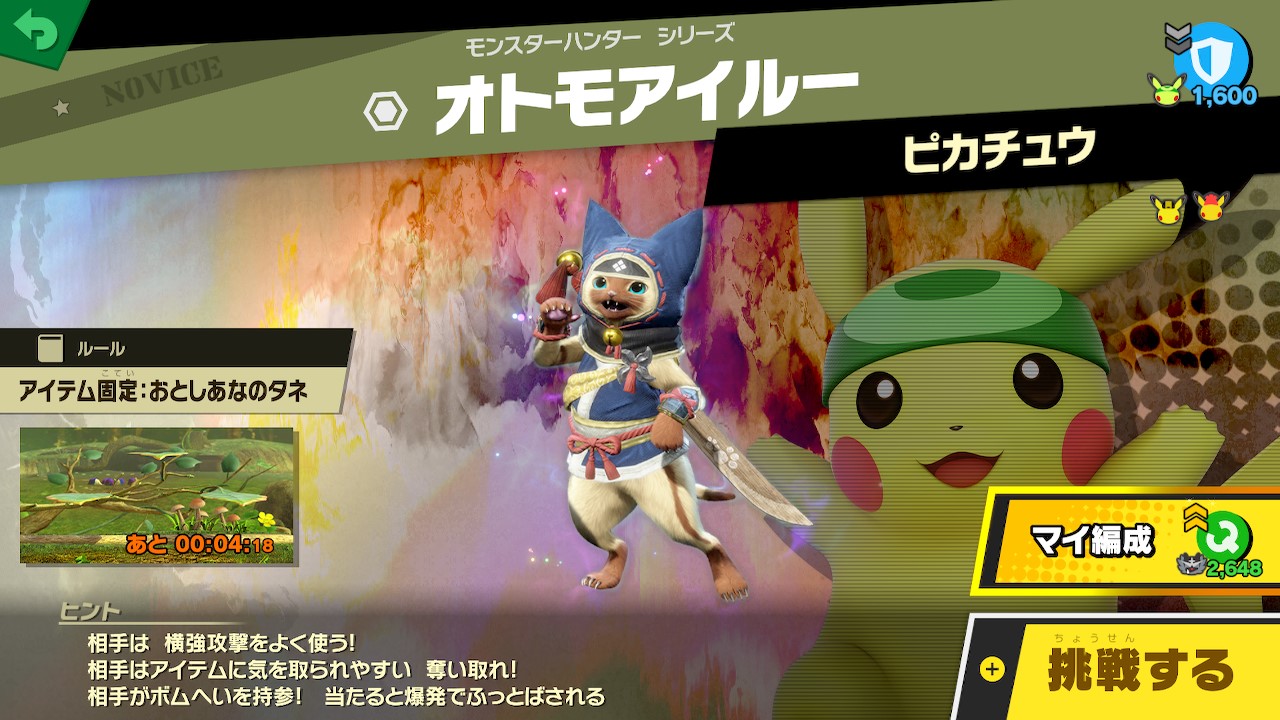
For characters like Ganondorf or King Dedede, who possess immense power but slow execution, a Pitfall Seed is a gift. Burying an opponent at 80% damage provides enough “hitstun” (the period where the opponent cannot move) to charge a Forward Smash to its maximum power. This technical synergy between item-induced immobility and character-specific frame data is what makes the Pitfall Seed a high-tier item in the game’s internal hierarchy.
Technical Countermeasures and Defensive Data
Understanding how to use a tool is only half of the equation; high-level play requires understanding the software’s defensive options. The Pitfall Seed is powerful, but it is not infallible. The game provides several “tech” options for players to mitigate its effects.
Mashing: The Logic of Input Frequency
The primary defense against a Pitfall Seed is a technique colloquially known as “mashing.” When a character is buried, the game software monitors the frequency of controller inputs. Each button press or directional stick movement subtracts a specific number of frames from the burial timer.
From a technical perspective, this creates a “skill-check.” A player with high manual dexterity can escape a burial much faster than a novice. However, the game also includes a “buffer” system. If a player mashes too aggressively and escapes the burial while still pressing buttons, they may accidentally trigger an unintended move (like an air dodge or an attack) the moment they become airborne, leaving them vulnerable to a “punish.”
Shielding and Reflector Interactions
Because the Pitfall Seed is categorized as a projectile, it adheres to the standard rules of SSBU’s interaction engine. This means it can be:
- Shielded: A standard bubble shield completely negates the effect, causing the seed to bounce off harmlessly and disappear.
- Reflected: Characters with reflection tools (like Fox’s Reflector or Mario’s Cape) can send the seed back at the thrower. The game’s code then switches the “ownership” variable of the item, meaning the original thrower can now be buried by their own seed.
- Caught: Using precise timing (an “Item Catch” on frame 1-2 of the catch animation), a player can snag the seed out of the air, turning a defensive situation into an offensive one.
The Role of Items in Software Design and Game Balance
The inclusion of items like the Pitfall Seed reflects Nintendo’s broader philosophy regarding “dynamic software.” By introducing variables that can bypass standard shield-and-strike gameplay, the developers ensure that SSBU remains accessible while maintaining a high ceiling for situational awareness.
Balancing RNG and Player Agency
There is a common debate in the tech and gaming community regarding Random Number Generation (RNG). Items spawn at random intervals and locations. However, the Pitfall Seed represents a “controlled variable.” While its appearance is random, its utility is entirely dependent on player skill—aiming the throw, predicting movement, and timing the follow-up.
This balance is a masterclass in game design. The software introduces “chaos” through item spawns, but the “resolution” of that chaos is determined by the players’ technical proficiency. The Pitfall Seed doesn’t win the game for you; it provides a technical opening that you must have the skill to exploit.
Procedural Generation and Stage Interaction
The Pitfall Seed also interacts with the procedural elements of different stages. In stages with moving platforms or “transforming” layouts, the Pitfall Seed’s “trap” state is constantly updated to match the current Y-axis of the floor. This requires the game engine to constantly check the coordinates of the seed against the collision data of the floor. If a platform disappears, the seed is programmed to vanish or fall, preventing “ghost traps” from hanging in mid-air—a testament to the robust physics checking performed by the game’s backend.

Conclusion: The Pitfall Seed as a Microcosm of SSBU’s Complexity
What does the Pitfall Seed do in SSBU? On the surface, it buries people. But beneath the surface, it is a complex intersection of frame data, collision logic, input frequency, and psychological warfare. It is a tool that rewards players who understand the technical nuances of the “bury” formula and punishes those who ignore the environmental hazards of the stage.
For players looking to elevate their game, the Pitfall Seed is a reminder that every item in the Super Smash Bros. Ultimate software suite is a sophisticated instrument. Mastering it requires more than just a lucky throw; it requires an understanding of the digital mechanics that govern the world of Smash. Whether you are using it to set a trap at the ledge or to confirm a game-winning smash attack, the Pitfall Seed remains one of the most technically rewarding items in the history of the franchise.
aViewFromTheCave is a participant in the Amazon Services LLC Associates Program, an affiliate advertising program designed to provide a means for sites to earn advertising fees by advertising and linking to Amazon.com. Amazon, the Amazon logo, AmazonSupply, and the AmazonSupply logo are trademarks of Amazon.com, Inc. or its affiliates. As an Amazon Associate we earn affiliate commissions from qualifying purchases.