
In the modern era of seamless connectivity, we often overlook the small, plastic devices nestled in our pockets or handbags. We use them to unlock our vehicles, access high-security office buildings, and even start our engines remotely. To the average user, it is simply a “key fob.” But have you ever paused to wonder why we use that specific term? Unlike many modern technical terms, “fob” is not an acronym for “Frequency Operated Button” or “Field Operated Board,” despite what internet myths might suggest.
Instead, the word “fob” has deep historical roots that predate modern electronics by centuries. Today, however, the key fob has evolved into a sophisticated piece of hardware—a miniature computer that utilizes complex encryption, radio frequency identification (RFID), and rolling code technology to safeguard our most valuable assets. Understanding the technology behind the fob reveals a fascinating intersection of linguistics, hardware engineering, and cybersecurity.
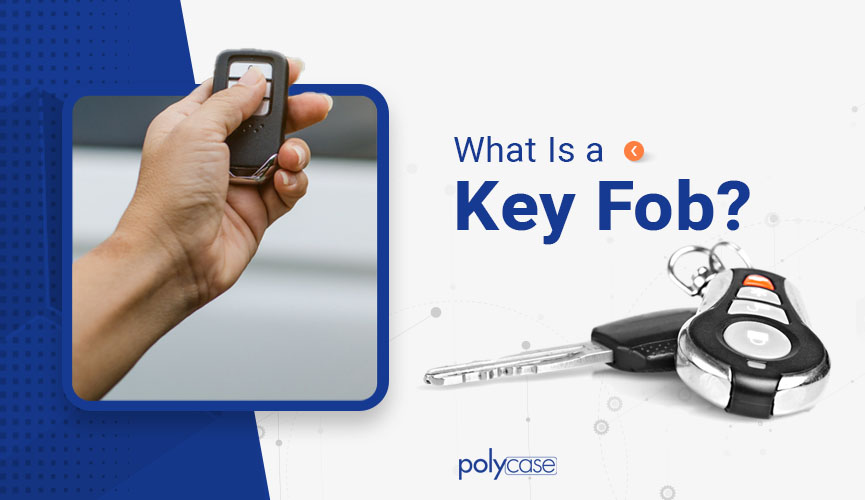
Decoding the “Fob”: The History and Etymology of a Tech Staple
To understand the modern technological context of the key fob, one must first look at its etymological origin. The term does not belong to the era of microchips; it belongs to the era of the pocket watch.
The Linguistic Origins
The word “fob” is believed to be linked to the Low German dialect word fuppe, meaning “pocket.” By the 17th and 18th centuries, a “fob” referred specifically to the small pocket in a pair of breeches or a vest designed to hold a pocket watch. Over time, the word shifted from describing the pocket itself to describing the ornaments or short chains attached to the watch. These ornaments were used to pull the watch out of the pocket with ease, serving both a functional and aesthetic purpose.
From Watch Pockets to Key Rings
As the pocket watch gave way to the wristwatch in the early 20th century, the “fob” did not disappear; it migrated. People began attaching similar decorative ornaments to their key rings. When the automotive and security industries began looking for ways to integrate electronic remote access in the 1980s, the small electronic housings were naturally attached to these rings. Engineers and consumers alike adopted the legacy term “fob” to describe these remote attachments. Thus, a word that once described a 1700s fashion accessory became the standard designation for a high-tech transmitter.
The Technological Anatomy of a Modern Key Fob
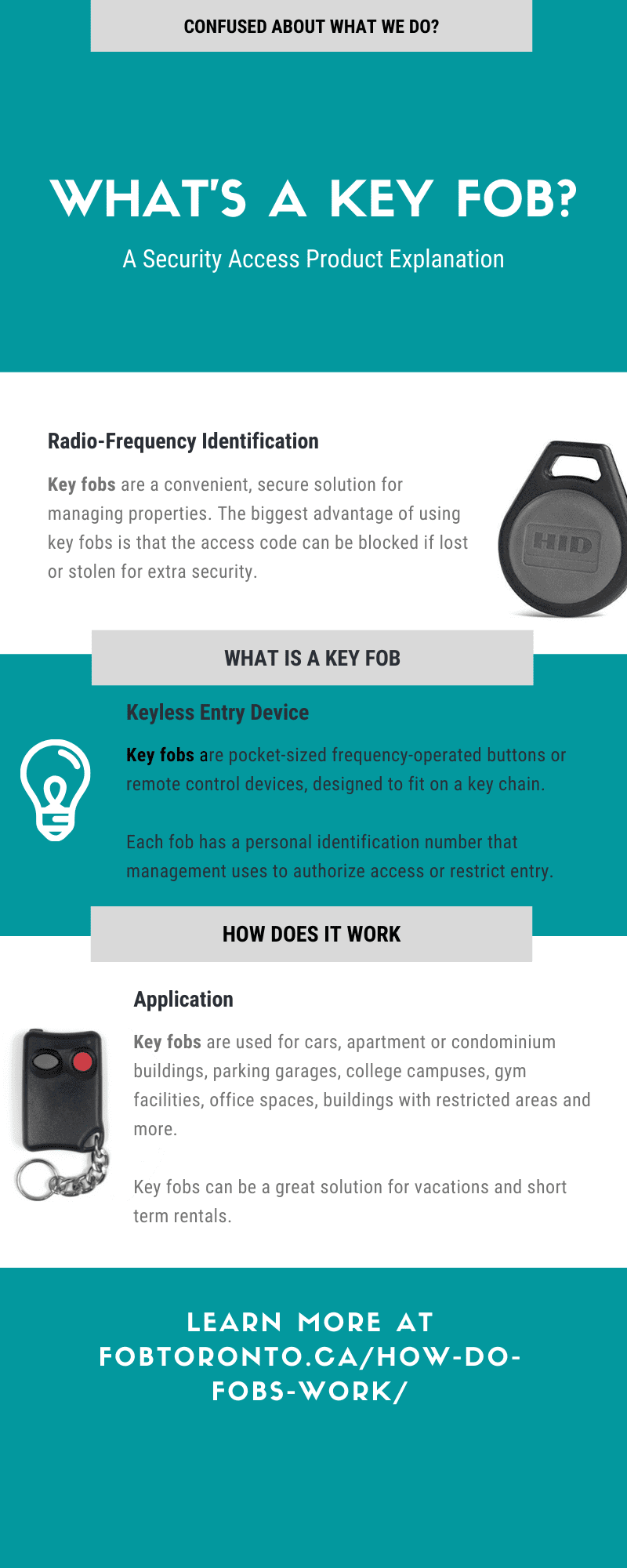
While the name is historical, the internal components of a modern key fob are a testament to the rapid miniaturization of electronics. A contemporary fob is essentially a specialized radio transmitter that communicates with a dedicated receiver inside a vehicle or a building’s access control system.
Radio Frequency Identification (RFID) and NFC
At the heart of most entry-level fobs is RFID technology. This involves two main components: an antenna and a microchip. In passive RFID systems—often used for office building “swipe” cards—the fob does not even require a battery. Instead, it captures a small amount of electromagnetic energy from the reader itself to power the chip and transmit a unique identification code.
For automotive applications, Near Field Communication (NFC) is becoming increasingly prevalent. This allows for more secure, short-range communication, enabling features like “digital keys” where a smartphone or a specialized fob can unlock a door simply by being held within inches of the handle.
Passive Keyless Entry (PKE) Systems
The most advanced tech trend in this space is the Passive Keyless Entry (PKE) system. Unlike older remotes that required the user to press a button (Active RKE), PKE systems use proximity sensors. The fob continuously or periodically listens for a low-frequency (LF) signal from the car. When you reach for the door handle, the car “wakes up” the fob. The fob then transmits a high-frequency (HF) response containing the authorization code. All of this happens in milliseconds, illustrating the efficiency of modern micro-transmitters.
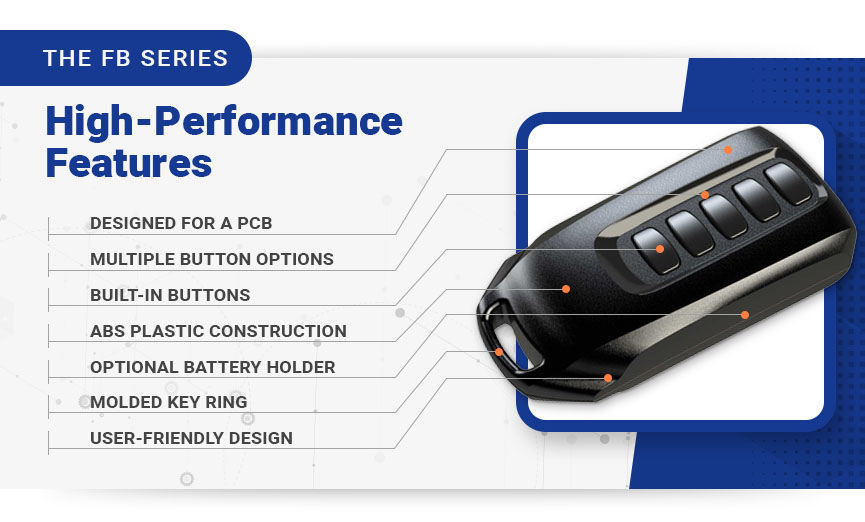
Power Management and Battery Life in Micro-Transmitters
One of the greatest engineering challenges in fob design is power management. Because fobs must remain small and lightweight, they are powered by tiny lithium coin-cell batteries (like the CR2032). To ensure these batteries last for years, the firmware inside the fob is optimized for “deep sleep” modes. The processor only draws significant current during the brief moments of transmission. This balance of hardware efficiency and software optimization is a cornerstone of mobile gadget design.
Digital Security: How Fobs Protect Against High-Tech Theft
As key fobs became more electronic, they also became targets for hackers. The transition from physical metal teeth to digital “handshakes” required a massive leap in cybersecurity.
The Role of Rolling Codes
In the early days of remote entry, fobs sent a “fixed code.” This was a significant security flaw; a thief with a simple radio receiver could record the signal and play it back later to unlock the car. To solve this, engineers developed “Rolling Codes” (also known as Hopping Codes).
Every time you press the button on a modern fob, a pseudo-random number generator (PRNG) creates a new code. Both the fob and the car use a synchronized algorithm to predict what the next code should be. Once a code is used, it is discarded and never accepted again. This ensures that even if a bad actor “sniffs” the signal, the captured data is useless for a second attempt.
Encryption Standards in Modern Transponders
Beyond rolling codes, high-end manufacturers use sophisticated encryption layers such as AES (Advanced Encryption Standard). When the fob and the vehicle communicate, they perform a multi-step “challenge-response” authentication. The vehicle sends a random data string to the fob; the fob encrypts that string using a secret key stored in its secure enclave and sends it back. If the vehicle’s computer decrypts the response and it matches the original string, access is granted. This level of digital security is comparable to the encryption used in online banking.
Addressing Signal Boosting and Relay Attacks
Despite these advances, a new tech threat emerged: the relay attack. In this scenario, thieves use a high-powered antenna to “pick up” the low-frequency signal from a fob sitting inside a house and relay it to the car in the driveway. To combat this, tech companies are integrating accelerometers into fobs. If the fob has been stationary for more than a few minutes (e.g., sitting on a kitchen counter), it enters a “motion-lock” state where it stops responding to pings, effectively neutralizing relay hardware.
The Future of Fobs: Integration with AI and the Internet of Things (IoT)
The hardware “fob” as we know it is currently undergoing a digital transformation. We are moving toward a future where the physical device may become redundant, replaced by software-defined access.
Smartphones as the Ultimate Digital Fob
The most significant trend in the gadget world is the consolidation of devices. Through the Apple CarKey API and similar Android frameworks, the functionality of the fob is being moved into the smartphone’s “Secure Element.” Using Ultra-Wideband (UWB) technology, smartphones can now provide spatial awareness, allowing a car to know exactly how far away the user is and even which side of the vehicle they are approaching.
Biometric Authentication and UWB Technology
Ultra-Wideband is the next frontier for fobs. Unlike Bluetooth, which estimates distance based on signal strength, UWB measures the “Time of Flight” (the time it takes for a pulse to travel between devices). This makes it nearly impossible to spoof. Furthermore, the integration of biometrics (FaceID or fingerprint scanning) adds a second factor of authentication. Even if a smartphone is stolen, it cannot act as a key fob without the owner’s biometric signature.
The Role of AI in Predictive Access Management
Artificial Intelligence is also beginning to play a role in access technology. Smart home ecosystems and automotive AI can learn a user’s routine. If the system detects—via the fob’s signal—that you are approaching your car at 8:00 AM on a workday, it can pre-condition the cabin temperature and load your GPS route before you even touch the door handle. This level of predictive automation turns the fob from a simple “unlock” tool into a beacon for a personalized AI environment.
In conclusion, the “fob” has traveled an incredible path from a 17th-century pocket watch accessory to a sophisticated node in the Internet of Things. While the name remains a nod to our analog past, the technology inside is at the bleeding edge of digital security and hardware engineering. As we look toward a future dominated by UWB, biometrics, and AI, the key fob stands as a perfect example of how tech trends can breathe new life into ancient concepts.
aViewFromTheCave is a participant in the Amazon Services LLC Associates Program, an affiliate advertising program designed to provide a means for sites to earn advertising fees by advertising and linking to Amazon.com. Amazon, the Amazon logo, AmazonSupply, and the AmazonSupply logo are trademarks of Amazon.com, Inc. or its affiliates. As an Amazon Associate we earn affiliate commissions from qualifying purchases.