
For decades, the definition of healthy gums was relegated to the subjective observation of a dental professional or a quick glance in a bathroom mirror. We were told to look for “pink and firm,” a qualitative metric that left significant room for error and late-stage diagnosis. However, in the current era of digital transformation, the question of what healthy gums look like is no longer a matter of visual guesswork. It is a data-driven science powered by high-definition imaging, artificial intelligence (AI), and sophisticated sensor technology.
As we integrate technology into every facet of our biological monitoring, the dental industry is undergoing a “tech-first” revolution. From intraoral scanners that capture sub-millimeter changes in tissue volume to AI algorithms that can detect gingivitis before the human eye sees redness, technology is providing a microscopic, high-fidelity answer to a centuries-old health question.

The Digital Evolution of Oral Diagnostics
The primary shift in modern dentistry is the transition from manual probing to digital visualization. Traditionally, a dentist used a metal probe to measure “pocket depth” around the teeth. Today, high-tech imaging tools are creating a digital twin of the patient’s mouth, allowing for a more nuanced understanding of gingival health.
AI-Powered Imaging and Computer Vision
At the heart of modern oral diagnostics lies computer vision. Machine learning models are now trained on millions of images of gingival tissue. By processing these datasets, AI can identify the subtle textural changes and vascular patterns that signify health. What a human perceives as “healthy gums” might, under the scrutiny of an AI diagnostic tool, reveal micro-ulcerations or early-stage inflammation that hasn’t yet manifested as visible swelling.
These software tools analyze “chroma” (color saturation) and “value” (brightness) to determine the oxygenation levels of the gum tissue. Healthy gums, in the digital eye, have a specific spectral signature. AI platforms integrated into dental software can now flag deviations from this signature, providing a “health score” that quantifies wellness in a way a simple mirror check never could.
Intraoral Cameras and High-Definition Clarity
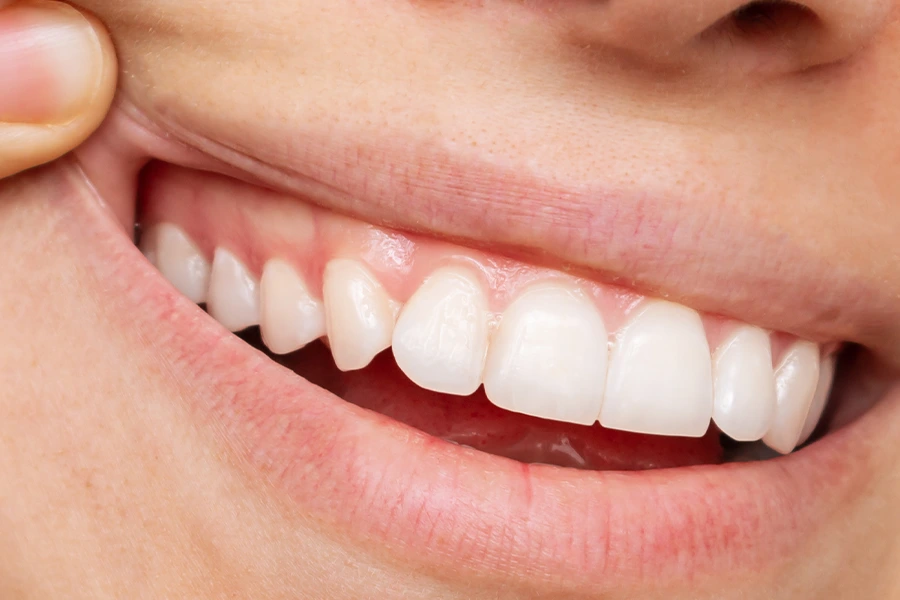
The advent of 4K intraoral cameras has revolutionized the patient-provider relationship. These gadgets allow for 50x to 100x magnification of the gingival margin. When looking at healthy gums through a high-definition lens, technology reveals a “stippled” appearance—much like the texture of an orange peel. This stippling is a key indicator of health, signifying that the connective tissue is firmly attached to the bone.
Modern software can overlay historical images with current scans, using a technique called “image subtraction” to highlight exactly where gum tissue has receded or where inflammation has decreased. This chronological data mapping turns a static observation into a dynamic trend analysis.
Wearable Dental Tech and Real-Time Monitoring
The definition of healthy gums is also being reshaped by the “Internet of Things” (IoT). We are moving away from episodic care—seeing a dentist twice a year—toward continuous monitoring via smart gadgets and wearable tech.
Smart Brushes and Haptic Feedback Sensors
The modern electric toothbrush is no longer just a motor and bristles; it is a sophisticated data-gathering device. High-end models are equipped with pressure sensors and gyroscopes that sync via Bluetooth to mobile applications. These apps provide a heat map of the user’s mouth, showing exactly where they are applying too much pressure—a leading cause of gum recession.
By monitoring the “mechanical stress” applied to the gums, these devices help maintain the structural integrity of the gingiva. The tech doesn’t just show you what healthy gums look like; it teaches you the behaviors required to maintain them. The haptic feedback serves as a real-time corrective algorithm, preventing the micro-trauma that leads to tissue degradation.
Bio-Sensing and Early Warning Systems
Emerging technology in the form of “smart mouthguards” and specialized sensors is beginning to enter the market. These devices can monitor the chemistry of the saliva and the temperature of the gingival sulcus. A rise in localized temperature is a classic digital marker for inflammation (gingivitis).
By using thermal imaging sensors integrated into consumer tech, users can receive notifications on their smartphones if a specific quadrant of their mouth shows signs of “heat,” long before the gums look red or feel sore. This proactive tech-stack transforms the definition of healthy gums from a visual state to a thermal and chemical baseline.

The Role of Big Data in Gingival Health Trends
The shift toward digital health records and cloud-based dental platforms has created a massive repository of data. This “Big Data” approach allows researchers and tech developers to identify what healthy gums look like across diverse populations, leading to more personalized healthcare.
Predictive Analytics for Periodontal Disease
Using predictive analytics, software can now calculate a “risk profile” for gum disease based on a combination of digital scans, genetic markers, and lifestyle data imported from other health apps (like Apple Health or Google Fit). For instance, if a user’s wearable tech indicates high stress (cortisol levels) and poor sleep, the dental AI can predict an increased risk of gum inflammation.
This holistic tech integration means that “healthy gums” are viewed as part of a larger systemic ecosystem. Predictive algorithms can alert users to take preventive action, such as adjusting their cleaning routine or scheduling a professional debridement, based on data trends rather than waiting for physical symptoms to appear.
Telehealth and Remote Consultations
Tele-dentistry platforms have become a critical tool in monitoring gum health. Through specialized smartphone attachments, patients can take medical-grade photos of their gums and upload them to a secure cloud.
The software then performs an initial triage, using AI to categorize the tissue as “healthy,” “at-risk,” or “diseased.” This tech-driven accessibility ensures that the standards for healthy gums are maintained even for individuals in remote areas, leveraging the power of 5G and high-speed data transmission to bridge the gap between the patient and the specialist.
Security and Privacy in the Age of Digital Health
As we rely more on technology to define and monitor our oral health, the conversation must include the security of the data being generated. Digital images of our mouths, our genetic predispositions to gum disease, and our daily hygiene habits constitute sensitive biometric data.
Protecting Biometric Dental Data
The hardware and software used to monitor gum health must adhere to rigorous encryption standards. As dental practices move to the cloud, the risk of data breaches increases. Ensuring that a “digital scan” of your gums is protected by end-to-end encryption is as important as the scan itself.
Tech firms are now implementing blockchain technology to create immutable health records. This allows patients to own their “gum health data,” granting temporary access to providers while ensuring that their biometric identity remains secure from unauthorized AI training or insurance profiling.
Interoperability of Health Tech Ecosystems
The future of gum health tech lies in interoperability—the ability for different software systems to talk to each other. If your smart toothbrush data can seamlessly integrate with your dentist’s clinical software, the definition of “healthy” becomes a shared, real-time metric.
Industry standards like FHIR (Fast Healthcare Interoperability Resources) are being applied to dental tech to ensure that whether you are using a gadget from a startup or a platform from a legacy dental corporation, the data remains consistent. This technological synergy is the final piece of the puzzle in moving toward a world where “healthy gums” are a precisely measured, digitally verified reality.
Conclusion: The Quantitative Future of Oral Health
We have moved past the era of “pink and firm.” In the modern tech landscape, healthy gums are defined by spectral signatures, thermal baselines, sub-millimeter attachment levels, and AI-verified textures. The integration of high-definition hardware, predictive software, and secure data ecosystems has turned oral hygiene into a sophisticated branch of digital health.
As AI continues to evolve and sensors become even more unobtrusive, the mystery of gum health will vanish. In its place, we will have a clear, data-backed roadmap to longevity, proving that technology is the most effective tool we have in the fight to keep our smiles—and our gums—in peak condition. Looking ahead, the question won’t be “what do my gums look like?” but rather, “what does my data say about my gums today?”
aViewFromTheCave is a participant in the Amazon Services LLC Associates Program, an affiliate advertising program designed to provide a means for sites to earn advertising fees by advertising and linking to Amazon.com. Amazon, the Amazon logo, AmazonSupply, and the AmazonSupply logo are trademarks of Amazon.com, Inc. or its affiliates. As an Amazon Associate we earn affiliate commissions from qualifying purchases.