
In the rapidly evolving landscape of the digital age, the ability to process complex information and arrive at innovative solutions is the cornerstone of progress. Traditionally, technology has been built on the foundations of formal logic—the binary world of ones and zeros, true or false, and if-then statements. However, as we push the boundaries of Artificial Intelligence (AI), software architecture, and cybersecurity, a more sophisticated cognitive framework is becoming essential. This framework is known as dialectical thought.
In a technical context, dialectical thought involves the ability to perceive, analyze, and synthesize contradictory ideas or opposing forces to reach a higher level of understanding or a more robust technological solution. It moves beyond linear problem-solving, acknowledging that in complex systems, two seemingly opposing truths can coexist. By applying this philosophical method to tech trends and software development, we can unlock new paradigms of efficiency and innovation.
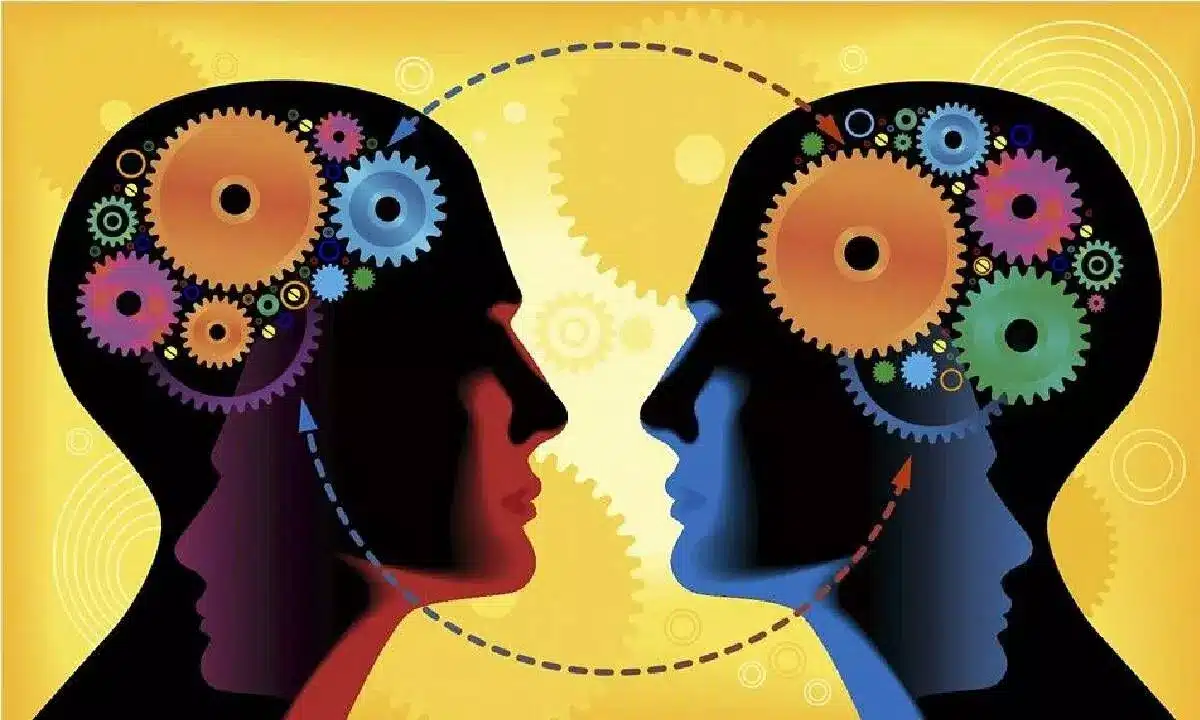
The Synthesis of Logic: How Dialectical Frameworks Define AI Development
The most profound application of dialectical thought today is found within the realm of Artificial Intelligence. For decades, AI was dominated by “Good Old Fashioned AI” (GOFAI), which relied on rigid, symbolic logic. Today’s generative models and neural networks, however, operate on a more dialectical plane, where the “truth” is often a probabilistic synthesis of vast, conflicting datasets.
Beyond Binary: Moving from Boolean Logic to Synthesis
In traditional software, a program follows a strict path. If a condition is met, “A” happens; if not, “B” happens. Dialectical thought allows AI developers to move toward “fuzzy logic” and probabilistic reasoning. Here, the “thesis” (the user’s intent) and the “antithesis” (the constraints of the data or safety filters) are not mutually exclusive. Instead, the AI performs a synthesis, generating an output that respects both the creative prompt and the underlying logical boundaries. This evolution is what allows modern LLMs (Large Language Models) to handle nuance, sarcasm, and complex coding tasks that would break a purely linear program.
The “Chain of Thought” as a Dialectical Process
One of the most significant breakthroughs in AI reasoning is the “Chain of Thought” (CoT) prompting and processing. This involves the AI breaking a problem down into steps, essentially arguing with its own initial assumptions. The model proposes a step (thesis), identifies a potential error or contradiction in that step (antithesis), and then refines its reasoning (synthesis). This internal dialogue mimics human dialectical thinking, allowing machines to solve multi-step mathematical and logical problems that were previously unsolvable by standard neural networks.
Dialectical Thought in Software Engineering and Architecture
The world of software engineering is rife with “religious wars”—debates over the best way to build and deploy applications. Dialectical thought provides a framework for senior architects to transcend these debates, recognizing that the best solutions usually lie in the synthesis of opposing methodologies.
The Tension Between Speed and Stability: DevOps as Synthesis
The “DevOps” movement itself is a classic example of dialectical thought in action. Historically, “Development” (the thesis) focused on change, features, and speed, while “Operations” (the antithesis) focused on stability, security, and the status quo. These two departments were often in direct conflict. The synthesis—DevOps—integrated these opposing goals through automation, continuous integration, and shared responsibility. By embracing the tension between “move fast” and “don’t break things,” tech organizations created a more resilient and productive environment than either department could achieve alone.
Monolith vs. Microservices: Finding the Middle Path
Architectural decisions often swing between the simplicity of a monolithic codebase (thesis) and the scalability of microservices (antithesis). A dialectical approach avoids the “one-size-fits-all” trap. It involves analyzing the specific needs of an enterprise and perhaps arriving at a “modular monolith” or a “service-oriented architecture” that captures the ease of testing found in monoliths while retaining the deployment flexibility of microservices. This involves a constant evaluation of trade-offs, where the engineer recognizes that every technical “solution” inherently contains new “problems” that must be managed.
Navigating Digital Security Through Dialectical Analysis
In digital security, the dialectic is not just a cognitive tool; it is a lived reality. The constant battle between attackers and defenders creates a fluid environment where static security measures are doomed to fail. Dialectical thought involves understanding that security is not a state of being, but a continuous process of synthesis between offense and defense.
The Adversarial Relationship: Red Teams and Blue Teams
Modern cybersecurity strategies utilize “Purple Teaming,” which is a direct application of dialectical synthesis. The Red Team (attackers/thesis) attempts to find vulnerabilities, while the Blue Team (defenders/antithesis) attempts to harden the system. Instead of working in silos, a dialectical approach integrates their findings. The synthesis—the Purple Team—uses the insights of the attacker to inform the strategy of the defender in real-time. This acknowledges that the system’s strength is derived directly from its exposure to its opposition.
Balancing User Privacy with Data Utility
One of the greatest contradictions in modern tech is the need for data-driven insights vs. the fundamental right to user privacy. A linear thinker might say we must choose one. A dialectical thinker looks for a synthesis through technologies like Differential Privacy or Federated Learning. These technologies allow AI models to learn from decentralized data without ever seeing the individual’s private information. This synthesis allows the “thesis” of data utility to coexist with the “antithesis” of total privacy, creating a new standard for ethical software development.
The Future of Human-Computer Interaction (HCI)
As we move toward an era of spatial computing and ubiquitous AI, the way we interact with technology is undergoing a dialectical shift. We are moving away from the “command-line” (where the human adapts to the machine) and toward “natural interfaces” (where the machine adapts to the human).
The Dialectic of Automation and Human Agency
There is a growing fear that automation (thesis) will eradicate human agency (antithesis). Dialectical thought suggests a synthesis: “Human-in-the-loop” systems or “Centaur Intelligence.” In these models, the computer handles the heavy lifting of data processing and pattern recognition, while the human provides the creative direction and ethical oversight. This synthesis doesn’t replace the human; it elevates the human to a higher level of cognitive function, transforming the user from a manual laborer of data into an orchestrator of intelligent systems.
Designing for Contradiction in User Experience (UX)
The best UX designs often balance contradictory needs: simplicity and power. A professional software suite (like a video editor or a cloud dashboard) must be simple enough for a novice to navigate (thesis) but powerful enough for a pro-user to customize (antithesis). Dialectical thought in design involves “progressive disclosure”—hiding complex features until they are needed. This synthesis allows the interface to be both minimal and exhaustive simultaneously, catering to the entire spectrum of user expertise without compromising the integrity of the tool.

Conclusion: The Dialectical Imperative for Tech Leaders
What does dialectical thought involve for the modern technologist? It involves the rejection of dogma. Whether it is in the way we train AI, the way we structure our code, or the way we protect our networks, the most successful innovations are rarely found at the extremes. Instead, they are found in the synthesis of opposing forces.
As technology becomes more integrated into the fabric of human life, the problems we face become more “wicked”—they are messy, contradictory, and constantly changing. Linear, binary thinking is no longer sufficient to solve them. By embracing dialectical thought, tech leaders can move beyond the “either/or” fallacies of the past and build a future that is more resilient, ethical, and intelligent. The synthesis of human intuition and machine logic is not just a trend; it is the next stage of our digital evolution.
aViewFromTheCave is a participant in the Amazon Services LLC Associates Program, an affiliate advertising program designed to provide a means for sites to earn advertising fees by advertising and linking to Amazon.com. Amazon, the Amazon logo, AmazonSupply, and the AmazonSupply logo are trademarks of Amazon.com, Inc. or its affiliates. As an Amazon Associate we earn affiliate commissions from qualifying purchases.