
In the modern era of the “Connected Home,” a drop in water pressure is no longer just a manual plumbing frustration; it is a failure of the home’s mechanical and digital ecosystem. When the flow of water becomes a trickle across every faucet in a residence, the cause is rarely a simple clogged aerator. Instead, it signals a systemic issue within the residential hydraulic network. For tech-savvy homeowners and property managers, understanding what causes low water pressure requires a deep dive into the intersection of mechanical engineering, IoT-enabled monitoring, and smart municipal infrastructure.

From malfunctioning pressure-reducing valves (PRVs) to the sophisticated algorithms used by leak detection systems, diagnosing low pressure is now a high-tech endeavor. By leveraging data-driven diagnostics and understanding the hardware that regulates fluid dynamics, we can pinpoint precisely why a home is losing its “bandwidth” of water flow.
1. The Hardware Interface: Mechanical Failures and Smart Pressure Regulators
At the heart of every modern residential water system sits the Pressure Reducing Valve (PRV). This critical piece of hardware acts as the gateway between high-pressure municipal mains and the sensitive internal plumbing of a home. When a house experiences a sudden, uniform drop in pressure, the PRV is often the primary point of failure.
The Engineering of Pressure Reduction
Traditionally, a PRV is a spring-loaded diaphragm mechanism that physically restricts the flow of water to maintain a set PSI (pounds per square inch). If the internal spring loses tension or the diaphragm becomes encrusted with mineral deposits, the valve can fail in a “closed” or “restricted” position. In a tech-integrated home, this is equivalent to a router throttling bandwidth due to hardware overheating.
The Rise of Smart PRVs and Digital Actuators
The next generation of water management involves “Smart PRVs.” Unlike traditional valves that require manual adjustment with a wrench, smart regulators utilize digital actuators and integrated pressure sensors. These devices connect to a home’s central hub via protocols like Zigbee or Z-Wave, allowing homeowners to monitor real-time PSI from a smartphone app. When these systems detect a drop in pressure, they can run self-diagnostic cycles to determine if the issue is a mechanical blockage within the valve or a decrease in supply from the street.
Scaling and Sediment: The Hardware Erosion Factor
Beyond the valves, the physical “pipes” function much like the copper or fiber-optic wiring in a data network. Over time, galvanic corrosion or scale buildup—particularly in older galvanized steel pipes—decreases the internal diameter of the conduit. From a technical perspective, this increases friction loss (head loss), drastically reducing the flow rate (GPM) even if the static pressure remains high. Digital flow meters can now identify these trends over time, providing a “health score” for the home’s physical infrastructure.
2. IoT and Sensor-Driven Diagnostics: Detecting the “Invisible” Cause
One of the most common causes of whole-house low water pressure is a major leak that hasn’t surfaced yet. In the past, such leaks could go undetected for weeks, causing structural damage and massive utility bills. Today, IoT (Internet of Things) sensor suites have transformed how we identify these catastrophic failures.
Ultrasonic Flow Analysis and Pressure Transducers
State-of-the-art leak detection systems, such as those developed by Phyn or Moen, utilize ultrasonic sensors and high-frequency pressure transducers. These devices sit on the main water line and sample pressure levels at a rate of up to 240 times per second. By analyzing the “signature” of the water flow, the system’s onboard AI can distinguish between the normal operation of a high-efficiency washing machine and the chaotic turbulence of a burst pipe behind a wall.
The Logic of the Automated Shut-off
When these sensors detect a sudden drop in pressure accompanied by a spike in flow velocity, the system identifies a “critical breach.” To prevent damage, the software triggers an automated ball valve to shut off the main supply. In this scenario, the “low water pressure” experienced by the user is actually a deliberate safety state initiated by the home’s digital defense system. Accessing the system’s logs allows the user to see exactly when the pressure dropped and which zone of the house triggered the alert.
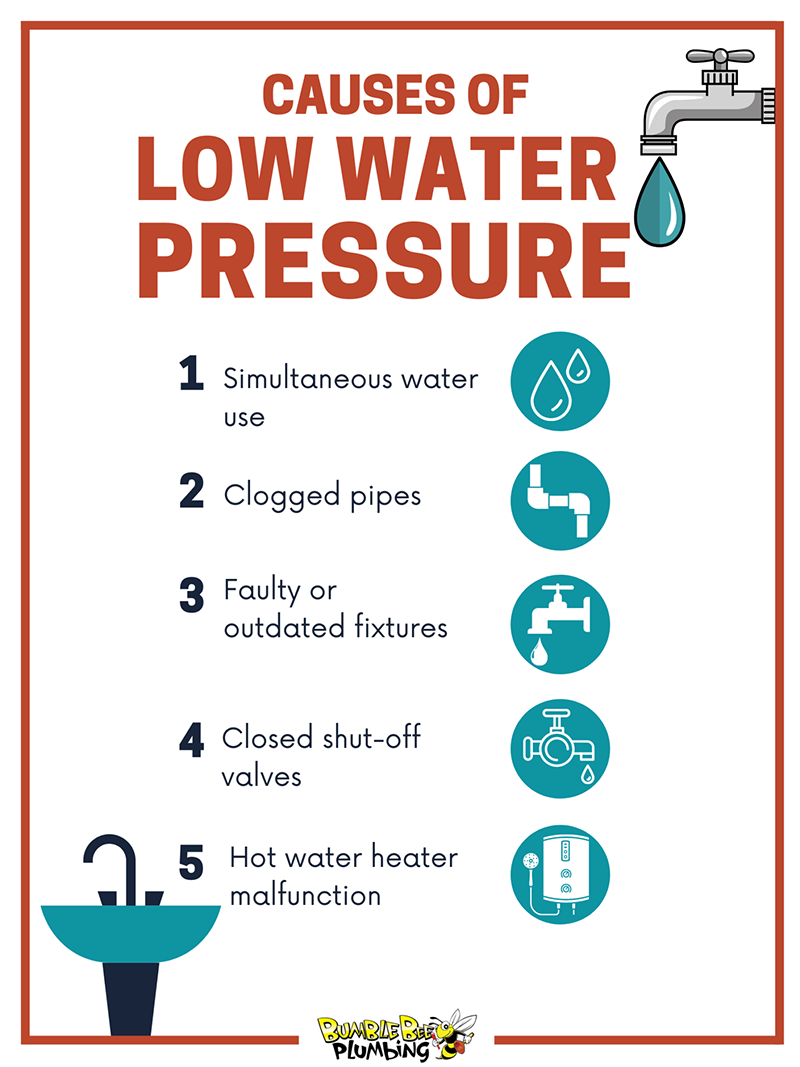
Environmental Monitoring and Thermal Telemetry
Sometimes, low pressure is caused by environmental factors, such as frozen pipes. Smart home ecosystems now integrate thermal sensors with water monitors. If the temperature near the main intake drops below a certain threshold, the system can alert the homeowner before the water crystallizes. Ice blockages act as physical firewalls, stopping the flow of water entirely or creating a significant pressure bottleneck.
3. The Digital Twin: Municipal Infrastructure and Smart Metering
Often, the cause of low water pressure lies outside the home’s boundary. Modern utility companies are increasingly adopting “Smart City” technologies to manage water distribution. When pressure drops across an entire house, the source may be a digital or mechanical failure at the municipal level.
Smart Meters and Real-Time Grid Monitoring
The transition from manual meter reading to Advanced Metering Infrastructure (AMI) has revolutionized utility management. Smart meters transmit data packets via cellular or radio networks to the utility provider. If a water main in the neighborhood bursts, the utility’s “Digital Twin”—a virtual model of the water grid—immediately identifies the drop in pressure and the localized loss of service. Homeowners can often check a utility “dashboard” or receive SMS alerts when municipal maintenance or a technical failure is affecting their home’s PSI.
Data Integration and Peak Usage Algorithms
In some smart-growth urban areas, low pressure is a result of “peak demand” exceeding the grid’s current capacity. Tech-driven utilities use predictive algorithms to manage pump stations. If the software fails to predict a surge in usage—such as during a heatwave when many automated irrigation systems activate simultaneously—the grid may experience a temporary “brownout” of water pressure. This is a load-balancing issue familiar to any network engineer, where the demand for a resource exceeds the throughput of the distribution nodes.
Municipal Backflow Prevention and Smart Check Valves
To protect the public water supply, many jurisdictions require backflow prevention assemblies. These are sophisticated mechanical check valves that prevent contaminated water from flowing back into the city mains. If the sensing line or the internal springs of these devices fail, they can inadvertently choke the supply to the entire house. Technicians now use digital differential pressure gauges to test these devices, ensuring that the “handshake” between municipal supply and private plumbing is operating at peak efficiency.
4. AI and Predictive Maintenance: The Future of Residential Water Systems
As we look toward the future, the “repair and replace” model of home maintenance is being supplanted by a “predict and prevent” paradigm. Artificial Intelligence is now being used to analyze years of water usage data to predict when a home’s pressure might fail before it actually does.
Machine Learning and Predictive Analytics
By aggregating data from thousands of connected homes, AI platforms can identify patterns of “pressure decay.” For instance, if a specific model of pressure regulator tends to fail after five years of high-mineral water exposure, the system can proactively notify the homeowner to schedule a technical upgrade. This move toward predictive maintenance ensures that the “uptime” of the home’s water system remains near 100%.
Integration with the Smart Home Ecosystem
The modern solution to low water pressure is the integration of water management into the broader smart home dashboard. When a pressure drop is detected, the home’s AI can cross-reference other data points: Is the smart irrigation system running? Is the pool auto-fill engaged? Is there a high-demand appliance active? By orchestrating these devices, the home’s “Operating System” can prioritize water flow to essential areas, much like a computer prioritizes CPU cycles for critical tasks.

The Economic Impact of High-Tech Water Management
Finally, the technology used to solve low water pressure has significant financial implications. High-tech monitoring reduces the “Mean Time to Repair” (MTTR) and prevents secondary damage. For the modern homeowner, investing in a digital water management suite is not just about ensuring a strong shower; it is about protecting the asset through advanced telemetry and automated responses.
In conclusion, “what causes low water pressure in the whole house” is a question that, in the 21st century, is answered through a combination of mechanical precision and digital insight. Whether the issue is a failing legacy valve, a localized pipe breach detected by ultrasonic sensors, or a municipal grid load-balancing error, technology provides the tools to diagnose, monitor, and resolve the issue with unprecedented accuracy. By viewing our home’s plumbing as a sophisticated data and fluid network, we can ensure that the flow of resources remains constant, efficient, and secure.
aViewFromTheCave is a participant in the Amazon Services LLC Associates Program, an affiliate advertising program designed to provide a means for sites to earn advertising fees by advertising and linking to Amazon.com. Amazon, the Amazon logo, AmazonSupply, and the AmazonSupply logo are trademarks of Amazon.com, Inc. or its affiliates. As an Amazon Associate we earn affiliate commissions from qualifying purchases.