
In the hyper-competitive landscape of the global beverage industry, market share is often won through flavor profiles, price points, or lifestyle associations. However, a specific subset of the craft brewing world has opted for a more aggressive, headline-grabbing tactic: the pursuit of the “World’s Strongest Beer.” When consumers search for “what beer has the most alcohol,” they aren’t merely looking for a high-octane drink; they are engaging with a high-stakes branding war that leverages scarcity, controversy, and the “halo effect” to build corporate identity.
The quest to produce a beer with 40%, 50%, or even 67% Alcohol by Volume (ABV) is rarely about the liquid inside the bottle. From a brand strategy perspective, these extreme products serve as “pioneer assets”—high-visibility, low-volume releases designed to redefine a brewery’s image from a local craft producer to an international innovator. This article explores how the race for the highest ABV has become one of the most effective tools in the modern brand strategist’s arsenal.
The Battle for the Crown: Strategic Positioning in the High-ABV Market
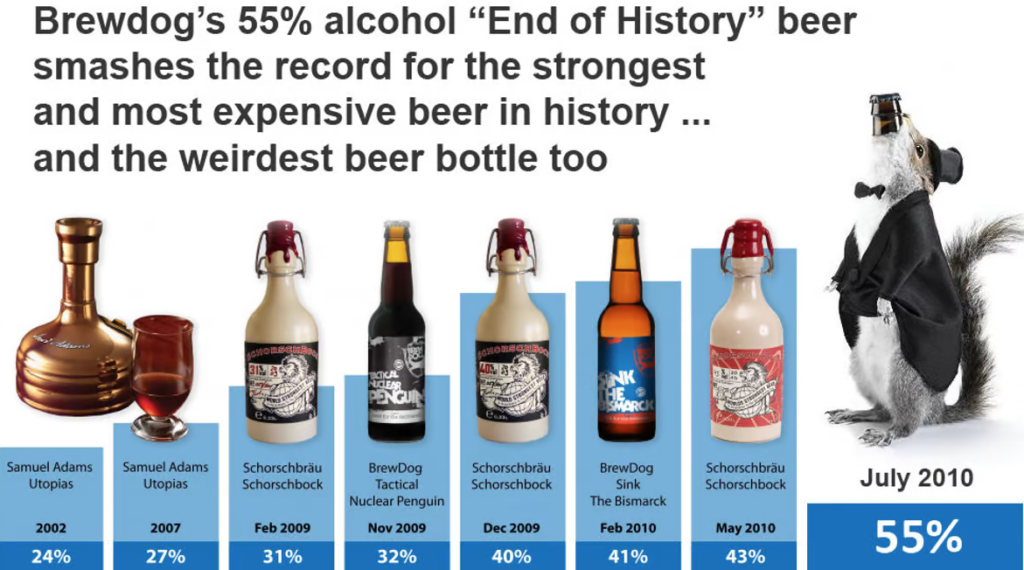
The “arms race” for the world’s strongest beer is perhaps the most literal example of competitive brand positioning. For over a decade, a handful of breweries—most notably Scotland’s BrewDog and Germany’s Schorschbräu—engaged in a public, back-and-forth struggle for the title. This wasn’t just a feat of engineering; it was a masterclass in PR-driven brand building.
BrewDog vs. Schorschbräu: The PR War
The rivalry began in earnest when BrewDog released “Tactical Nuclear Penguin” (32% ABV), explicitly mocking the traditional brewing methods of their competitors. When Schorschbräu responded with a 40% ABV lager, BrewDog countered with “Sink the Bismarck!” (41%). This back-and-forth created a narrative that the media couldn’t resist. By positioning themselves as the “punks” of the industry fighting against a “traditionalist” German powerhouse, BrewDog used the high-ABV title to establish a rebellious, disruptive brand identity that remains their core USP (Unique Selling Proposition) today.
Creating a “Halo Effect” through Record-Breaking
In marketing, the “halo effect” occurs when a consumer’s positive impression of one product spills over into the rest of a brand’s portfolio. Most consumers will never taste a beer that clocks in at 55% ABV, nor would many want to, given the price point and intense ethanol burn. However, the existence of such a beer signals to the consumer that the brewery is a master of its craft. If a brand can successfully navigate the technical hurdles of fractional freezing and yeast survival to create a record-breaker, the consumer assumes their entry-level IPA or Lager must also be of superior quality.
The Brand Identity of the “World’s Strongest” Title
Building a brand around “the most” of anything requires a delicate balance between prestige and accessibility. For breweries like Keith’s Brewery (producers of Snake Venom, currently cited as the world’s strongest at 67.5%), the branding is less about “craft” and more about “notoriety.”
Scarcity and Exclusivity as Marketing Levers
The strongest beers in the world are almost always produced in limited quantities. BrewDog’s “The End of History” (55% ABV) was limited to just 12 bottles, each encased in taxidermy. By combining extreme alcohol content with extreme visual packaging and extreme scarcity, the brand transitioned from a beverage company to a luxury collectible house. This strategy mirrors that of high-end fashion brands or limited-run automotive manufacturers. The goal isn’t volume sales; the goal is to drive brand equity and “search intent,” ensuring that whenever someone asks “what beer has the most alcohol,” the brand’s name is the inevitable answer.
Navigating Regulatory Challenges and Brand Risk
There is a significant inherent risk in branding a product as the “strongest.” Alcohol advocacy groups and regulatory bodies often view these products as irresponsible. A brand strategy that leans too heavily into high-ABV territory risks being de-listed from major retailers or facing legal sanctions. Successful brands mitigate this by framing their high-ABV products as “sipping spirits” rather than traditional beers. They often include warning labels or suggest serving sizes of 25ml. This “responsible rebel” framing allows the brand to maintain its edgy identity while satisfying the corporate social responsibility (CSR) requirements of the modern market.
Beyond the Bottle: How Extreme ABV Impacts Brand Equity
The long-term value of producing the world’s strongest beer is not found in the revenue generated from those specific sales, but in the “earned media” and cultural currency the brand acquires. In an era where digital advertising costs are skyrocketing, the organic reach of a “World Record” headline is worth millions in equivalent ad spend.
The Transition from Craft to Luxury Brand
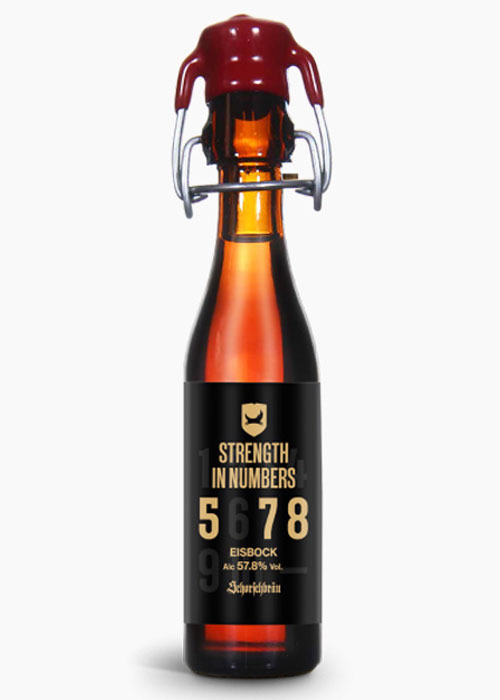
When a brewery releases a beer like “Strength in Numbers” (a 57.8% ABV collaboration between BrewDog and Schorschbräu that ended their decade-long feud), they are signaling a move toward the luxury market. These products are often priced at hundreds of dollars per bottle. This price anchoring makes their $15 four-packs seem like a bargain by comparison. It elevates the entire brand out of the “commodity” category and into the “experience” category. The brand is no longer just selling beer; it is selling a story, a conversation piece, and a piece of brewing history.
Case Study: Snake Venom and the Viral Loop
Keith’s Brewery’s “Snake Venom” is a primary example of how a brand can dominate the digital space without a massive marketing budget. By hitting the 67.5% ABV mark, the brand created a viral loop. Every “top 10” list, YouTube tasting video, and “weird news” blog post features the product. This organic search dominance means that the brand stays at the top of the “Most Alcohol” niche for years after the initial product release. The brand identity becomes synonymous with “The Ultimate,” providing a level of staying power that traditional advertising cannot buy.
Future Outlook: The Sustainability of the High-ABV Marketing Gimmick
As the craft beer market matures, the question arises: is the “strongest beer” strategy still viable? The industry is currently seeing a shift toward “Mindful Drinking” and low-ABV “Session” beers. However, from a brand strategy perspective, the “extremes” will always have a place.
The Rise of the “Reverse Superlative”
Just as brands fought to have the most alcohol, we are now seeing a strategic pivot where brands compete to have the least calories or the best flavor at 0.0% ABV. The lessons learned from the high-ABV arms race—scarcity, technical storytelling, and the halo effect—are now being applied to the non-alcoholic sector. A brand that can make a 0% beer taste exactly like a 5% IPA earns the same “technical mastery” equity that a 60% ABV producer once did.
Final Thoughts on Brand Supremacy
The quest for the beer with the most alcohol is a testament to the power of superlative branding. It proves that in a crowded marketplace, being “the most” is often more valuable than being “the best.” Whether through the shock value of taxidermy bottles or the technical prowess of freeze-distillation, breweries have used high-ABV products to etch their names into the global consciousness.
For a brand, the “World’s Strongest Beer” is a flagship. It sits at the top of the mast, visible from miles away, signaling the brand’s presence, its values, and its refusal to blend in. While the average consumer may never take more than a cautious sip of a 67% ABV brew, the brand that created it has already won. They have captured the consumer’s curiosity, dominated the search results, and established themselves as a leader in a world where being average is the only true failure.
aViewFromTheCave is a participant in the Amazon Services LLC Associates Program, an affiliate advertising program designed to provide a means for sites to earn advertising fees by advertising and linking to Amazon.com. Amazon, the Amazon logo, AmazonSupply, and the AmazonSupply logo are trademarks of Amazon.com, Inc. or its affiliates. As an Amazon Associate we earn affiliate commissions from qualifying purchases.