
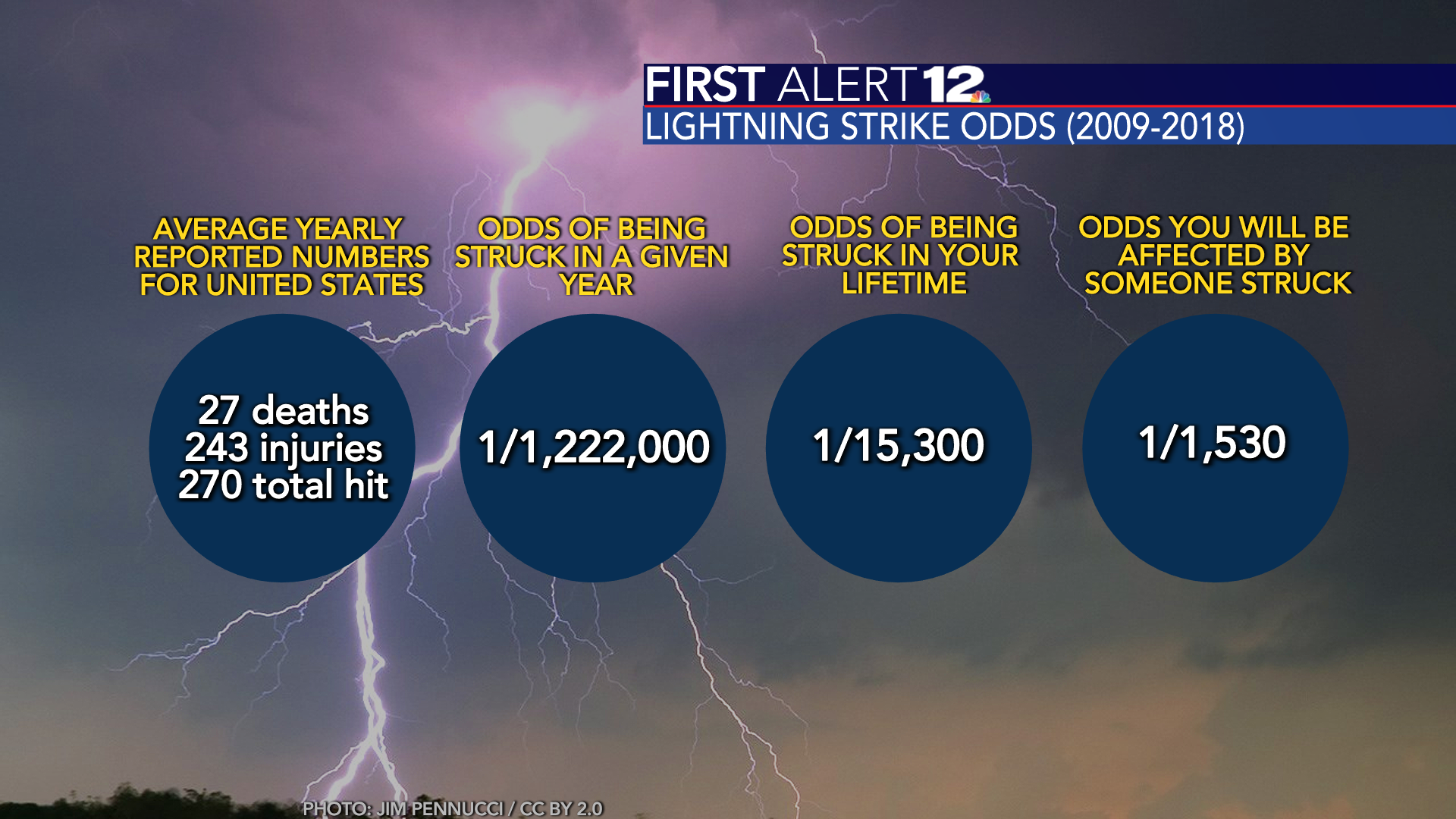
In the world of meteorology, the odds of being struck by lightning in a given year are approximately one in a million. It is a rare, high-impact event that most people consider a statistical impossibility in their daily lives. However, in the landscape of personal finance and investing, the metaphor of “being struck by lightning” takes on a dual meaning. On one hand, it represents the “moonshot” success—the penny stock that goes to the moon or the ground-floor crypto investment that turns a few hundred dollars into millions. On the other hand, it represents “tail risk”—the sudden, catastrophic market crash or individual financial disaster that can wipe out a lifetime of savings.
Understanding your chances of being struck by lightning in a financial sense is not about predicting the weather; it is about understanding probability, risk management, and the psychological biases that lead investors to chase anomalies rather than build sustainable wealth.
The Psychology of the Jackpot: Why We Chase Lightning
The human brain is evolutionarily wired to notice patterns, but it is notoriously poor at calculating extreme probabilities. In finance, this manifests as a fascination with “outlier” events. We see the headlines of a teenager becoming a multi-millionaire through an NFT or a lucky investor betting their life savings on a single high-leverage option play, and we subconsciously recalibrate our expectations.
The Allure of the ‘Moonshot’ Investment
The “moonshot” is the financial equivalent of hoping for a lightning strike to power your house instead of installing solar panels. In the modern digital economy, the democratization of trading platforms has made it easier than ever to chase these high-risk, high-reward assets. From meme stocks to speculative altcoins, the allure lies in the “asymmetric upside”—the idea that you can lose a little but gain a lot. However, when an investor views these rare events as a viable strategy rather than a statistical fluke, they move from the realm of investing into the realm of gambling. The professional approach acknowledges that while these strikes occur, they cannot be the foundation of a wealth-building strategy.
Cognitive Biases: Overestimating the Rare Event
Two primary psychological factors are at play when we assess financial lightning strikes: the availability heuristic and the survivorship bias. The availability heuristic leads us to overestimate the probability of events that are easy to remember. Because the media celebrates the “lottery winners” of the stock market while ignoring the millions who lost money on the same trade, we perceive the “strike” as more common than it is. Survivorship bias compounds this by hiding the “graveyard” of failed investments. When you only see the survivors, the odds of success look far better than they truly are.
Calculating the Real Odds: Market Volatility and Tail Risk
To navigate the financial markets professionally, one must move beyond the “jackpot” mentality and look at the actual distribution of returns. In statistics, most market movements fall within a standard deviation—the “normal” weather of the economy. But the financial world is prone to “Fat Tails,” where extreme events happen more frequently than a standard bell curve would suggest.
The Concept of the Black Swan in Financial Markets
Coined by Nassim Nicholas Taleb, a “Black Swan” is an event that is unpredictable, has a massive impact, and is often explained away with hindsight. These are the negative lightning strikes of the financial world. The 2008 housing crisis, the 2020 pandemic-induced flash crash, and the sudden collapse of major financial institutions are examples of these events. Investors who do not account for the possibility of these “strikes” often find themselves over-leveraged and vulnerable. Professional finance is as much about surviving the storms as it is about basking in the sun.
Historical Anomalies vs. Statistical Norms
If we look at the history of the S&P 500, the “lightning strikes” (days where the market moves more than 5% in either direction) are incredibly rare, yet they account for a disproportionate amount of the market’s long-term performance. Missing just the ten best days in the market over several decades can cut an investor’s total returns in half. This highlights a critical truth: you don’t need to predict where lightning will strike; you simply need to be “in the field” (invested) consistently so that you are there when the positive anomalies occur, while being protected enough to survive the negative ones.
Strategic Risk Management: Grounding Your Financial Portfolio
If you were standing in an open field during a thunderstorm, you would seek a lightning rod or a grounded shelter. In personal finance, risk management serves as your grounding mechanism. It is the process of ensuring that no single “strike”—no matter how powerful—can permanently end your financial journey.
Diversification as a Lightning Rod
Diversification is often called the “only free lunch in investing,” but more accurately, it is your primary defense against a direct hit. By spreading capital across different asset classes (stocks, bonds, real estate, commodities) and different sectors, you ensure that a catastrophic event in one area doesn’t lead to a total loss. If lightning strikes the tech sector, your exposure to healthcare or consumer staples acts as a buffer. The goal of a professional portfolio is not to avoid all risk, but to ensure that risk is distributed so that the “chances of being struck” in a fatal way are reduced to near zero.
The Role of Emergency Funds and Insurance
Beyond the portfolio, personal financial safety requires structural grounding. An emergency fund is the ultimate insurance against a personal “lightning strike”—a sudden job loss, a medical emergency, or a major home repair. While an investment portfolio is built for growth, an emergency fund is built for survival. Similarly, insurance products (life, disability, liability) are financial tools specifically designed to handle low-probability, high-impact events. They are the cost of “grounding” your life against the unpredictable.
From Luck to Logic: Building Wealth Without Relying on the Strike
The most successful investors in history—from Warren Buffett to Jack Bogle—did not build their fortunes by waiting for a lightning strike. They built them through the relentless application of logic, discipline, and time. They understood that while catching a lucky break is great, relying on one is a recipe for ruin.
The Power of Compound Interest vs. Sudden Windfalls
The “miracle” of compound interest is often described as the eighth wonder of the world. Unlike a lightning strike, which is instantaneous and unpredictable, compounding is slow, steady, and inevitable if given enough time. A strike might give you a 1,000% return in a day, but compounding can give you a 10,000% return over thirty years with significantly less risk. The professional mindset shifts the focus from “How can I get rich this year?” to “How can I ensure I am wealthy in twenty years?” This shift in time horizon changes the investor’s relationship with risk and probability.

Automating Success: The Disciplined Investor’s Path
One of the most effective ways to mitigate the urge to “chase lightning” is through automation. Dollar-cost averaging—the practice of investing a fixed amount of money at regular intervals regardless of market conditions—removes the emotional component of investing. It ensures that you are buying more shares when prices are low (during the “storms”) and fewer when prices are high. This disciplined approach acknowledges that we cannot predict when the next market surge or crash will happen, so we choose to participate in all of them systematically.
In conclusion, your chances of being “struck by lightning” in the financial world are high if you spend your life standing in the middle of a speculative field during a storm. If you chase volatility, use excessive leverage, and ignore diversification, a catastrophic hit is almost a mathematical certainty over a long enough timeframe.
However, if you treat the “lightning strike” as what it is—a rare outlier—you can build a financial life that is resilient to the shocks and positioned to benefit from the long-term growth of the global economy. Professional wealth management is not about catching the strike; it’s about building the house that can withstand the weather, ensuring that when the clouds eventually clear, you are still standing, stronger and more prosperous than before.
aViewFromTheCave is a participant in the Amazon Services LLC Associates Program, an affiliate advertising program designed to provide a means for sites to earn advertising fees by advertising and linking to Amazon.com. Amazon, the Amazon logo, AmazonSupply, and the AmazonSupply logo are trademarks of Amazon.com, Inc. or its affiliates. As an Amazon Associate we earn affiliate commissions from qualifying purchases.