
The global yoga mat market is no longer a simple subset of the fitness industry; it has evolved into a sophisticated arena for material science and polymer engineering. What appears to be a simple rectangular accessory is, in reality, a complex composite of chemical compounds, structural engineering, and tactile technology. As consumers demand higher performance, durability, and environmental safety, the manufacturing processes behind these tools have transitioned from basic rubber molding to advanced industrial synthesis.
Understanding what yoga mats are made of requires a journey through the evolution of synthetic polymers, the physics of friction, and the latest breakthroughs in sustainable material technology.
The Evolution of Polymer Engineering in Fitness
The history of yoga mat composition mirrors the broader history of industrial materials. In the early days of Western yoga, practitioners used woven cotton or wool rugs. However, the need for traction and cushioning led to the adoption of synthetic materials. This shift marked the beginning of “traction technology” in personal fitness.
PVC: The Traditional Synthetic Standard
Polyvinyl Chloride (PVC) remains the most prevalent material in the yoga mat industry due to its incredible versatility and cost-effectiveness. From a technical standpoint, PVC is a high-strength thermoplastic polymer. In its raw form, it is rigid, but through the addition of plasticizers—typically phthalates—it becomes the flexible, “sticky” surface familiar to most practitioners.
The manufacturing process involves a method known as “expansion,” where blowing agents are introduced to create a foam-like structure. This provides the “give” or cushioning required for joint protection. While PVC is criticized for its environmental footprint, it remains the gold standard for durability, often lasting decades without significant degradation of its molecular bond.
TPE (Thermoplastic Elastomer): The Hybrid Breakthrough
As the tech industry pushed for materials that bridged the gap between plastic and rubber, Thermoplastic Elastomers (TPE) emerged as a dominant force in mat production. TPE is a physical blend of polymers (usually a plastic and a rubber) that consists of materials with both thermoplastic and elastomeric properties.
The technical advantage of TPE lies in its recyclability. Unlike traditional thermoset rubber, TPE can be re-melted and reshaped, making it a “closed-loop” manufacturing candidate. It is typically processed through injection molding or extrusion, allowing for precise control over the mat’s density and “bounce-back” rate. This material is lighter than PVC and offers a softer feel, though it generally possesses a shorter lifespan under high-intensity thermal stress.
Advanced Material Properties and Performance Metrics
When engineers design a yoga mat, they are solving for specific physical variables: coefficient of friction, tensile strength, and compression set. These metrics determine how a mat performs under the heat and pressure of a rigorous session.
Closed-Cell vs. Open-Cell Technology
One of the most critical technical distinctions in mat composition is the cell structure.
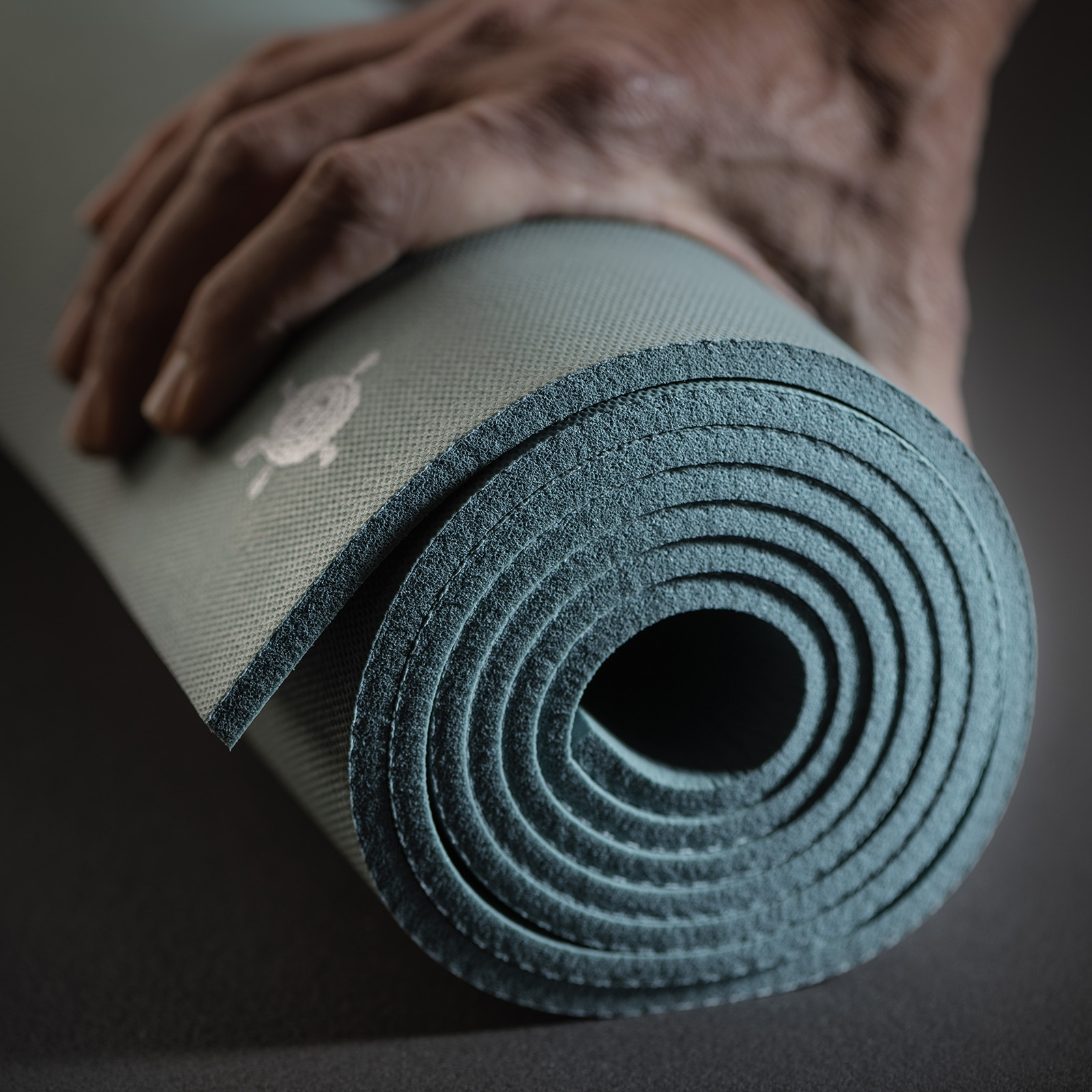
- Closed-Cell Technology: Most PVC and TPE mats use a closed-cell construction. During the foaming process, the cells are sealed shut, preventing moisture (sweat) and bacteria from penetrating the surface. This makes the mat easier to clean and more hygienic. However, from a physics perspective, it reduces the “wet grip” because moisture sits on top of the surface, creating a hydroplaning effect.
- Open-Cell Technology: Polyurethane (PU) and some natural rubber mats utilize an open-cell structure. These cells are interconnected, acting like a microscopic sponge that wicks moisture away from the surface. This maintains a high coefficient of friction even when wet. The trade-off is that these mats require more intensive deep-cleaning to prevent the accumulation of organic matter within the porous matrix.
Shore Durometer and Cushioning Mechanics
The “squishiness” of a mat is measured using a Shore durometer, a device that calculates the hardness of a material. For yoga mats, the goal is to achieve an optimal balance between Shore A hardness (surface durability) and foam density (impact absorption).
High-density mats utilize a compact molecular structure that provides stability for balancing poses, preventing the “bottoming out” effect where the practitioner feels the hard floor through the mat. Engineering these mats involves calculating the “compression set”—the ability of the foam to return to its original thickness after being compressed by a specific load over time.
Sustainable Tech and Bio-Based Innovations
The current frontier of yoga mat technology is the shift from petroleum-based synthetics to bio-engineered materials. This transition requires sophisticated chemical engineering to ensure that “green” materials can match the performance of their synthetic predecessors.
Natural Rubber Vulcanization Processes
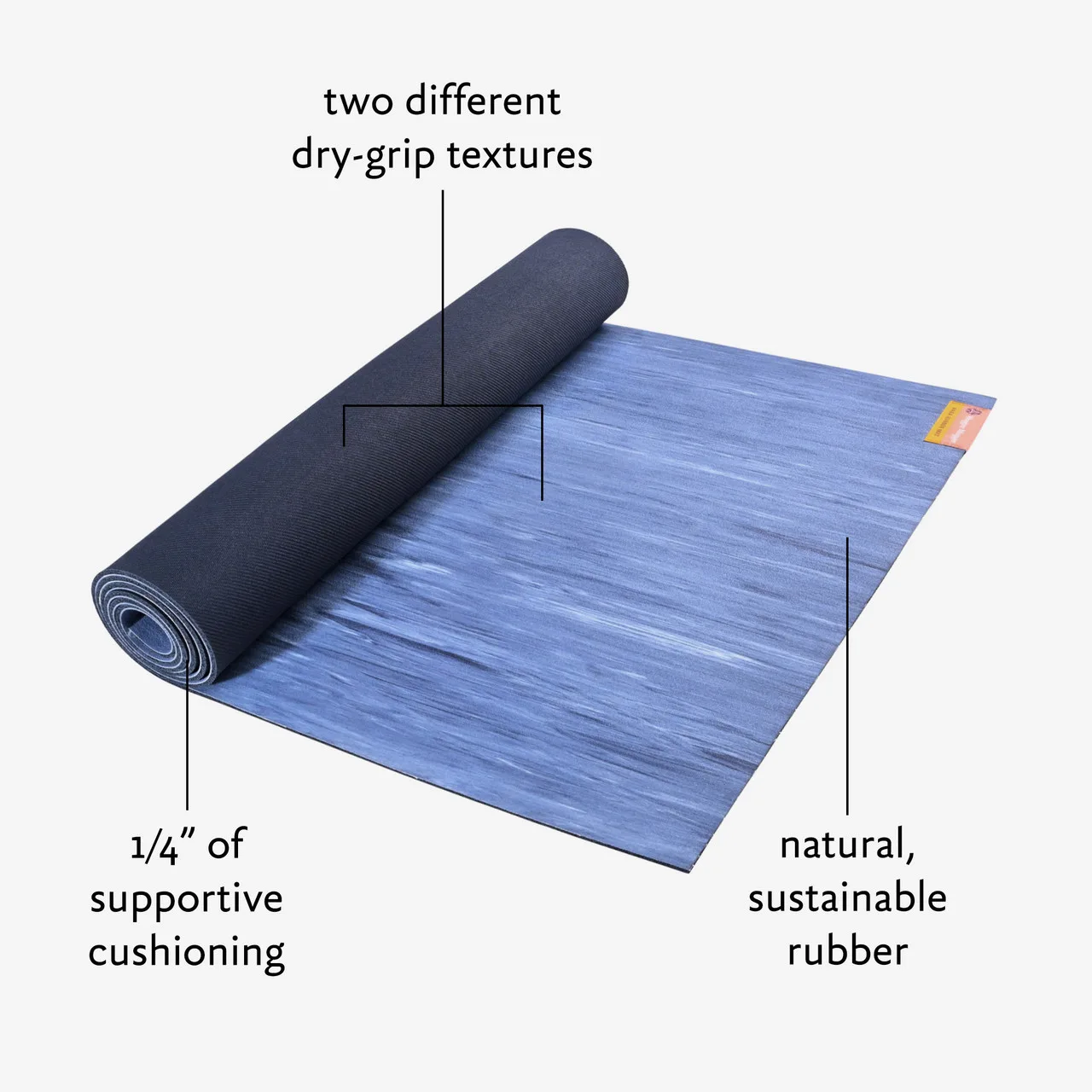
Natural rubber mats are derived from the latex of Hevea brasiliensis trees. To transform liquid latex into a durable yoga mat, it must undergo vulcanization. This chemical process involves heating the rubber with sulfur or other accelerators to create cross-links between polymer chains.
Modern “Tech-Green” mats have refined this process to eliminate the use of toxic foaming agents. The challenge in rubber technology is managing the “oxidation” of the material; since it is organic, it eventually breaks down. Engineers are now incorporating antioxidants and UV stabilizers into the rubber matrix to extend the product’s lifecycle while maintaining its biodegradable status.
Cork and Jute: Integrating Organic Fibers with Synthetic Backing
Materials like cork and jute are being integrated into yoga mat surfaces through advanced lamination technology. Cork contains a natural wax called suberin, which becomes “grippy” when wet, making it a marvel of organic material science.
The technical challenge lies in the “bonding layer.” To create a functional mat, the cork or jute top layer must be thermally fused or chemically bonded to a base layer (usually TPE or Natural Rubber) without the use of toxic glues. This requires high-precision heat-press machinery that ensures a permanent bond while preserving the structural integrity of the organic fibers.
The Future of Smart Mats: Sensor Integration and Haptic Feedback
As we look toward the future, yoga mats are transitioning from passive surfaces to active hardware. The “Tech” of what a mat is made of is beginning to include electronics and conductive materials.
IoT-Enabled Surfaces for Form Correction
Emerging “Smart Mats” incorporate a layer of piezoresistive sensors. These sensors are made of materials that change their electrical resistance when compressed. By embedding a grid of these sensors between layers of TPE or PU, the mat can “see” where a user is placing their weight.
The data is then processed via an onboard microcontroller and transmitted via Bluetooth to a smartphone app. This integration requires the mat to be flexible enough to roll up without snapping the delicate circuitry, a feat achieved through the use of conductive inks and flexible printed circuit boards (FPCBs).
Pressure-Sensing Conductive Layers
Some high-end prototypes are experimenting with “haptic feedback” mats. These mats utilize a layer of electro-active polymers (EAPs) that can vibrate or change texture in response to an electric field. Imagine a mat that provides a gentle pulse under your right foot if your alignment is off-center. This represents the ultimate convergence of textile engineering, sensor technology, and biometric data.
Manufacturing Precision and Chemical Safety Standards
The final aspect of what makes a modern yoga mat is the regulatory technology used to ensure safety. Because yoga involves skin-to-surface contact and deep breathing in close proximity to the material, the “off-gassing” of Volatile Organic Compounds (VOCs) is a major technical concern.
Phthalate-Free Processing and Global Regulations
Modern manufacturing facilities now employ Gas Chromatography-Mass Spectrometry (GC-MS) testing to ensure that mats are free from harmful substances. Technical certifications such as OEKO-TEX Standard 100 or REACH (Registration, Evaluation, Authorisation and Restriction of Chemicals) have become benchmarks for quality.
These standards dictate the chemical limits for heavy metals, formaldehyde, and azo dyes. Achieving these standards requires a high degree of “clean manufacturing,” where the factory environment is strictly controlled to prevent cross-contamination from other industrial processes.

Conclusion
A yoga mat is far more than a piece of rubber; it is a meticulously engineered piece of equipment. From the molecular architecture of PVC and TPE to the complex capillary action of open-cell polyurethane and the burgeoning world of integrated sensors, the materials used in yoga mats represent a significant intersection of chemistry and physics.
As we move forward, the focus will continue to shift toward “Materials 2.0″—surfaces that are not only high-performing and durable but also fully integrated into the digital ecosystem and 100% circular in their lifecycle. Whether through the refinement of natural polymers or the introduction of conductive textiles, the technology beneath our feet continues to evolve at an impressive pace.
aViewFromTheCave is a participant in the Amazon Services LLC Associates Program, an affiliate advertising program designed to provide a means for sites to earn advertising fees by advertising and linking to Amazon.com. Amazon, the Amazon logo, AmazonSupply, and the AmazonSupply logo are trademarks of Amazon.com, Inc. or its affiliates. As an Amazon Associate we earn affiliate commissions from qualifying purchases.