
In the modern smart home ecosystem, humidifiers have evolved from simple water basins with fans into sophisticated pieces of climate-control technology. From ultrasonic transducers to IoT-enabled sensors that monitor ambient moisture levels in real-time, these devices are essential components of a healthy digital environment. However, the most advanced hardware on the market is only as effective as the fuel—water—it consumes.
Choosing the right type of water for your humidifier is not merely a household chore; it is a critical maintenance protocol for high-end hardware. Using the wrong input can lead to sensor degradation, mechanical failure, and a decrease in air quality that contradicts the device’s original purpose. This guide examines the technical intersection of water chemistry and gadget performance to ensure your indoor air tech operates at peak efficiency.

Understanding the Hardware: How Modern Humidifiers Process Water
To understand why water quality matters, one must first look at the internal mechanics of modern humidification technology. Most consumer-grade gadgets fall into two technological camps: ultrasonic and evaporative. Each handles water minerals differently, leading to varied technical outcomes.
Ultrasonic Technology and Piezoelectric Transducers
Ultrasonic humidifiers represent the cutting edge of silent, energy-efficient moisture delivery. These devices utilize a small metal diaphragm, known as a piezoelectric transducer, which vibrates at an ultrasonic frequency. These vibrations literally “atomize” the water, turning it into a fine mist that is dispersed into the air.
Because this technology does not use heat, it atomizes everything within the water—including minerals, bacteria, and chemicals. From a technical standpoint, the transducer is a precision instrument; any buildup of mineral scale on this component reduces its vibration frequency, leading to mechanical strain and eventual hardware failure.
Evaporative Systems and Wick Technology
Evaporative humidifiers are more traditional but increasingly feature smart integration for fan speed control and humidity targeting. These units use a “wick” filter to absorb water, while a high-velocity fan blows air through the saturated filter.
In this scenario, the water evaporates, but the minerals stay behind in the wick. While this prevents minerals from entering the air, it creates a “scaling” effect on the filter. If the water is rich in minerals (hard water), the wick becomes calcified, significantly reducing the surface area available for evaporation. This forces the device’s motor to work harder, consuming more electricity and shortening the fan’s lifespan.
The Physics of “White Dust” and Sensor Failure
One of the most common technical complaints regarding ultrasonic humidifiers is the appearance of a fine white powder on nearby electronics, furniture, and the device itself. In the tech world, this isn’t just a cleaning issue—it’s a hardware risk.
Mineral Interference with IoT Sensors
Modern smart humidifiers are equipped with hygrostats—sensors that measure the current humidity level to determine when the device should activate or deactivate. When tap water with high mineral content is used, the “white dust” (primarily calcium and magnesium) can settle directly on these sensitive sensors.
Once coated in mineral residue, the sensors lose their calibration. This can lead to “short-cycling,” where the device turns on and off rapidly because it cannot accurately read the ambient air. Over time, this erratic behavior can lead to a total failure of the control board or the Wi-Fi module due to overheating from constant state-switching.
Impellers and Biofilm Accumulation
Beyond minerals, the biological makeup of the water used can impact the gadget’s internal health. Stagnant tap water is a breeding ground for biofilm—a collective of microorganisms that stick to surfaces. In humidifiers, biofilm can clog internal impellers and narrow the channels through which water flows.
From a technical maintenance perspective, biofilm acts as an insulator, trapping heat within the motor housing. For high-performance gadgets designed to run 24/7, this lack of thermal regulation can result in the internal plastic components warping or the motor burning out prematurely.
Distilled vs. Tap: A Technical Performance Analysis
When analyzing the “input” for your humidifier, there are three main contenders: tap water, filtered water, and distilled water. Each has a specific profile that affects the ROI (Return on Investment) of your home technology.
The Problem with Tap Water Conductivity
Tap water is treated for safety, but not for mechanical purity. It contains chlorine, fluoride, and varying levels of minerals. In the context of electronics, tap water is highly conductive. While this is necessary for certain types of steam vaporizers (which use electrodes to boil water), it is detrimental to the precision components of ultrasonic units.
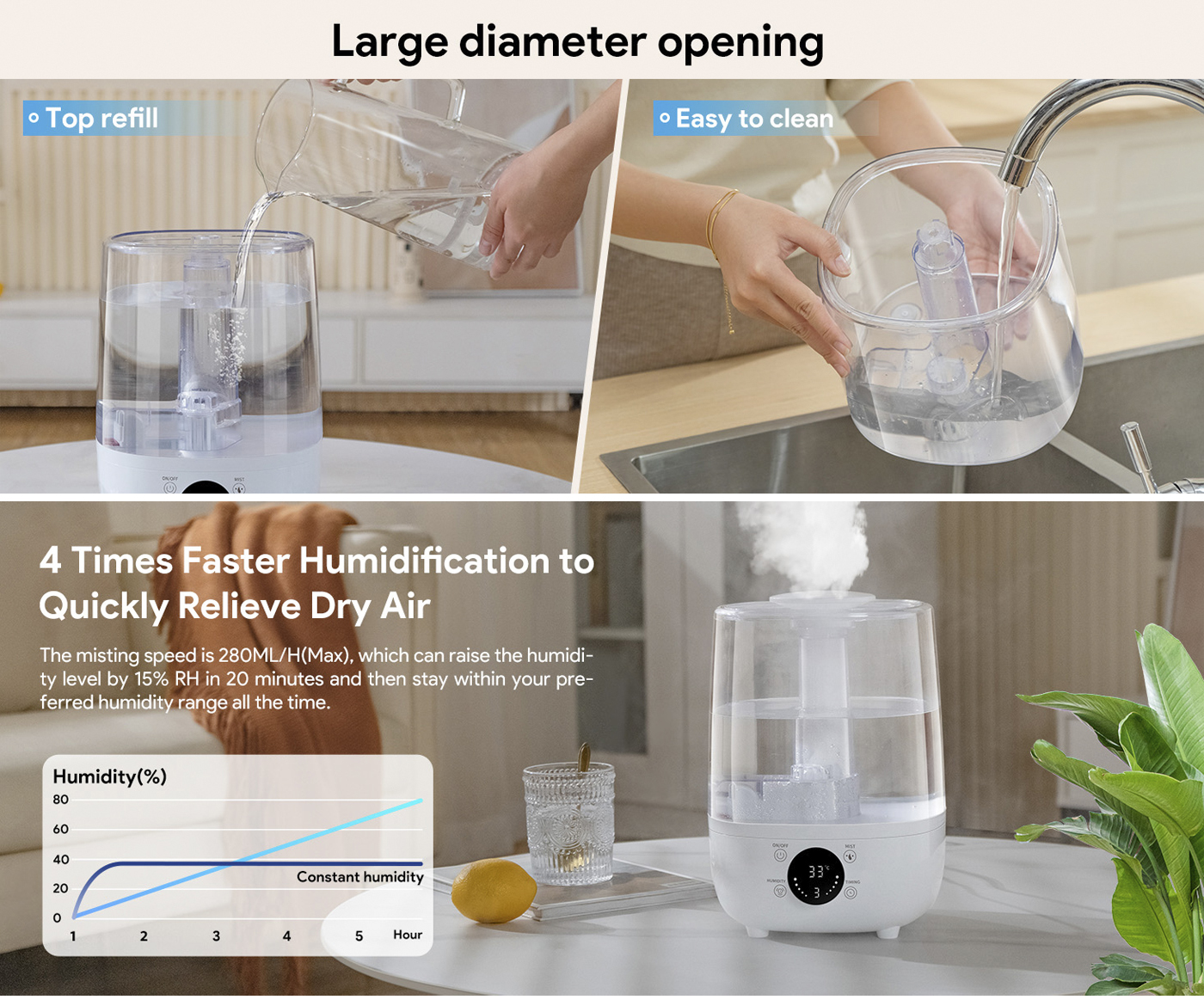
Furthermore, the chemical additives in tap water can degrade the rubber seals and gaskets inside the humidifier. Once these seals lose their integrity, water can leak into the electrical housing, causing a short circuit that renders the gadget useless.
Distilled Water: The Gold Standard for Hardware
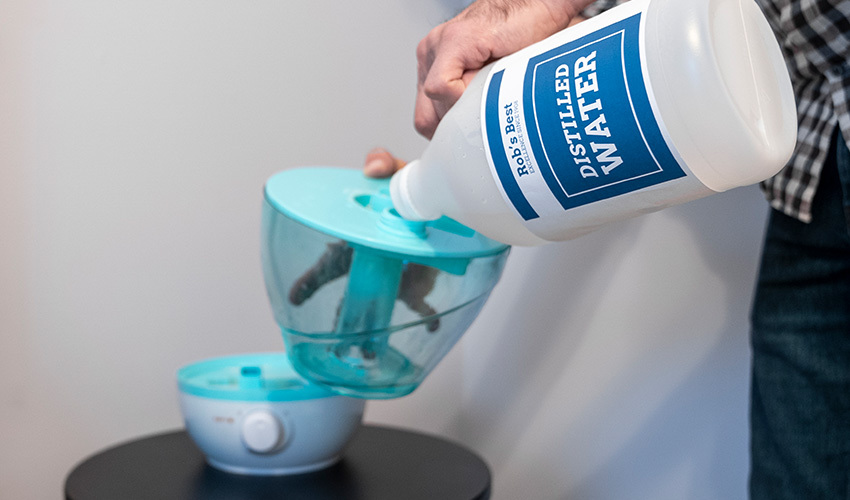
Distilled water is the result of steam being condensed back into a liquid, a process that removes 99.9% of minerals and impurities. In the tech community, distilled water is preferred for cooling loops and high-end humidifiers because it is non-conductive and leaves zero residue.
Using distilled water ensures that:
- The Transducer remains clear: Maximum vibration efficiency is maintained.
- No White Dust: Sensitive electronics nearby (like PCs or gaming consoles) are protected from mineral ingress.
- Sensor Accuracy: The internal hygrostat remains clean, ensuring the smart features of the device work as advertised.
Demineralization Cartridges as a Middle Ground
For users who find distilled water logistically difficult to source, many brands offer demineralization cartridges. These are essentially ion-exchange filters that “soften” the water before it hits the transducer. While effective, they introduce a secondary technical requirement: filter monitoring. If the cartridge is not replaced on time, the hardware protection it provides drops to zero, making it a “soft” solution compared to the “hard” solution of using distilled water.
Smart Maintenance: Leveraging AI and App Notifications
The latest generation of humidifiers from brands like Dyson, Levoit, and Honeywell are designed with “self-aware” maintenance protocols. Integrating these devices into your smart home ecosystem allows for a data-driven approach to device care.
Predictive Maintenance and Filter Life
Many modern units sync with mobile apps to provide real-time data on water quality and filter health. By monitoring the flow rate and the resistance of the internal pump, the software can predict when mineral buildup is beginning to affect performance.
Users should treat “Clean Me” notifications with the same urgency as a “Software Update” on a computer. Neglecting a cleaning cycle when using tap water allows minerals to harden into “scale,” which often requires chemical decalcifiers (like citric acid or vinegar) that can be abrasive to the device’s plastic chassis.
Automated Refill Systems and Water Quality Sensors
The most high-end installations now feature automated refill lines, similar to a refrigerator’s ice maker. These systems often include inline reverse osmosis (RO) filters. For a tech-focused homeowner, installing an RO system ensures that the humidifier always receives “low-TDS” (Total Dissolved Solids) water. This automation removes the human error factor, ensuring the gadget never runs dry and the hardware is never exposed to damaging tap water minerals.
The Future of Indoor Air Tech: UV-C and Advanced Filtration
As we look toward the future of home gadgets, the focus is shifting from simple moisture delivery to total air purification. The water we put into these devices is becoming part of a larger technological cycle.
UV-C Sterilization
Many new humidifiers feature a “kill zone” where the water is exposed to UV-C light before being misted. This technology is designed to neutralize the DNA of bacteria and viruses. However, UV-C light is less effective in “turbid” or cloudy water (common with high-mineral tap water). To ensure the UV-C hardware can actually penetrate the water stream, the liquid must be clear and mineral-free, further reinforcing the need for distilled or highly filtered water.
Integration with Air Purifiers
We are seeing an increase in 2-in-1 gadgets that combine HEPA air purification with humidification. These complex machines are particularly sensitive to water quality. If “white dust” from tap water is generated, it will immediately be sucked back into the device’s own HEPA filter, clogging the filter and requiring an expensive replacement much sooner than the manufacturer’s estimate.
In a tech-forward home, the synergy between devices is paramount. Using distilled water in a humidifier isn’t just about the humidifier; it’s about protecting the entire network of air sensors and purifiers that maintain your environment.
Final Protocol for Gadget Preservation
To maximize the lifespan and performance of your indoor air technology, the protocol is clear. While tap water is functional in an emergency, it acts as a slow-acting “malware” for your humidifier’s hardware.
- Primary Choice: Use distilled water to eliminate mineral scaling and protect internal sensors.
- Secondary Choice: Use demineralization filters or Reverse Osmosis water if distilled is unavailable.
- Maintenance: Perform a technical “reset” by cleaning the transducer with citric acid every 50 hours of use to prevent calcification.
- Monitoring: Utilize smart app integrations to track water consumption and part longevity.
By treating your humidifier as a precision gadget rather than a simple appliance, and by fueling it with the correct water type, you ensure a higher ROI, better performance, and a cleaner, more technologically sound living space.
aViewFromTheCave is a participant in the Amazon Services LLC Associates Program, an affiliate advertising program designed to provide a means for sites to earn advertising fees by advertising and linking to Amazon.com. Amazon, the Amazon logo, AmazonSupply, and the AmazonSupply logo are trademarks of Amazon.com, Inc. or its affiliates. As an Amazon Associate we earn affiliate commissions from qualifying purchases.