
The term “paraprofessional” encompasses a wide range of vital roles across various industries, most notably in education, law, and healthcare. While these individuals provide essential support that keeps institutions running smoothly, the financial aspect of the role—specifically the paraprofessional salary—is a subject of significant discussion. For those considering this career path or currently working within it, understanding the nuances of compensation, benefits, and long-term financial planning is crucial. In the context of personal finance and career economics, the paraprofessional salary represents a unique baseline that requires strategic management to ensure financial stability and growth.
The Financial Landscape of Paraprofessional Roles
When analyzing what a paraprofessional earns, it is important to first recognize the diversity of the role. A paraprofessional is generally defined as a worker who is trained to assist a professional, such as a teacher or a lawyer, but who does not hold a full professional license in that specific field. Because of this, the salary reflects a middle-ground position in the labor market.
Defining the Paraprofessional Role in Today’s Economy
In the modern economy, paraprofessionals are the “force multipliers” of their organizations. In the educational sector, they are often known as paraeducators or teacher assistants. In the legal sector, they are paralegals. From a financial perspective, these roles are often entry-points into stable industries. However, because many paraprofessional positions—particularly in public education—are funded through tax revenue or grants, the salary scales are often rigid and publicly documented. Understanding where you sit on a “salary step” is the first step in managing your business finance as an individual.
National Averages vs. Regional Realities
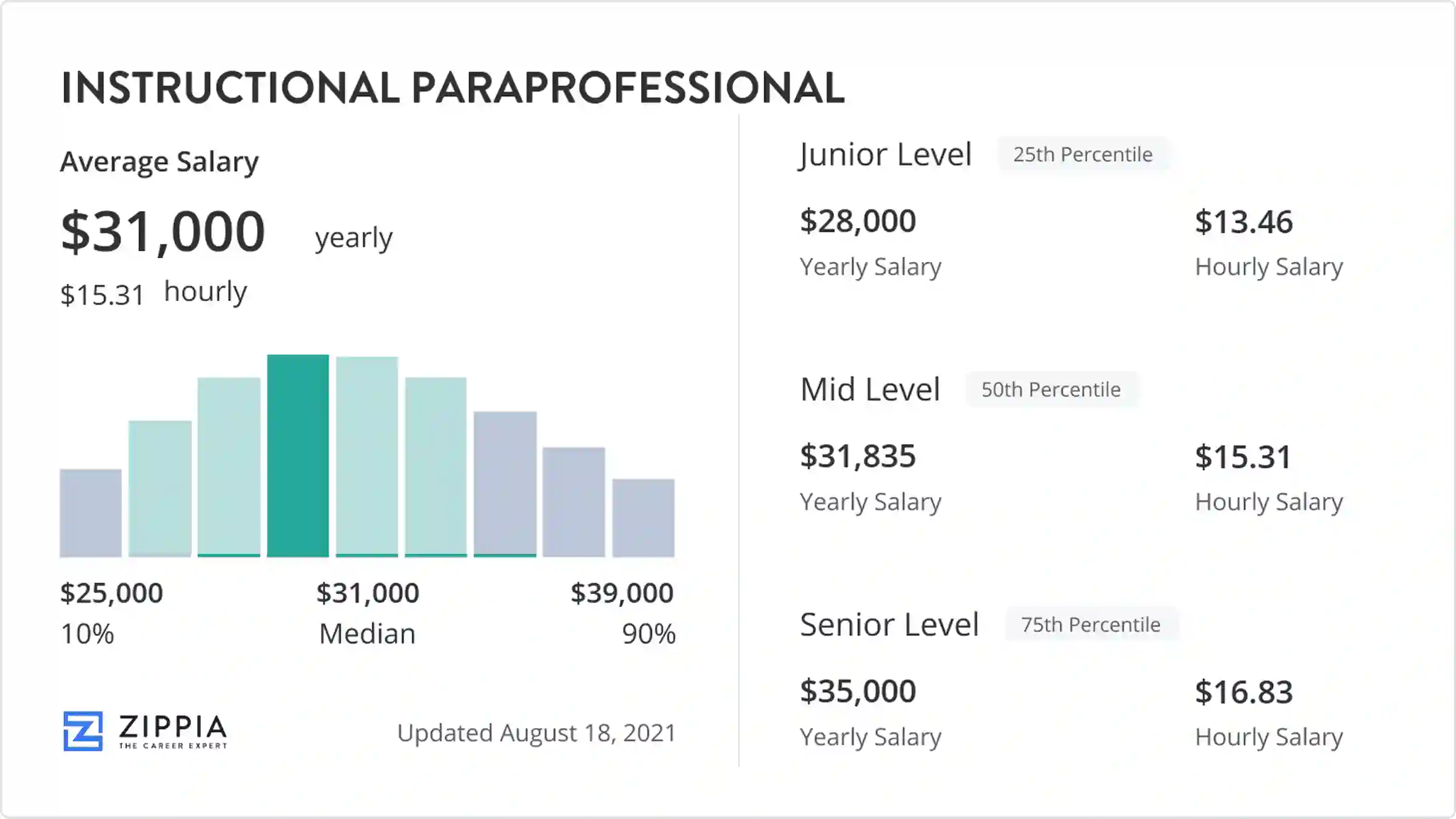
On a national level, the average paraprofessional salary in the United States typically ranges between $30,000 and $45,000 per year. However, these figures can be incredibly misleading without considering geographic location. For instance, a paraeducator in a high-cost-of-living area like New York City or San Francisco may earn significantly more in nominal dollars than someone in a rural district, but their purchasing power may actually be lower. When evaluating a salary offer, it is vital to use financial tools like cost-of-living calculators to determine the “real value” of the income in that specific market.
Factors Influencing Your Earning Potential
Not all paraprofessional roles are paid equally. Several key variables dictate whether a salary sits at the bottom or the top of the industry range. By identifying these factors, individuals can make informed decisions to increase their personal net worth.
Educational Requirements and Certifications
While some paraprofessional roles only require a high school diploma, those that demand an Associate’s degree or specific certifications almost always command higher pay. In the educational sector, meeting the “Highly Qualified” status under federal guidelines—which often requires two years of college credit or passing a rigorous state assessment—can unlock higher pay tiers. Financially speaking, the Return on Investment (ROI) for a two-year degree in this field is often positive, as it provides access to more stable, higher-paying government roles.
Specialized Fields: Education vs. Legal vs. Healthcare
The industry in which a paraprofessional works is perhaps the biggest driver of income variation.
- Educational Paraprofessionals: Often earn the least but may have more stable hours and summers off, which provides opportunities for side hustles.
- Legal Paraprofessionals (Paralegals): These roles often have the highest earning potential, with senior paralegals in corporate law firms sometimes earning salaries that rival mid-level management in other industries.
- Healthcare Paraprofessionals: This includes roles like Certified Nursing Assistants (CNAs). While the base pay can be modest, the availability of overtime often allows for a higher take-home pay compared to educational roles.
The Impact of Experience and Longevity
Most paraprofessional contracts, especially in unionized environments, are built on “steps and lanes.” Each year of service typically results in a small percentage increase in salary (a step). “Lanes” refer to increases based on additional college credits or professional development. From a financial planning perspective, this predictability is a double-edged sword: while it offers security, it limits the ability to negotiate for a massive raise based solely on performance.
Maximizing Your Income: Beyond the Base Salary
When looking at a paraprofessional salary, it is a mistake to focus only on the gross monthly check. To truly understand the financial value of the position, one must look at the total compensation package and supplemental income opportunities.

Understanding Benefits Packages and Retirement Contributions
One of the most significant “hidden” financial benefits of many paraprofessional roles, particularly in the public sector, is the benefits package. High-quality health insurance with low premiums can be equivalent to thousands of dollars in untaxed income. Furthermore, many paraprofessionals have access to state pension systems or 403(b) retirement plans with employer matching. For a personal finance strategist, these “forced savings” mechanisms are invaluable for long-term wealth building, often outweighing a slightly higher salary in a private-sector job that lacks benefits.
Leveraging Stipends and Continuing Education Credits
Many employers offer stipends for paraprofessionals who take on extra duties, such as coaching, bilingual translation, or working with specialized behavioral programs. Additionally, some organizations offer tuition reimbursement. Utilizing these programs is a form of “investing in yourself” using someone else’s capital. By completing a degree while working as a paraprofessional, you are essentially increasing your future earning capacity without incurring the full weight of student debt.
Side Hustles for Paraprofessionals
Because many paraprofessional roles (especially in schools) operate on a 180-to-190-day work calendar, there is a significant amount of “down time.” From a money-management perspective, this is a prime opportunity for side hustles. Many paraprofessionals leverage their skills into private tutoring, childcare, or freelance administrative work during the summer months. This secondary income stream can be the difference between living paycheck-to-paycheck and building a robust emergency fund or investment portfolio.
Budgeting and Financial Management for Paraprofessionals
Working with a modest or fixed salary requires a disciplined approach to personal finance. Effective budgeting ensures that a paraprofessional salary can support a comfortable lifestyle while still allowing for future growth.
Managing Seasonal Income Fluctuations
For those on a 10-month school contract, the “summer gap” is a major financial hurdle. Strategic budgeting involves calculating your annual income and dividing it by 12, regardless of when the checks arrive. Some districts offer “stretched pay,” where they withhold a portion of your check during the school year to pay you during the summer. If this isn’t an option, setting up a high-yield savings account and automating “summer tax” transfers from every paycheck is an essential financial habit.
Debt Management and Student Loan Forgiveness
Many paraprofessionals enter the field with some student debt. The good news is that those working in Title I schools or for government/non-profit organizations may be eligible for Public Service Loan Forgiveness (PSLF) after 120 qualifying payments. This is a massive financial boon. Navigating the paperwork for these programs is essentially a “financial project” that can result in tens of thousands of dollars in net-worth improvement by eliminating liabilities.
Investing on a Modest Income
It is a common myth that you need a high salary to invest. Even $50 a month contributed to a Roth IRA or a low-cost index fund can grow significantly over time due to compound interest. For a paraprofessional, the key is consistency. By automating investments and treating them as a “non-negotiable” bill, you can build a financial safety net that complements your employer-provided retirement plan.
The Future Outlook: Wage Growth and Career Advancement
The financial landscape for paraprofessionals is currently undergoing a shift. As labor shortages impact schools and law firms, there is upward pressure on wages, leading to better financial outcomes for those in the field.
Advocacy and Union Influence on Salaries
In many regions, paraprofessional salaries are determined by collective bargaining. Unions play a pivotal role in negotiating cost-of-living adjustments (COLAs) and protecting benefits. Staying informed about contract negotiations is a part of professional financial literacy. When unions win higher base pay or better insurance caps, the “business finance” of the individual worker improves overnight.

Bridging the Gap to Professional Roles
Finally, for many, the paraprofessional salary is a temporary financial state. Many use the role as a “residency” to gain experience while pursuing a full teaching credential, a nursing degree, or a law degree. This “bridge” strategy is financially sound; it allows you to earn an income and gain industry-specific knowledge while preparing for a significant “salary jump” in the future. In this context, the paraprofessional salary isn’t just a wage—it’s a funded education in your future career.
By understanding the components of a paraprofessional salary and applying sound financial principles, individuals can navigate this career path with confidence. Whether it is a lifelong calling or a stepping stone, the key to financial success as a paraprofessional lies in maximizing benefits, managing seasonal cash flow, and always looking for opportunities to increase one’s value in the marketplace.
aViewFromTheCave is a participant in the Amazon Services LLC Associates Program, an affiliate advertising program designed to provide a means for sites to earn advertising fees by advertising and linking to Amazon.com. Amazon, the Amazon logo, AmazonSupply, and the AmazonSupply logo are trademarks of Amazon.com, Inc. or its affiliates. As an Amazon Associate we earn affiliate commissions from qualifying purchases.