
The image of an oceanographer as a lone explorer on a wooden ship, peering through a brass telescope, is a relic of the past. In the twenty-first century, an oceanographer is primarily a high-tech data scientist, a robotics engineer, and a digital modeler. To ask “what is an oceanographer” today is to inquire about the sophisticated intersection of hardware, software, and artificial intelligence applied to the largest ecosystem on Earth. Modern oceanography is a discipline defined by its reliance on cutting-edge technology to decode the complexities of the deep, transforming the vast blue expanse into actionable digital insights.
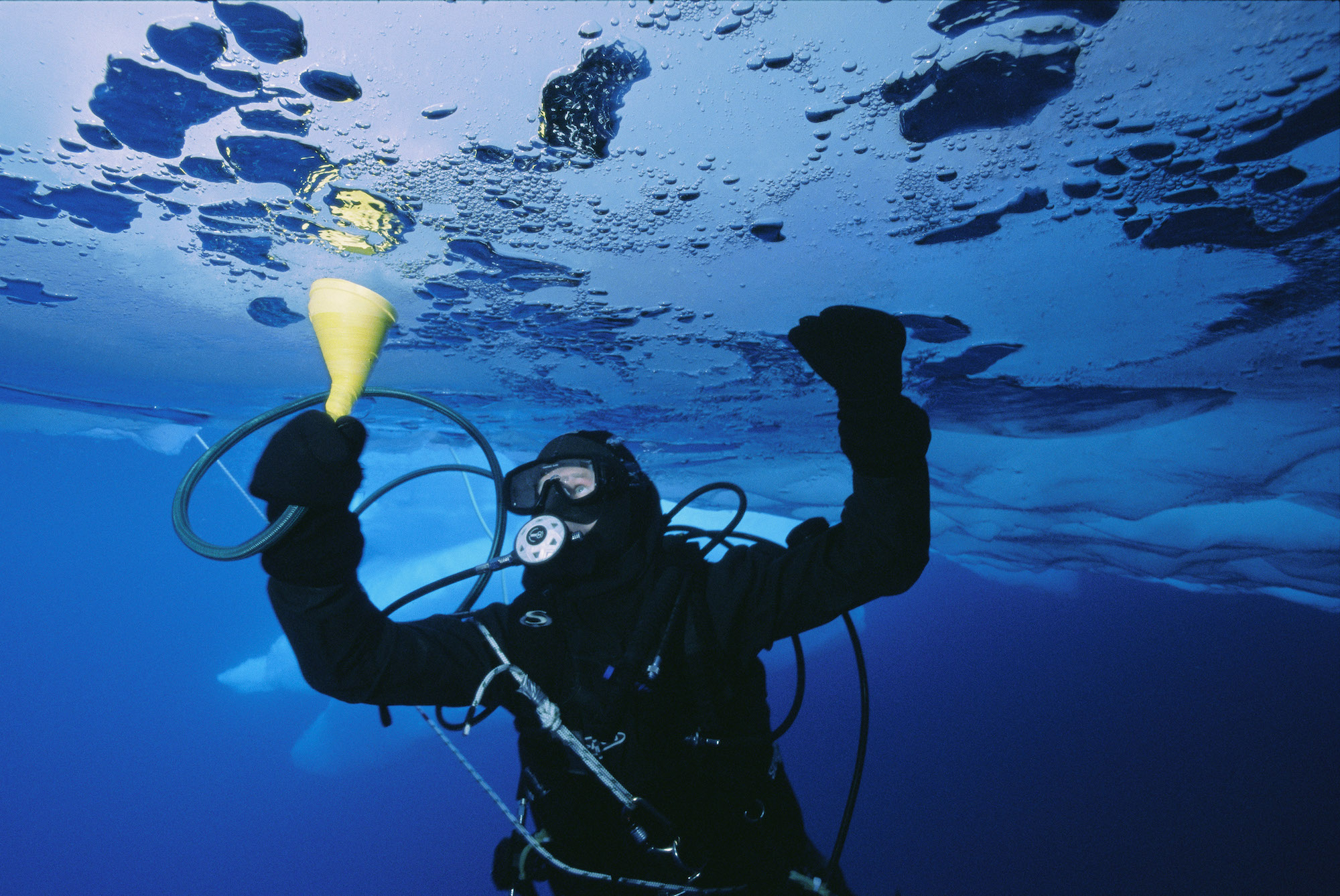
The Evolution of Deep-Sea Exploration: From Manual Sampling to Real-Time Data
Historically, oceanography was a “blind” science. Researchers dropped buckets or nets into the water and hoped to retrieve something representative of the depths. Today, the role of an oceanographer has shifted toward the management of persistent, autonomous data streams. The field has moved from intermittent expeditions to a state of constant surveillance, enabled by the Internet of Underwater Things (IoUT).
The Transition from Physical Samples to Digital Streams
Modern oceanographers spend as much time in front of high-resolution monitors as they do on research vessels. The shift began with the deployment of the Argo program—a global array of nearly 4,000 drifting robotic floats. These devices represent a triumph of hardware engineering, capable of diving to 2,000 meters and transmitting data via satellite. For the tech-driven oceanographer, the “ocean” is now a massive, multi-petabyte database updated in real-time, requiring advanced skills in data architecture to manage.
Integrating IoT and Remote Sensing in Marine Science
The integration of satellite technology has further redefined the profession. Oceanographers now utilize Synthetic Aperture Radar (SAR) and altimetry data to measure sea-level changes and surface temperatures with millimeter precision. This “remote” oceanography allows scientists to observe global patterns that were invisible to their predecessors. By leveraging IoT sensors mounted on everything from buoys to marine mammals, oceanographers create a mesh network of connectivity that spans the globe, bridging the gap between physical oceanography and digital infrastructure.
The Digital Toolbox: Essential Software and Hardware for the Modern Oceanographer
To understand what an oceanographer does, one must look at their arsenal of gadgets and software. The profession is currently undergoing a “Robotics Revolution,” where the quality of a scientist’s insights is often directly proportional to the sophistication of their tech stack.
Autonomous Underwater Vehicles (AUVs) and ROVs
The frontline of modern oceanography is populated by Autonomous Underwater Vehicles (AUVs) and Remotely Operated Vehicles (ROVs). AUVs, such as Slocum gliders, are marvels of energy efficiency, utilizing changes in buoyancy to “fly” through the water for months at a time. Oceanographers program these vehicles with complex mission parameters, allowing them to map the seafloor or detect chemical plumes without human intervention. ROVs, conversely, are the “heavy lifters,” tethered to ships and equipped with 4K cameras and robotic manipulators, allowing oceanographers to conduct “telepresence” research from thousands of miles away.
GIS and Advanced Spatial Modeling Software
Geographic Information Systems (GIS) are the backbone of marine data visualization. An oceanographer uses GIS to layer biological, chemical, and physical data onto 3D maps of the ocean floor. Software like ArcGIS or QGIS, often augmented with custom Python scripts, allows for the analysis of spatial relationships that define marine habitats. This software-centric approach enables the transition from “what is happening” to “where is it happening and why,” providing a granular look at the underwater landscape.
High-Performance Computing (HPC) for Climate Prediction
The ocean is the planet’s primary heat sink, making its study vital for climate modeling. This requires massive computational power. Modern oceanographers utilize High-Performance Computing (HPC) clusters to run General Circulation Models (GCMs). These models simulate the movement of water masses, energy exchange with the atmosphere, and the carbon cycle. An oceanographer in this niche is essentially a computational fluid dynamics expert, using supercomputers to forecast the future state of the planet.
AI and Machine Learning: Revolutionizing Marine Discovery

The sheer volume of data being harvested from the oceans has surpassed human capacity for manual analysis. As a result, Artificial Intelligence (AI) and Machine Learning (ML) have become indispensable tools for the contemporary oceanographer.
Automated Bio-Acoustic Monitoring and Species Identification
One of the most labor-intensive tasks in oceanography was once the identification of marine life from audio recordings or photographs. Today, oceanographers deploy machine learning algorithms to do the heavy lifting. Convolutional Neural Networks (CNNs) can be trained to identify specific whale vocalizations or distinguish between different species of plankton in millions of frames of video. This automation allows oceanographers to monitor ecosystem health at a scale previously thought impossible, turning raw noise into structured biological data.
Predictive Analytics for Ocean Acidification and Thermal Currents
AI is not just for identification; it is for prediction. Oceanographers use random forest models and deep learning to predict “marine heatwaves” or the spread of hypoxic “dead zones.” By feeding decades of historical satellite data into ML models, researchers can identify subtle precursors to major oceanic events. This predictive capability is transforming the role of the oceanographer from a reactive observer to a proactive analyst, providing critical warnings to industries and governments.
Digital Security and Data Integrity in Maritime Research
As oceanography becomes increasingly digital and reliant on remote connectivity, the issue of cybersecurity has moved to the forefront. An oceanographer must now be cognizant of the vulnerabilities inherent in global data networks.
Protecting Satellite Communication Links
Research vessels and remote sensors rely on satellite links (such as Iridium or Starlink) to transmit sensitive data. For an oceanographer, ensuring that this data is encrypted and protected from interception is paramount. In an era of geopolitical tension, marine data—especially that pertaining to seafloor mapping or underwater acoustics—can have significant strategic value. Understanding the protocols of digital security is now a “soft skill” that every tech-forward oceanographer must possess.
Open Data vs. Cybersecurity in Global Research Collaborations
The oceanographic community prides itself on the “Open Data” movement, where findings are shared globally to combat climate change. However, this creates a unique challenge: how to maintain open access while protecting the integrity of the sensor networks. Oceanographers must navigate the complexities of secure API management and cloud storage security to ensure that the data being used to make global policy decisions has not been tampered with or corrupted by malicious actors.
The Future of Oceanography: Emerging Tech Trends to Watch
The field is on the cusp of several technological breakthroughs that will once again redefine what it means to be an oceanographer. These trends suggest a future where the line between “oceanographer” and “tech engineer” becomes even more blurred.
Quantum Computing in Molecular Marine Biology
While still in its infancy, quantum computing holds the promise of solving complex molecular simulations that are currently impossible for classical computers. Future oceanographers may use quantum algorithms to understand how marine organisms adapt to chemical changes at a molecular level, or to simulate the complex protein folding of extremophiles living near hydrothermal vents. This would open up a new frontier in marine biotechnology and carbon sequestration research.

The Role of Digital Twins in Ocean Conservation
The concept of the “Digital Twin”—a virtual, real-time replica of a physical object or system—is migrating from manufacturing to oceanography. Oceanographers are working toward a “Digital Twin of the Ocean” (DTO). This would be a comprehensive, multi-dimensional digital representation of the global marine environment. By integrating every available data point—from satellite feeds to deep-sea sensor logs—oceanographers will be able to run “what-if” scenarios in a virtual environment. For instance, they could simulate the impact of a new offshore wind farm or a deep-sea mining operation before a single piece of equipment touches the water.
In conclusion, an oceanographer is no longer just a “student of the sea”; they are a master of the digital systems that allow us to perceive a world we cannot inhabit. Through the lens of technology, the modern oceanographer deciphers the language of the deep, utilizing AI, robotics, and massive data arrays to safeguard the future of the blue planet. To enter this field today is to enter one of the most technologically demanding and digitally innovative careers on the planet.
aViewFromTheCave is a participant in the Amazon Services LLC Associates Program, an affiliate advertising program designed to provide a means for sites to earn advertising fees by advertising and linking to Amazon.com. Amazon, the Amazon logo, AmazonSupply, and the AmazonSupply logo are trademarks of Amazon.com, Inc. or its affiliates. As an Amazon Associate we earn affiliate commissions from qualifying purchases.