
In the rapidly advancing landscape of medical technology, the ability to quantify human health has moved from the bedside clipboard to the cloud. Among the most critical metrics for assessing cardiovascular efficiency is the Cardiac Index (CI). While traditionally a measurement confined to intensive care units and high-stakes surgical suites, the integration of Artificial Intelligence (AI), sophisticated sensors, and remote monitoring software is bringing the understanding of a “normal cardiac index” into the digital age.
The Cardiac Index is not merely a number; it is a sophisticated data point that relates an individual’s cardiac output to their body surface area (BSA). In the tech world, we look at this as a “performance benchmark”—a way to normalize data across different “hardware” (human bodies) to ensure the engine (the heart) is meeting the systemic demands of the user.

Understanding the Cardiac Index in the Digital Health Era
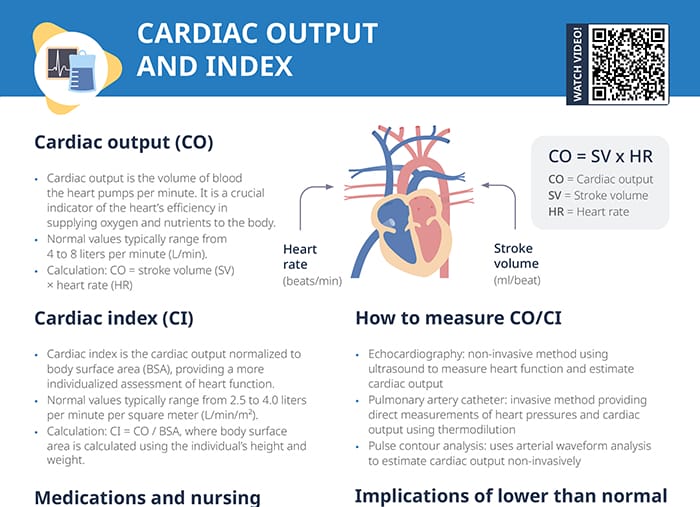
At its core, the Cardiac Index is a hemodynamic parameter that relates the Cardiac Output (CO) to Body Surface Area (BSA), thus relating the heart’s performance to the size of the individual. The formula is straightforward: CI = CO / BSA. However, the technology used to derive these figures has undergone a radical transformation.
Defining the Metric: Why Surface Area Matters
From a data architecture perspective, raw Cardiac Output (the amount of blood the heart pumps per minute) is an incomplete data set. A cardiac output of 5 liters per minute might be optimal for a 120-pound marathon runner but dangerously low for a 250-pound powerlifter. By calculating the Cardiac Index, medical professionals use BSA as a scaling factor.
The generally accepted “normal” range for a cardiac index is 2.5 to 4.0 L/min/m². When the data falls below 2.2 L/min/m², it signals a potential system failure, often categorized as cardiogenic shock in clinical settings. Tech-enabled diagnostic tools now allow for this normalization to happen in real-time, adjusting for fluctuations in a patient’s height, weight, and metabolic state through integrated software.
From Invasive Catheters to Non-Invasive Sensors
Historically, measuring a cardiac index required a Swan-Ganz catheter—an invasive piece of hardware threaded through the heart. In the contemporary tech landscape, we are seeing a shift toward non-invasive hemodynamic monitoring (NIHM).
Modern software platforms now utilize Bio-Impedance and Bio-Reactance technologies. These systems use skin-based sensors to track the flow of blood through the aorta. By applying low-level electrical currents and measuring the phase shift of the voltage, algorithms can calculate stroke volume and cardiac index without a single incision. This transition from “hardware-heavy” invasive procedures to “software-heavy” sensor technology represents a massive leap in patient safety and data accessibility.
The Role of AI and Machine Learning in Interpreting Cardiac Data
A single snapshot of a cardiac index is useful, but the true power of this metric lies in trend analysis. This is where Artificial Intelligence (AI) and Machine Learning (ML) have become indispensable tools for the modern cardiologist and tech enthusiast alike.
Predictive Analytics and Early Warning Systems
Tech companies like Edwards Lifesciences and Philips are developing AI algorithms that do more than just report a number. These platforms use predictive analytics to anticipate a “crash” in the cardiac index before it physically manifests.
By analyzing thousands of data points per second—including heart rate, stroke volume variation, and mean arterial pressure—ML models can identify patterns that precede a drop in the cardiac index. This “early warning system” allows clinicians to intervene minutes or even hours earlier, shifting medicine from a reactive state to a proactive, tech-driven preventative model. In tech terms, this is akin to predictive maintenance for a high-performance server; you fix the cooling system before the CPU overheats and crashes the network.
Cloud-Based Integration of Real-Time Vitals
The “Internet of Medical Things” (IoMT) has enabled the seamless flow of hemodynamic data from the patient to the provider. A normal cardiac index can fluctuate based on activity, stress, and medication. Cloud-based platforms now aggregate this data, providing a longitudinal view of a patient’s cardiac performance.
Through secure APIs and HL7 FHIR standards, cardiac index data is integrated directly into Electronic Health Records (EHR). This interoperability ensures that whether a patient is in the ICU or a recovery wing, their “hemodynamic profile” is accessible to the entire care team via tablet, smartphone, or desktop, ensuring data-driven decision-making at every touchpoint.
Wearable Technology: Bringing Clinical Metrics to the Consumer
We are currently witnessing a “democratization” of health data. What was once the sole domain of specialized hospital equipment is migrating to consumer-grade wearables. While consumer gadgets aren’t yet providing a clinical-grade cardiac index, the roadmap is clear.
The Shift from Step Counting to Hemodynamic Tracking
The first generation of wearables focused on simple metrics: steps, calories, and basic heart rate. However, the current generation of gadgets—ranging from the Apple Watch to the Oura Ring—is moving deep into the territory of hemodynamic monitoring.
Advanced optical sensors (PPG) are being refined to measure pulse wave velocity and blood oxygenation, which are key components in the algorithmic estimation of cardiac performance. Tech firms are investing billions into miniaturized sensors that can eventually calculate an estimated Cardiac Index. For the tech-savvy consumer, this means the ability to monitor “system efficiency” during high-intensity interval training (HIIT) or recovery phases, providing a level of biological insight previously reserved for elite athletes.
Challenges in Sensor Accuracy and Data Privacy
As we integrate cardiac index monitoring into the tech stack of our daily lives, two hurdles remain: sensor fidelity and data security. Achieving a “normal” reading requires extreme precision; a 10% error in a sensor’s reading could lead a user to believe they are in heart failure when they are simply experiencing a glitch.
Furthermore, cardiac data is the most sensitive form of PII (Personally Identifiable Information). Tech companies are now forced to lead the way in encryption and decentralized data storage to ensure that a user’s cardiac index—a window into their overall longevity and health—is protected from cyber threats. The marriage of cybersecurity and health-tech is perhaps the most critical infrastructure development in this niche.
Digital Therapeutics and the Future of Personalized Heart Health
The ultimate goal of tracking a cardiac index through technology is the development of Digital Therapeutics (DTx). This represents a shift where software itself becomes the treatment or the primary driver of health outcomes.
Telemedicine and Remote Patient Monitoring (RPM)
For patients with chronic heart failure, maintaining a “normal” cardiac index is a daily struggle. Remote Patient Monitoring (RPM) software allows these individuals to live at home while being “virtually” tethered to a clinic.
Weight scales, blood pressure cuffs, and wearable sensors transmit data to a centralized dashboard. If a patient’s cardiac index begins to trend downward, the software triggers an alert for a telehealth consultation. This tech-centric approach reduces hospital readmissions and optimizes the “uptime” of the patient’s health, mirroring the way IT departments manage remote infrastructure.
Virtual Health Assistants and Bio-Feedback Loops
The future of cardiac monitoring likely involves Virtual Health Assistants powered by Generative AI. Imagine a system that monitors your cardiac index and, noticing a slight deviation from “normal” due to stress, suggests a specific breathing exercise or adjusts your digital environment to lower cortisol levels.
This creates a closed-loop system where data (Cardiac Index) informs an action (Digital Intervention), which then improves the data. We are moving toward a reality where “normal” is no longer a static range found in a textbook, but a personalized, dynamic baseline maintained by a sophisticated suite of tech tools.

Conclusion: The Quantified Heart
A “normal” cardiac index of 2.5 to 4.0 L/min/m² remains the physiological gold standard. However, the way we measure, interpret, and act upon that number has been forever changed by technology. From the AI algorithms that predict hemodynamic instability to the wearables that track our every beat, the cardiac index has become a vital metric in the broader “Quantified Self” movement.
As software continues to eat the world, it is also beginning to understand the heart. For tech professionals and digital-health enthusiasts, the cardiac index is more than just a medical value—it is a vital sign for the future of human-computer integration, signaling a world where our devices know our internal health as well as they know our digital footprints.
aViewFromTheCave is a participant in the Amazon Services LLC Associates Program, an affiliate advertising program designed to provide a means for sites to earn advertising fees by advertising and linking to Amazon.com. Amazon, the Amazon logo, AmazonSupply, and the AmazonSupply logo are trademarks of Amazon.com, Inc. or its affiliates. As an Amazon Associate we earn affiliate commissions from qualifying purchases.