
In the landscape of alternative investments, sophisticated portfolios have long moved beyond the traditional confines of stocks, bonds, and real estate. High-net-worth individuals and institutional investors are increasingly looking toward tangible assets—specifically, rare gemstones—to hedge against inflation and currency volatility. Among these, the fire opal stands out as a unique and increasingly lucrative entry. Unlike the classic white opal characterized by a milky sheen, the fire opal is a vibrant, transparent-to-translucent gemstone known for its fiery hues of orange, red, and yellow.
Understanding what a fire opal is from a financial perspective requires more than just an appreciation of its aesthetic beauty; it requires an analysis of geological rarity, market liquidity, and the shifting dynamics of global supply chains.

Understanding the Asset Class: Defining Fire Opal in the Global Market
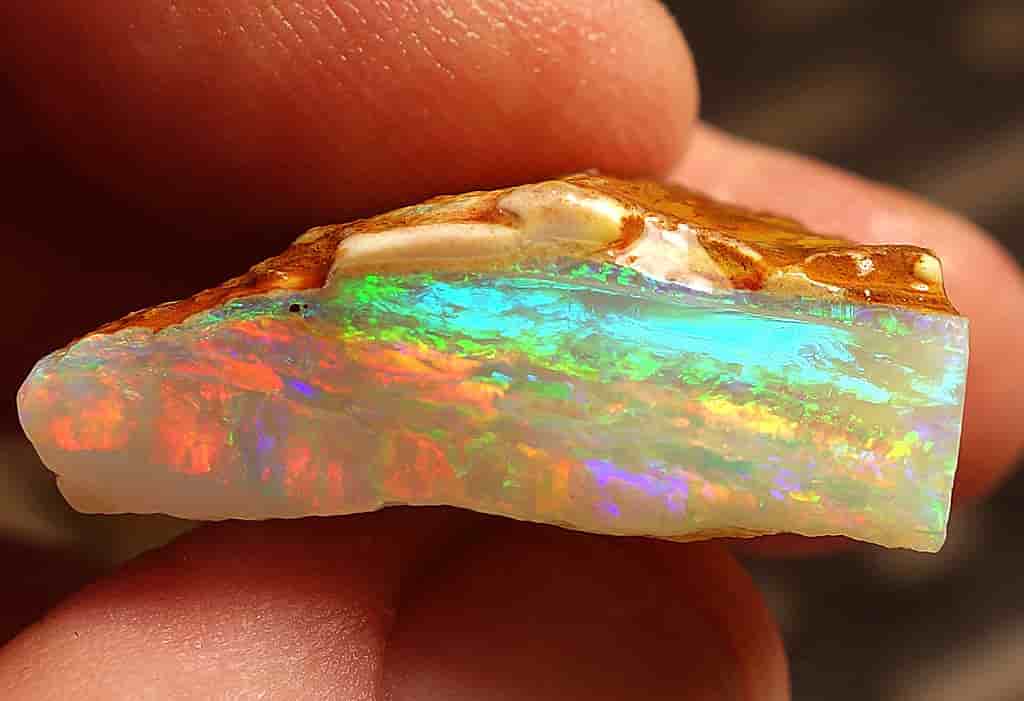
From a commodity standpoint, a fire opal is a hydrated amorphous form of silica. However, in the world of high-end finance and luxury trade, it is classified as a “specialty gemstone.” While most opals are prized for “play-of-color” (the rainbow flashes seen in Australian opals), the fire opal is one of the few varieties valued primarily for its intense body color.
Chemical Composition and Value Drivers
The valuation of a fire opal begins at the molecular level. Its characteristic fiery glow is caused by trace amounts of iron oxide. For an investor, the chemical stability of the stone is a critical factor. Fire opals are typically found in volcanic rock formations, particularly in Mexico, which remains the “Gold Standard” for this asset. The presence of water within the silica structure (typically 3% to 10%) means that “stability”—the resistance to cracking or “crazing”—is a primary driver of long-term value. A stable, high-saturation stone acts as a store of value, whereas unstable specimens represent a total loss of capital.
The Distinction Between Play-of-Color and Body Color
In the gemstone market, there is a distinct pricing tier for fire opals. The most common variety is the “cherry fire opal” (deep red) or “tangerine fire opal” (bright orange) without play-of-color. However, the “Precious Fire Opal”—a stone that possesses both an intense red body color and the internal prismatic play-of-color—commands a massive premium. From a portfolio diversification standpoint, these “dual-trait” stones represent the blue-chip tier of the opal market, often appreciating at rates that outpace standard precious metals.
The Economics of Rarity: Supply Chains and Geographic Premiums
Like any finite resource, the price of fire opals is dictated by the intersection of scarcity and geographic provenance. In the “Money” niche, understanding where an asset originates is as important as the asset itself.
The Mexican Monopoly and Regional Valuation
Mexico is the world’s primary producer of investment-grade fire opals, specifically from the states of Querétaro, Jalisco, and Guerrero. These are often referred to as “Mexican Fire Opals” in trade circles. Because these mines are frequently small-scale or artisanal, the global supply is inconsistent. For an investor, this inconsistency creates “scarcity premiums.” When a particular mine ceases production, the existing inventory of high-quality stones from that region often sees a sharp spike in valuation on the secondary market.
Ethical Sourcing and Provenance Impact on Price
Modern financial markets are increasingly sensitive to ESG (Environmental, Social, and Governance) factors. The gemstone industry is no exception. A fire opal with a documented, ethical “mine-to-market” trail often carries a 15% to 20% price premium over stones of unknown origin. Investors are paying for the security of knowing their asset is untainted by conflict or exploitative labor, which ensures better liquidity when selling to major auction houses or luxury jewelry conglomerates.
Valuation Framework: How Appraisers Determine Worth

For those looking to allocate capital into fire opals, understanding the appraisal process is essential. Gemstones do not have a centralized “spot price” like gold; instead, their value is determined by a complex matrix of qualitative and quantitative factors.
The Four Cs of Fire Opals (Color, Clarity, Cut, and Carat Weight)
While the “Four Cs” were popularized by the diamond industry, they are adapted specifically for fire opals:
- Color: This is the most significant price mover. The hierarchy of value typically moves from yellow (lowest) to orange, to “cherry red” (highest). The saturation must be vivid; brownish undertones significantly devalue the stone.
- Clarity: Unlike many other opals, fire opals are often faceted like diamonds. Therefore, transparency is key. “Eye-clean” stones—those with no visible inclusions—are the gold standard for investment.
- Cut: A precision-cut stone that maximizes light return and minimizes “windowing” (areas where light passes straight through) will command a higher price per carat.
- Carat Weight: Fire opals over five carats are rare. As the size increases, the price per carat increases exponentially rather than linearly, reflecting the extreme rarity of large, clean crystals.
Transparency vs. Opacity: Market Liquidity Factors
Investors must distinguish between “translucent” and “transparent” stones. Transparent fire opals are highly sought after by high-end jewelry designers, making them easier to liquidate. Opaque specimens, while beautiful, are often relegated to the “collector” or “hobbyist” market, which lacks the deep-pocketed liquidity required for rapid capital recovery.
Fire Opals in a Diversified Portfolio
Investing in fire opals is not merely about buying a stone; it is about strategic wealth management. Tangible assets serve as a “safe haven” during periods of stagflation or when the purchasing power of fiat currency is in decline.
Inflation Hedging with Tangible Assets
Historically, rare gemstones have maintained their value in real terms over decades. Unlike a company’s stock, a fire opal cannot go bankrupt. It is a portable, high-density form of wealth. For example, a high-quality fire opal worth $50,000 can fit in the palm of your hand, whereas $50,000 in gold requires significant physical storage and security. This portability makes fire opals an attractive “insurance policy” for international investors.
Risks and Mitigation Strategies for Gemstone Investors
No investment is without risk. For fire opals, the primary risks are physical damage and market subjectivity.
- Durability: Fire opals have a Mohs hardness of 5.5 to 6.5, making them softer than sapphires or diamonds. Professional storage and insurance are non-negotiable.
- Valuation Risk: Because there is no central exchange, the buy-sell spread (the difference between the price you pay and the price you can sell for) can be wide.
- Authentication: Synthetics and treatments (such as “smoking” or dyeing) can deceive the untrained eye. Investors should only purchase stones accompanied by a grading report from a reputable laboratory, such as the GIA (Gemological Institute of America) or SSEF.
Future Outlook: Digital Authentication and the Gemstone Market
As we look toward the future of the “Money” niche, technology is beginning to intersect with gemstone investing in ways that favor the fire opal.
The rise of blockchain technology is being used to create digital “passports” for rare gemstones. By linking a physical fire opal to a non-fungible digital record, the history, ownership, and appraisal data are permanently recorded. This reduces the friction of the “trust gap” in gemstone trading, potentially leading to a more liquid and transparent market.
Furthermore, as emerging markets in Asia and the Middle East continue to grow, the demand for “alternative” colored gemstones—moving away from the “Big Three” (Ruby, Emerald, Sapphire)—is increasing. Fire opals, with their culturally auspicious red and orange hues, are perfectly positioned to capture this new wealth.
In conclusion, a fire opal is more than just a geological curiosity; it is a sophisticated financial instrument. For the investor who understands the nuances of color saturation, the economics of Mexican mining, and the importance of certified provenance, the fire opal offers a vibrant opportunity to diversify wealth into a tangible, beautiful, and historically resilient asset class. While it requires more due diligence than a standard index fund, the potential for capital appreciation—and the security of a physical asset—makes the fire opal a compelling chapter in the story of modern wealth management.
aViewFromTheCave is a participant in the Amazon Services LLC Associates Program, an affiliate advertising program designed to provide a means for sites to earn advertising fees by advertising and linking to Amazon.com. Amazon, the Amazon logo, AmazonSupply, and the AmazonSupply logo are trademarks of Amazon.com, Inc. or its affiliates. As an Amazon Associate we earn affiliate commissions from qualifying purchases.