
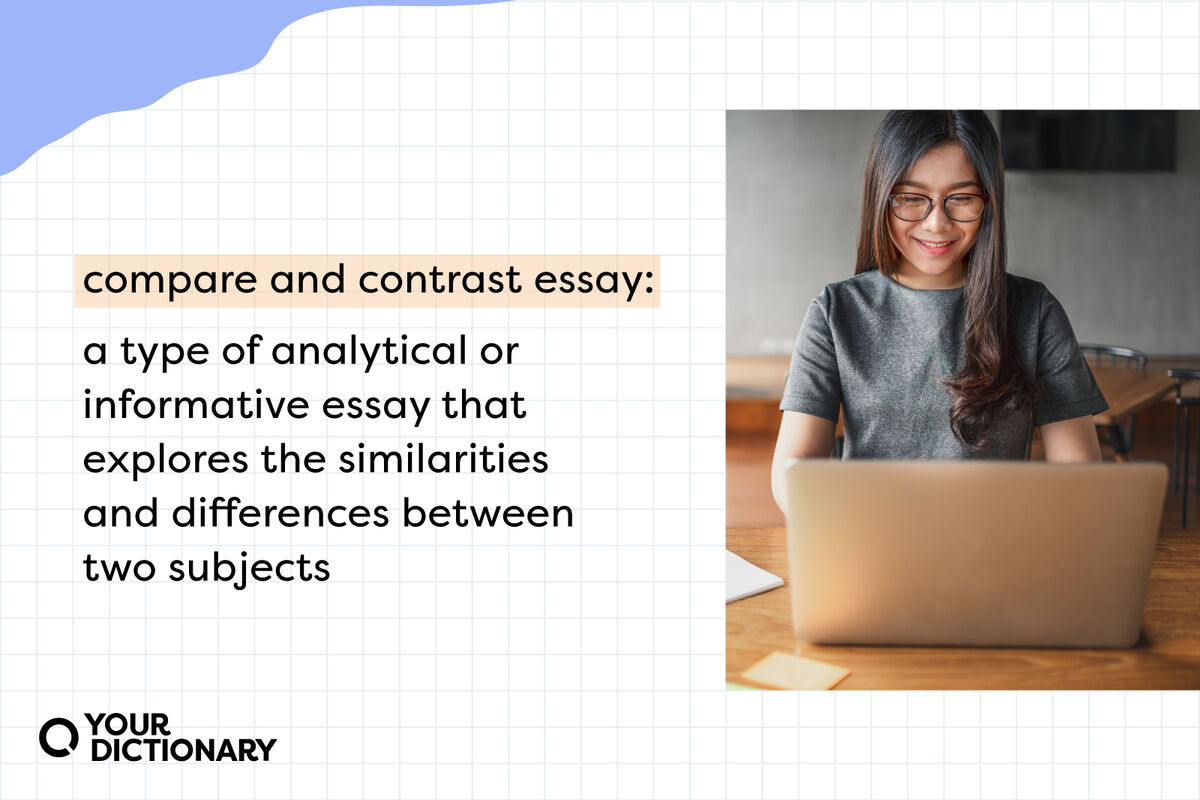
In the rapidly evolving world of technology, the ability to discern differences and recognize similarities between competing systems, software, and hardware is more than just an academic exercise—it is a critical professional skill. A compare and contrast essay, in the technical context, is a structured analytical document designed to evaluate two or more technological entities to determine their relative strengths, weaknesses, and ideal use cases.
Whether a Chief Technology Officer (CTO) is deciding between two cloud infrastructure providers or a developer is weighing the benefits of different programming frameworks, the fundamental principles of the compare and contrast essay provide the framework for these high-stakes decisions. This article explores the nuances of this analytical format, its structural requirements, and how it serves as a cornerstone for technological evaluation.
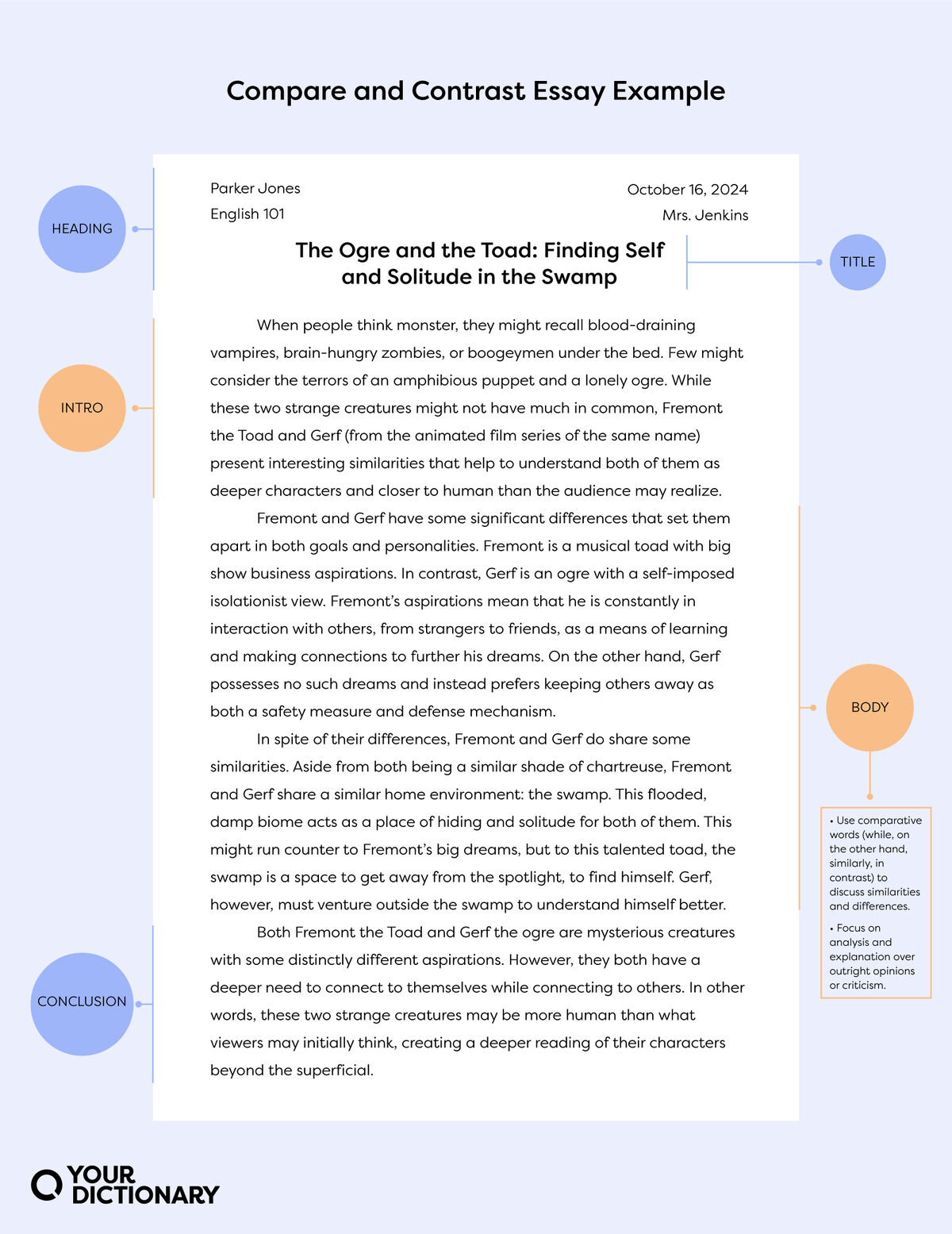
Understanding the Framework of Tech Comparisons
At its core, a compare and contrast essay in technology is an analytical deep dive. It goes beyond a simple list of features to uncover the underlying philosophies and performance metrics that distinguish one tool from another. To write an effective tech comparison, one must move past surface-level marketing jargon and focus on the practical implications of technical specifications.
The Analytical Mindset in Technical Writing
Writing a compare and contrast essay requires a high degree of objectivity. In tech, bias toward a specific ecosystem—such as the “Apple vs. Android” or “Windows vs. Linux” debates—can cloud judgment. A professional essay avoids “fanboyism” and instead adopts a neutral, data-driven perspective. The goal is not necessarily to declare a “winner” in a vacuum, but to identify which entity is superior for a specific context. This mindset ensures that the analysis is valuable for stakeholders who rely on accuracy to make procurement or development decisions.
The Role of Objective Metrics
Unlike a narrative essay, a technical compare and contrast essay relies heavily on quantifiable data. This includes benchmarks, latency measurements, throughput, pricing tiers, and security certifications. By establishing these metrics as the “grounds for comparison,” the writer ensures that the essay remains grounded in reality. For instance, comparing two Artificial Intelligence (AI) models requires looking at parameter counts, inference speeds, and training data diversity rather than just “how smart” they feel during a casual prompt session.
Key Elements of an Effective Tech Comparison Essay
Structure is the backbone of any successful analytical piece. Without a logical flow, a technical comparison becomes a confusing list of specs that provides no actionable insight. There are two primary organizational strategies used in professional tech environments: the “Block Method” and the “Point-by-Point Method.”
The “Block” Method: Comprehensive System Analysis
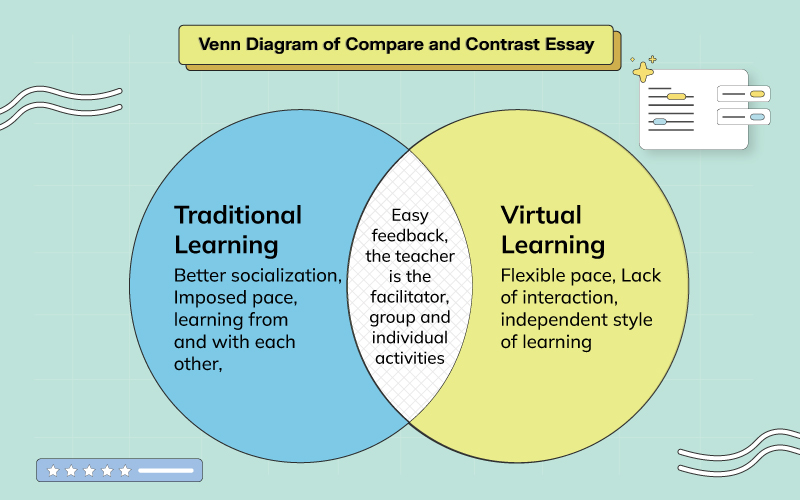
The Block Method involves discussing the first subject entirely (Subject A) and then discussing the second subject entirely (Subject B). In a tech essay, this might involve a full review of AWS (Amazon Web Services) followed by a full review of Microsoft Azure.
This method is most effective when the audience needs a holistic understanding of each platform before seeing how they interact. However, the writer must ensure that both “blocks” address the same criteria in the same order. If you discuss the security features of AWS in the first paragraph, you must discuss the security features of Azure in the corresponding section of the next block to maintain coherence.
The “Point-by-Point” Method: Granular Feature Evaluation
The Point-by-Point Method is generally preferred for complex technical comparisons. Instead of separating the subjects, the essay is organized by specific criteria. For example, if comparing two smartphone flagships, the H3 sub-sections might be “Camera Performance,” “Battery Efficiency,” and “Operating System Integration.”
Within each section, both subjects are discussed side-by-side. This allows for immediate contrast, making it easier for the reader to see exactly where one product eclipses the other. This method is highly engaging and is the standard for modern software reviews and hardware tutorials.
Establishing the “Basis for Comparison”
Before a single word is written about the products themselves, the essay must establish why these two things are being compared. This is known as the “Basis for Comparison.” In the tech world, it would be illogical to compare a high-end enterprise server to a consumer-grade laptop. A professional essay clarifies the common ground—for example, “Both platforms are Kubernetes-based container orchestration services designed for mid-sized enterprises.” This sets the boundaries for the analysis.
Leveraging AI and Digital Tools for Deep Technical Analysis
In the modern era, the process of drafting a compare and contrast essay is itself assisted by technology. Sophisticated software tools and AI models allow writers to synthesize vast amounts of technical documentation and user feedback into a cohesive narrative.
Using Large Language Models for Data Extraction
Artificial Intelligence has revolutionized how we gather data for comparison. Tools like ChatGPT, Claude, and Gemini can ingest thousands of pages of technical documentation to highlight the subtle differences between two API versions or two different coding languages. When writing a tech-focused essay, these tools serve as research assistants, helping the writer identify “hidden” contrasts—such as license agreements or obscure dependency requirements—that might not be immediately obvious in a standard product sheet.
Benchmarking Software as Evidence
A tech comparison essay is only as strong as its evidence. Professional tech writers often use benchmarking software (like Geekbench for processors or Selenium for web application performance) to generate proprietary data for their essays. Including original data or industry-standard benchmarks adds a layer of authority to the contrast. It moves the essay from a subjective opinion piece to a rigorous technical report, providing the “insightful” quality necessary for professional-grade content.
Applying Contrastive Analysis to Real-World Tech Scenarios
To understand the value of the compare and contrast essay, one must look at how it is applied to the most significant debates in the current digital landscape. These comparisons often shape the direction of the entire tech industry.
Software Ecosystems: iOS vs. Android
The comparison between iOS and Android is a classic example of a “philosophical” contrast essay. While the hardware specs might be similar, the contrast lies in the approach to user privacy, ecosystem “walled gardens,” and developer freedom. A professional essay on this topic would analyze the trade-off between the security of a closed system (iOS) and the flexibility of an open-source foundation (Android), providing a nuanced view that goes beyond mere feature-counting.
Infrastructure: Cloud vs. On-Premise
For businesses, the comparison between Cloud hosting and On-Premise servers is a high-stakes essay topic. The contrast here is often between capital expenditure (CapEx) and operational expenditure (OpEx). By structuring the essay around key pillars—such as scalability, security control, and long-term cost-efficiency—a writer can guide a business leader toward the infrastructure that best fits their specific growth trajectory. This is the compare and contrast essay at its most influential: serving as a roadmap for corporate digital strategy.
The Strategic Value of Comparison in Tech Decision-Making
Ultimately, a compare and contrast essay in the tech niche is a decision-support tool. It is designed to cut through the noise of the digital marketplace and provide a clear, reasoned path forward.
Moving Beyond Specs to User Experience
While technical specifications are vital, a truly insightful tech essay also contrasts the “human element”—the User Experience (UX). Two pieces of software might have identical capabilities on paper, but if one has an intuitive UI and the other is riddled with complex menus, the contrast is stark. Professional tech writing emphasizes the friction points in a user’s journey, recognizing that the “best” technology is often the one that stays out of the user’s way.
Synthesizing the Verdict
The final section of a compare and contrast essay—the conclusion—is where the synthesis occurs. In the tech niche, this is not just a summary; it is a recommendation. The writer brings together the points of comparison and contrast to offer a final verdict based on different personas. For instance: “For power users who prioritize customization, Tool A is the superior choice; however, for small teams requiring rapid deployment and ease of use, Tool B is the clear winner.”
This level of professional engagement ensures that the compare and contrast essay remains a vital instrument in the technologist’s toolkit. By applying rigorous structure, objective data, and a deep understanding of industry trends, the writer transforms a simple comparison into a powerful piece of digital intelligence.
aViewFromTheCave is a participant in the Amazon Services LLC Associates Program, an affiliate advertising program designed to provide a means for sites to earn advertising fees by advertising and linking to Amazon.com. Amazon, the Amazon logo, AmazonSupply, and the AmazonSupply logo are trademarks of Amazon.com, Inc. or its affiliates. As an Amazon Associate we earn affiliate commissions from qualifying purchases.