
In the modern landscape of consumer electronics and industrial hardware, power management is the unsung hero of performance. As our devices become smaller, faster, and more energy-efficient, the internal components—such as microprocessors, memory modules, and wireless sensors—require increasingly precise and lower voltage levels to function. However, the power sources we use, such as lithium-ion batteries or wall adapters, often provide a much higher voltage than these sensitive components can handle. This is where the buck regulator, also known as a step-down DC-DC converter, becomes an essential piece of technology.

A buck regulator is a highly efficient switching power supply that “steps down” a higher input DC voltage to a lower output DC voltage. Unlike older methods of voltage reduction, the buck regulator utilizes high-speed switching and energy storage elements to ensure that very little power is wasted as heat. In this article, we will explore the mechanics, components, and critical applications of buck regulators in the current tech ecosystem.
1. Understanding the Fundamentals of Buck Regulators
To understand why a buck regulator is so important, one must first understand the fundamental challenge of power conversion. If you have a 12V battery but need to power a 3.3V microchip, you cannot simply connect them directly; the chip would instantly fry. You need a middleman to bridge the gap.
The Core Definition
A buck regulator is a type of Switch-Mode Power Supply (SMPS) specifically designed to lower voltage. The term “buck” literally refers to the act of “bucking” or opposing the input voltage to produce a lower output. The primary advantage of a buck regulator over a standard linear regulator is efficiency. While a linear regulator acts like a variable resistor—burning off the excess voltage as heat—a buck regulator acts more like a high-speed tap that turns on and off, delivering exactly the amount of energy needed.
Anatomy of a Buck Converter: Key Components
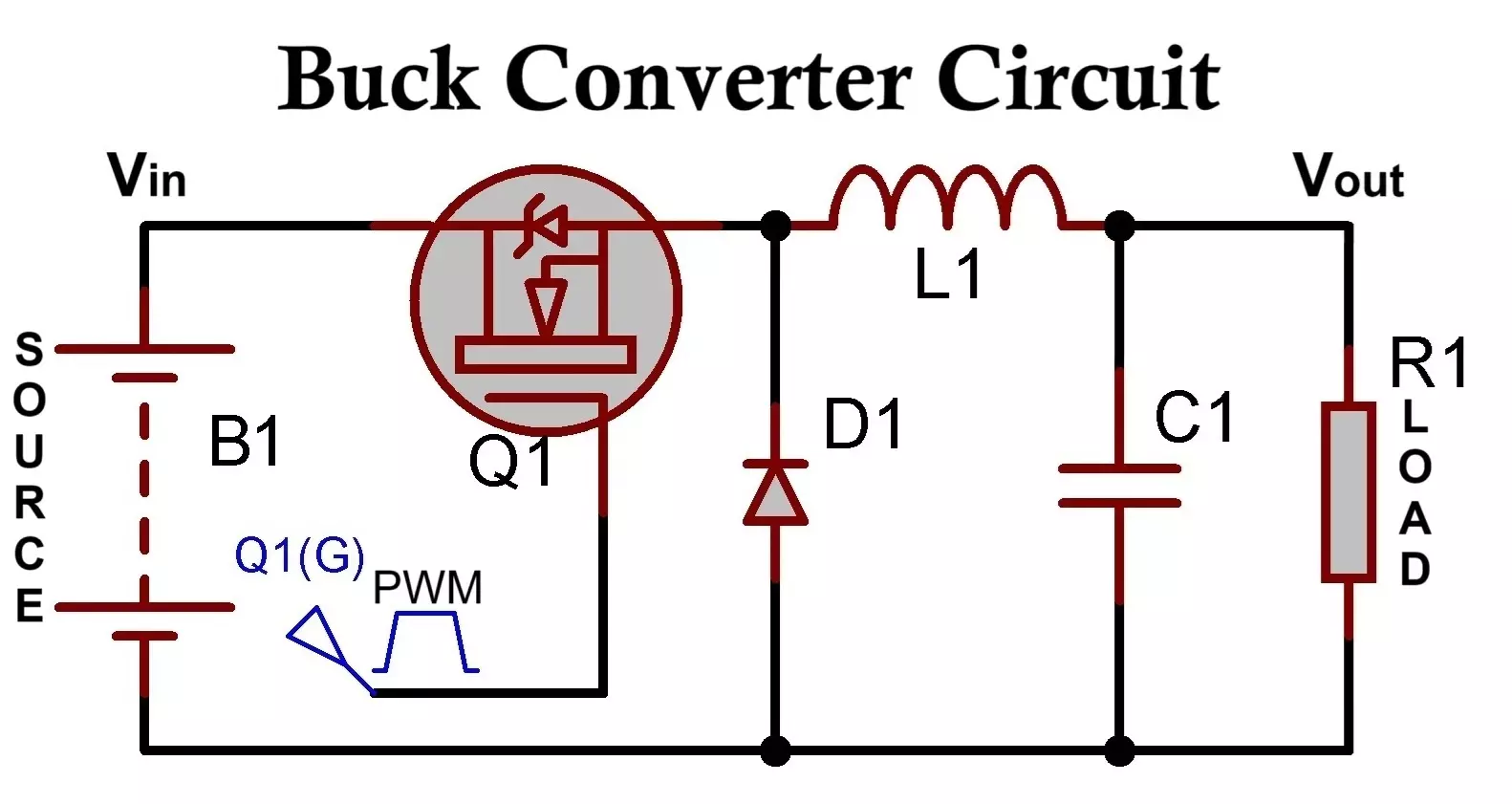
Every buck regulator consists of a few essential hardware components that work in a synchronized loop:
- The Switch (MOSFET): This is the heart of the regulator. It opens and closes thousands or even millions of times per second (kHz to MHz range).
- The Diode (or Rectifier): This component provides a path for current when the switch is open.
- The Inductor: This is an energy storage element. It resists changes in current and smooths out the flow of electricity.
- The Capacitor: Acting as a secondary storage unit, the capacitor filters the output voltage to ensure it remains steady and free of “noise.”
- The Control Circuit (PWM Controller): The “brain” that monitors the output and tells the switch when to open and close.
The Evolution from Linear to Switching
In the early days of electronics, linear regulators were the standard. They were simple to design and produced very little electromagnetic interference (EMI). However, they were incredibly inefficient. For example, if you dropped 12V to 5V at 1 Amp using a linear regulator, you would waste 7 Watts of power as heat. In a modern smartphone, that amount of heat would melt the casing. Buck regulators solved this by utilizing switching technology, often achieving efficiencies of 90% to 95%, making them the gold standard for modern tech.
2. How Buck Regulators Operate: The Physics of Power Conversion
The operation of a buck regulator is a masterclass in electrical engineering, relying on the principles of electromagnetism and Pulse Width Modulation (PWM).
The On-State and Off-State
The regulator functions in two distinct phases. During the On-State, the MOSFET switch is closed, allowing current to flow from the input source through the inductor and into the load (the device being powered). As current passes through the inductor, it builds up a magnetic field, storing energy.
During the Off-State, the switch opens. Because an inductor naturally resists a sudden drop in current, it uses its stored magnetic energy to keep the current flowing toward the load. The diode (or a second MOSFET in synchronous designs) completes the circuit, allowing the inductor to discharge its energy. By the time the inductor’s energy is nearly spent, the switch closes again, and the cycle repeats.
Pulse Width Modulation (PWM) and Duty Cycles
The secret to maintaining a constant output voltage lies in Pulse Width Modulation (PWM). The controller adjusts the “Duty Cycle,” which is the ratio of time the switch is “on” versus “off.”
- If the input is 10V and you need 5V, the switch will be on for roughly 50% of the time.
- If the input voltage drops, the controller increases the “on” time (duty cycle) to compensate and keep the output stable.
This high-speed adjustment happens in real-time, allowing the regulator to react to changes in load demand within microseconds.
Efficiency vs. Heat Dissipation
Because the switch is either fully “on” (low resistance) or fully “off” (zero current), the power dissipated by the regulator itself is minimal. This is the technical reason why your laptop or smartphone can remain relatively cool while performing complex tasks. The energy is transferred through magnetic fields rather than being resisted by silicon, which is the cornerstone of green technology and portable battery longevity.
3. Key Performance Metrics and Technical Specifications
When engineers integrate buck regulators into gadgets or industrial hardware, they must consider several technical trade-offs that impact the overall performance of the device.
Voltage Ripple and Noise
Because buck regulators work by switching on and off, the output voltage is not a perfectly flat line; it has tiny “ripples.” High-frequency switching can also introduce electromagnetic interference (EMI) that might interfere with Wi-Fi or Bluetooth signals. High-quality tech reviews often look at the “ripple” of a power supply, as excessive noise can lead to system instability or audio interference in high-end gadgets.
Thermal Management and Heat Dissipation
While buck regulators are efficient, they are not perfect. Some energy is lost during the switching transitions and through the internal resistance of the inductor. In high-power applications, such as gaming PCs or server racks, even a 5% loss can generate significant heat. Tech designers must choose components with low “Equivalent Series Resistance” (ESR) and ensure proper airflow to maintain the regulator’s lifespan.
Transient Response and Load Regulation
A high-performance buck regulator must have an excellent “transient response.” Imagine you are playing a high-end video game on your phone; the processor suddenly demands a huge burst of current. The buck regulator must respond instantly to provide that power without the voltage dropping. If the response is too slow, the device might lag or crash. This “load regulation” is a primary differentiator between budget electronics and premium hardware.
4. Real-World Applications in Modern Tech
Buck regulators are ubiquitous. Almost every device that contains a battery or plugs into a wall uses at least one, and often dozens, of these circuits.
Consumer Electronics and Mobile Devices
In a smartphone, the lithium-ion battery provides roughly 3.7V to 4.2V. However, the core processor might run at 0.8V, the memory at 1.2V, and the screen backlight at a different level entirely. A modern smartphone contains a specialized Power Management Integrated Circuit (PMIC) that houses multiple tiny buck regulators to feed each component its specific “diet” of voltage, maximizing battery life.
Automotive and Electric Vehicle Systems
The automotive industry is currently undergoing a massive shift toward electrification. In an Electric Vehicle (EV), the main battery pack may operate at 400V or 800V. However, the dashboard lights, sensors, and infotainment systems still run on 12V or 5V. High-voltage buck regulators are used to step down the massive energy of the drive battery to power the vehicle’s onboard computers safely and efficiently.
Data Centers and High-Performance Computing
Servers in data centers are among the most power-hungry machines on earth. They typically receive 48V DC power, but the high-end CPUs and GPUs inside require massive amounts of current at very low voltages (often around 1V). Buck regulators in these environments are designed for extreme density and efficiency, often using multi-phase designs where several regulators work in parallel to share the load and reduce heat.
5. Choosing the Right Buck Regulator for Your Tech Project
For developers, hobbyists, and hardware engineers, selecting the right buck regulator is a critical decision in the product development lifecycle.
Synchronous vs. Non-Synchronous Rectification
A “Non-Synchronous” buck regulator uses a diode to catch the inductor’s current. These are cheaper and simpler but less efficient because the diode has a fixed voltage drop. “Synchronous” regulators replace the diode with a second MOSFET. This second switch is timed perfectly to reduce energy loss, making it the preferred choice for high-efficiency tech like ultrabooks and wearable devices.
Fixed vs. Adjustable Output Voltages
Tech designers can choose between regulators that have a hard-coded output (e.g., a 5V fixed regulator) or adjustable ones. Adjustable regulators use a resistor divider network to set the output, providing more flexibility for custom hardware projects. When building a Raspberry Pi project or a custom drone, adjustable buck modules (often called “Buck Converters”) are a favorite among the DIY tech community for their versatility.
The Rise of GaN Technology
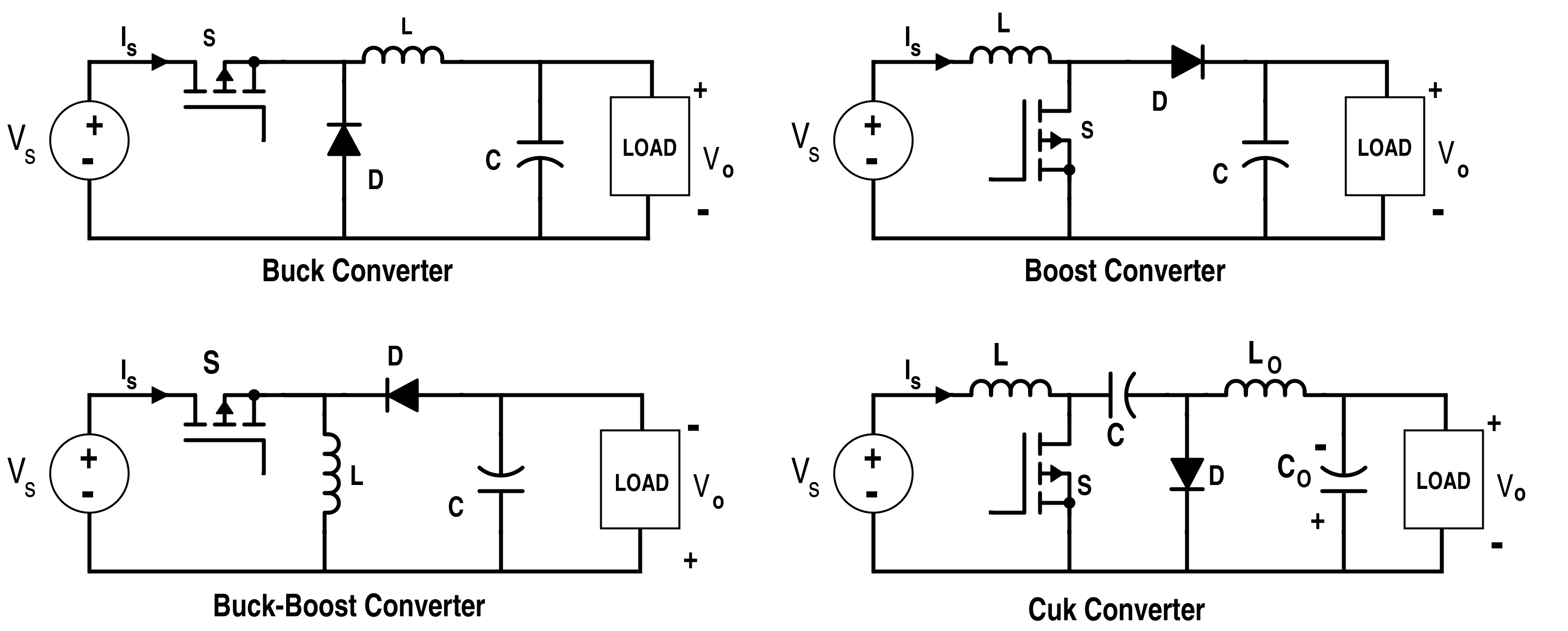
The latest trend in tech is the use of Gallium Nitride (GaN) instead of traditional Silicon for the switches in buck regulators. GaN allows for much faster switching speeds with even less heat loss. This is the technology behind the incredibly small “fast chargers” now available for laptops and phones. By using GaN buck-boost technology, manufacturers can shrink the size of power bricks while increasing their wattage.
Conclusion
The buck regulator is a cornerstone of modern technology, providing the invisible infrastructure that allows our digital world to function. By efficiently stepping down voltage through high-speed switching and magnetic energy storage, these components enable the miniaturization of our gadgets, the longevity of our batteries, and the stability of our most complex computing systems. Whether it is powering a simple LED or the most advanced AI processor in a data center, the buck regulator remains the most effective tool for managing power in the 21st century. As we move toward a future of even more portable and powerful tech, the evolution of the buck regulator—from silicon to GaN and beyond—will continue to be a primary driver of innovation.
aViewFromTheCave is a participant in the Amazon Services LLC Associates Program, an affiliate advertising program designed to provide a means for sites to earn advertising fees by advertising and linking to Amazon.com. Amazon, the Amazon logo, AmazonSupply, and the AmazonSupply logo are trademarks of Amazon.com, Inc. or its affiliates. As an Amazon Associate we earn affiliate commissions from qualifying purchases.