
In the vast ecosystem of Python programming, the philosophy of “readability counts” is more than just a line in the Zen of Python; it is a fundamental architectural principle. As developers build increasingly complex software systems, the ability to inspect and understand the state of an object at a glance becomes indispensable. This is where Python’s “magic methods”—specifically the __str__ method—play a transformative role.
Commonly referred to as a “dunder” (double underscore) method, __str__ allows developers to define how an object should be represented as a string. Without it, Python defaults to a cryptic, hexadecimal-laden description that offers little value to the programmer or the end-user. By mastering __str__, you bridge the gap between abstract machine code and human-readable information, creating software that is easier to debug, maintain, and interact with.

Understanding the Fundamentals of the str Method
To appreciate the utility of __str__, one must first understand the concept of Python’s “Data Model.” In Python, everything is an object. When you create a custom class, you are defining a blueprint for a new type of object. However, by default, these objects do not know how to “describe” themselves to a human.
What are Dunder Methods?
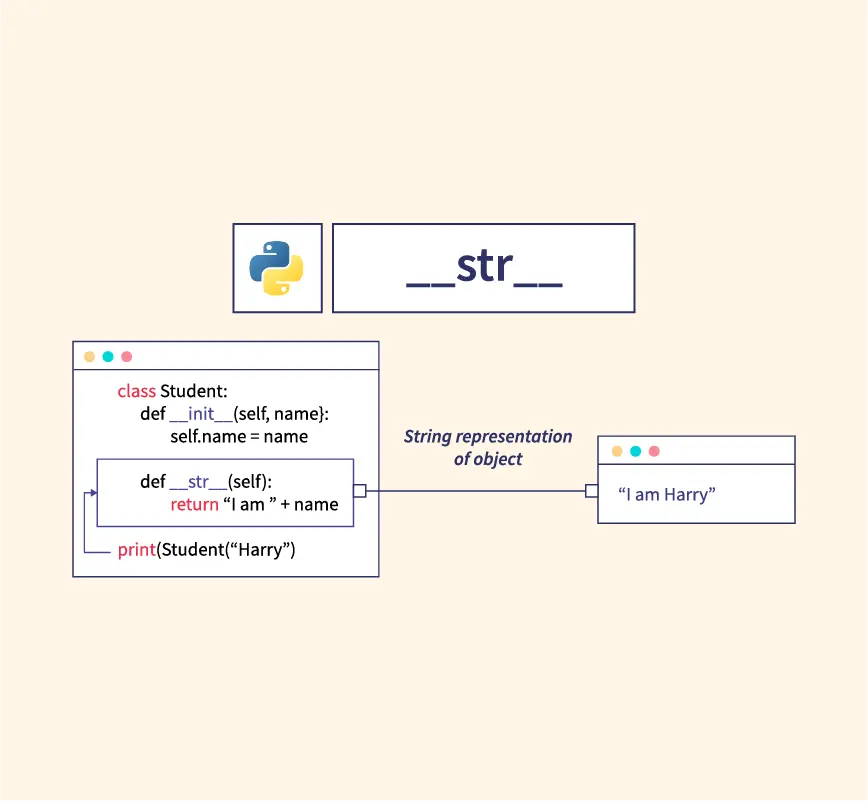
Dunder methods are special methods that begin and end with double underscores. They are not meant to be called directly (e.g., you rarely write my_object.__str__()). Instead, they are invoked internally by Python’s built-in functions or operators. For instance, when you use the + operator, Python calls the __add__ method. Similarly, when you use the print() function or the str() constructor on an object, Python looks for the __str__ method within that object’s class definition.
The Core Purpose of str
The primary objective of __str__ is to return a “nicely printable” string representation of an object. It is designed for the end-user. If you are building an application where you need to display object data in a log file, a user interface, or a console output, __str__ ensures that the output is intuitive.
Consider a scenario where you have a Car object. Without a defined __str__ method, printing the object might result in <__main__.Car object at 0x7f8b1c123450>. While technically correct, it tells the developer nothing about the car’s make, model, or year. The __str__ method allows you to transform that memory address into something meaningful, like “2023 Tesla Model 3.”
Implementing str in Your Python Classes
Implementing the __str__ method is straightforward, yet it requires a thoughtful approach to ensure the information returned is actually useful. The method must always return a string; failing to do so will result in a TypeError.
Basic Syntax and Structure
To implement this in a class, you simply define the method within the class block and ensure it returns a formatted string. Here is the skeletal structure:
class Product:
    def __init__(self, name, price):
        self.name = name
        self.price = price

    def __str__(self):
        return f"Product: {self.name} | Price: ${self.price:.2f}"
In this example, the f-string provides a clean, readable format. When a developer later executes print(Product("Laptop", 1200)), the output is immediate and clear.
Practical Example: Building a User Profile Class
Let’s look at a more robust implementation within a software development context. Imagine you are building a backend system for a social media application. You need to handle thousands of user profiles.
class UserProfile:
    def __init__(self, username, email, membership_level):
        self.username = username
        self.email = email
        self.membership_level = membership_level

    def __str__(self):
        return f"User({self.username}) - Level: {self.membership_level}"


<p style="text-align:center;"><img class="center-image" src="https://blog.finxter.com/wp-content/uploads/2021/02/str-1-1024x576.jpg" alt=""></p>


# Usage
user1 = UserProfile("DevMaster99", "dev@example.com", "Premium")
print(user1)
# Output: User(DevMaster99) - Level: Premium
By defining __str__, the developer ensures that any time a user object is logged during a session, the logs are readable. This simplifies the process of tracking user activity or identifying which user triggered a specific event in the system.
The Critical Distinction: str vs. repr
One of the most common points of confusion for Python developers is the difference between __str__ and its sibling, __repr__. While both return string representations of an object, they serve two distinct audiences and purposes.
Representation for Users vs. Developers
The consensus in the Python community, often cited by core contributors, is that __str__ is for users, while __repr__ is for developers.
__str__: Should be readable and pretty. It doesn’t need to show every internal detail; it just needs to provide the essence of the object.__repr__: Should be unambiguous. Ideally, the string returned by__repr__should look like a valid Python expression that could be used to recreate the object. It is what you see when you inspect an object in the Python interpreter or when the object is part of a list being printed.
When Does Python Fall Back on repr?
If you define __repr__ but not __str__, Python will use __repr__ as a fallback when str() is called. However, the reverse is not true. If you only define __str__, the object will still display its default memory address in the interpreter or in collections like lists and dictionaries. Therefore, a best practice in professional software development is to always implement __repr__ at a minimum, and then implement __str__ if you need a more user-friendly version for display purposes.
Best Practices for Writing Effective String Representations
Writing a __str__ method is easy, but writing a good one requires adherence to certain software engineering standards. Effective string representations contribute to the “self-documenting” nature of high-quality code.
Avoiding Complex Logic in str
The __str__ method should be “pure” in the sense that it should not have side effects. It should not modify the state of the object, increment counters, or make external API calls. Its sole responsibility is to look at the current attributes of the object and format them into a string. Including complex logic or heavy computation within __str__ can lead to performance bottlenecks, especially during logging or debugging sessions where multiple objects are printed in rapid succession.
Consistency and Formatting
Consistency across your codebase is vital. If one class in your system represents its data as Name: Value, all other classes should ideally follow a similar pattern. This makes the output of your entire software suite feel cohesive. Furthermore, using modern formatting techniques like f-strings (available in Python 3.6+) is highly recommended over older % formatting or .format() methods, as they are faster and more readable.
Security Considerations
In the context of digital security and software integrity, be cautious about what you include in a __str__ representation. Avoid including sensitive data such as passwords, API keys, or personally identifiable information (PII) like social security numbers. Since __str__ is often used in logs, including sensitive data could inadvertently lead to a data breach if logs are stored insecurely or viewed by unauthorized personnel.
Beyond the Basics: String Formatting and Advanced Integration
As you advance in your Python journey, you will find that __str__ integrates deeply with other parts of the Python ecosystem, including modern libraries and frameworks.
Integration with f-strings and .format()
The __str__ method is the engine behind how objects behave when placed inside an f-string or a .format() call. When you write f"The current user is {user}", Python implicitly calls user.__str__(). Understanding this allows you to create highly dynamic and readable reporting tools. In data science and AI tool development, this is frequently used to print the status of models or the configuration of neural network layers.
The Role of str in Modern Software Architecture
In large-scale applications, particularly those utilizing Object-Relational Mapping (ORM) like Django’s ORM or SQLAlchemy, the __str__ method is used to identify database records in the administrative interface. For example, in a Django app, defining __str__ in your models ensures that the Django Admin panel shows meaningful names (like “Order #1042”) instead of generic labels (like “Order object (1042)”).
Furthermore, in the world of AI and Machine Learning, custom classes representing datasets or training loops often utilize __str__ to provide real-time feedback on training progress, loss metrics, and accuracy. This allows researchers to monitor complex processes without needing to dive into the raw data structures.
Conclusion
The __str__ method is a small but powerful tool in a Python developer’s arsenal. It embodies the language’s commitment to clarity and simplicity. By moving beyond the default object representations and providing clear, concise, and informative strings, you improve the developer experience for yourself and your team. Whether you are building simple scripts or complex AI-driven applications, the thoughtful implementation of __str__ ensures that your code remains accessible, your logs remain readable, and your software remains maintainable in the long run. Embracing this dunder method is not just about writing better code—it’s about writing code that communicates.