
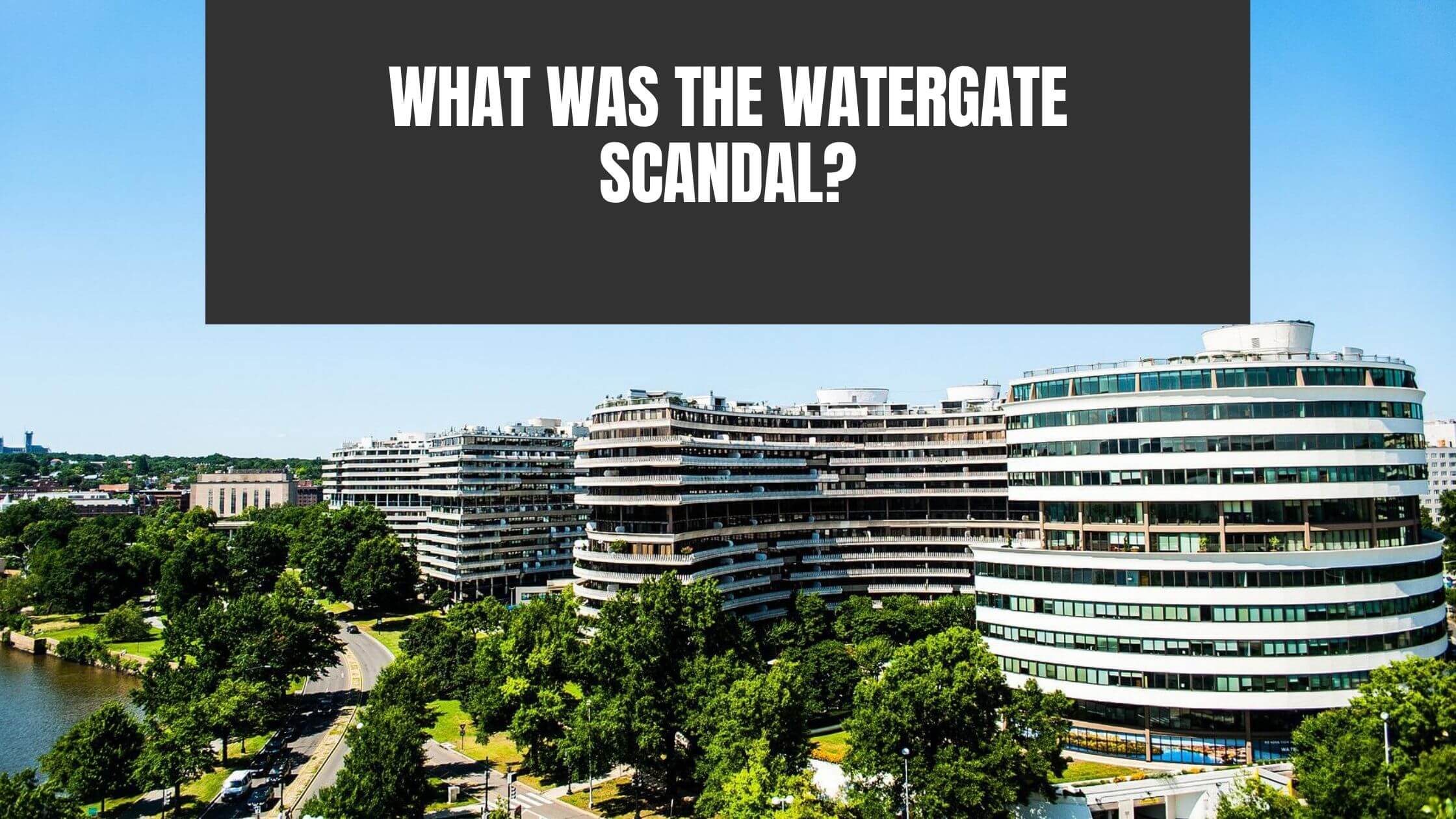
In 1972, five men were arrested for breaking into the Democratic National Committee headquarters at the Watergate complex. Their tools were physical: lockpicks, cameras, and bugging devices. The subsequent investigation relied on physical paper trails, secret meetings in parking garages, and the now-infamous magnetic tapes that recorded conversations in the Oval Office.
If the Watergate scandal were to occur in the current decade, it would look fundamentally different. The “break-in” would likely not involve a physical door, and the “smoking gun” would not be a cassette tape. In this exploration, we analyze how modern technology—ranging from sophisticated cyber-espionage tools to blockchain and artificial intelligence—would transform one of history’s most significant political scandals into a high-stakes digital chess match.

The Digital Breaking and Entering: From Lockpicks to Logic Bombs
The original Watergate burglars were caught because of a piece of tape on a door. In the 21st century, the perimeter is no longer a physical office wall but a complex network of firewalls, encrypted servers, and cloud-based databases. A modern Watergate would likely begin with a sophisticated cyber-attack rather than a physical trespass.
From Lockpicks to Phishing and Zero-Day Exploits
If a political operative today wanted to gain access to an opponent’s strategy, they wouldn’t send men in suits to pick a lock. Instead, they would deploy “spear-phishing” campaigns or utilize “Zero-Day” exploits. These are software vulnerabilities unknown to the developer, which can be sold for millions on the dark web. In a modern scenario, the “Plumbers”—Nixon’s secret investigative unit—would be a team of elite black-hat hackers operating from a remote, untraceable server.
The Vulnerability of the Internet of Things (IoT)
The original bugging devices were rudimentary and difficult to hide. Today, our environments are saturated with microphones and cameras. Smart speakers, connected thermostats, and even office printers could serve as entry points for a modern surveillance operation. A modern-day Watergate might involve compromising the firmware of a smart device in a strategy room, allowing an adversary to stream high-definition audio and video directly to an encrypted cloud bucket.
The Metadata Trail: Why There Are No “Silent” Scandals Anymore
One of the greatest challenges for the Watergate investigators was connecting the burglars to the White House. It took months of painstaking work by journalists and the FBI to follow the money and the phone calls. In the digital age, everyone leaves a trail of “digital exhaust” that is nearly impossible to scrub entirely.
Digital Forensics and the End of Anonymity
In 1972, a phone call was ephemeral unless it was recorded. Today, metadata—the data about data—tells a story even if the content of the message is deleted. Every email sent, every server accessed, and every GPS coordinate logged by a smartphone creates a breadcrumb. Digital forensic experts can reconstruct deleted files and trace IP addresses back to their source. A modern investigator wouldn’t just look for a “Deep Throat” in a parking garage; they would look for an anomalous login from an IP address linked to a government-contracted VPN.
AI-Powered Investigation and Pattern Recognition
Artificial Intelligence has revolutionized how we process large datasets. During the original Watergate hearings, investigators had to manually review thousands of documents. Today, Machine Learning (ML) algorithms can scan millions of leaked emails or documents in seconds to find patterns, keywords, and connections that a human might miss. If a modern Watergate leak occurred, AI tools would be used to cross-reference donor lists, private calendars, and travel logs to map out the conspiracy with surgical precision.
The Role of Encryption and Secure Communications
The downfall of Richard Nixon was largely due to his own secret taping system. The “smoking gun” tape proved he was involved in the cover-up. In the modern era, the battle over information is defined by the tension between absolute transparency and end-to-end encryption.
Signal, Telegram, and the “White House Tapes” of the 21st Century
Modern political figures are increasingly aware of the dangers of a digital trail. Instead of recorded phone lines, they might use encrypted messaging apps like Signal or Telegram, which offer self-destructing messages. However, even these are not foolproof. If a device’s “endpoint” is compromised—for example, via Pegasus-style spyware—the encryption is bypassed because the data is captured before it is even encrypted. The “18-and-a-half-minute gap” in Nixon’s tapes would, today, be represented by a “Remote Wipe” command or a hardware-encrypted drive that investigators cannot crack without a master key.
The Double-Edged Sword of Zero-Trust Architecture
Many modern organizations have moved toward a “Zero-Trust” security model. In this framework, no one is trusted by default, even those inside the network. Every access request must be authenticated and authorized. While this makes it harder for a Watergate-style intruder to move laterally through a system, it also creates a digital log of every single person who accessed a sensitive file. For a modern Nixon, the challenge wouldn’t just be hiding the tapes, but explaining why his personal credentials were used to access a sensitive database at 2:00 AM.
Information Warfare and the Deepfake Era
The Watergate scandal was eventually resolved because there was a consensus on the facts. The tapes provided objective proof. In the current technological landscape, the very concept of “proof” is under siege due to the rise of synthetic media and disinformation.
Verification in a Post-Truth Digital Landscape
If a “smoking gun” audio file were released today, the first defense from the accused would likely be that it is a “Deepfake.” AI can now generate incredibly realistic audio and video of public figures saying things they never actually said. This creates a “liar’s dividend,” where a guilty party can dismiss legitimate evidence as a technological fabrication. Modern “Watergate” investigators would need to employ sophisticated cryptographic hashing and digital watermarking to prove that their evidence is authentic and has not been tampered with.
How Blockchain Could Authenticate Political Leaks
To counter the threat of Deepfakes, future whistleblowers might use blockchain technology. By uploading a document’s “hash” (a unique digital fingerprint) to a public, immutable ledger at the moment of its creation, a whistleblower can prove that a document existed in a certain state at a certain time. This would prevent the government from claiming a leak was “edited” or “faked” after the fact. Blockchain turns the ephemeral nature of digital data into a permanent, verifiable record—a modern version of the notary seal that cannot be forged.

Conclusion: The New Frontier of Oversight
If Watergate happened today, the scandal would move at the speed of light. The “break-in” would be a notification on a CISO’s (Chief Information Security Officer) dashboard. The “tapes” would be terabytes of encrypted data on a cold-storage drive. The “investigation” would be a global collaborative effort involving journalists, white-hat hackers, and data scientists.
Technology has made it easier than ever to conduct espionage, but it has also made it significantly harder to hide the evidence of that espionage. While the tools of the trade have shifted from physical lockpicks to complex code, the fundamental tension remains the same: the struggle between those who wish to use power in the shadows and the technological tools designed to bring those shadows into the light. In the digital age, a “Watergate” would not just be a political crisis; it would be a landmark event in the history of cybersecurity, defining the boundaries of privacy and transparency for the next generation.
aViewFromTheCave is a participant in the Amazon Services LLC Associates Program, an affiliate advertising program designed to provide a means for sites to earn advertising fees by advertising and linking to Amazon.com. Amazon, the Amazon logo, AmazonSupply, and the AmazonSupply logo are trademarks of Amazon.com, Inc. or its affiliates. As an Amazon Associate we earn affiliate commissions from qualifying purchases.