
At first glance, the act of placing an egg in a microwave seems like a simple culinary shortcut. However, from the perspective of thermal engineering and material science, it is a high-stakes experiment in pressure containment and electromagnetic energy transfer. What occurs inside the shell is not merely “cooking”; it is a complex interaction of non-ionizing radiation, dielectric heating, and volumetric expansion that often results in a catastrophic structural failure. Understanding why this happens requires a deep dive into the technology of the microwave oven and the biological architecture of the egg.
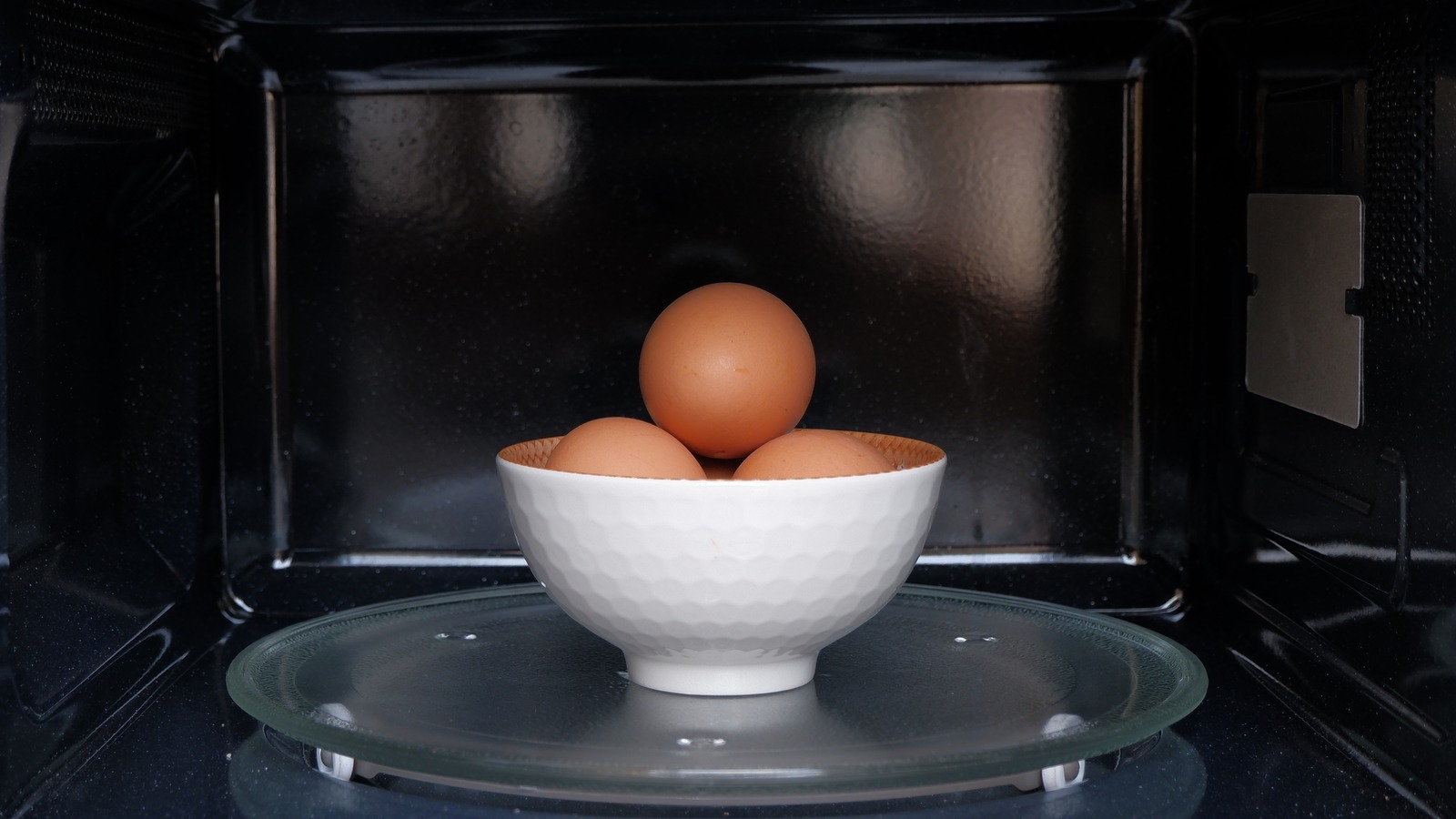
The Mechanics of Microwave Radiation and Dielectric Heating
To understand the “egg explosion” phenomenon, one must first understand the technology inside the appliance. A microwave oven is essentially a localized electromagnetic field generator. At its core is a magnetron, a high-powered vacuum tube that converts electricity into electromagnetic waves, typically at a frequency of 2.45 gigahertz (GHz).
The Role of the Magnetron and Waveguides
The magnetron emits microwaves that are channeled into the cooking chamber via a waveguide. These waves bounce off the reflective metal walls, creating a “standing wave” pattern. In modern kitchen technology, a stirrer fan or a rotating turntable is utilized to ensure that the distribution of these waves is as even as possible, preventing “cold spots” where the radiation does not reach the food. However, even with these advancements, the way an egg absorbs this energy is fundamentally different from how it reacts to a conventional oven.
Non-ionizing Radiation and Dipole Rotation
Unlike an oven that uses conduction or convection to heat food from the outside in, a microwave utilizes dielectric heating. The 2.45 GHz frequency is specifically tuned to interact with polar molecules—primarily water. Water molecules are dipoles, meaning they have a positive end and a negative end.
As the electromagnetic field alternates billions of times per second, the water molecules within the egg white and yolk attempt to align themselves with the field. This rapid rotation creates molecular friction, which translates into thermal energy. In an egg, which is approximately 75% water, this energy absorption happens with incredible speed and intensity throughout the entire volume of the object simultaneously.
The Steam Trap: Structural Integrity vs. Volumetric Expansion
The primary reason an egg becomes a “thermal bomb” in a microwave lies in its physical structure. An egg is, by design, a sealed vessel. When subjected to rapid dielectric heating, the internal components undergo a phase change that the external shell is not equipped to handle.
Why the Shell Fails as a Pressure Vessel
In a traditional boiling process, heat is transferred slowly from the water to the shell, and then to the interior. This allows for a gradual increase in temperature. In a microwave, however, the yolk (which has a higher fat content and different dielectric properties) often heats even faster than the white.
As the temperature of the internal liquids surpasses the boiling point, they begin to convert into steam. Under normal circumstances, steam occupies about 1,600 times the volume of liquid water. Because the eggshell is a semi-permeable but rigid structure made of calcium carbonate, it cannot expand to accommodate this rapid volumetric increase. The shell essentially becomes a pressure vessel with no relief valve.
The Phenomenon of Superheated Liquids
One of the most dangerous aspects of microwaving an egg is the creation of superheated pockets of moisture. Because the microwave heats the egg so quickly and uniformly, the water inside the proteins can sometimes reach temperatures well above 100°C (212°F) without turning into a gas, due to the internal pressure.
This state is highly unstable. The moment the shell is pierced or the egg is moved, the equilibrium is disturbed. This triggers a “flash evaporation” event where the superheated water instantaneously turns to steam, resulting in a violent explosion that can spray boiling liquid and shell fragments at high velocities. This is a classic example of a physical vapor explosion in a contained environment.
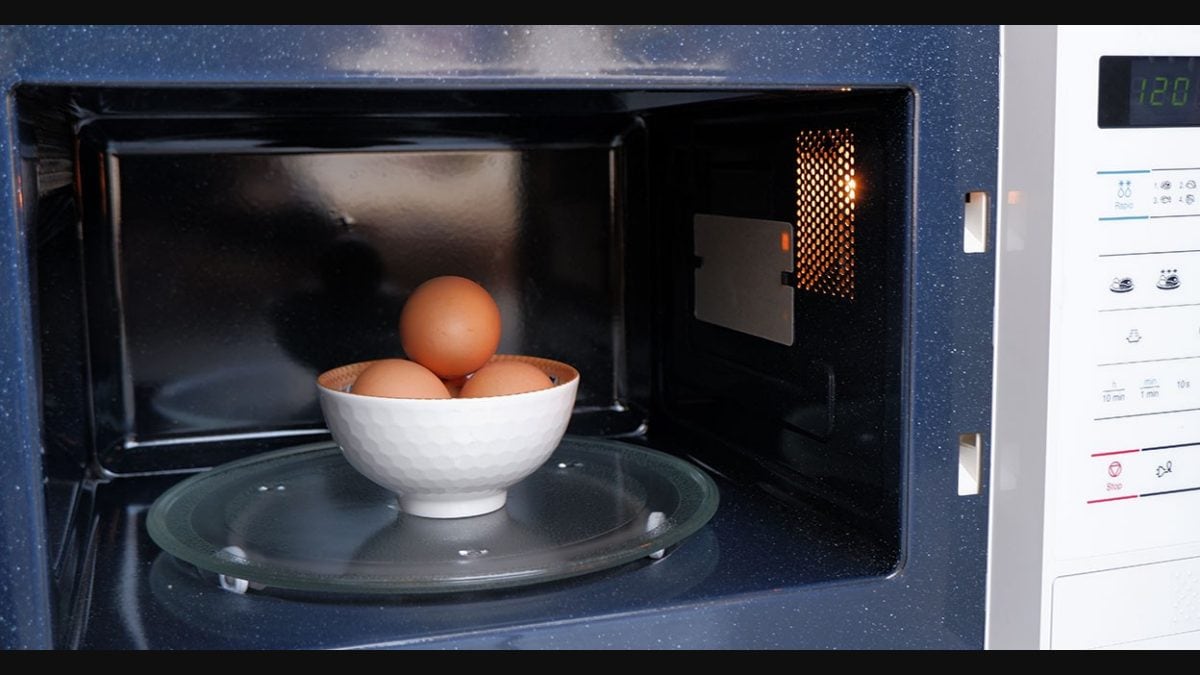
Kitchen Tech Safety and Failure Analysis
From a tech and gadget perspective, the “exploding egg” is a significant case study in user interface (UI) design and safety engineering. Manufacturers of microwave ovens have long recognized that certain materials and biological structures are incompatible with their hardware.
The Importance of Sensor Technology
Modern high-end microwaves are increasingly incorporating “Inverter Technology” and “Sensor Cooking.” Traditional microwaves operate on a binary system: the magnetron is either 100% on or 100% off. To achieve “50% power,” the machine simply cycles the magnetron on and off in intervals. This “pulse-width modulation” approach is often what triggers the rapid pressure spikes in eggs.
In contrast, Inverter Technology allows for a continuous flow of variable power. By delivering a steady, lower stream of energy, the internal pressure within an egg has a better chance of equalizing, though it still remains a high-risk activity. Furthermore, infrared (IR) sensors and humidity sensors (often called “Genius Sensors” in consumer tech) are being refined to detect the specific “outgassing” or surface temperature spikes that precede a structural failure, allowing the machine to shut down automatically.
Damage to the Appliance and Component Longevity
An exploding egg is not just a mess; it is a mechanical stress test for the appliance. The sudden release of pressure and moisture can find its way into the waveguide cover or the cooling vents. If moisture enters the internal circuitry or the magnetron housing, it can cause short-circuiting or corrosion. Furthermore, the acoustic shock of a large egg exploding can, in rare cases, crack the glass turntable or damage the door seals, which are critical for containing microwave radiation.
Emerging Innovations in Food Technology and Precision Heating
The “egg problem” has actually spurred innovation in the world of food tech and specialized gadgets. Engineers have sought to create devices that allow for microwave egg cooking while mitigating the risks of explosion.
The Engineering of Microwave-Safe Egg Poachers
To solve the pressure problem, tech companies have developed specialized microwave containers. These gadgets usually involve a water reservoir and a lid with a precision-engineered vent. By surrounding the egg in a water bath or “shielding” the shell with a dome, these devices attempt to mimic the conductive heating of a stove while utilizing the speed of the microwave. The vent acts as a mechanical pressure relief valve, ensuring that steam can escape safely rather than building up to a critical point.
Smart Ovens and the Future of Automated Cooking
We are currently entering the era of the “Smart Kitchen,” where appliances are connected to the Internet of Things (IoT). Future microwave tech may include computer vision—cameras inside the oven paired with AI—that can identify an unshelled egg. Upon detection, the software would theoretically lock out the “Start” function or force the machine into a specific “Low-Intensity” mode designed to prevent pressure buildup. This move toward “Context-Aware” hardware is a major trend in consumer electronics, aimed at reducing human error and increasing the lifespan of domestic gadgets.
The Impact of Viral Tech Content and Responsible Communication
In the age of social media, “What happens if you microwave an egg” has transitioned from a kitchen mistake to a viral content category. This highlights a shift in how we consume information about technology and physics.
Educational Value of “Will it Explode?” Content
While often framed as entertainment, the proliferation of slow-motion videos showing eggs exploding in microwaves serves a functional educational purpose. High-speed cameras (technology that captures thousands of frames per second) allow viewers to see the exact moment of structural failure. These visual aids are powerful tools for teaching fluid dynamics and thermal expansion, making abstract physical laws tangible for a digital audience.

The Responsibility of Tech Educators
As tech reviewers and “life-hack” influencers gain more traction, there is a growing need for responsible communication. Demonstrating a dangerous interaction with a common appliance requires a disclaimer regarding the “Superheating” effect mentioned earlier. Because the explosion often occurs after the microwave has stopped, the risk of facial burns is high. Tech education must balance the “spectacle” of the explosion with a technical explanation of why the appliance reacted the way it did, reinforcing safe operation protocols for all household electronics.
Ultimately, the humble egg serves as a reminder that even our most common household gadgets operate on complex physical principles. The microwave is a marvel of 20th-century engineering, but it requires an understanding of how electromagnetic energy interacts with different materials. Whether through the development of better sensors or the education of the end-user, the goal of modern kitchen tech remains the same: to harness the power of physics while minimizing the chaos of unforeseen explosions.
aViewFromTheCave is a participant in the Amazon Services LLC Associates Program, an affiliate advertising program designed to provide a means for sites to earn advertising fees by advertising and linking to Amazon.com. Amazon, the Amazon logo, AmazonSupply, and the AmazonSupply logo are trademarks of Amazon.com, Inc. or its affiliates. As an Amazon Associate we earn affiliate commissions from qualifying purchases.