
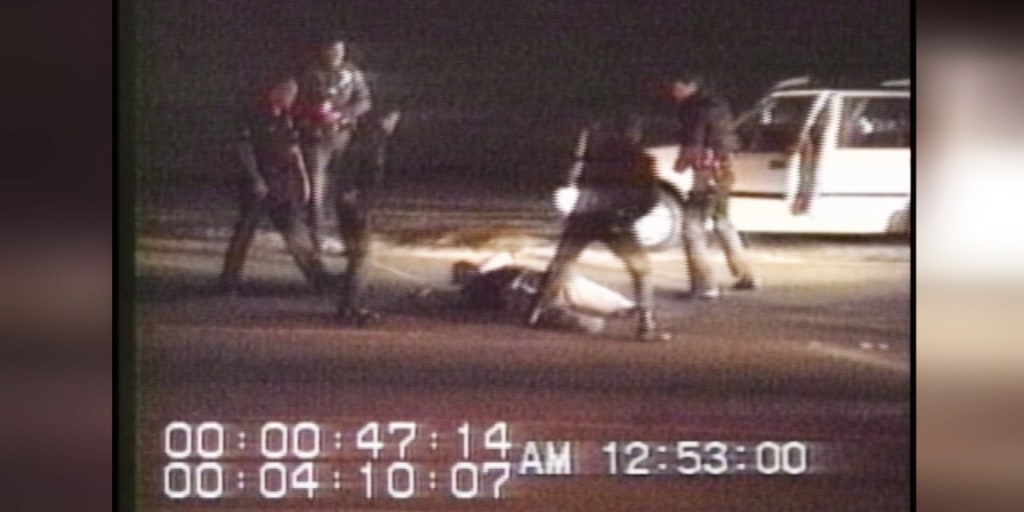
The grainy, shaky footage captured on March 3, 1991, changed the world forever. When George Holliday stepped onto his balcony with a Sony Handycam, he wasn’t just recording a violent encounter between the Los Angeles Police Department and a motorist named Rodney King; he was unknowingly launching the era of citizen journalism. While the subsequent trials of Sergeant Stacey Koon and Officers Laurence Powell, Timothy Wind, and Theodore Briseno became a watershed moment for the American legal system, the technological implications of that night set the stage for the modern surveillance state and the digital tools we use for accountability today.

To understand what happened to the officers involved, one must first understand the technology that both condemned and, paradoxically, initially exonerated them. The evolution from a single handheld analog camera to today’s AI-integrated body-worn cameras is a journey through three decades of rapid technological advancement in digital security and hardware.
The Dawn of Citizen Journalism: The Sony CCD-F55 Handycam
The Rodney King incident was perhaps the first time in history that “amateur” technology disrupted a “professional” narrative. Before 1991, the public’s understanding of police conduct was almost entirely mediated by official reports and professional news crews.
George Holliday’s Unintentional Innovation
In 1991, the Sony CCD-F55 Video 8 Handycam was a consumer-grade marvel. It was portable, relatively affordable, and used 8mm video cassettes. When George Holliday filmed the four officers beating Rodney King, he was utilizing a tool that had only recently become common in middle-class households. This “Tech Trend” of the early 90s—the democratization of video recording—meant that the police no longer held a monopoly on the visual record of an event. The footage was eventually sold to KTLA, a local news station, and then went “viral” in a pre-internet sense, being broadcast globally.
The Shift from Professional Broadcast to Amateur Witnessing
The technical limitations of the Handycam played a significant role in the legal defense of the officers. The footage was grainy, lacked high-definition detail, and did not include audio of the officers’ commands. In the first trial in Simi Valley, the defense team utilized “state-of-the-art” (at the time) frame-by-frame analysis. By slowing the analog tape down, they argued that Rodney King’s movements—which appeared to be a man struggling for his life—were actually “aggressive” actions that justified the officers’ use of force. This manipulation of analog media showed the tech world that video evidence was not an objective truth but a data set that could be reinterpreted through different playback speeds.
The Legal Aftermath and the Failure of 1990s Forensic Tech
The fate of the officers was inextricably linked to how the technology was presented in court. Initially, in 1992, all four officers were acquitted of state charges of assault with a deadly weapon and use of excessive force. The public outcry led to a federal trial in 1993 for violating King’s civil rights.
The Fate of the Four Officers
In the federal trial, the prosecution used a more sophisticated approach to the digital evidence. Stacey Koon (the sergeant in charge) and Laurence Powell (the officer who delivered the most strikes) were found guilty and sentenced to 30 months in federal prison. Timothy Wind and Theodore Briseno were acquitted, though they lost their careers in law enforcement. The difference between the two trials was not just the venue, but the maturation of the legal strategy surrounding the video evidence. The “tech” of the courtroom had evolved; prosecutors learned how to counter the frame-by-frame deconstruction used by the defense.
The Limitations of Analog Storage and Retrieval
In the early 90s, the “Digital Security” we take for granted today did not exist. There was no cloud storage, no blockchain for chain of custody, and no metadata to prove the tape hadn’t been edited. The “original” tape was a physical object—a piece of plastic and magnetic film. If that tape had been lost or damaged, the entire case would have collapsed. This vulnerability sparked a tech revolution in how law enforcement and legal systems handle evidence, leading directly to the development of Digital Evidence Management Systems (DEMS).
The Evolution of Law Enforcement Tech: From Analog to Body-Worn Cameras
The Rodney King incident was the catalyst for a massive influx of funding into police technology. The goal was twofold: to provide more data for “accountability” and to provide “protection” for officers against false accusations.
The Implementation of In-Car Video Systems
Following the 1992 riots, many departments began installing dash cameras. These were the precursors to the modern body cam. However, these early systems were bulky and relied on VHS tapes stored in the trunk of the cruiser. They were prone to mechanical failure and “manual overrides” by officers who didn’t want to be recorded. This era taught the tech industry that for accountability software to work, it had to be tamper-proof and automated.
Taser Development and the Tech of Non-Lethal Force
One of the key arguments in the Rodney King trial was that the officers’ “tech” was insufficient. The officers claimed the Taser (which was an early, less reliable model at the time) failed to stop King, leaving them with only their batons as a “non-lethal” option. In the decades following, the technology of non-lethal force underwent a massive R&D boom. Today’s Tasers are sophisticated digital devices that record the time, duration, and GPS location of every discharge, syncing that data automatically with cloud-based oversight software.
Modern Accountability: Body-Worn Cameras and AI-Driven Oversight
Fast forward to the present day, and the tech landscape has shifted from “witnessing by chance” to “surveillance by default.” If the Rodney King incident happened today, it would be captured from five different angles by 4K body cameras, multiple smartphones, and high-definition CCTV.
The Rise of Axon and the Cloud-Based Evidence Era
Companies like Axon (formerly TASER International) have moved beyond hardware to become software giants. They provide a massive cloud ecosystem (Evidence.com) where body cam footage is uploaded automatically via Wi-Fi. This eliminates the “George Holliday” factor; the evidence is no longer held by a bystander but is part of a secure, encrypted digital chain. The “Digital Security” aspect is now paramount—ensuring that footage cannot be deleted or altered by the officers involved.
Using AI to Monitor Police Conduct and Bias
The newest frontier in this tech niche is the use of Artificial Intelligence to analyze footage. Rather than having a supervisor manually watch thousands of hours of video, AI tools can now flag “stress indicators” in audio, detect the drawing of a firearm, or analyze the language used by officers for signs of bias or escalation. This is a direct technological response to the Rodney King beating: an attempt to create a system that detects a “Stacey Koon” or a “Laurence Powell” before an incident occurs.
The Future of Digital Evidence: Blockchain and the Threat of Deepfakes
As we look toward the future, the technology born from the legacy of March 3, 1991, faces its greatest challenge yet. While the Rodney King video was “grainy but real,” we are entering an era where video evidence can be perfectly faked.
Ensuring Chain of Custody in a Digital World
To combat the rise of “Deepfakes,” digital security firms are looking toward blockchain technology. By “hashing” a video file the moment it is recorded by a body camera or a smartphone, developers can create an immutable record. If a single pixel is changed, the digital signature will no longer match the blockchain record. This level of verification is the logical conclusion of the quest for “truth” that began with Holliday’s 8mm tape.

The Rodney King Legacy in the Age of Generative AI
The officers who beat Rodney King were ultimately judged by a 10-minute video. In today’s tech environment, the concern has shifted from “was there a camera?” to “can we trust the camera?” As generative AI becomes more accessible, the tools for accountability must become more sophisticated. The tech industry is currently in an arms race, developing “Authenticity Tools” to ensure that the “viral videos” of tomorrow are as influential—and as accurate—as the one that changed history three decades ago.
In conclusion, the story of what happened to the officers who beat Rodney King is not just a legal or social narrative; it is a technological one. From the humble Sony Handycam to AI-driven surveillance and blockchain-verified evidence, the drive for police accountability has been fueled by constant innovation. The legacy of that night lives on in every smartphone in a bystander’s hand and every body camera clipped to a uniform, reminding us that in the digital age, the lens is the ultimate arbiter of justice.
aViewFromTheCave is a participant in the Amazon Services LLC Associates Program, an affiliate advertising program designed to provide a means for sites to earn advertising fees by advertising and linking to Amazon.com. Amazon, the Amazon logo, AmazonSupply, and the AmazonSupply logo are trademarks of Amazon.com, Inc. or its affiliates. As an Amazon Associate we earn affiliate commissions from qualifying purchases.