
In the landscape of modern indie horror, few antagonists have captured the collective unease of the gaming community quite like Miss Delight. Introduced in the third chapter of the Poppy Playtime saga, her presence is not merely a feat of narrative storytelling but a masterclass in technical game design and procedural AI implementation. When users ask “what happened to Miss Delight,” they are often referring to her lore-based demise, but from a technological perspective, the question is much broader: How was she constructed, how does her complex AI function, and what does her implementation reveal about the current state of horror game engines?

As we peel back the layers of the digital assets and code that comprise this character, we find a sophisticated intersection of Unreal Engine optimization, algorithmic pathfinding, and advanced sound engineering. Miss Delight represents a significant leap forward for Mob Entertainment, showcasing how indie studios are now utilizing high-level technical frameworks to compete with AAA standards.
The Evolution of Character Assets: From Concept to Digital Terror
The visual identity of Miss Delight is a testament to the power of modern 3D modeling and texturing pipelines. Unlike earlier antagonists in the genre who relied on simple jump-scare mechanics, Miss Delight’s technical design is built to withstand close-up scrutiny within a high-fidelity environment.
Mesh Design and Texturing in Unreal Engine
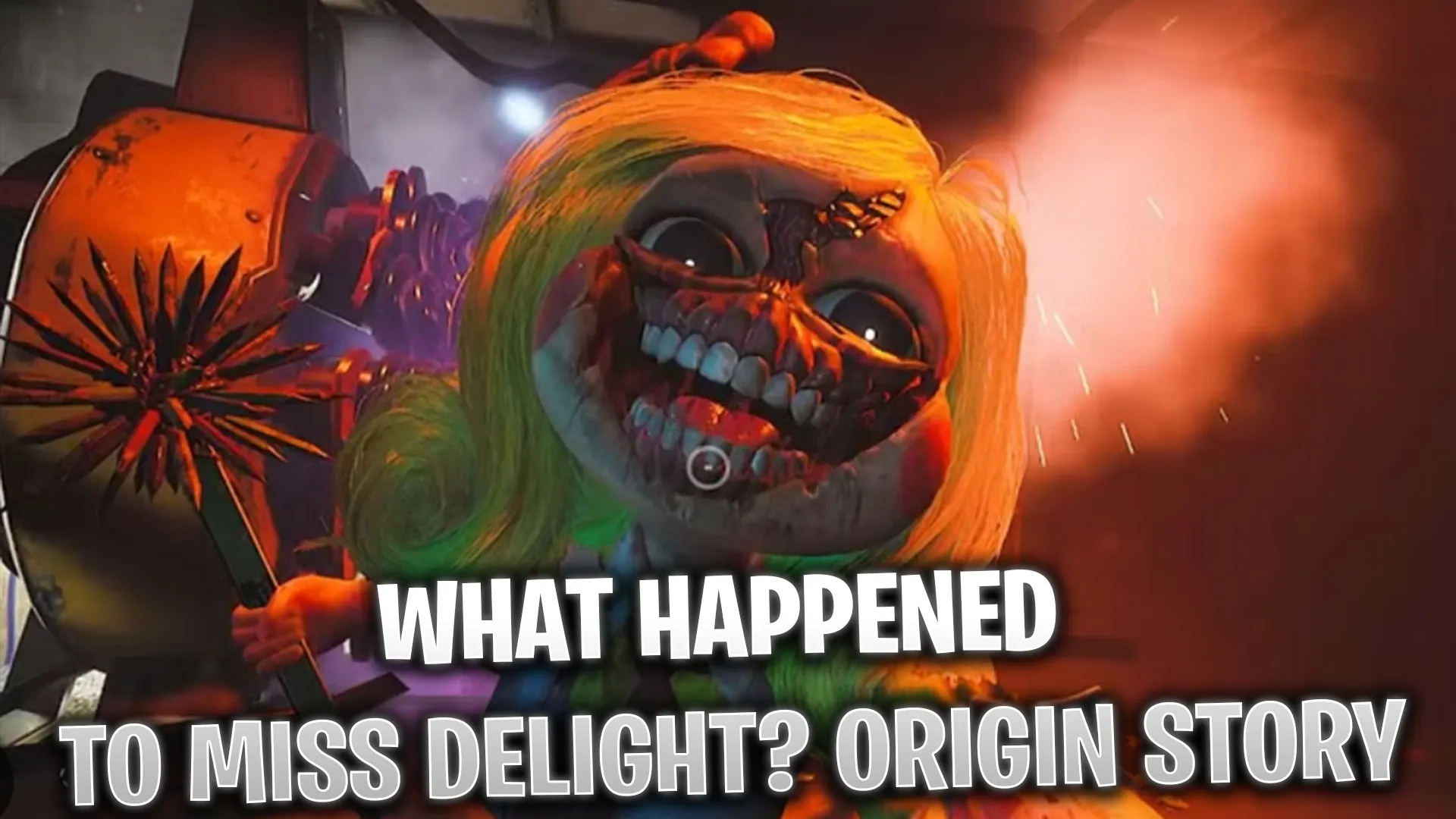
The character model for Miss Delight utilizes a high-poly count mesh that allows for intricate “shattering” effects—a key part of her visual narrative. In technical terms, the developers utilized advanced vertex painting and PBR (Physically Based Rendering) materials to give her plastic skin a weathered, cracked, and decaying appearance. This isn’t just an aesthetic choice; it’s a technical solution to the “uncanny valley.” By leaning into the brokenness of the model, the developers avoid the limitations of stiff facial animations, instead focusing on high-detail static expressions that feel more menacing under the game’s dynamic lighting system.
The “Shattered” Aesthetic: Optimization and Visual Storytelling
One of the primary technical challenges with Miss Delight was her weapon—the “Barb.” From a rendering standpoint, a weapon with numerous small, sharp protrusions can be a nightmare for anti-aliasing and draw calls. To mitigate performance drops during high-speed chases, the dev team likely employed LOD (Level of Detail) transitions. This allows the engine to swap the high-fidelity model for a lower-resolution version as the player gains distance, ensuring that the frantic gameplay remains at a stable frame rate without sacrificing the player’s immersion during close encounters.
Advanced Pathfinding and AI Mechanics in Chapter 3
The most striking technical aspect of Miss Delight is her behavior. She operates on a “Weeping Angel” mechanic—moving only when the player is not looking at her. While this seems simple in theory, implementing it in a complex, non-linear 3D environment requires sophisticated AI logic.
The Red Light, Green Light Algorithm
The core of Miss Delight’s AI is a Boolean check: Is the actor within the player’s camera frustum and is there a clear line of sight? The game engine must constantly calculate the “visibility” status of the NPC. If the player’s field of view (FOV) does not intersect with the character’s collision box, the AI switches from a “frozen” state to a “seek” state.
What makes this technically impressive in Poppy Playtime Chapter 3 is the speed at which this state-switching occurs. Developers used optimized tick rates to ensure that the moment a player flickers their flashlight or turns their head, Miss Delight responds instantly. This requires a high-performance integration between the animation blueprint and the AI controller, preventing “sliding” animations where the character might move slightly while the player is looking.
NavMesh Challenges and Environmental Interaction
Miss Delight isn’t just chasing the player through an open field; she navigates the “Playcare” school—a labyrinthine environment filled with obstacles. To handle this, the developers utilized a dynamic NavMesh (Navigation Mesh). As the player moves through the school, Miss Delight’s AI must calculate the shortest path while also accounting for the player’s gaze. This involves “Influence Maps,” where the AI assigns weight to certain areas of the map. If an area is within the player’s sightline, the AI may choose a different, obscured path to get closer, creating the illusion of a sentient, hunting predator.
Sound Engineering: The Technical Anatomy of Fear
In horror gaming, audio technology is just as critical as visual fidelity. Miss Delight’s presence is often announced through auditory cues before she is ever seen, a feat achieved through advanced spatialization techniques.
Spatial Audio Integration
Using plugins like Steam Audio or Unreal’s native spatialization, the developers positioned Miss Delight’s “skittering” and “manic laughter” sounds in 3D space. This relies on HRTF (Head-Related Transfer Function) algorithms, which simulate how human ears perceive sound directionality. When a player hears Miss Delight behind them to the left, it isn’t just a simple pan to the left speaker; it is a frequency-shifted audio signal that mimics the way sound bounces off the walls of the digital hallway. This technical layer is essential for the “red light, green light” mechanic, as it allows players to track her position using only their ears.
Procedural Audio Triggers
Miss Delight’s dialogue and sound effects are not merely on a loop. They are procedurally triggered based on the player’s distance and the AI’s current state. If the AI is in “stalking” mode, the audio engine prioritizes low-frequency ambient sounds and quiet footfalls. Once the “chase” state is triggered, the audio engine shifts to high-intensity, high-frequency “stings.” This dynamic mixing ensures that the technical soundscape evolves in real-time with the gameplay, preventing audio fatigue and maintaining a high level of tension.
The Tech Stack Behind the Nightmare
To understand what happened to the development of Miss Delight, one must look at the technical ecosystem that supports her. The shift from the more simplistic mechanics of Chapter 1 to the complex interactions of Chapter 3 highlights a maturing tech stack.
Physics Engines and Collision Detection
A recurring technical issue in early indie horror was “clipping,” where characters would pass through walls. For Miss Delight, the developers tightened the capsule collision components. During her chase sequences, the physics engine must handle rapid acceleration and deceleration without the character model getting stuck on the environment’s geometry. This involved rigorous “Stress Testing” in the development phase, using automated scripts to run the AI through the level thousands of times to identify snag points in the NavMesh.
Optimization for Multi-Platform Performance
Poppy Playtime is designed to run on everything from high-end PCs to mobile devices and consoles. Miss Delight’s technical design had to be scalable. This was achieved through “Shader Permutations.” On a high-end PC, her model features complex reflections and shadows; on mobile, these are swapped for pre-baked lighting and simplified shaders. The “what happened” in terms of her performance stability across platforms is a result of meticulous technical profiling, ensuring that the AI logic—which is CPU intensive—doesn’t choke the mobile processors while the GPU handles the rendering.
The Future of Interactive Horror Technology
Miss Delight is more than just a character; she is a prototype for the future of interactive AI in the horror genre. Her implementation marks a shift away from scripted jump-scares toward “Emergent Gameplay,” where the player’s specific actions dictate the behavior of the antagonist.
Dynamic NPC Behavior
As we look toward future chapters and titles, the technology used for Miss Delight is being refined into more autonomous agents. We are seeing the move toward “Utility AI,” where NPCs don’t just follow a path but make decisions based on a series of “needs” and “sensors.” Miss Delight’s ability to “hide” or “wait” for the player to look away is a precursor to even more complex behaviors, potentially involving machine learning models that adapt to a specific player’s habits.

Scaling Indie Tech for Global Audiences
The success of Miss Delight’s technical execution has set a new benchmark for indie studios. It proves that with the right application of Unreal Engine’s toolset—specifically its AI behavior trees and Niagara VFX systems—a small team can produce a character that rivals the complexity of those found in multi-million dollar productions.
In conclusion, “what happened to Miss Delight” is a story of technical triumph. Through the clever use of frustum culling checks, spatial audio, and optimized 3D modeling, Mob Entertainment created a character that is as much a feat of engineering as she is a figure of nightmares. As hardware continues to evolve, the lessons learned from Miss Delight’s development will undoubtedly pave the way for even more sophisticated, technically-driven horror experiences in the years to come.
aViewFromTheCave is a participant in the Amazon Services LLC Associates Program, an affiliate advertising program designed to provide a means for sites to earn advertising fees by advertising and linking to Amazon.com. Amazon, the Amazon logo, AmazonSupply, and the AmazonSupply logo are trademarks of Amazon.com, Inc. or its affiliates. As an Amazon Associate we earn affiliate commissions from qualifying purchases.