
For many, the name “History Channel” evokes memories of meticulously crafted documentaries, expert historians dissecting ancient civilizations, and compelling narratives from pivotal moments in human history. It was a brand synonymous with education, depth, and intellectual curiosity. Yet, over the past decade or so, a casual flip through the channels might reveal a different landscape: reality shows about pawn shops, truck drivers, or speculative series about aliens and monsters. The question “What happened to History Channel?” isn’t merely a nostalgic lament; it’s a profound inquiry into the seismic shifts impacting media, branding, and finance in the digital age. This article delves into the multi-faceted answer, exploring how the relentless march of technology, the pressures of brand identity, and the unforgiving realities of economic sustainability collectively reshaped a once-unwavering bastion of historical programming.

The Shifting Sands of Media: A Technological Reckoning
The transformation of the History Channel cannot be understood without first acknowledging the revolutionary impact of technology on how we consume content. The digital age didn’t just introduce new platforms; it fundamentally altered viewer expectations and the very economics of television.
From Linear TV to Digital Disruption
The traditional model of linear television, where viewers tuned in at a specific time for scheduled programming, has been steadily eroded by the rise of on-demand content. Streaming services like Netflix, Hulu, Disney+, and Amazon Prime Video have accustomed audiences to instant access to vast libraries of shows, often without commercials. This shift presented an existential threat to traditional cable channels, including the History Channel. Viewers, particularly younger demographics, gravitated towards platforms offering personalized viewing experiences, often powered by sophisticated AI tools that learn their preferences and recommend content.
Moreover, the internet democratized historical content. YouTube became a repository for countless educational channels, documentaries, and historical analyses, many produced with surprisingly high quality and available for free. Dedicated history apps offered interactive timelines, virtual tours, and curated educational experiences. The History Channel, once a gatekeeper of historical knowledge on television, suddenly found itself competing with an almost infinite array of digital alternatives, many of which offered niche content that traditional broadcasters could not or would not provide. The imperative for traditional channels became clear: adapt or become obsolete. This often meant broadening appeal beyond a niche historical audience to attract a wider net of viewers accustomed to diverse, often less educational, content streams.
The Data-Driven Content Economy
Another powerful technological force is the ascendancy of data analytics. Modern media companies operate in a data-driven content economy where every click, every pause, and every completed episode is meticulously tracked. AI tools and algorithms analyze viewer behavior to identify trends, predict popular genres, and even influence creative decisions. For a channel like History, this meant a constant pressure to produce “binge-worthy” content that could compete in an attention economy increasingly fragmented by choice. If data suggested that reality shows or speculative non-fiction drew higher engagement metrics than a meticulously researched documentary on ancient Mesopotamia, the financial incentives naturally steered programming in that direction.
The beauty of history lies in its complexity and nuance, but these qualities can be challenging to convey in a format optimized for maximum, immediate engagement. The data-driven approach, while efficient for optimizing viewership in the short term, often prioritized quantity and immediate impact over intellectual depth and long-term educational value. This strategic pivot, informed by technological capabilities, inevitably began to reshape the channel’s identity from within.
Production Tech and Accessibility
The advancement in production technology has also played a dual role. On one hand, sophisticated digital cameras, editing software, and CGI have made it possible to produce stunning visual historical recreations more affordably than ever before. This could have been a boon for historical documentaries, allowing for even more immersive and accurate portrayals of the past. On the other hand, the accessibility of relatively inexpensive, high-quality production gear also democratized content creation. Independent filmmakers, academic institutions, and even hobbyists could now produce compelling historical content, often distributing it directly to audiences via platforms like YouTube or specialized streaming services. This meant the History Channel, once a prime destination for such content, faced competition not just from other major networks, but from a vast ecosystem of smaller, agile, and often highly specialized content creators. The traditional broadcast model, with its higher overheads and longer production cycles, struggled to compete with the speed and niche focus of these digital-first entities.
The Brand Identity Crisis: Evolution or Erosion?
Beyond the technological shifts, the History Channel’s journey reflects a significant struggle with brand identity in a rapidly changing media landscape. The core question became: what does “History” mean to a contemporary audience, and how should a brand adapt without losing its essence?
Repositioning for a New Audience
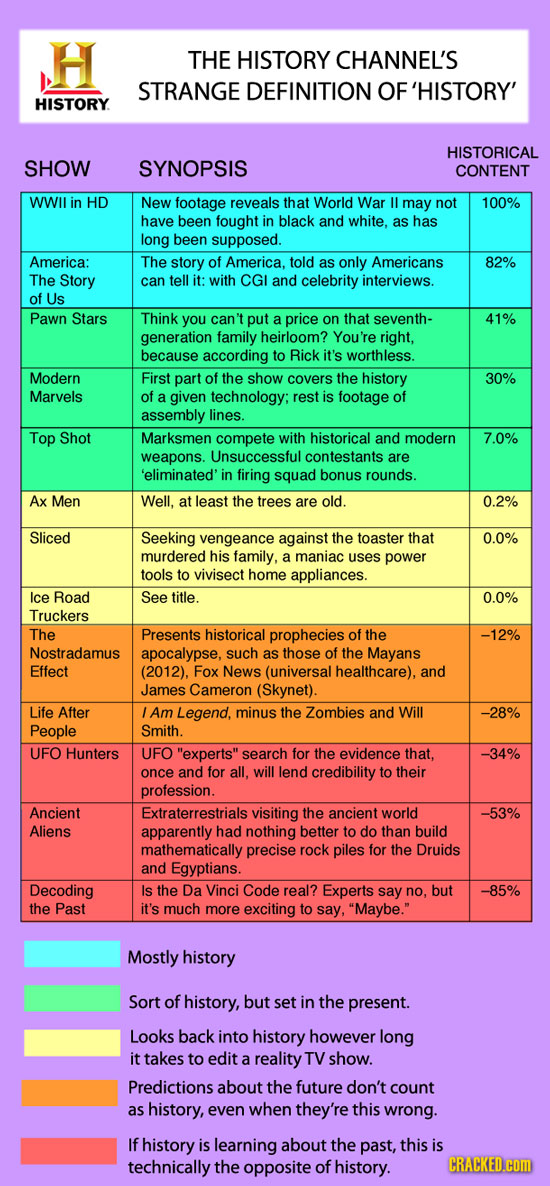
The original brand promise of “The History Channel” was clear: a dedicated space for historical exploration. Its corporate identity was built around education, authenticity, and intellectual rigor. However, as the channel began to introduce shows like “Pawn Stars,” “Storage Wars,” or “Ancient Aliens,” a conscious or unconscious repositioning began. Was this a strategic brand move to broaden appeal and capture a larger, more diverse audience? Or was it a reactive measure to declining viewership and increased competition?
The result was a blurring of the brand’s core. For loyal viewers, the shift felt like an erosion of the original mission. The brand’s reputation, once tied to verifiable historical facts, increasingly became associated with entertainment, speculation, and even sensationalism. While a brand strategy might aim to evolve, a dramatic departure from the foundational pillars can lead to an identity crisis, confusing the existing audience and potentially alienating new ones who might have been drawn to the channel’s original premise. Marketing efforts had to contend with this internal contradiction: how do you market a “History Channel” that increasingly features content that many viewers would not categorize as history?
Marketing in a Fragmented Landscape
The fragmentation of the media landscape, driven by technological advancements, compounded the History Channel’s branding challenges. In a world where audiences are segmented across countless platforms and niche interests, communicating a clear and consistent brand message becomes incredibly difficult. Historically, the channel’s marketing could focus on its unique selling proposition: high-quality historical content. However, as its programming diversified, its marketing had to broaden as well, potentially diluting its impact.
Successful branding in the digital age often relies on hyper-targeting and a strong, unique value proposition. When the History Channel began to resemble general entertainment channels, it lost some of its distinctiveness. Its marketing campaigns struggled to stand out in a crowded market where every streaming service and influencer vied for attention. Case studies of successful rebrands often demonstrate a clear, deliberate pivot with a new, well-defined target audience. For the History Channel, the shift felt more organic and driven by necessity, leading to a less defined new identity and a perception among some that it had abandoned its roots rather than purposefully evolved them.
The Value Proposition Dilemma
Ultimately, a brand must offer a clear value proposition. What unique benefit does it provide that competitors do not? For a long time, the History Channel’s value was its exclusive focus on history, delivered with production quality beyond what many smaller outlets could achieve. But in an era where Netflix offers critically acclaimed historical dramas, YouTube hosts countless expert-led historical discussions, and dedicated educational platforms provide interactive learning, what is the unique value of the History Channel’s current offering?

If its programming increasingly overlaps with general entertainment or “reality” television, its value proposition as a distinct historical authority diminishes. This dilemma forces channels to either double down on their niche and find new ways to deliver it, or fully embrace a broader identity and accept the consequences for their original brand loyalty. The History Channel’s trajectory suggests it opted for the latter, prioritizing broader appeal in the face of intense competition.
The Financial Imperative: Monetization in the Modern Age
Underneath all the technological and branding shifts lies the relentless pressure of financial sustainability. Media is a business, and the choices made by channels are inextricably linked to their ability to generate revenue and maintain profitability.
Ad Revenue vs. Subscription Models
Traditional cable television, including the History Channel, has long relied heavily on advertising revenue. Advertisers pay based on viewership numbers and demographics. As cable subscriptions declined and audiences migrated to ad-free or ad-light streaming services, the traditional ad revenue model came under immense pressure. Lower viewership means less attractive ad rates, creating a powerful financial incentive to produce content that guarantees high ratings, even if it deviates from the channel’s original mission.
Producing niche historical documentaries, while valuable, often appeals to a smaller, more dedicated audience. Reality TV, with its lower production costs and broader appeal, frequently delivers higher, more consistent viewership, making it a more attractive option from a business finance perspective. The financial tools used for forecasting revenue inevitably pointed towards content that maximized reach, pushing the channel away from its specialist roots. The choice was often stark: maintain niche content and face declining ad revenues, or diversify programming to chase higher ratings and secure financial viability.
The Pursuit of Profit: Diversification and New Ventures
To counteract declining traditional revenues, media companies are constantly exploring new income streams. This includes licensing content to streaming platforms, developing spin-off shows, merchandising, and even launching digital-only content initiatives. For the History Channel, this pursuit of profit likely influenced decisions to create more “franchise-friendly” shows that could spawn multiple seasons, international versions, and associated products.
Investing in new content is always a financial gamble, but the potential for online income through digital distribution or partnerships can be significant. However, these new ventures often require channels to invest in different types of content, sometimes further moving away from the core identity. The financial pressure to innovate and diversify can thus contribute to the brand’s evolution, sometimes at the expense of its initial purpose. Side hustles, in the context of a major network, mean exploring every avenue for monetization, even if it means transforming the very nature of its content offering.
The Cost of Quality Content
High-quality historical documentaries, especially those involving extensive archival research, on-location shooting, expert interviews, and sophisticated graphics, are expensive to produce. They require significant financial investment without the guarantee of mass appeal or viral success. In a landscape where budgets are tightening and pressure for quick returns on investment is mounting, cheaper, faster-to-produce reality television becomes a financially more appealing option.
The ROI on content is a critical metric for any media company. While a prestigious historical documentary might garner critical acclaim, a low-cost reality show might deliver a better return on investment in terms of consistent ratings and advertising revenue. This fundamental financial reality plays a significant role in shaping programming schedules and influencing what kind of content gets greenlit. Without strong financial backing or alternative funding models, the pursuit of intellectually rigorous but expensive content can become unsustainable.
What’s Next for “History” in the Digital Age?
The journey of the History Channel serves as a powerful case study for any brand navigating the complexities of the digital age. The question is not just “what happened,” but “what could happen” next.
Reinventing “History” with Tech
The very technologies that disrupted the History Channel also offer pathways for its reinvention. Imagine AI-powered interactive historical experiences, where viewers can explore events from multiple perspectives. Virtual Reality (VR) and Augmented Reality (AR) could offer immersive historical tours, transporting users to ancient Rome or the trenches of WWI. Personalized learning paths, powered by AI in education, could allow individuals to delve deep into historical topics that genuinely interest them, transcending the linear constraints of traditional television. Future historical content might not be passive viewing but active participation, available through specialized apps or digital platforms. The potential to use technology to bring history alive in compelling, educational ways remains immense.
Rebuilding the Brand’s Trust
For the History Channel to reclaim its original mission, it would likely require a deliberate and transparent effort to rebuild trust with its audience. This could involve a clear brand narrative that reaffirms its commitment to authentic history, alongside a curated selection of programming that reflects this commitment. Re-engaging with academic communities, commissioning scholarly works, and promoting historical literacy could be part of a new reputation rebuilding strategy. Alternatively, if the channel fully embraces its current, broader identity, it needs to articulate what “History” means in this new context and clearly communicate this to its audience, perhaps even considering a rebrand that better reflects its actual content. Community engagement and transparency would be key in either scenario.
Sustainable Financial Models for Niche Content
The challenge of funding high-quality, niche historical content in a mass-market media landscape remains. Innovative financial models could offer solutions. This might include direct-to-consumer subscription services for specialized historical archives, partnerships with educational institutions or cultural organizations, or even crowdfunding models where audiences directly support specific historical documentary projects. Grants and endowments could also play a larger role. Exploring online income strategies beyond traditional advertising, such as premium educational content, virtual historical workshops, or even merchandise linked to specific historical eras, could provide more sustainable revenue streams, allowing for a renewed focus on depth and quality over mass appeal.
Conclusion
The story of “What Happened to History Channel?” is a microcosm of the profound transformations sweeping across the entire media industry. It’s a tale of technological disruption forcing traditional models to adapt, of brand identities struggling to evolve without losing their essence, and of financial pressures dictating creative decisions. The interplay of advancing technology, the imperative for strategic brand management, and the unforgiving realities of business finance collectively steered the History Channel away from its original course. While some mourn the loss of a dedicated historical resource, its evolution underscores a crucial lesson: in an era of relentless change, even the most established brands must constantly re-evaluate their purpose, embrace innovation, and creatively redefine their value proposition to survive and thrive. The future of “history” in the digital age may not lie in a single television channel, but in a diverse, technologically-driven ecosystem of content creators, educators, and platforms dedicated to exploring the past in new and engaging ways.
aViewFromTheCave is a participant in the Amazon Services LLC Associates Program, an affiliate advertising program designed to provide a means for sites to earn advertising fees by advertising and linking to Amazon.com. Amazon, the Amazon logo, AmazonSupply, and the AmazonSupply logo are trademarks of Amazon.com, Inc. or its affiliates. As an Amazon Associate we earn affiliate commissions from qualifying purchases.