
The digital landscape is one of constant flux, where once-dominant platforms can vanish overnight due to a complex interplay of legal pressures, technical failures, or shifting user behaviors. Among the most discussed disappearances in recent years within the tech community is that of MagnetDL. For over a decade, MagnetDL served as a cornerstone of the BitTorrent ecosystem, prized for its minimalist interface and its commitment to “magnet links” over traditional torrent files.
However, as users have recently discovered, the site has become increasingly difficult to access, leading to widespread speculation about its fate. To understand what happened to MagnetDL, one must look beyond a simple “site down” notice and examine the broader technological, security, and regulatory shifts currently reshaping the internet’s peer-to-peer (P2P) infrastructure.

Understanding the Rise and Fall of MagnetDL
MagnetDL carved out a specific niche in the mid-2010s by offering a “clean” alternative to the cluttered, ad-heavy environments of its competitors. While many indexing sites were becoming unusable due to aggressive pop-ups and malicious redirects, MagnetDL maintained a database that was indexed efficiently and presented simply.
The Transition to Magnet Links
The site’s name itself points to a pivotal shift in P2P technology. Unlike early torrent sites that hosted .torrent files on their own servers, MagnetDL focused on magnet links. Technically, a magnet link is a “hyperlink” containing the cryptographic hash of a file. This allows a BitTorrent client to find other peers sharing the data without needing a central server to host a metadata file. By adopting this technology early, MagnetDL reduced its own server load and created a layer of abstraction that made it harder for authorities to claim the site was “hosting” copyrighted material.
The 2023-2024 Disruptions
The decline of MagnetDL did not happen in a single day. Starting in 2023, users began reporting intermittent 500-series errors and DNS resolution issues. In many jurisdictions, including the UK, Australia, and parts of the EU, the site was not actually “down” in the traditional sense; rather, it had been added to ISP-level blocklists. By mid-2024, the original .com domain became largely unresponsive globally. While the operators have not released an official “closing” statement, the pattern suggests a combination of domain seizure, hosting provider termination, or a voluntary “sunset” by the developers to avoid escalating legal liabilities.
The Technical Infrastructure of Modern P2P Distribution
The disappearance of MagnetDL highlights the ongoing technical battle between decentralized protocols and centralized gatekeepers. To understand why sites like MagnetDL are targeted, we must look at how the BitTorrent protocol has evolved to survive in an increasingly regulated digital environment.
DHT and PEX: The Backbone of Trackerless Torrents
In the early days of file sharing, “trackers” were essential. A tracker was a central server that kept track of which users had which parts of a file. If the tracker was taken down, the swarm died. Modern P2P technology utilizes Distributed Hash Tables (DHT) and Peer Exchange (PEX).
DHT essentially turns every user’s BitTorrent client into a mini-tracker. When MagnetDL provided a magnet link, it wasn’t just giving a file location; it was giving the client a “key” to search the DHT network. This technical decentralization is why, even though MagnetDL is gone, the files it indexed are still perfectly accessible to those who have the hash codes.
The Role of DNS and Reverse Proxies
Most modern indexers rely on services like Cloudflare to hide their actual server IP addresses and protect against Distributed Denial of Service (DDoS) attacks. However, this creates a paradox: to remain decentralized, these sites rely on centralized “middlemen.” When regulatory bodies pressure these middlemen, or when DNS providers are forced to “sinkhole” a domain, the site effectively disappears from the public web, even if the backend servers are still running.
Digital Security: The Danger of the “Mirror” Ecosystem
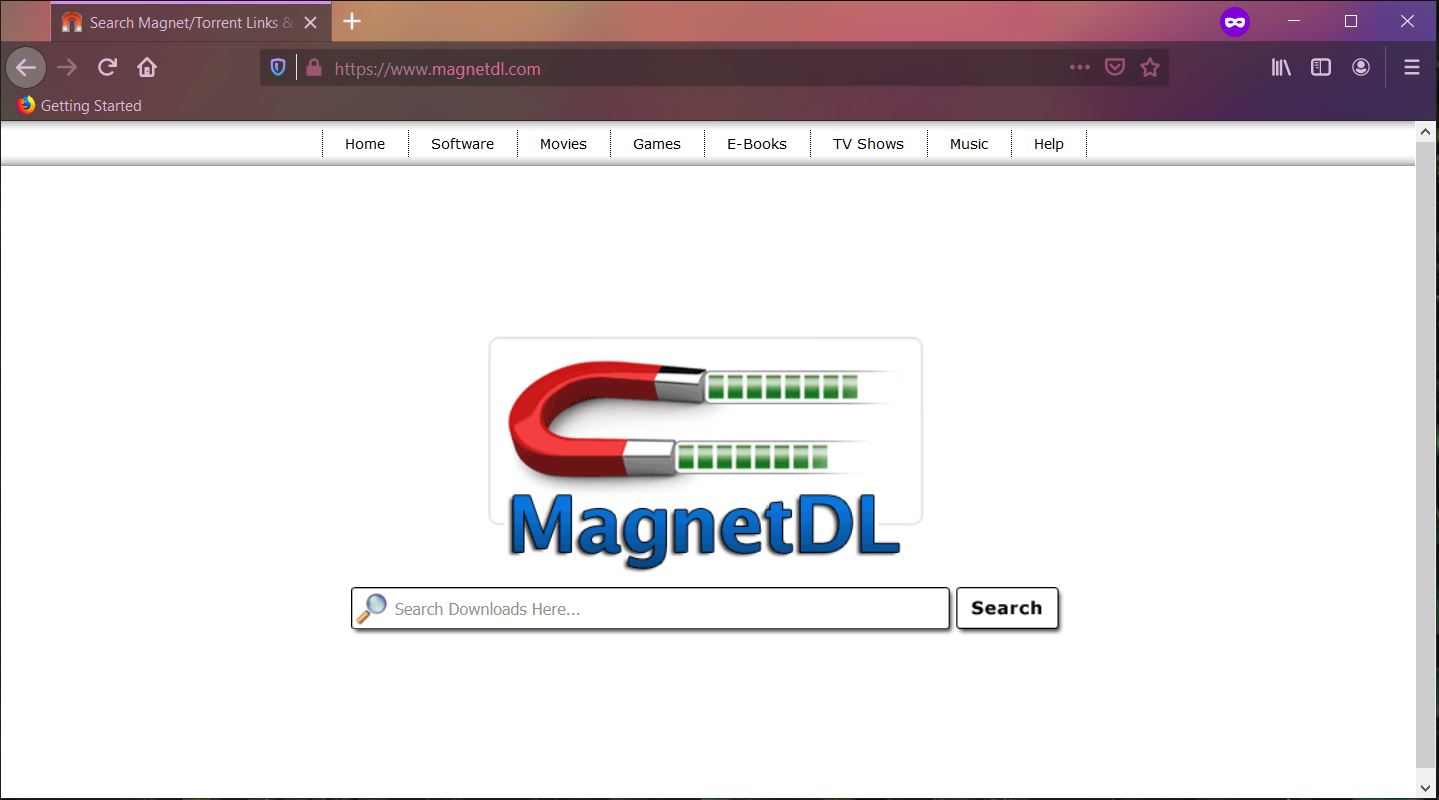
Whenever a major site like MagnetDL goes offline, a vacuum is created. This vacuum is almost immediately filled by “mirrors” and “proxies.” From a technical and security perspective, this is the most dangerous period for the average user.
Phishing and Malware Injection
Searching for “MagnetDL” today will yield dozens of results claiming to be “MagnetDL Unblocked” or “MagnetDL Proxy.” Many of these sites are not operated by the original team. Instead, they are shells designed to harvest user data or distribute malicious software. These “clone” sites often use JavaScript injection to trigger unauthorized downloads or utilize the visitor’s CPU for stealth cryptocurrency mining (cryptojacking).
The Necessity of Sandboxing and Encryption
For tech-savvy users, the disappearance of a primary indexer necessitates a shift in security protocols. The use of Virtual Private Networks (VPNs) has transitioned from a luxury to a requirement to bypass ISP-level DNS filtering. Furthermore, the rise of “browser sandboxing” and the use of ad-blocking extensions that prevent script execution have become the primary line of defense against the malicious mirrors that pop up in MagnetDL’s wake.
The Legal and Regulatory Squeeze on Tech Platforms
The fate of MagnetDL is inextricably linked to the tightening of global digital regulations. We are currently witnessing a shift in how intellectual property is protected on a technical level, moving away from suing individual users and toward the “deplatforming” of the infrastructure itself.
The Impact of the Digital Services Act (DSA)
In the European Union, the implementation of the Digital Services Act has forced service providers to be more proactive in taking down “illegal content.” This has created a “chilling effect” where hosting providers and domain registrars are quicker to terminate accounts associated with P2P indexing to avoid massive fines. MagnetDL, despite its minimalist and “passive” approach to indexing, fell squarely into the crosshairs of these new compliance requirements.
ISP-Level Filtering and SNI Inspection
Technologically, governments are getting better at blocking sites. In the past, a simple DNS change (like moving to Google’s 8.8.8.8) could bypass a block. Today, many ISPs use Server Name Indication (SNI) filtering. This allows the ISP to see the hostname of the website a user is trying to connect to, even if the traffic is encrypted, and drop the connection before it is established. This technical escalation is a major reason why MagnetDL’s traffic plummeted before the site eventually went dark.
The Future: Decentralized Web and IPFS
As centralized indexers like MagnetDL face an existential crisis, the tech community is looking toward the next generation of file-sharing protocols that do not rely on a single domain or server.
The InterPlanetary File System (IPFS)
IPFS is a peer-to-peer hypermedia protocol designed to make the web faster, safer, and more open. Unlike the traditional web (HTTP), which searches for locations (IP addresses), IPFS searches for content (hashes). If an indexer were built on IPFS, there would be no central server to shut down. The “site” would exist on the computers of everyone who uses it.
Web3 and Blockchain Indexing
There is also growing interest in using blockchain technology to create immutable indexes of magnet links. By storing the “database” of a site like MagnetDL on a public ledger, the information becomes resistant to censorship. While the user interface (the website) might still be vulnerable to DNS blocks, the underlying data—the library of magnet links—would remain accessible through any gateway connected to the blockchain.
Conclusion: The End of an Era, the Continuity of Tech
The disappearance of MagnetDL marks the end of an era for “Web 2.0” torrent indexing. The site’s simplicity and reliability made it a favorite, but its centralized nature made it an easy target for the evolving technical and legal frameworks of the 2020s.
However, in the world of technology, nothing truly disappears; it merely evolves. The “MagnetDL model” is being replaced by more resilient, decentralized technologies. Users are moving away from easily blockable .com domains and toward encrypted networks, DHT-reliant clients, and decentralized storage protocols. While we may not see the return of MagnetDL in its original form, the technical principles it championed—efficiency, magnet-link prioritization, and minimalist design—will continue to influence the next generation of digital content distribution. The death of the site is not the death of the technology; it is simply a catalyst for the next stage of P2P innovation.