
In the world of personal finance and corporate management, few terms are as ubiquitous yet frequently misunderstood as “time and a half.” Whether you are an employee looking to maximize your take-home pay or a business owner trying to balance a departmental budget, understanding the mechanics of overtime compensation is essential. At its core, time and a half is a financial incentive and a legal requirement that dictates how labor is valued beyond the standard workweek.
This guide explores the definition of time and a half from a financial perspective, detailing how it is calculated, who it applies to, and how it impacts the broader fiscal health of a business.

Defining Time and a Half in the Financial Landscape
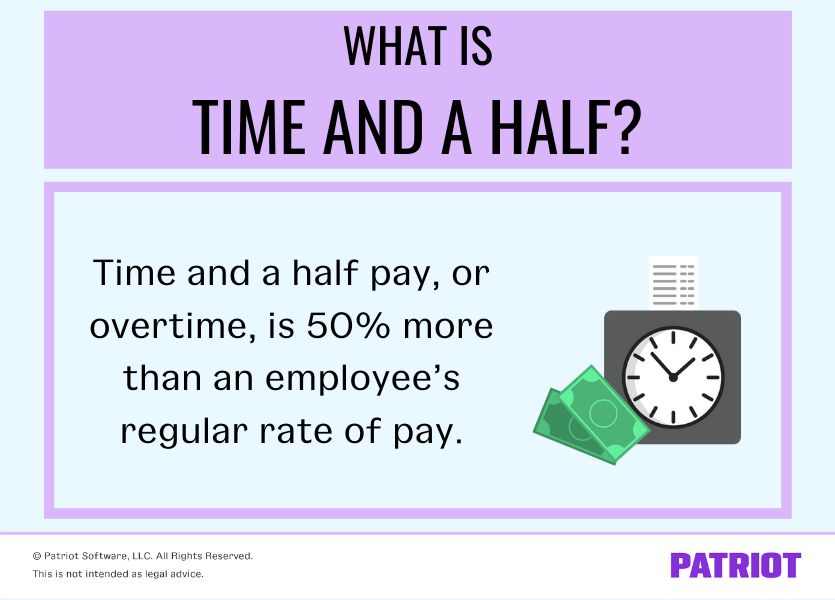
Time and a half refers to a rate of pay that is 1.5 times the regular hourly wage an employee earns. In the United States, this standard was largely solidified by the Fair Labor Standards Act (FLSA) of 1938, a landmark piece of legislation designed to protect workers from exploitation and encourage businesses to hire more staff rather than overworking a skeleton crew.
The Mechanics of the 1.5x Multiplier
From a purely mathematical standpoint, the “time” represents the base hourly rate, while the “half” represents an additional 50% of that rate. For example, if an employee’s regular rate of pay is $20 per hour, their time and a half rate is $30 per hour ($20 + $10).
In the context of business finance, this multiplier represents a significant increase in the marginal cost of labor. For every hour worked beyond the standard 40-hour threshold, the business is essentially paying a 50% premium for productivity. This makes overtime a critical variable in cash flow management and operational budgeting.
Who Qualifies? Exempt vs. Non-Exempt Status
Not every worker is entitled to time and a half. The financial distinction usually falls between “exempt” and “non-exempt” employees.
- Non-Exempt Employees: Typically paid hourly, these individuals are legally entitled to overtime pay for any hours worked over 40 in a single workweek. From a financial planning perspective, these employees represent “variable labor costs.”
- Exempt Employees: Generally salaried professional or executive roles that meet specific salary thresholds and job duty tests. These individuals do not receive overtime pay, making them “fixed labor costs.”
Understanding these categories is vital for corporate identity and financial strategy, as misclassifying an employee can lead to severe legal penalties and back-pay liabilities that can jeopardize a company’s solvency.
Calculating Overtime: A Step-by-Step Financial Breakdown
Calculating time and a half may seem straightforward, but it can become complex when factoring in bonuses, commissions, and varying shift differentials. Precision in these calculations is the difference between a clean financial audit and a costly legal dispute.
Calculating the Regular Rate of Pay
The “regular rate” is not always just the base hourly wage. According to financial regulations, the regular rate must include all remuneration for employment, excluding specific statutory exceptions. This means if an employee receives a non-discretionary bonus or a shift premium, those amounts must be factored into the base rate before the 1.5x multiplier is applied.
For instance, if an employee earns $15/hour but also receives a $50 weekly production bonus for 40 hours of work, their true regular rate is $16.25/hour ($600 base + $50 bonus divided by 40 hours). Therefore, their overtime rate would be $24.38, not $22.50.
Real-World Scenarios and Edge Cases
Consider a “blended rate” scenario, which often occurs in businesses where employees perform two different roles at two different pay scales. If a worker spends 30 hours as a technician at $20/hour and 20 hours as a supervisor at $30/hour, the business must calculate a weighted average to determine the overtime premium.
Financial controllers must be diligent in tracking these hours. Automated payroll systems have mitigated much of the human error involved, but the underlying financial logic must be understood by the management team to ensure that labor budgets remain accurate.
The Impact of Overtime on Business Finance and Budgeting
For a business, overtime is a double-edged sword. While it allows for increased output without the long-term overhead of hiring new full-time staff, it can quickly erode profit margins if not managed with fiscal discipline.
Balancing Labor Costs with Productivity
The primary financial concern with time and a half is the “law of diminishing returns.” While an employee is being paid 150% of their wage, they are rarely 150% more productive during those extra hours. In fact, fatigue often leads to a decrease in hourly output.
When a company’s overtime expenses exceed 10-15% of total payroll, it often signals a need for a structural shift. At this point, the financial cost of paying time and a half usually outweighs the cost of recruiting, hiring, and providing benefits for an additional employee. Analyzing the “break-even point” between overtime and new hires is a core task for any financial officer.
Using Overtime as a Strategic Growth Tool
Conversely, time and a half can be a strategic financial tool during periods of seasonal demand or short-term scaling. For a startup or a growing business, paying overtime is often safer than hiring. Hiring involves fixed costs—health insurance, 401(k) matches, and payroll taxes—that are difficult to shed if demand drops. Overtime, however, is a flexible expense that can be dialed back instantly, allowing for better agility in capital allocation.
Navigating Legal Compliance and Financial Risk
The financial implications of “time and a half” extend beyond the weekly payroll run. Non-compliance with overtime laws represents one of the most significant “hidden” liabilities on a company’s balance sheet.
Common Payroll Pitfalls to Avoid
Many businesses fall into the trap of “comp time” (offering extra time off instead of overtime pay) or “averaging weeks” (paying no overtime if an employee works 50 hours one week and 30 the next). Both practices are generally illegal for non-exempt employees under federal law.
From a financial perspective, these errors accumulate as “off-balance-sheet liabilities.” If an audit occurs, the company may be forced to pay years of back wages, liquidated damages (which double the amount owed), and attorney fees. This can result in a sudden cash outflow that can cripple a small to mid-sized enterprise.
Keeping Accurate Financial Records for Compliance
Robust financial health requires meticulous record-keeping. Businesses should maintain detailed logs of hours worked, rates paid, and the specific calculations used for overtime. These records are not just for the IRS; they are for the protection of the business’s valuation. During a merger or acquisition, potential buyers will scrutinize payroll records to ensure there are no looming labor-related financial disasters.
Maximizing Personal Income: The Employee’s Financial Perspective
For the individual, understanding time and a half is a vital component of wealth building and personal income strategy. It is often the fastest way to accelerate debt repayment or increase investment capital.
Strategic Side Hustles and Overtime Opportunities
In the context of “Online Income” and “Side Hustles,” many workers find that their most profitable “side gig” is actually working extra hours at their primary job—provided it pays time and a half. If a person is debating between starting a low-paying freelance gig or taking five hours of overtime at a $30/hour base rate, the overtime (at $45/hour) is almost always the superior financial choice.
However, employees must also factor in the “opportunity cost” of their time. If the physical or mental toll of overtime prevents the pursuit of higher-value skills or long-term investing goals, the short-term financial gain of time and a half might be a net negative for their lifetime earning potential.
Understanding the Net Impact on Take-Home Pay
A common financial myth is that working overtime can “put you in a higher tax bracket,” resulting in less take-home pay. While it is true that a larger paycheck might be subject to a higher marginal tax rate, it is mathematically impossible to earn less money by making more.
Because the U.S. uses a progressive tax system, only the income within the higher bracket is taxed at the higher rate. Employees should use financial tools and calculators to understand their “net” overtime rate—what they actually keep after taxes—to determine if the extra work aligns with their personal financial goals.

Conclusion
Time and a half is more than just a payroll rule; it is a fundamental concept in the intersection of labor and finance. For businesses, it represents a flexible but expensive labor tool that requires careful budgeting and strict legal compliance. For employees, it is a powerful mechanism for increasing income and achieving financial independence. By mastering the calculations and understanding the strategic implications of overtime, both parties can make more informed decisions that support long-term fiscal stability and growth.
aViewFromTheCave is a participant in the Amazon Services LLC Associates Program, an affiliate advertising program designed to provide a means for sites to earn advertising fees by advertising and linking to Amazon.com. Amazon, the Amazon logo, AmazonSupply, and the AmazonSupply logo are trademarks of Amazon.com, Inc. or its affiliates. As an Amazon Associate we earn affiliate commissions from qualifying purchases.