
In the modern era of sports, data is the silent architect of performance. While golf is often perceived as a game of pastoral tradition, it is increasingly governed by complex mathematical models and sophisticated software. At the heart of this digital transformation is a metric that many amateur players see on their scorecards but few truly understand: the Slope Rating. In the context of sports technology, the Slope Rating isn’t just a number; it is a sophisticated algorithm designed to level the playing field across varying degrees of terrain difficulty and player skill sets.
Understanding the Slope Rating through a technological lens reveals the intricate interplay between environmental data, human performance metrics, and the software systems that power the World Handicap System (WHS). This article explores the technical foundations of the Slope Rating, the hardware used to calibrate it, and how digital ecosystems are redefining how we perceive difficulty on the golf course.
The Mathematics of the Fairway: Deconstructing the Slope Rating Algorithm
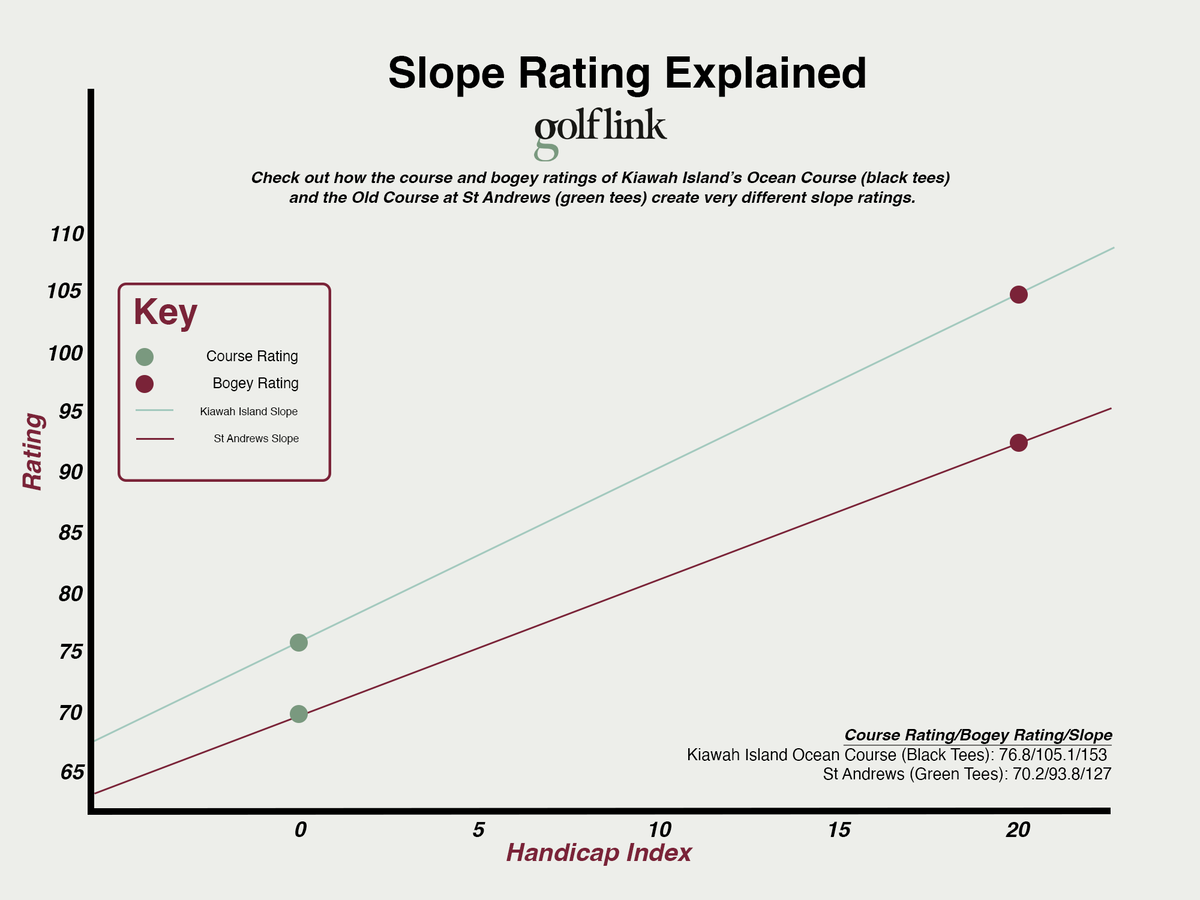
To understand the Slope Rating from a technical perspective, one must first view a golf course as a data set. Every bunker, change in elevation, and narrowing of a fairway represents a variable in a complex equation. The Slope Rating is essentially a measure of the relative difficulty of a course for a “bogey golfer” (an average player) compared to a “scratch golfer” (an elite player).
The Variables: Scratch vs. Bogey Golfers
In algorithmic terms, the Slope Rating is a “slope” of a line on a graph where the x-axis represents the skill level and the y-axis represents the predicted score. To generate this, tech-driven course raters must define two primary data points. The first is the “Course Rating,” which is the predicted score for a scratch golfer under normal conditions. The second is the “Bogey Rating,” a prediction for a player with a handicap of approximately 20.
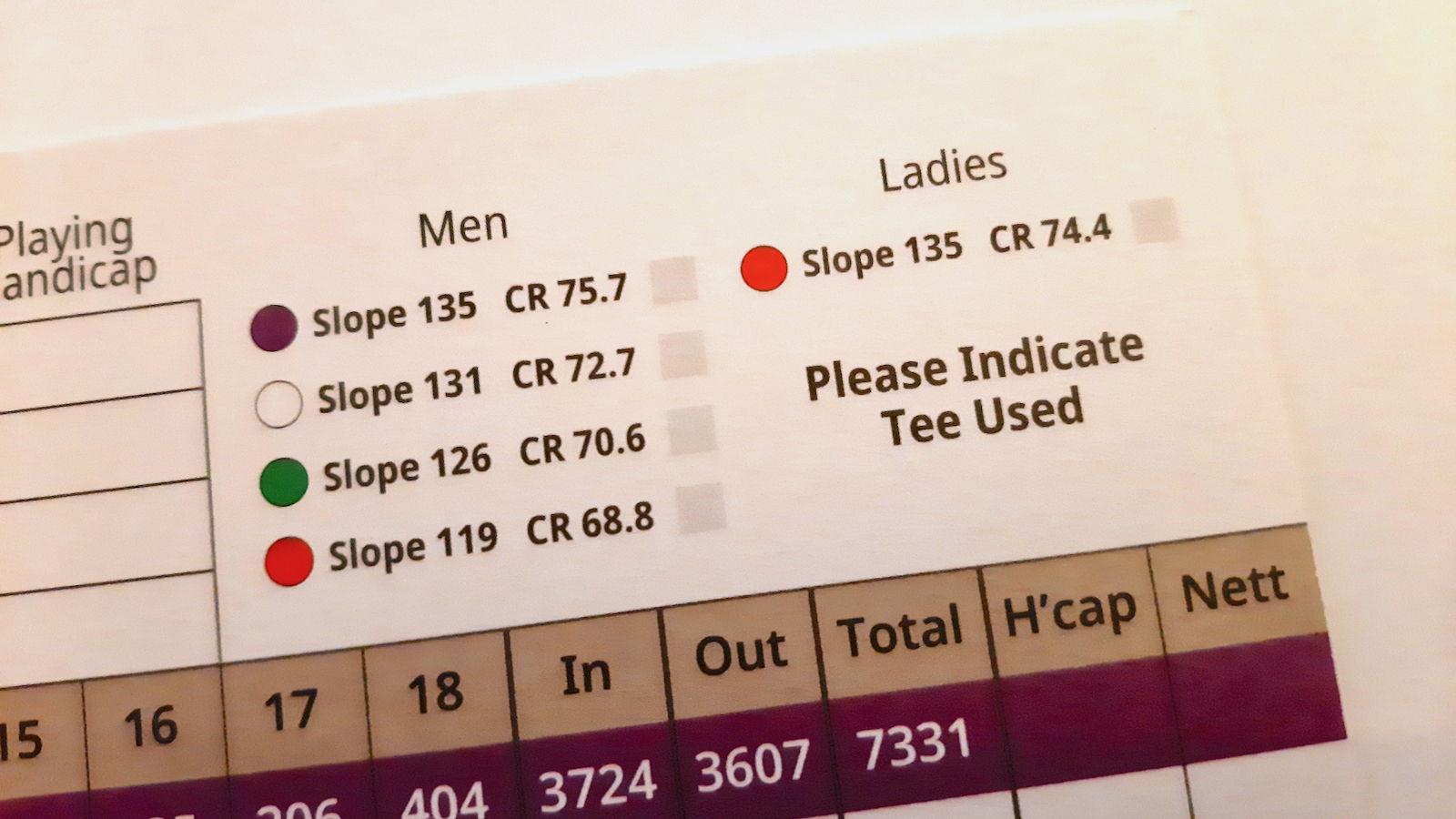
The Slope Rating is calculated using the difference between these two ratings. The standard “neutral” slope is 113. Any number higher than 113 indicates that the course becomes exponentially more difficult for the average player than for the pro. This is a classic example of non-linear scaling in performance data, where environmental obstacles (the “tech stack” of the course) disproportionately affect lower-tier users.
Processing Terrain Data: The Role of Course Rating
Before a Slope Rating can be generated, a massive amount of raw data must be processed. Raters use standardized protocols to measure “effective playing length.” This isn’t just the yardage on a map; it’s a calculated value that accounts for roll, elevation changes, wind, and forced lay-ups.
From a software engineering perspective, this is akin to stress-testing an application. Raters evaluate ten “obstacle factors” for every hole, including topography, fairway width, green target size, and the proximity of hazards. These factors are assigned numerical values, which are then fed into the USGA’s proprietary software to output the final Slope and Course Ratings.
Integrating Slope into the Digital Ecosystem: The Role of Golf Software
The transition from paper scorecards to digital platforms has made the Slope Rating more relevant than ever. Today, the Slope Rating is a key component of the “Internet of Golf,” where cloud-based systems ensure that a player’s handicap remains accurate regardless of where they play in the world.
Cloud-Based Handicap Tracking
The implementation of the World Handicap System (WHS) in 2020 represented a massive digital overhaul of the sport. Central to this system is the “Handicap Index,” a portable number calculated in the cloud. However, a player doesn’t play to their Index; they play to a “Course Handicap.”
The technology behind this calculation is seamless. When a player enters their Index into a mobile app like GHIN or Grint, the software pulls the Slope Rating and Course Rating from a centralized global database. It then executes the formula: (Handicap Index × (Slope Rating / 113)) + (Course Rating – Par). This instantaneous calculation allows for real-time adjustments, ensuring that the competitive integrity of the game is maintained through high-speed data retrieval and processing.
API Integration in Golf Apps and Wearables
The proliferation of golf technology has led to a boom in API (Application Programming Interface) usage. Companies like Garmin, Apple, and Arccos rely on accurate Slope Rating data to power their hardware. When a golfer looks at their smartwatch and sees a “plays-like” distance, the device is merging GPS telemetry with the course’s Difficulty Algorithm.
These apps use the Slope Rating as a foundational data layer. By integrating this with real-time weather APIs and internal accelerometer data, developers can provide golfers with a sophisticated UX (User Experience) that mimics having a professional caddie. The tech stack here is impressive: it involves geospatial mapping, real-time data syncing, and predictive modeling, all centered around that single Slope Rating number.

Precision Measurement: The Hardware Behind the Rating
Determining a Slope Rating is no longer a matter of a few experts walking the course with a measuring tape. It has become a high-tech operation involving specialized hardware designed for hyper-accurate environmental sensing.
Laser Rangefinders and Adaptive Slope Technology
While the official Slope Rating of a course is fixed, players use consumer-grade hardware to navigate it. Modern laser rangefinders have introduced “Slope Compensation” technology. These devices use inclinometers to measure the angle of a slope between the golfer and the pin.
Inside the rangefinder, a micro-processor calculates the hypotenuse of the triangle formed by the golfer, the target, and the ground. It then applies an algorithm—similar to the one used in course rating—to tell the player that an uphill 150-yard shot actually “plays” like 165 yards. This hardware-level application of slope physics has revolutionized club selection, turning the abstract concept of slope into actionable, real-time data.
GPS Mapping and Satellite Imagery in Course Calibration
To establish the initial rating of a course, technology such as LIDAR (Light Detection and Ranging) and high-resolution satellite imagery are often employed. LIDAR, the same technology used in autonomous vehicles, allows for the creation of 3D topographic maps of a golf course with centimeter-level accuracy.
By processing this point-cloud data, software can automatically identify the severity of undulations on a green or the steepness of a bunker face. This reduces human error in the rating process. When we talk about “Slope Rating,” we are essentially talking about the digitization of the Earth’s surface into a competitive framework.
The Future of AI in Golf Course Difficulty Assessment
As we look toward the future, Artificial Intelligence (AI) and Machine Learning (ML) are poised to take Slope Rating and difficulty assessment to the next level. We are moving from static ratings to dynamic, data-driven performance insights.
Machine Learning and Predictive Performance
Currently, a Slope Rating is a static snapshot of a course’s difficulty. However, AI can analyze millions of rounds of “shot-level data” collected by sensors in golf clubs. By training ML models on this data, golf associations could theoretically create “Dynamic Slope Ratings” that change based on current course conditions, such as green speed (measured by a Stimpmeter) or rough height.
If the data shows that 90% of bogey golfers are failing to clear a specific water hazard on a windy day, the algorithm could adjust the difficulty rating in real-time. This move toward “Big Data Golf” would allow for more granular and fair competition, mirroring the way ELO ratings function in competitive eSports and online gaming.
Virtual Reality and Digital Twins of World-Class Courses
The concept of the “Digital Twin” is gaining traction in architecture and industrial design, and golf is no exception. High-end simulators use the Slope Rating and Course Rating data to create hyper-realistic virtual versions of famous courses like Pebble Beach or St. Andrews.
In these VR environments, the physics engine must perfectly replicate the “Slope” of the real-world terrain. This requires a massive amount of compute power to ensure that the virtual ball reacts to the digital slope exactly as it would on grass. This intersection of VR technology and golf analytics allows players to “beta test” their skills against the world’s highest slope-rated courses from the comfort of their homes, further blurring the line between physical sport and digital simulation.
Conclusion: The Synergy of Sport and Software
The Slope Rating is far more than a golfing quirk; it is a sophisticated bridge between the physical world and the digital landscape. It represents the successful application of algorithms, cloud computing, and precision hardware to a sport that is centuries old. By quantifying “difficulty,” the Slope Rating allows the tech-driven golfer to engage with the game on a deeper, more analytical level.
As technology continues to evolve, our understanding of course difficulty will become even more precise. From the LIDAR drones mapping the fairways to the AI models predicting our scores, the “Slope” is a testament to how data can enhance human performance and ensure fairness in one of the world’s most complex games. Whether you are a software developer, a data analyst, or a weekend golfer, the Slope Rating is a reminder that in the modern world, even the grass beneath our feet is part of the digital frontier.
aViewFromTheCave is a participant in the Amazon Services LLC Associates Program, an affiliate advertising program designed to provide a means for sites to earn advertising fees by advertising and linking to Amazon.com. Amazon, the Amazon logo, AmazonSupply, and the AmazonSupply logo are trademarks of Amazon.com, Inc. or its affiliates. As an Amazon Associate we earn affiliate commissions from qualifying purchases.