
The release of Stardew Valley’s 1.6 update represented a significant milestone in the lifecycle of one of the most successful indie titles in gaming history. While many players focused on the new items and dialogue, the introduction of the “Green Rain” weather event serves as a masterclass in dynamic environmental design and software iteration. From a technical perspective, the Green Rain is not merely a visual filter; it is a complex state-change within the game’s engine that affects asset spawning, NPC scheduling, and global variables.
This article examines the underlying mechanics of the Green Rain, exploring how developer ConcernedApe implemented this event to refresh the game’s logic and provide a template for environmental storytelling through procedural systems.
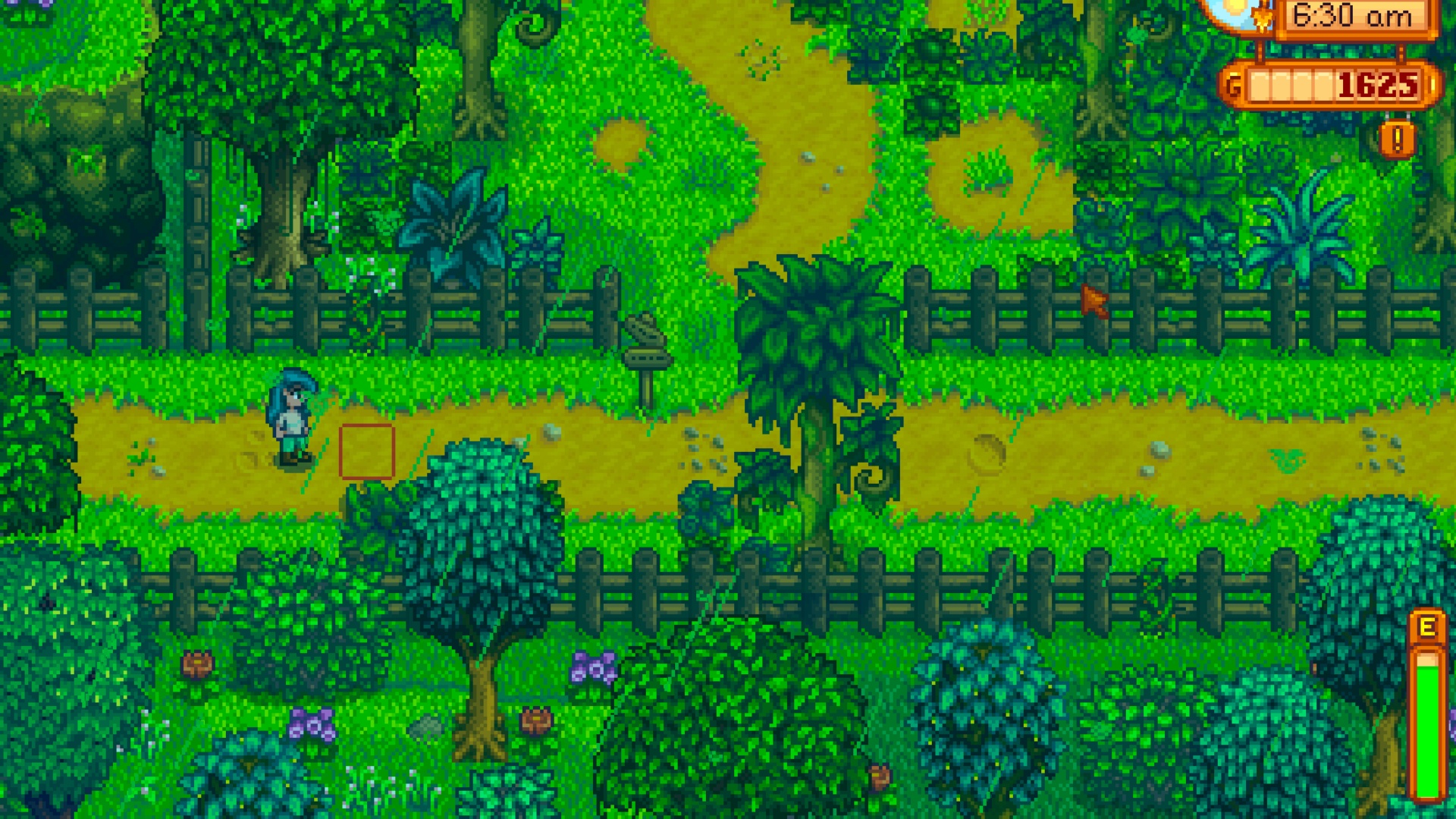
The Architecture of Environmental Overhauls in Update 1.6
The Green Rain event, which occurs exclusively during the Summer season, represents a shift in how Stardew Valley handles weather-based triggers. Historically, weather in the game followed a binary or trinary logic (sun, rain, snow, or storm). The Green Rain introduces a “World State” modification that goes beyond simple precipitation.
The Procedural Trigger System and Scheduling
The Green Rain is designed to be a rare, high-impact event. Technically, its appearance is determined by the game’s random number generator (RNG) seeded at the start of the save file, though it is scripted to occur at least once during the first Summer of a new playthrough. Unlike standard rain, which uses a simple probability check, the Green Rain requires the engine to preload a specific set of environmental overrides.
On the day preceding the rain, the weather report on the television displays “???” with a distorted green background. This is a UI-level override that signals the game engine to prepare for a “Type 4” weather state (an internal classification for special events). This advanced scheduling allows the game to modify the next day’s asset loading, ensuring that the necessary textures for mossy trees and mutated weeds are cached before the player exits the farmhouse.
Visual Shaders and Atmospheric Rendering
One of the most striking technical aspects of the Green Rain is the application of a global color overlay. In game development, achieving this without sacrificing readability is a delicate balance. Stardew Valley utilizes a custom shader that tints the entire color palette toward the green spectrum while maintaining the contrast ratios necessary for accessibility.
This isn’t just a simple layer of green transparency. The shader interacts with the game’s lighting engine, causing light sources (like torches or glow rings) to emit a sickly, neon glow. This demonstrates an evolution in the game’s rendering pipeline, allowing for more atmospheric variety without the need for entirely new tilemaps for every single location.
Analyzing the Dynamic Mutation of Game Assets
During a Green Rain event, the game’s object-spawning logic undergoes a massive shift. The primary technical purpose of this event is to distribute “Moss,” a new resource introduced in 1.6, and to temporarily alter the ecology of the valley.
The Proliferation of Moss and Fiddlehead Ferns
Moss is handled as a “secondary layer” attribute on tree objects. During the Green Rain, the growth rate for moss is accelerated by a factor of hundreds. The algorithm checks every valid tree tile on the map and applies a “mossy” state, which changes the sprite and adds a harvestable interaction.
More significantly, the Green Rain triggers the spawning of Fiddlehead Ferns outside of their traditional “Secret Woods” biome. From a technical standpoint, this is a “Global Foraging Override.” The game temporarily ignores the standard foraging tables for the Forest, Town, and Mountain maps, replacing them with a specific “Green Rain Table.” This allows players to collect rare resources in high volumes, rewarding them for interacting with the software’s altered state.
Transformation of Weeds and Trees
The most visually chaotic element of the Green Rain is the sudden appearance of “Giant Weeds” and “Mutated Trees.” These are not standard decorative objects but temporary entities that exist only for the duration of the event.
The game engine utilizes a procedural placement algorithm to fill empty tiles with these new objects. Some trees will transform into “stalk” varieties that drop large amounts of wood and moss when felled. This requires the game to temporarily swap the metadata of a tile from “Empty” or “Tree” to a “Special Event Object” ID. Once the day concludes, a cleanup script runs to revert any untouched mutated trees back into their base forms or remove them entirely, preventing the save file from being permanently cluttered with event-specific data.
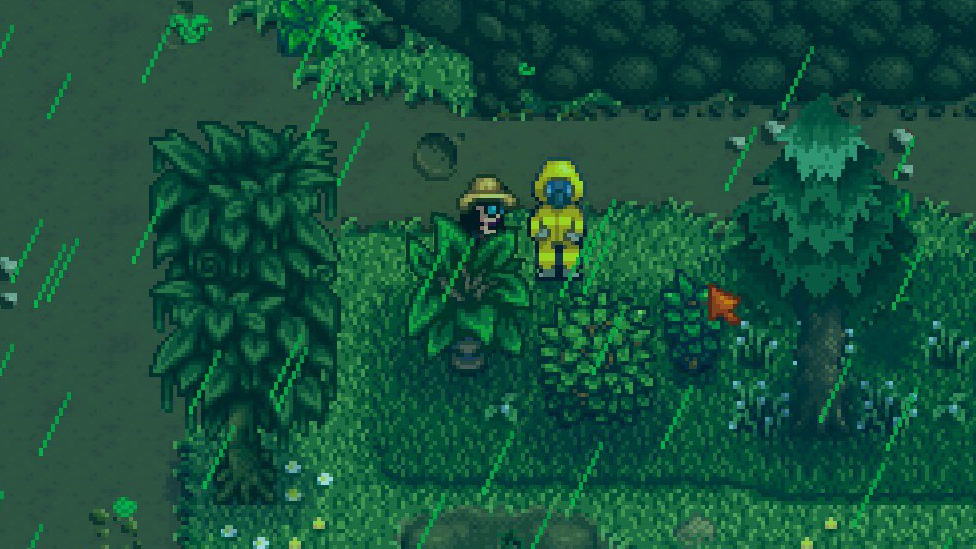
Impact on Game Logic and NPC Pathfinding
Beyond the flora, the Green Rain fundamentally alters the behavioral scripts of the inhabitants of Pelican Town. This is perhaps the most complex part of the update’s implementation, as it requires overriding the standard “Schedule” files for dozens of NPCs simultaneously.
Unique NPC Behavioral Scripts
In Stardew Valley, NPCs follow a rigid schedule defined by XNB files. On the day of the Green Rain, the game engine triggers a “Schedule Override Condition.” Most NPCs are programmed to react with confusion or fear, leading them to congregate in specific areas—most notably the Stardrop Saloon.
Technically, this is achieved through a “Weather-Based Schedule Priority.” If the weather ID equals “Green Rain,” the game ignores the NPC’s standard daily routine and jumps to a specific line of code labeled green_rain_schedule. This creates a sense of community and narrative urgency, as the player finds the town deserted except for these localized hubs. It is a highly efficient way to tell a story through AI behavior without the need for a dedicated cutscene.
Safety Protocols and Map State Changes
Because the Green Rain fills the world with rapidly growing weeds and trees, there is a risk of NPCs becoming “stuck” due to pathfinding obstructions. To combat this, the 1.6 update includes a “Destructive Pathfinding” flag for NPCs during this event. If an NPC’s path is blocked by one of the event-specific weeds, the game can either allow the NPC to walk through the object or trigger a “clearance” function that removes the obstacle.
Furthermore, certain areas of the map are flagged as “Safe Zones” where the mutated growth is restricted. This ensures that essential transition points—such as the paths to the Mines or the Blacksmith—remain functional despite the chaotic visual overhaul.
Software Longevity through Iterative Feature Deployment
The Green Rain serves as a case study in how a “live” game can be updated to maintain player interest through technical novelty. By introducing a new weather state, ConcernedApe has expanded the framework of the game without requiring a foundational rewrite of the engine.
Player Retention and the “Mystery” Variable
From a software design perspective, the Green Rain is a retention tool. By obfuscating the event on the weather report and making it a rare occurrence, the developer creates a “moment of discovery.” This encourages players to continue through the Summer season to see if they will trigger the event.
The technical implementation of “mystery” in games often involves hidden variables and unconventional UI elements. By changing the TV’s weather forecast to a static-filled green screen, the developer uses visual feedback to inform the user that the software is operating under a different set of rules, heightening the immersive experience.
The Future of Stardew’s Technical Roadmap
The success of the Green Rain event suggests a future where Stardew Valley (or its successors) could utilize even more complex environmental states. The architecture used for the Green Rain—global shaders, foraging overrides, and schedule hijacking—could be repurposed for various “World Events,” such as droughts, floods, or magical anomalies.
This modular approach to game design is what has allowed Stardew Valley to remain relevant for nearly a decade. Instead of adding static content, the developer is adding “Systems.” A system like the Green Rain is more valuable than a new item because it creates a new environment for all existing items to interact with.

Conclusion
What does the Green Rain do in Stardew Valley? On the surface, it provides a bounty of moss and a strange, atmospheric day for the player to explore. Beneath the surface, however, it is a sophisticated execution of state-management, asset mutation, and AI redirection.
By leveraging procedural spawning and schedule overrides, the 1.6 update demonstrates how technical constraints can be turned into creative features. The Green Rain is not just a weather pattern; it is a testament to the power of iterative development, proving that even a well-established game can find new life by simply changing the color of the sky and the logic of the earth.
aViewFromTheCave is a participant in the Amazon Services LLC Associates Program, an affiliate advertising program designed to provide a means for sites to earn advertising fees by advertising and linking to Amazon.com. Amazon, the Amazon logo, AmazonSupply, and the AmazonSupply logo are trademarks of Amazon.com, Inc. or its affiliates. As an Amazon Associate we earn affiliate commissions from qualifying purchases.