
In the world of international finance, cross-border investment, and global mobility, certain acronyms carry significant weight. For anyone looking toward Southern Europe—specifically Spain—the term “NIE” is perhaps the most critical piece of the financial puzzle. If you have ever asked yourself, “What does NIE mean?” you are likely standing at the threshold of a new financial venture, whether that involves purchasing property, launching a startup, or diversifying your investment portfolio in one of the Eurozone’s most vibrant economies.
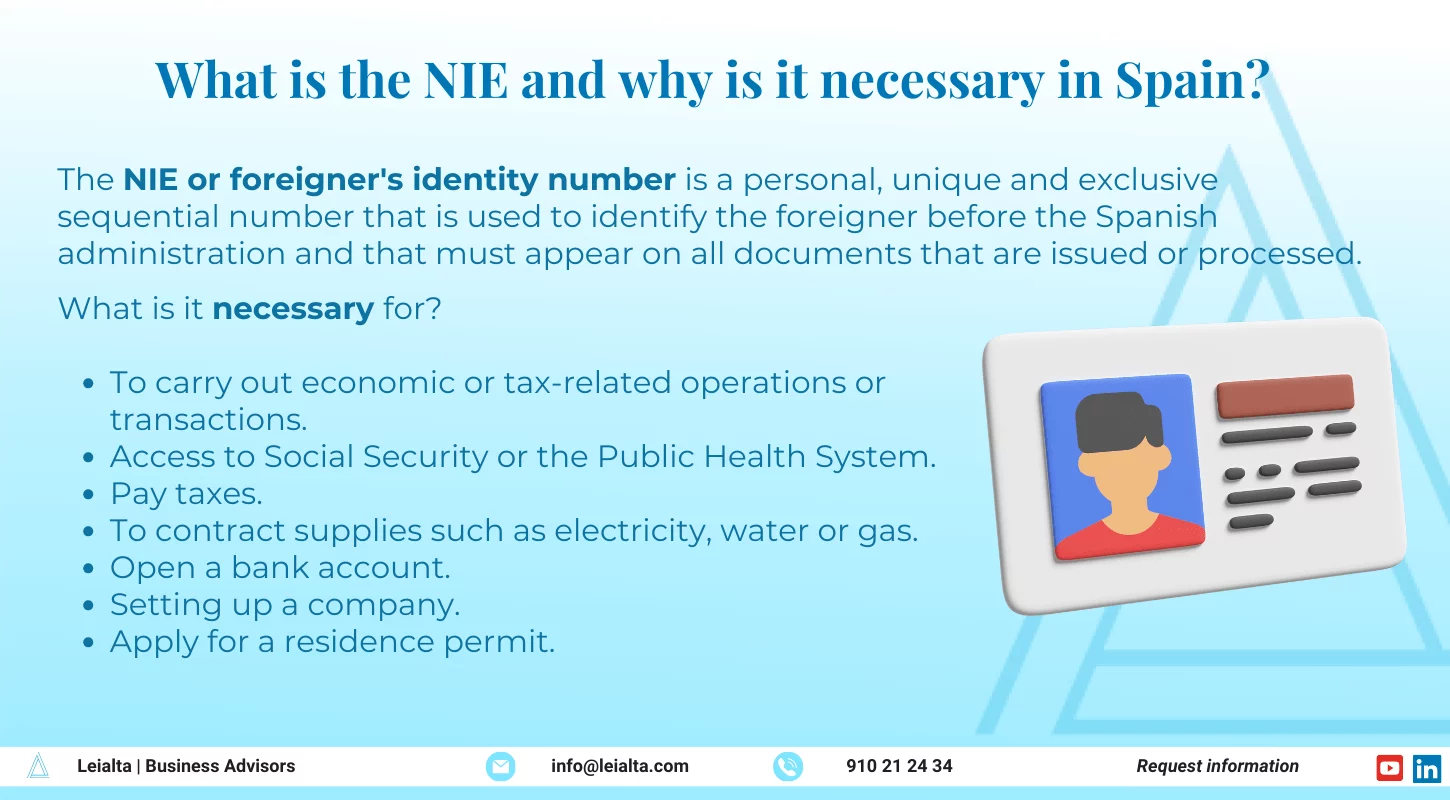
NIE stands for Número de Identidad de Extranjero, which translates to the Foreigner Identification Number. While it may look like a simple alphanumeric code on a piece of paper, it is, in fact, the master key to your economic life within the Spanish jurisdiction. It serves as your tax identification number, your social security link, and your primary identifier for every fiscal transaction you will ever conduct.
Understanding the NIE: Definition and Financial Significance
To understand the NIE, one must first view it through the lens of fiscal regulation. In many countries, a social security number or a national ID serves multiple purposes. In Spain, the system distinguishes between citizens (who hold a DNI) and foreigners. The NIE is the universal identification number assigned by the Spanish authorities to non-nationals who have economic, professional, or social interests in the country.
The Legal Framework of the Foreigner Identification Number
The NIE is regulated under the Spanish Organic Law 4/2000 and the Royal Decree 557/2011. Legally, it is a personal, unique, and exclusive number. It consists of a prefix letter (X, Y, or Z), followed by seven digits and a verification character.
From a financial perspective, the NIE is synonymous with your NIF (Número de Identificación Fiscal). This means that for the Spanish Tax Agency (Hacienda), you do not exist as a financial entity until you have been assigned this number. Without it, you cannot legally be part of the Spanish economy, even if you are not a physical resident of the country.
Why Your Financial Life Starts with a NIE
Whether you are a digital nomad, a high-net-worth investor, or a corporate entity looking to establish a subsidiary, the NIE is the baseline requirement. It is the bridge between your capital and the Spanish market. Every financial interaction—from the mundane task of setting up a utility bill to the complex process of executing a multi-million euro commercial merger—requires this identifier. It ensures transparency, allows the government to track capital flows, and prevents money laundering by ensuring that every actor in the financial system is properly accounted for.
The Economic Power of the NIE: From Banking to Real Estate
The practical application of the NIE is most visible when we look at asset acquisition and personal finance management. In the Spanish market, liquidity is only useful if it is paired with the appropriate legal identification.
Opening Bank Accounts and Accessing Financial Products
One of the first questions a financial advisor will ask an international client is whether they possess a NIE. Spanish banks are bound by strict “Know Your Customer” (KYC) and Anti-Money Laundering (AML) regulations. To open a resident or non-resident bank account, the NIE is mandatory.
Once the account is open, the NIE becomes the anchor for all other financial products. If you wish to apply for a mortgage, take out an insurance policy, or invest in Spanish stocks and bonds, the financial institution will use your NIE to report your activities to the Bank of Spain and the tax authorities. Without it, you are effectively locked out of the local banking system, making it impossible to manage local expenses or receive income from Spanish sources.
Real Estate Investment and the Property Registry
For many, the NIE is the first step toward a significant real estate investment. Spain remains a top destination for international property buyers. However, the process of buying a home involves several fiscal checkpoints.
To sign a deed of sale (Escritura) before a notary, both the buyer and the seller must provide their tax identification numbers. Furthermore, to pay the associated taxes—such as the ITP (Impuesto de Transmisiones Patrimoniales) for resale properties or VAT (IVA) for new builds—the buyer must have a NIE. Finally, the Land Registry (Registro de la Propiedad) will not record the change of ownership unless the foreign buyer is correctly identified via their NIE. In short: no NIE, no property.
Tax Obligations and Compliance
Owning assets in a foreign country inevitably leads to tax obligations. The NIE is the tool used to file your tax returns. If you own property but do not live in Spain, you are liable for the Non-Resident Income Tax (IRNR). If you become a resident, the NIE identifies you for your annual Personal Income Tax (IRPF) filings.
The financial significance here is profound. Efficient tax planning depends on the correct registration of your NIE with the Agencia Tributaria. It allows you to benefit from double taxation humors between Spain and your home country, ensuring that your global wealth is managed legally and efficiently.
Business Finance and Entrepreneurship with a NIE
Beyond personal assets, the NIE is the cornerstone of corporate finance and entrepreneurship for foreigners in Spain. The country has become a hub for tech startups and international business hubs, but the entry point remains the same.
Starting a Company (SL) as a Non-Resident
If you intend to incorporate a Spanish company, such as a Sociedad Limitada (SL), the NIE is the first hurdle. As a director or a shareholder of a Spanish entity, you must have a NIE to sign the incorporation papers.
From a business finance perspective, the NIE of the founders is linked to the company’s CIF (Código de Identificación Fiscal). This connection is vital for obtaining a corporate bank account, securing business loans, and interacting with the Social Security system if the company plans to hire employees. For international investors, the NIE provides the legal standing necessary to exercise their rights as shareholders and to receive dividends.
Freelancing and the Autónomo System
The “gig economy” and the rise of remote work have led thousands of professionals to register as freelancers (Autónomos) in Spain. To do this, one must possess a NIE to register with both the tax office and the Social Security Treasury (Tesorería General de la Seguridad Social).
The NIE allows the freelancer to issue invoices, deduct business expenses, and contribute to the pension system. In this context, the NIE is not just an ID; it is a license to generate revenue and build a professional financial history within the European Union.
Navigating the Acquisition Process: A Strategic Approach
Understanding what a NIE is only solves half the problem; the other half is the strategic acquisition of the number to facilitate your financial goals.
Resident vs. Non-Resident NIE
There is a common misconception that a NIE is the same as a residency permit. This is incorrect. A “Non-Resident NIE” is simply a tax number for those who do not plan to live in Spain for more than 183 days a year but have financial interests there. A “Resident NIE” (often associated with the TIE card for non-EU citizens or the green certificate for EU citizens) implies that the holder is a tax resident in Spain.
Choosing the right path is a major financial decision. Tax residency triggers “World Wide Income” taxation, meaning Spain will tax you on your global assets. Investors must consult with financial experts to determine how their NIE application aligns with their broader tax strategy.
Documentation and the Gestoria Advantage
The process of obtaining a NIE involves navigating Spanish bureaucracy, which can be notoriously complex. It requires an application form (EX-15), a valid passport, and proof of why you need the number (such as a property deposit contract, a business plan, or a job offer).
Many high-level investors utilize a Gestoria—a professional firm specializing in administrative and financial consultancy. From a money-management perspective, hiring a professional to handle the NIE application is an investment in time and “opportunity cost.” It ensures that no errors are made that could delay a time-sensitive real estate closing or a business acquisition.
Managing Your Digital Financial Identity
In the modern era, the NIE has evolved from a paper certificate into a digital identity. This transition has significant implications for how individuals manage their wealth and financial security.
Digital Certificates and Online Financial Security
Once you have a NIE, you can obtain a Certificado Digital. This is an electronic file that authenticates your identity online. In the realm of finance, this tool is invaluable. It allows you to access your tax records, pay taxes, and sign legal documents electronically from anywhere in the world.
This digital integration reduces the friction of international money management. It allows an investor in New York or London to manage their Spanish fiscal obligations with the same ease as their local ones, provided they have their NIE-linked digital certificate.
Future-Proofing Your International Financial Profile
The NIE is permanent. Even if you sell your Spanish assets and move elsewhere, that number remains assigned to you for life. As global financial transparency increases through initiatives like the Common Reporting Standard (CRS), having a clear, well-managed financial identity in every jurisdiction where you hold assets is vital.
Your NIE is a record of your financial footprint in Spain. Maintaining a “clean” record—paying taxes on time and keeping your information updated—is essential for your future creditworthiness and your ability to move capital freely across borders.
Conclusion
So, what does NIE mean? While it literally stands for a foreigner’s ID number, its true meaning is much deeper. In the context of money, investment, and business, the NIE is your fiscal passport. It is the bridge between international capital and Spanish opportunity.
Whether you are seeking the lifestyle benefits of a Mediterranean villa, the high returns of the Spanish real estate market, or the professional growth of a European startup, the NIE is your first and most important investment. By understanding its power, navigating its acquisition strategically, and using it to manage your taxes and banking, you set the foundation for long-term financial success in one of the world’s most attractive economic landscapes.
aViewFromTheCave is a participant in the Amazon Services LLC Associates Program, an affiliate advertising program designed to provide a means for sites to earn advertising fees by advertising and linking to Amazon.com. Amazon, the Amazon logo, AmazonSupply, and the AmazonSupply logo are trademarks of Amazon.com, Inc. or its affiliates. As an Amazon Associate we earn affiliate commissions from qualifying purchases.