
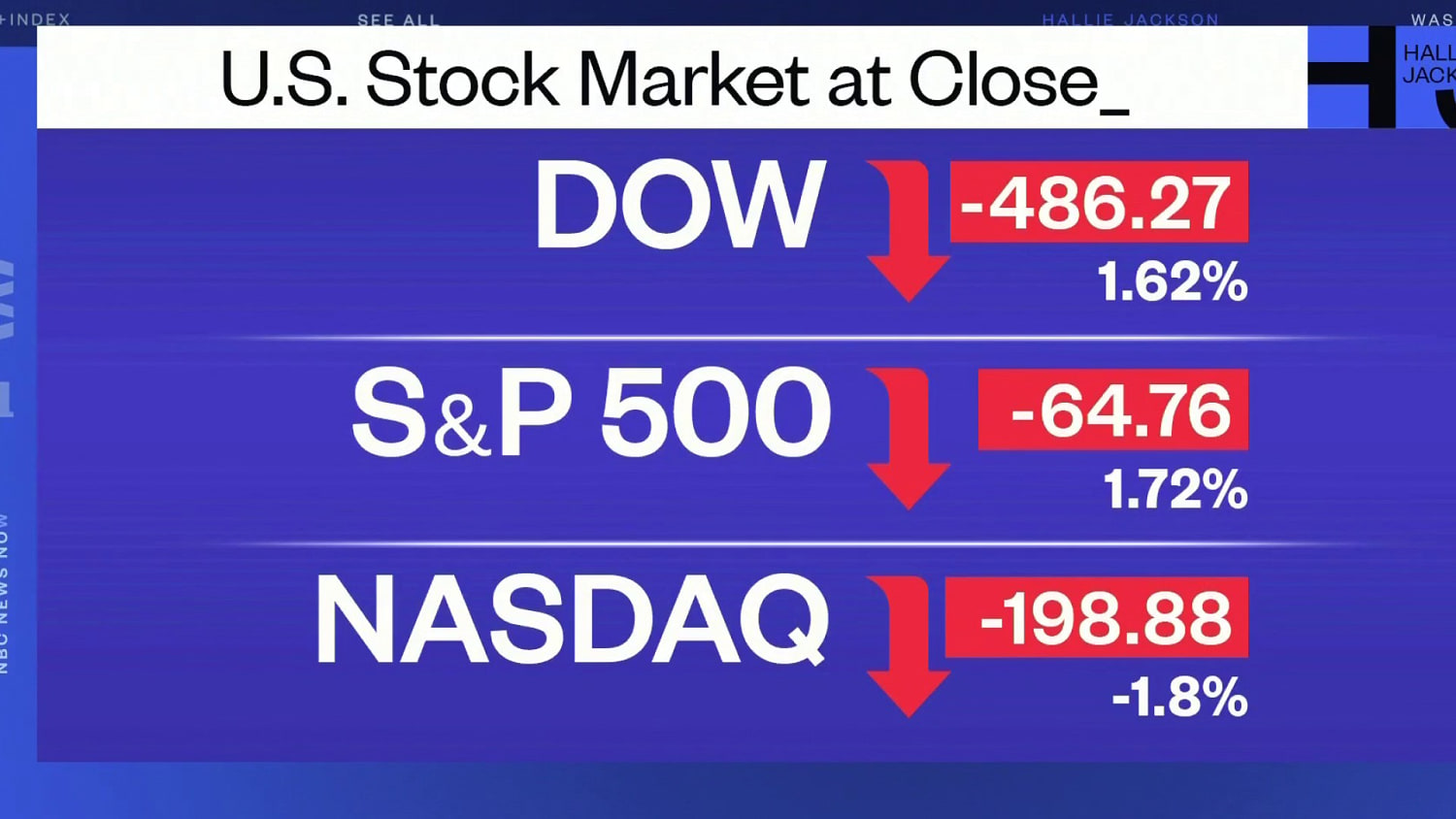
For many, the first question asked at the end of a trading day is, “What did the Dow Jones close at today?” This single number, broadcast across news tickers and financial websites worldwide, serves as the most recognized shorthand for the health of the American economy. While the Dow Jones Industrial Average (DJIA) represents only 30 of the thousands of publicly traded companies, its closing price is more than just a digit; it is a reflection of investor sentiment, corporate health, and macroeconomic stability.
To truly understand the significance of today’s closing price, one must look beyond the immediate green or red arrows. Understanding how this index is calculated, what moves it, and how it fits into a broader personal finance strategy is essential for any modern investor.

The Mechanics of the Dow Jones Industrial Average
The Dow Jones Industrial Average is the oldest continuous barometer of the US equity market. Established by Charles Dow in 1896, it began as a simple average of twelve industrial companies. Today, it has evolved into a sophisticated, though often debated, price-weighted index consisting of 30 “blue-chip” companies that are leaders in their respective industries.
Price-Weighting vs. Market-Cap Weighting
One of the most critical aspects of the Dow’s daily closing price is its methodology. Unlike the S&P 500 or the Nasdaq, which are market-capitalization-weighted (where the size of the company determines its influence), the Dow is price-weighted. This means that companies with higher share prices have a greater impact on the index’s movement than those with lower share prices, regardless of the company’s actual total valuation.
For example, if a company trading at $200 per share sees a 1% increase, it will push the Dow higher than a company trading at $50 per share seeing the same 1% increase. This quirk is why financial analysts often look at multiple indices to get a full picture of the market, but the Dow remains the psychological anchor for the general public.
The Role of the Dow Divisor
When you see the Dow close up 300 points, it doesn’t mean the 30 component stocks added 300 dollars to their combined share prices. Instead, the total sum of the prices is divided by the “Dow Divisor.” This divisor is a mathematical constant that accounts for stock splits, dividends, and other structural changes in the component companies. It ensures that the index remains consistent over time, providing a historical continuum that allows us to compare today’s close to the market conditions of decades ago.
Drivers Behind Today’s Closing Price
When the closing bell rings at 4:00 PM EST, the final number is the result of millions of trades influenced by a complex web of global events. If you are looking at today’s closing price and wondering why it moved the way it did, the answers usually lie in three specific areas: interest rates, corporate earnings, and geopolitical stability.
The Federal Reserve and Interest Rate Sentiment
In the current financial climate, the Federal Reserve is perhaps the most significant driver of the Dow’s daily performance. The “close” is often a direct reaction to the Fed’s stance on inflation and interest rates. Higher interest rates typically lead to a lower closing price for the Dow because they increase borrowing costs for corporations and make fixed-income assets, like bonds, more attractive relative to stocks. Conversely, a “dovish” Fed that suggests rate cuts can send the Dow soaring as investors anticipate cheaper capital and higher corporate profits.
Earnings Season and Individual Component Impact
Because the Dow only tracks 30 companies, a major earnings miss or beat by just one or two members can significantly sway the daily closing price. During earnings season, investors watch reports from heavyweights like UnitedHealth Group, Goldman Sachs, or Microsoft. If a high-priced component reports record-breaking profits, the Dow may close in the green even if the broader market is struggling. This “concentration risk” is a hallmark of the Dow and is why the daily closing number is often described as a snapshot of corporate America’s elite.

Geopolitical Events and Market Volatility
Markets hate uncertainty. Today’s closing price is often a barometer of global stability. From trade negotiations and oil supply shifts to international conflicts, the Dow reacts instantaneously to news. A sudden dip at the close can often be traced back to a breaking news headline that forces institutional investors to hedge their bets and move toward “safe-haven” assets.
How to Interpret Daily Market Fluctuations
For the individual investor, seeing the Dow Jones close down 1% or 2% can be a source of anxiety. However, professional financial management requires a more nuanced interpretation of these daily fluctuations. A “bad day” on the Dow does not necessarily equate to a failing investment strategy.
Distinguishing Volatility from Trend
It is essential to distinguish between daily volatility and a long-term trend. The Dow Jones closing price is a “noisy” data point. On any given day, the index can swing hundreds of points based on a single rumor or a minor economic report. Insightful investors look at the moving averages—such as the 50-day or 200-day moving average—to see if the current closing price represents a temporary blip or a fundamental shift in the market’s direction.
The Danger of Emotional Reactivity
The closing price is often used by media outlets to create a sense of urgency. “Dow Plunges” or “Dow Hits Record High” make for compelling headlines, but they can lead to emotional trading. Financial history shows that investors who react impulsively to the daily closing price often “sell low and buy high,” eroding their long-term wealth. Understanding that the Dow is a long-term growth engine allows investors to view a low closing price as a potential buying opportunity rather than a signal to exit the market.
Strategic Investing: Beyond the Daily Number
While “what did the Dow close at today” is a valid question, the more important question for your personal finance is: “How does today’s close affect my long-term goals?” Building wealth requires moving beyond the obsession with daily ticks and focusing on structural investment principles.
The Role of Index Funds and ETFs
For most individuals, the best way to interact with the Dow is through Exchange-Traded Funds (ETFs) that track the index, such as the SPDR Dow Jones Industrial Average ETF Trust (DIA). By owning the “Diamonds,” as they are known, you are effectively buying into the 30 most established companies in the US. This provides a level of stability that smaller-cap stocks cannot offer. While the Dow may not offer the explosive growth of a tech startup, its components are usually dividend-paying giants that provide a steady income stream even when the closing price is stagnant.
Diversification: Looking Past the Dow
While the Dow is an excellent indicator of “Big Business,” it lacks representation in many high-growth sectors and international markets. A sound financial strategy uses the Dow as one pillar of a diversified portfolio. By combining Dow-tracking assets with international equities, emerging tech, and fixed-income securities, you insulate yourself from the specific risks associated with the 30 companies in the index. When the Dow closes down because of a specific industrial slump, your other assets may hold steady, preserving your capital.
Long-Term Wealth Building vs. Market Timing
The closing price of the Dow today is ultimately a distraction if your goal is retirement twenty years from now. Market timing—the attempt to predict the Dow’s close to buy or sell—is a losing game for the vast majority of participants. Instead, wealth is built through time in the market. Consistent contributions (dollar-cost averaging) ensure that you are buying more shares when the Dow closes lower and fewer when it closes higher, naturally optimizing your cost basis over decades.
Conclusion: The Big Picture of the Dow Close
When we ask what the Dow Jones closed at today, we are seeking a sense of orientation in a complex financial world. The number provides a simplified summary of the day’s collective economic wisdom. However, the true value of the Dow lies not in its daily closing price, but in its ability to reflect the enduring resilience of the American corporate landscape.
For the savvy investor, today’s close is just one page in a very long book. Whether the market ends in the green or the red, the principles of disciplined investing, diversification, and a focus on long-term value remain the most effective tools for achieving financial independence. The Dow will continue to fluctuate, but those who understand the mechanics and the “why” behind the numbers will always be better positioned to navigate the path to prosperity.
aViewFromTheCave is a participant in the Amazon Services LLC Associates Program, an affiliate advertising program designed to provide a means for sites to earn advertising fees by advertising and linking to Amazon.com. Amazon, the Amazon logo, AmazonSupply, and the AmazonSupply logo are trademarks of Amazon.com, Inc. or its affiliates. As an Amazon Associate we earn affiliate commissions from qualifying purchases.