
In the rapidly evolving landscape of digital culture, words often act as gatekeepers of relevance. For brand managers, marketing executives, and creative directors, understanding these linguistic shifts is not merely a matter of staying “hip”—it is a matter of maintaining brand equity and avoiding the fatal kiss of obsolescence. One such term that has reshaped the way companies approach visual identity and consumer engagement is “cheugy.”
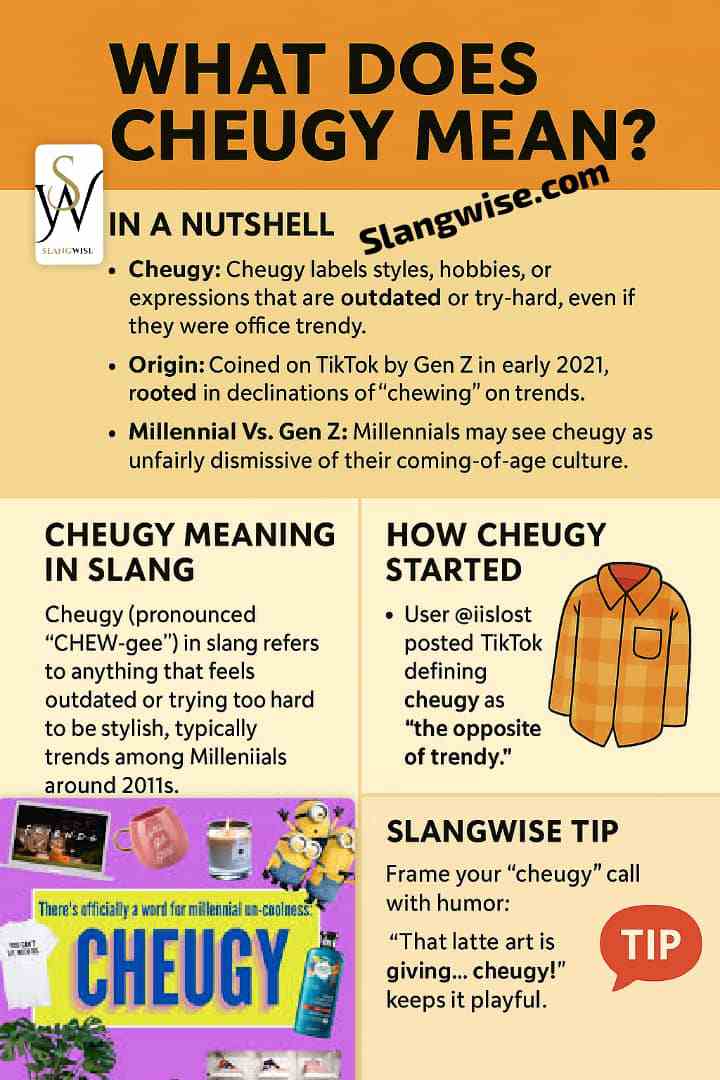
Originally coined to describe a specific aesthetic that is slightly off-trend or “trying too hard,” cheugy has become a diagnostic tool for brand health in the 2020s. To understand what cheugy means in slang is to understand the lifecycle of a brand and the precarious line between a timeless classic and a dated relic.
The Anatomy of Cheugy: Why Brands Fail the Modern Vibe Check
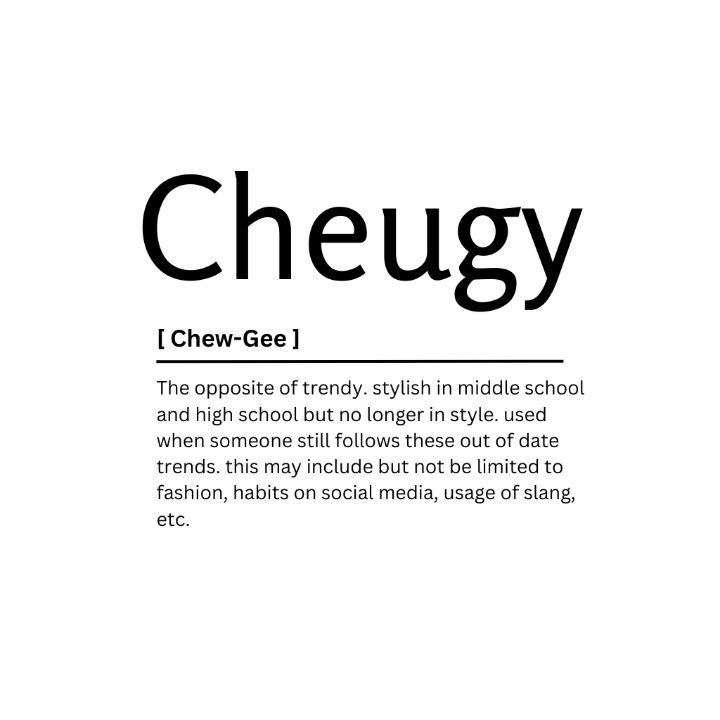
At its core, “cheugy” (pronounced chew-gee) describes an aesthetic that was popular a few years ago but has since lost its edge. It is not quite “vintage” and not quite “ugly”; rather, it is characterized by a lack of original thought and an over-reliance on mass-market trends that have reached their saturation point. In the context of brand strategy, being labeled cheugy is a warning sign that a brand’s visual language is no longer resonating with the influential Gen Z and Alpha demographics.
The Visual Language of the Outdated
For a brand, cheuginess often manifests in its design choices. Think of the “Millennial Pink” era, the over-saturation of succulent-themed office decor, or the ubiquitous use of “Live, Laugh, Love” style script fonts. These elements were once the height of sophisticated, direct-to-consumer (DTC) branding. However, as these tropes were adopted by every mid-tier suburban retailer, they lost their exclusivity and their “cool factor.”
When a brand clings to these visual markers long after the cultural vanguard has moved on, it signals a lack of agility. Professional branding requires a keen eye for semiotics; if your logo or packaging relies on design trends that peaked in 2015, you are inadvertently communicating that your product is also stuck in the past.
The Psychology of the “Try-Hard” Brand
Perhaps the most damaging aspect of the cheugy label is the perception of “trying too hard.” Authenticity is the primary currency of modern marketing. A brand becomes cheugy when its attempts to appear trendy feel forced or performative. This often happens when corporate entities try to adopt slang or internet memes without a deep understanding of the subcultures that created them. This disconnect creates a “cringe” response in the consumer, leading to a loss of brand trust. Strategic branding requires a balance between being current and being authentic to the brand’s core identity.
Brand Longevity vs. Viral Obsolescence
The rise of the “cheugy” critique highlights a broader challenge in corporate identity: the shrinking lifecycle of trends. In the past, a brand identity could remain untouched for a decade. Today, the digital zeitgeist moves at the speed of a TikTok scroll. Brands must now decide whether to chase micro-trends or invest in a timeless identity that is “cheugy-proof.”
Avoiding the “Cool Mom” Marketing Trap
There is a specific phenomenon in brand strategy where a legacy brand attempts to “de-age” itself by mimicking the behavior of younger consumers. In slang terms, this is often compared to the “Cool Mom” character from Mean Girls—someone desperately trying to fit in but failing because the effort is too visible.
To avoid this, brand strategists must focus on “values-based” branding rather than “vibe-based” branding. While vibes are ephemeral and easily become cheugy, values are foundational. A brand that stands for sustainability, transparency, or high-quality craft remains relevant regardless of whether they use the right font on their Instagram Stories.
The Shelf Life of Micro-Trends
We are currently living in an era of “cores”—Cottagecore, Barbiecore, Gorpcore. While these micro-trends offer short-term marketing opportunities, they are also factories for cheuginess. A brand that pivots its entire identity to capitalize on a viral aesthetic risks becoming a punchline six months later.

Strategic brand management involves identifying the difference between a fundamental shift in consumer behavior and a passing aesthetic fad. For example, the shift toward “Quiet Luxury” (minimalism, high-quality materials, no logos) is a reaction to the loud, logo-heavy cheuginess of the late 2010s. Brands that recognized this shift early were able to reposition themselves as premium and timeless.
Strategic Rebranding in the Post-Cheugy Era
When a brand realizes it has fallen into the cheugy category, the solution is rarely a superficial makeover. It requires a deep dive into corporate identity and a willingness to shed the “safe” choices that led to the stagnation. Rebranding for the modern era involves moving away from the generic and toward the specific.
Minimalism and Subtlety as Defensive Strategies
One of the most effective ways to combat the cheugy label is through strategic reduction. Cheuginess is often “loud”—it features too many slogans, too much glitter, and too much obvious branding. By moving toward a more minimalist aesthetic, brands can create a “blank canvas” that allows the consumer to project their own sense of style onto the product.
This is why we see high-end fashion houses and tech companies moving toward “sans-serif” logos and neutral color palettes. While some critics argue this leads to “blanding,” from a strategic standpoint, it is a defensive move to ensure the brand does not date itself too quickly.
Listening to the Digital Zeitgeist without Mimicry
The goal of a modern brand should not be to speak the slang of the youth, but to understand the sentiment behind it. If “cheugy” is a rejection of mass-produced, unoriginal consumerism, then the brand response should be to emphasize uniqueness, heritage, or bespoke experiences.
Brand social listening tools should be used to monitor these shifts. However, the insight gained should be used to inform product development and high-level strategy, not just to write “trendy” tweets. A brand that understands the “why” behind the slang can innovate; a brand that only understands the “what” will always be one step behind.
Turning “Cheug” into a Brand Asset: The Power of Irony and Nostalgia
Interestingly, the lifecycle of slang suggests that what is cheugy today may become “vintage” or “retro” tomorrow. Some brands have successfully navigated the cheugy critique by leaning into it with a sense of irony or by reclaiming their “uncool” status as a mark of reliability.
The “Ugly-Cool” Rebrand
Brands like Crocs or Birkenstock were, at various points, the epitome of cheugy or even “anti-fashion.” However, by leaning into their specific, polarizing aesthetic and focusing on functional excellence, they transformed from “dad shoes” into high-fashion collaborations. This teaches us that a brand doesn’t always need to be “cool” in the traditional sense; it just needs to be distinctive.
Leveraging Nostalgia for Brand Equity
As the 20-year trend cycle continues to accelerate, the “Millennial” aesthetics that are currently considered cheugy will eventually become nostalgic. Strategic brands can prepare for this by archiving their classic assets and waiting for the right moment to reintroduce them as “heritage” pieces. The key is the transition from “outdated” to “iconic.”
Conclusion: Agility as the Ultimate Brand Virtue
Understanding what cheugy means in slang is a masterclass in modern brand survival. It reveals the thin line between being a household name and being a cultural footnote. For brands to thrive in this environment, they must prioritize agility, authenticity, and a deep-seated understanding of their own DNA.
In a world where consumers can deconstruct a brand’s entire identity with a single word, the most successful companies will be those that don’t just follow the trend, but those that understand the cultural forces driving the trend. By avoiding the pitfalls of “try-hard” marketing and generic design, brands can transcend the label of cheugy and achieve a state of permanent relevance. The goal is not to be trendy; the goal is to be indispensable.
aViewFromTheCave is a participant in the Amazon Services LLC Associates Program, an affiliate advertising program designed to provide a means for sites to earn advertising fees by advertising and linking to Amazon.com. Amazon, the Amazon logo, AmazonSupply, and the AmazonSupply logo are trademarks of Amazon.com, Inc. or its affiliates. As an Amazon Associate we earn affiliate commissions from qualifying purchases.