
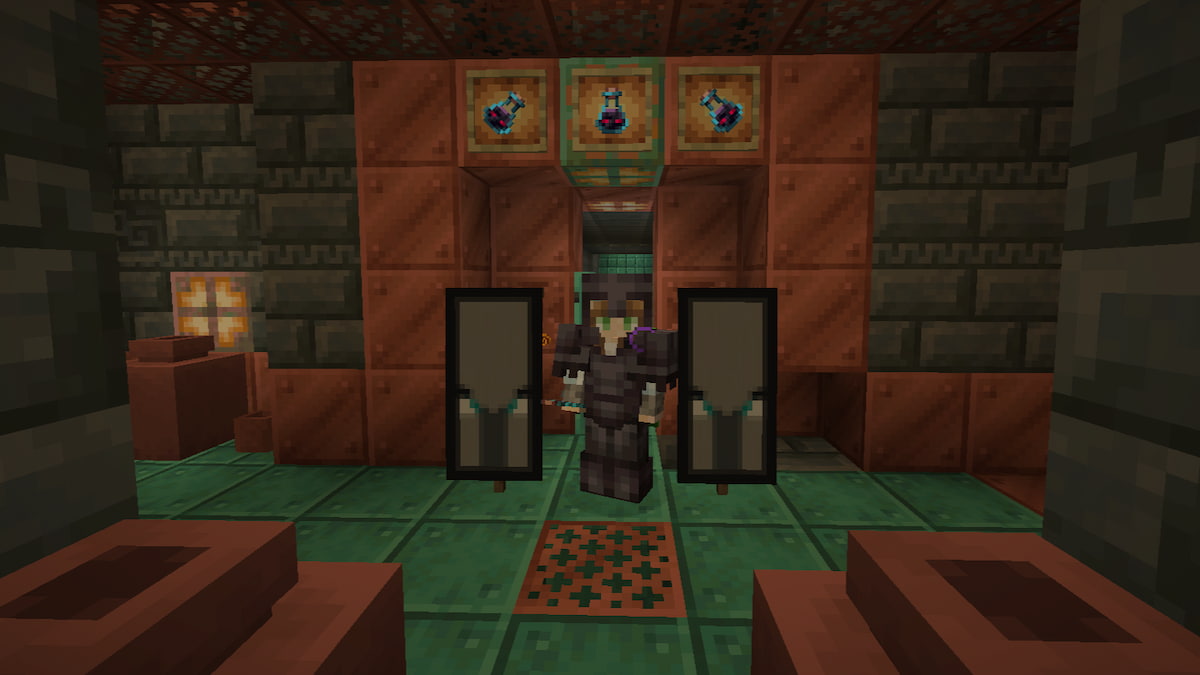
The evolution of Minecraft as a premier sandbox software platform has always been defined by its ability to balance player agency with environmental challenge. With the release of the 1.21 update, titled “Tricky Trials,” Mojang Studios introduced a fundamental shift in how players interact with high-risk scenarios. At the heart of this mechanical overhaul is the Ominous Bottle—a consumable item that has redefined the “Bad Omen” status effect and changed the way technical players approach raids and the new Trial Chambers.
In previous iterations of the game, the Bad Omen effect was an almost involuntary consequence of killing a Pillager Captain. Today, the Ominous Bottle represents a transition toward a more modular, player-driven experience. Understanding what this bottle does requires a deep dive into the technical mechanics of the 1.21 update, the structural logic of Trial Chambers, and the strategic implications of the newly tiered omen system.
The Evolution of Game Mechanics: From Passive Effects to Consumable Logic
The introduction of the Ominous Bottle marks a significant departure from Minecraft’s legacy “Bad Omen” mechanics. For years, the Bad Omen effect was applied instantly to any player who defeated a Raid Captain (a Pillager carrying an Ominous Banner). This often led to “accidental raids,” where a player would return to their village or base only to trigger a high-intensity combat event they were unprepared for.
Decoupling Effects from Mob Logic
From a software design perspective, Mojang moved the trigger for the Bad Omen effect from a death event (killing a mob) to a player-initiated action (consuming an item). When a player kills a Raid Captain now, the mob drops an Ominous Bottle rather than applying the effect directly. This change gives the player complete control over when—and if—the challenge begins. This shift aligns with modern game design philosophies that prioritize player intent and reduce “punishing” mechanics that occur outside of a user’s direct choice.
The Rarity and Tier System of Ominous Bottles
The Ominous Bottle is not a monolithic item; it exists in five distinct tiers, labeled I through V. Each tier dictates the intensity and duration of the Bad Omen effect.
- Tier I: Lasts for 1 hour and 40 minutes, providing the baseline challenge level.
- Tier V: The highest difficulty, typically reserved for players with end-game gear, significantly amplifying the difficulty of the resulting Trial or Raid.
These bottles can be found in Vaults within Trial Chambers or as drops from Raid Captains outside of those structures. This tiered system adds a layer of depth to resource management, as players must decide whether to consume a lower-tier bottle for a safer run or risk a Tier V bottle for superior rewards.
Technical Breakdown: How the Ominous Bottle Interacts with World Logic
When a player consumes an Ominous Bottle, the game applies the “Bad Omen” status effect. However, the functionality of this effect has been split into two distinct paths depending on the player’s location. This branching logic is a sophisticated piece of world-state programming that allows a single item to serve two very different gameplay purposes.
Activating the Bad Omen Effect
Once consumed, the Bad Omen effect remains dormant on the player for its specified duration. Unlike traditional potions, the Ominous Bottle does not provide a buff; it serves as a “key” to unlock harder versions of existing content. The game constantly checks the player’s coordinates against defined structures (Villages and Trial Chambers) to determine if the Bad Omen should mutate into a more specific event trigger.
Transitioning to Trial Omens and Raid Omens
The true power of the Ominous Bottle is revealed through its transformation:
- The Raid Omen: If a player with Bad Omen enters the boundaries of a village, the effect transforms into a “Raid Omen.” A countdown timer begins, giving the player a brief window to leave the area or prepare for a multi-wave assault by Illagers.
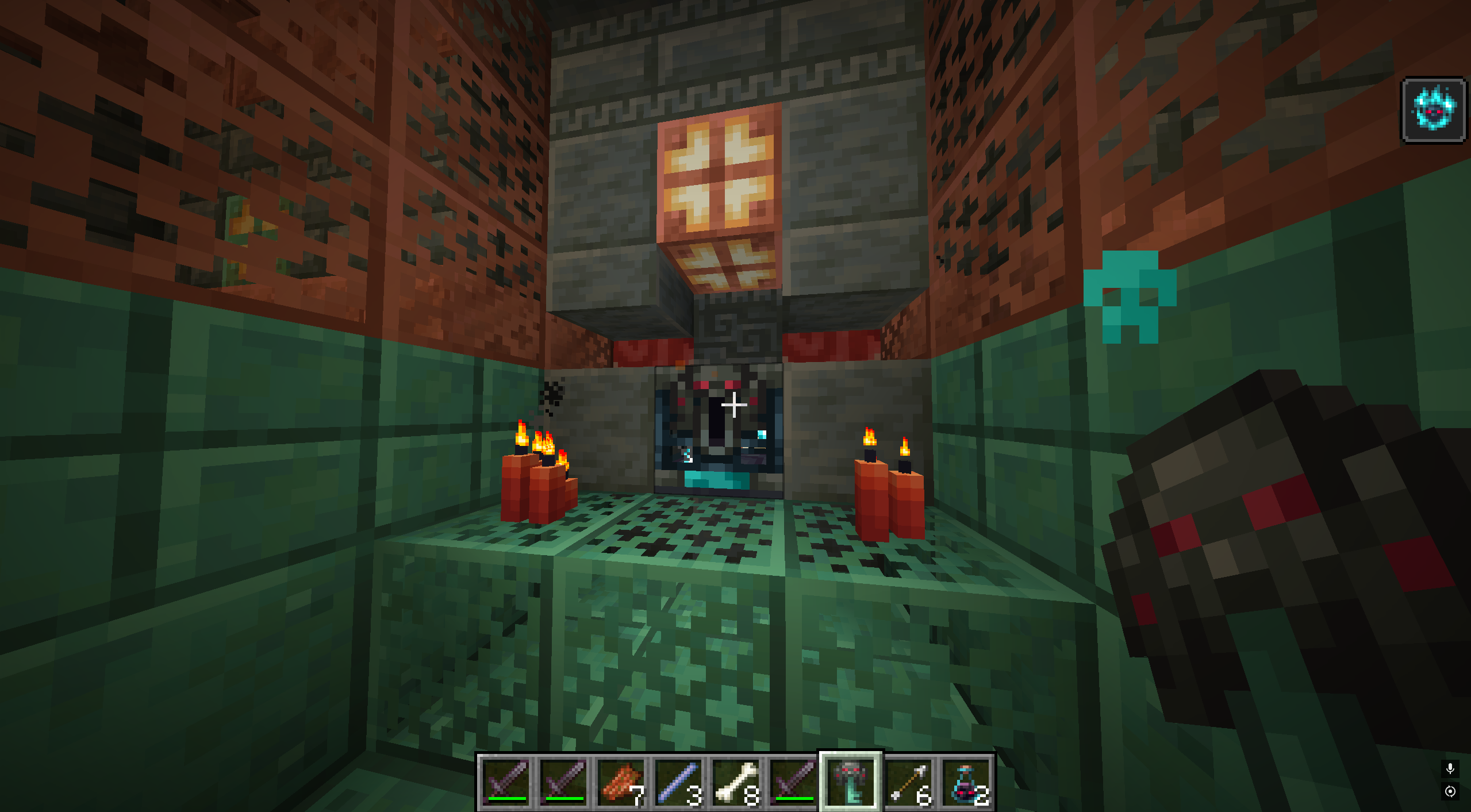
- The Trial Omen: If a player enters a Trial Chamber (a new underground procedurally generated structure) with the Bad Omen effect, it transforms into a “Trial Omen.” This specific state tells the game’s “Trial Spawner” blocks to switch to “Ominous” mode.
This dual-purpose logic allows Mojang to condense multiple difficulty-scaling mechanics into a single inventory item, streamlining the user experience while increasing the technical complexity of the world’s response to the player.
Exploring the Trial Chambers: A New Frontier in Procedural Generation
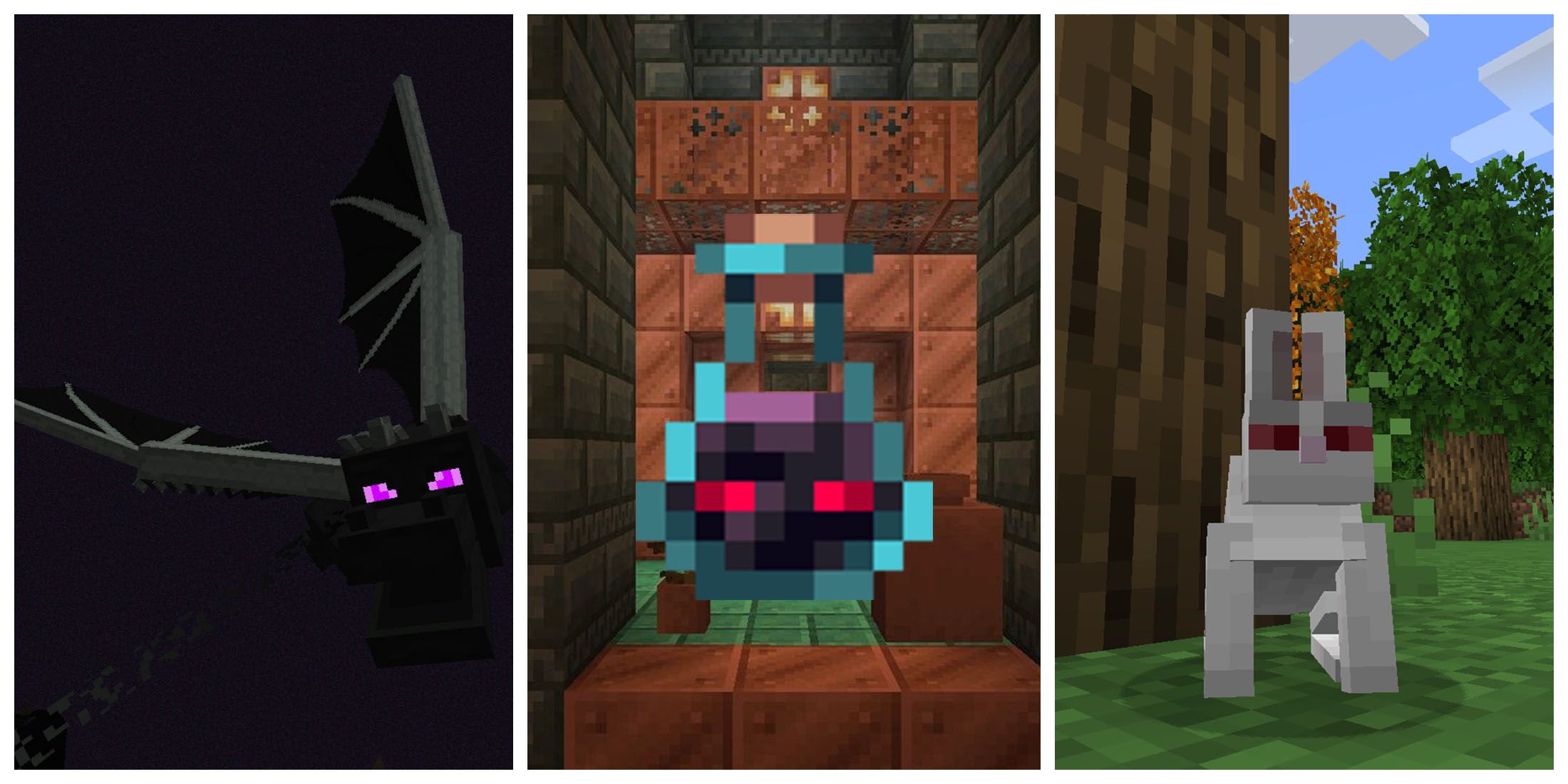
The primary environment where the Ominous Bottle shines is the Trial Chamber. These structures are a masterclass in procedural generation, designed to test combat skills through a series of “Trial Spawners.” When the Ominous Bottle is used to trigger a Trial Omen, the entire structure reacts, changing the rewards and the risks.
The Mechanics of Ominous Trial Spawners
Standard Trial Spawners generate mobs based on the number of players nearby. However, under the influence of an Ominous Bottle, these become Ominous Trial Spawners. These spawners:
- Equip mobs with armor and weapons (often enchanted).
- Spawn projectiles (like lingering potions or fire charges) above the player’s head during combat.
- Increase the total health and damage output of the summoned entities.
This “Ominous” state is indicated by a shift in the spawner’s visual particles from blue to a menacing soul-fire blue and purple. It represents a high-tier challenge designed for the “Mid-to-Late” game phase of a survival world.
Loot Tables and Reward Scaling
The technical motivation for using an Ominous Bottle is the “Ominous Vault.” Standard Vaults in Trial Chambers provide decent loot, but Ominous Vaults contain the game’s most prestigious new items. By successfully completing an Ominous Trial, players receive an Ominous Trial Key.
This key is used to unlock Ominous Vaults, which have a chance to drop:
- Heavy Cores: Used to craft the Mace, a new high-damage weapon.
- Flow and Guster Armor Trims: Aesthetic enhancements for player gear.
- Enchanted Golden Apples: Rare survival items.
- Higher-level Enchanted Books: Such as those containing the new “Wind Burst” or “Breach” enchantments.
The loot tables are mathematically weighted so that the risk of consuming a high-tier Ominous Bottle is directly proportional to the potential rarity of the reward, creating a compelling gameplay loop for those seeking to optimize their character’s power.
Strategic Integration: Optimizing Gameplay for High-Tier Rewards
For the technical Minecraft player, the Ominous Bottle is more than just a challenge trigger; it is a tool for optimization. Managing these bottles effectively requires an understanding of “Risk-Reward Ratios” and inventory management.
Managing Risk-Reward Ratios
Professional players and those operating on high-stakes servers (like SMPs) use the Ominous Bottle to farm specific resources. For example, if a player is hunting for the Mace’s “Heavy Core,” they must engage with Tier IV or V Ominous Bottles to maximize their chances of obtaining Ominous Trial Keys. This requires a “loadout” strategy: bringing specific potions, Golden Apples, and specialized weaponry to handle the armored mobs generated by the Ominous Spawners.
Furthermore, the Ominous Bottle allows for “Raid Farming” to be more controlled. By storing bottles in a chest near a dedicated raid farm, players can trigger raids at their convenience, optimizing the acquisition of Emeralds and “Totems of Undying” without the need to scout for Pillager Outposts constantly.
The Future of Modular Game Events in Minecraft
The implementation of the Ominous Bottle suggests a future where Minecraft continues to move away from “random” events and toward “requested” events. This modularity is a hallmark of modern software design—giving the user the “API” (the bottle) to interact with the “Server” (the game world) on their own terms. It allows for a more personalized experience, where a builder can avoid the stress of raids entirely, while a combat enthusiast can seek out the most difficult Tier V challenges available.
Conclusion: A Paradigm Shift in Player Agency
The Ominous Bottle is a testament to how Minecraft continues to mature as a digital product. By converting a passive status effect into a tangible, tiered item, Mojang has empowered players with the ability to scale their own difficulty and curate their own adventures. Whether it is being used to brave the depths of an Ominous Trial Chamber for a Heavy Core or to strategically trigger a Raid for resource farming, the bottle serves as a critical bridge between the player and the game’s most challenging content.
As players continue to explore the “Tricky Trials” update, the Ominous Bottle will remain the central tool for those looking to push the boundaries of what is possible in survival mode. It represents a perfect blend of technical design and engaging gameplay, ensuring that the world of Minecraft remains as dangerous—or as peaceful—as the player chooses it to be.
aViewFromTheCave is a participant in the Amazon Services LLC Associates Program, an affiliate advertising program designed to provide a means for sites to earn advertising fees by advertising and linking to Amazon.com. Amazon, the Amazon logo, AmazonSupply, and the AmazonSupply logo are trademarks of Amazon.com, Inc. or its affiliates. As an Amazon Associate we earn affiliate commissions from qualifying purchases.